
If your definition of scientific truth is whatever the current peer-reviewed literature says, you can stop reading here.
But if you want to know what the literature is about to say, and why it matters enormously for climate restoration, read on.
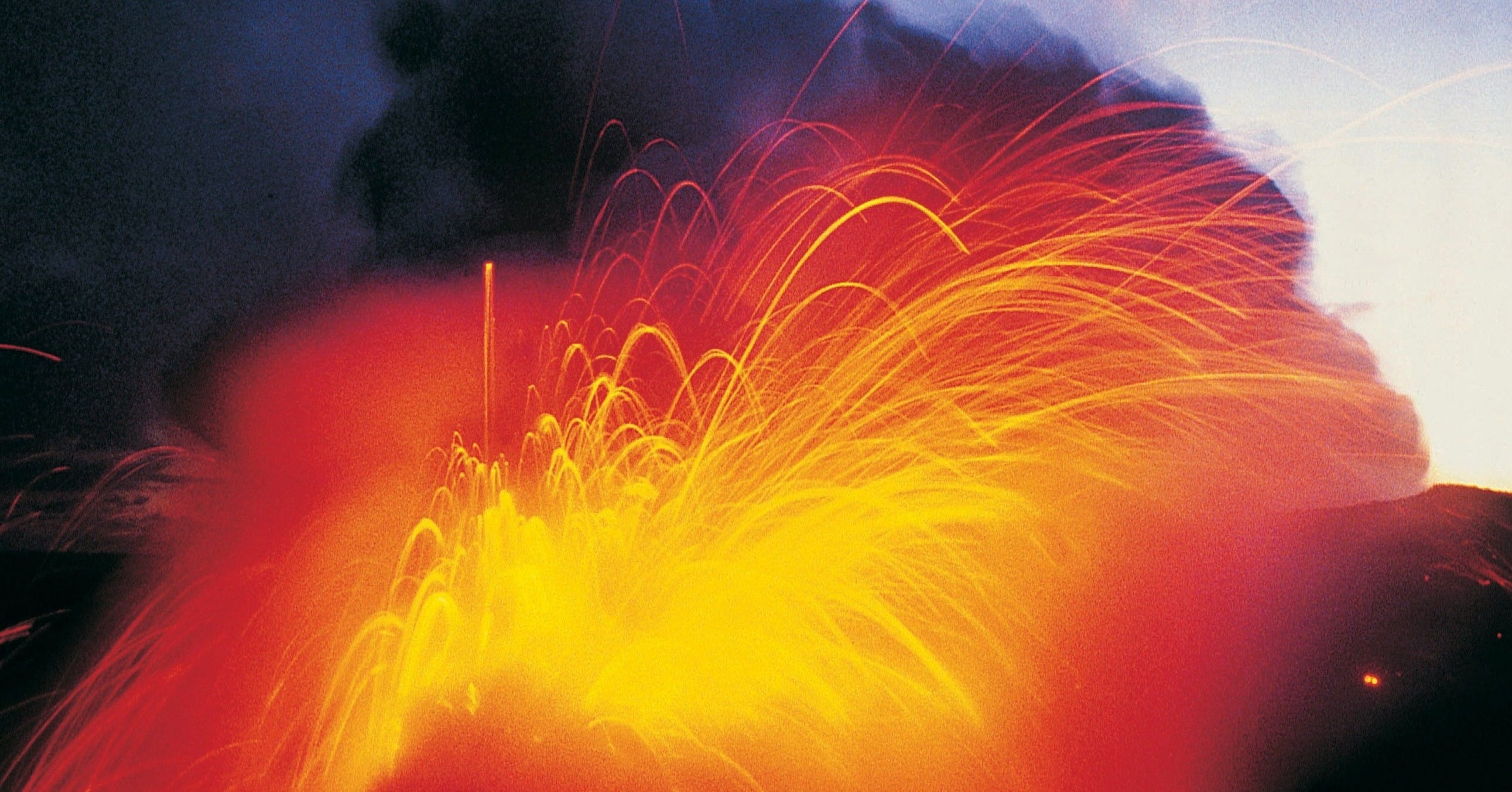
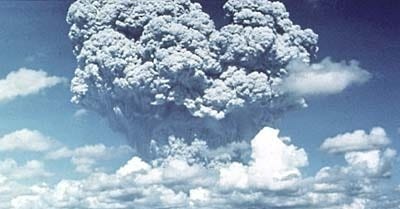
In June 1991, Mount Pinatubo erupted in the Philippines. It was the second-largest volcanic eruption of the 20th century. The aerosols it shot into the stratosphere cooled the planet by roughly half a degree Celsius for about two years.
That cooling is not the mystery.
The mystery is what happened to atmospheric CO2.
Between 1991 and 1993, approximately 18 gigatons of CO2 disappeared from the atmosphere. The Mauna Loa record - the most trusted CO2 dataset on Earth - shows it plainly. And here is what makes it strange: that removed CO2 never came back. It appears to be gone permanently, or at minimum for multiple decades.
Scientists have known about this anomaly for thirty years. Three main theories have been proposed to explain it. All three fail when you look at the data carefully.
That failure is what opens the door to something new: Localized Ocean Fertilization (LOF).
If you agree these fresh ideas are important, please share with your friends and colleagues.
Before evaluating any theory, let’s establish the facts that any valid explanation must account for. There are three.
Fact 1: Scale. Roughly 18 Gt of CO2 were removed. That is not a rounding error. It is 2.25 parts per million in the Mauna Loa record. Any theory that cannot plausibly account for removal at that scale is not a theory. It’s a wish.
Fact 2: Permanence. The removal has persisted for decades. This rules out any mechanism that only operates during the temporary, post-eruption cooling window. Something sequestered that carbon and kept it sequestered.
Fact 3: Selectivity. Here is the clue that everyone has underweighted. Nine large eruptions have occurred over the last 500 years that cooled the planet by 0.5 to 1 degree Celsius for one to two years. Only three of them produced a significant CO2 anomaly. The other six did not. This is not noise in the data. It is a signal. And any valid theory must explain why some eruptions caused massive CO2 removal and others, though equally large and equally cooling, did not.
The most politically comfortable explanation has long been land photosynthesis. Cooler temperatures, reduced evaporation, diffused light from the aerosol cloud - perhaps plants globally drew down more CO2.
It has one fatal problem. Tree ring data indicate that 1992 rings, and those after other large eruptions, were slightly narrower than normal - meaning plant growth was suppressed, not enhanced. The aerosol-reduced sunlight (approximately 2% less at the surface) slowed growth, it did not speed it. The O2/CO2 ratio in the atmosphere in 1993 further contradicts land photosynthesis as the primary driver.
Land photosynthesis cannot explain the 18 Gt removal. It cannot explain the permanence. And it cannot explain why six similarly-sized eruptions produced no CO2 anomaly.

Colder oceans dissolve CO2 more readily. This is basic chemistry. Sarmiento (1993) calculated this mechanism and Fay (2023) confirmed it: post-Pinatubo ocean cooling absorbed approximately 0.3-0.4 Gt of CO2. That is about 2% of the observed removal.
It is real. It is simply not the answer. Even if you stretch every assumption, ocean cooling chemistry cannot account for an order of magnitude more CO2 than it can physically dissolve. And it certainly cannot explain why that CO2 has stayed removed for 30 years: As ocean temperatures returned to normal, dissolved CO2 would outgas back into the atmosphere.
Ocean cooling cannot explain the scale. It cannot explain the permanence. And it cannot explain the selectivity.

This is where it gets interesting, because when scientists say “OIF could not have caused this,” they are correct. They are just talking about the wrong version of OIF.
The standard OIF model that has dominated the literature for three decades is what is referred to as “full-basin OIF”: adding iron broadly across large stretches of ocean to stimulate phytoplankton blooms. The oceanographers who study this agree that full-basin OIF, at its theoretical maximum, could remove perhaps 1-3 Gt of CO2 per year. Peer-reviewed analyses from NASEM (2022), GESAMP (2019), and Frontiers in Climate (2024/2025) all confirm this ceiling.
So when those same scientists say that phytoplankton blooms could not have removed 18 Gt, they are right…if you are talking about full-basin OIF.
But that is not what nature did.
Understanding why the field converged on a theory that doesn’t fit the data requires a short history lesson.
In 1990, John Martin demonstrated that iron was the limiting nutrient driving CO2 removal during ice ages, particularly in the Southern Ocean, where dust storms from southern South America and southern Africa deposited iron. This was a genuine breakthrough. The initial OIF field experiments in the 1990s and early 2000s showed that adding iron did produce phytoplankton blooms. But those blooms lasted only days or weeks, and only 1-2% of the absorbed biocarbon sank to the seafloor. The rest was eaten by fish and recycled back into CO2.
Given those numbers, everyone reasonably concluded that large-scale CO2 removal would require fertilizing enormous swaths of the ocean over long periods. That’s full-basin OIF.
The problem is that those early experiments were not conducted near large, downwelling ocean eddies. And that turns out to make all the difference.
Localized Ocean Fertilization, sometimes called ocean eddy fertilization, is not a variation of full-basin OIF. It’s a fundamentally different explanation of how nature removes gigatons of atmospheric CO2.
Here’s how it works.
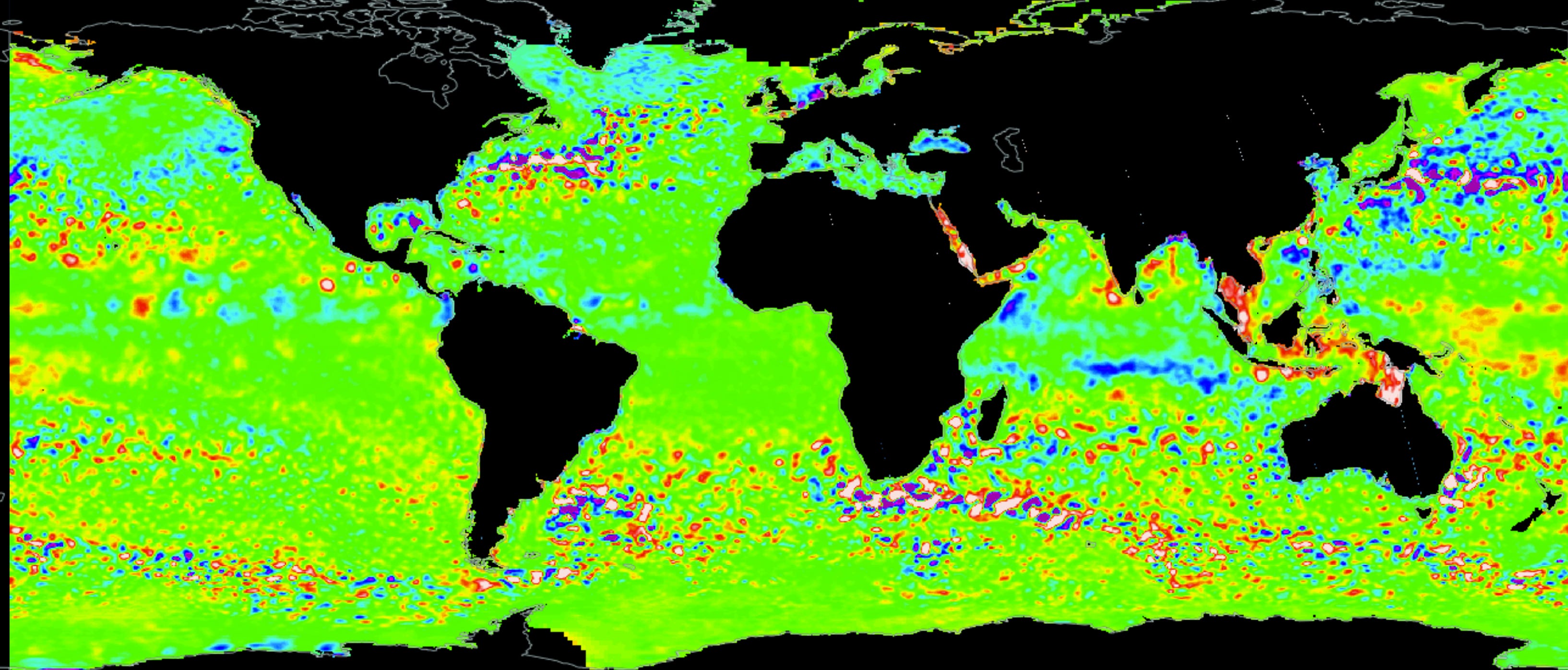
When iron and other nutrients enter the ocean near a large downwelling eddy—a rotating body of water in which the Coriolis effect pushes water downward— something different happens. Instead of the usual 1-2% of biocarbon sinking before fish can consume it, 50% or more sinks. The downwelling eddy physically pulls the carbon-laden organic matter deep into the ocean before the food chain can metabolize it back into CO2.
This is not theoretical. Satellite CO2 data shows significant carbon removal occurring near eddies and no significant removal in comparable regions without eddies. The pattern is consistent and clear.
Now apply this to the Pinatubo question. The Pinatubo eruption deposited iron-rich aerosols in a region of the ocean with active downwelling eddies. Our research shows that two other eruptions in the last 500 years that produced major CO2 anomalies share this geographic characteristic. The six eruptions that produced no CO2 anomaly? They were not near eddy-rich regions.
This is the selectivity signal that no other theory can explain. LOF explains it directly.
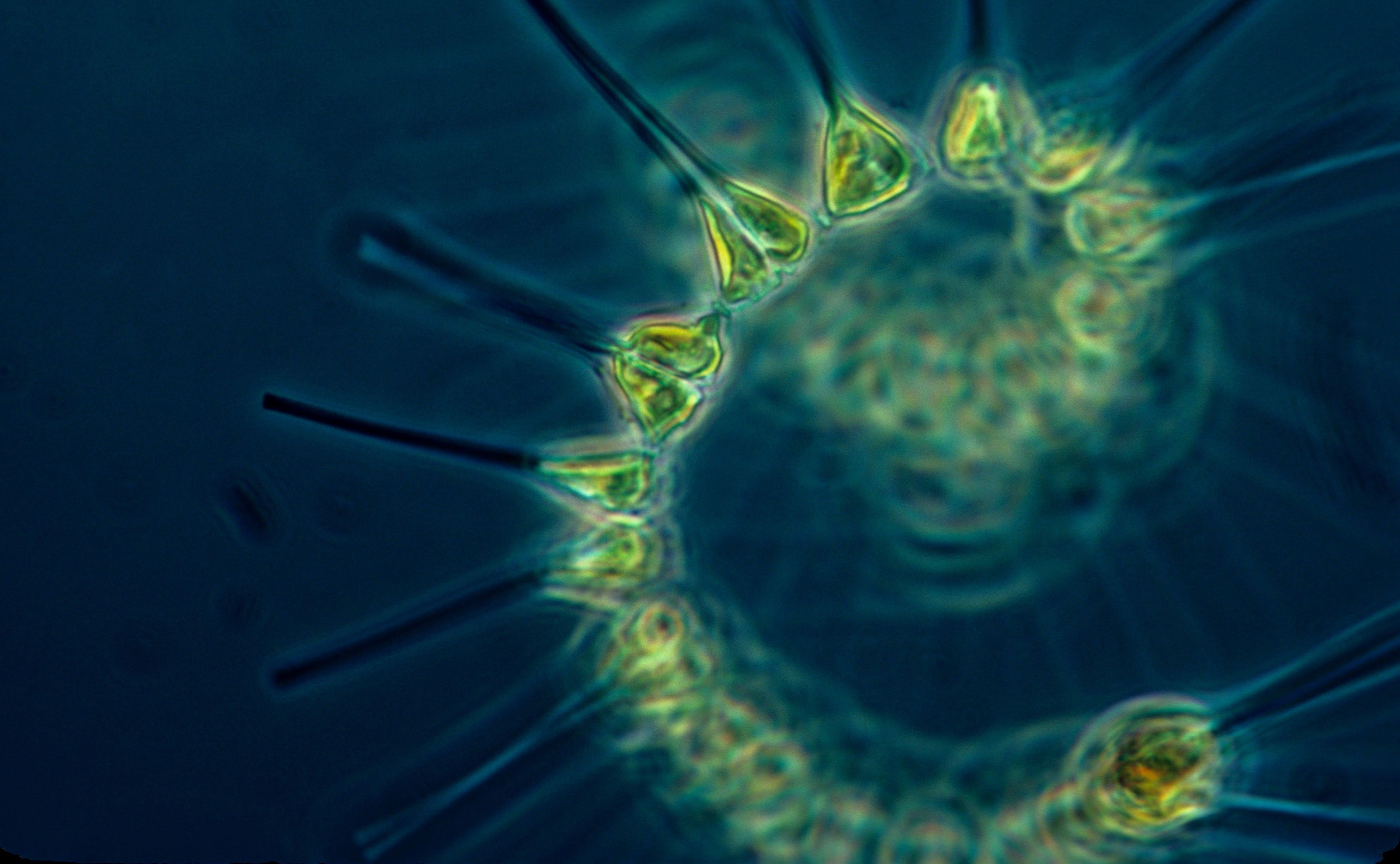
Full-basin OIF fails partly because of nutrient constraints. Growing massive phytoplankton populations requires not just iron but nitrogen and phosphorus. Where do those come from?
LOF incorporates a mechanism that full-basin OIF models have ignored: nitrogen-fixing bacteria. These microorganisms can convert dissolved nitrogen gas directly into the nitrates that phytoplankton need. With sufficient iron to nourish those bacteria ( iron that Pinatubo’s ash provided) the nitrogen supply problem becomes solvable, powered by sunlight.
LOF does not deplete phosphorus or other necesary elements because the organisms sink with the downwelling eddy and dissolve, returning their minerals right back into solution where they started. We know this because there was essentially no biocarbon on the seafloor where the Pinatubo ash fell. Conventional views of OIF hold that plankton needs to sink to the seafloor, which could sequester carbon but also take minerals out of circulation.
The full 18 Gt removal (scale)
The multi-decade permanence (deep ocean sequestration via downwelling eddies)
Why only 3 of 9 large eruptions produced CO2 anomalies (proximity to eddy-rich zones)
The O2/CO2 ratio signatures in the atmospheric data (consistent with marine photosynthesis).
Send this post to your friends and associates who want a safe climate for future generations

This is the objection you will hear. It is worth addressing head-on.
The paper formalizing LOF is currently in peer review. Some experts dismiss the phytoplankton explanation for that reason alone. This is understandable as an institutional posture. It is not useful as an intellectual one.
The same experts who say the literature doesn’t support LOF also agree, correctly, that conventional full-basin OIF cannot account for what happened after Pinatubo. They agree that land photosynthesis is contradicted by tree ring data and O2/CO2 ratios. They agree that ocean cooling can only explain 2-3% of the observed removal.
We are left, then, with a 97% gap that none of the established theories can fill.
LOF fills that gap. It is the only hypothesis that is simultaneously:
Consistent with the Mauna Loa CO2 data
Consistent with all nine eruption cases over 500 years
Consistent with the O2/CO2 ratio
Consistent with the permanence of the removal
Physically testable within 10 years for under $50 million
The literature will catch up. The question for scientists and funders is whether to wait for it - or to be part of what it says next.
LOF is not just an academic hypothesis about a 30-year-old volcanic eruption. If nature removed 18 Gt of CO2 using localized iron fertilization near downwelling eddies, then the question of whether we can intentionally replicate that process becomes urgent.
The good news is that we now know what conditions are required: sufficient iron and nitrogen-fixing bacteria, delivered in a region with active downwelling eddies. We know where those eddies are. We have satellite data to monitor results. We can design a test.
Full-basin OIF was always a non-starter: environmentally unappealing, economically impractical, and insufficient in scale. LOF operates on roughly 1% of the ocean’s area, in targeted locations, replicating what nature has demonstrably done.
The wheat farmer does not plant wheat everywhere. She plants it where it grows best, and optimizes everything around those locations. LOF is the equivalent approach for ocean carbon sequestration.

The scientists who say conventional OIF cannot explain the Pinatubo CO2 removal are right. That’s the wrong version of OIF.
Three theories have been proposed to explain the 18 Gt removal: land photosynthesis, ocean cooling, and full-basin OIF. Each fails on the data - on scale, permanence, and selectivity across nine volcanic events.
LOF refers to phytoplankton blooms near downwelling ocean eddies, sustained by iron and nitrogen-fixing bacteria. It is the only hypothesis that accounts for all three requirements simultaneously. It is testable. It has physical mechanisms. And it points toward a pathway for intentional CO2 removal that has never seriously been on the table before.
The peer-reviewed paper is coming. The data is already here.
For scientists and funders prepared to engage with what the evidence actually shows, rather than just what the current consensus has assumed, LOF deserves serious attention and serious resources.
Comments
Nothing yet. Say the first thing.
Sign in to join the conversation.