

Ever since the start of the FIFA World Cup about two weeks ago, there has been much debate around the biggest rule change that we’ve seen at the tournament—hydration break. Pausing the game for three minutes in both halves, so players can drink water and cool down, isn’t strictly new to the tournament. It was also a feature at the 2022 World Cup in Qatar. What is different this time is that this is a mandatory rule.
Much of the debate has swirled around the use—and misuse—of the hydration break for FIFA to bolster its advertising revenue. Fans certainly think that, as can be heard in the loud boos every time a hydration break is announced, like at the Argentina vs Austria match on Monday. That game was being played at the AT&T Stadium in Dallas, which has a powerful air-conditioning system. However, it is just one of four such stadiums at the World Cup. The 12 remaining stadiums can only offer shade, not respite from the heat.
And the heat is intense. A study on heat risk at the World Cup, published in January in the International Journal of Biometeorology, found that 14 of the 16 host locations exceeded the danger limit of wet-bulb globe temperature (WBGT) at 28°C in the summer. That combination of high temperature and high humidity can seriously affect a football player’s health.
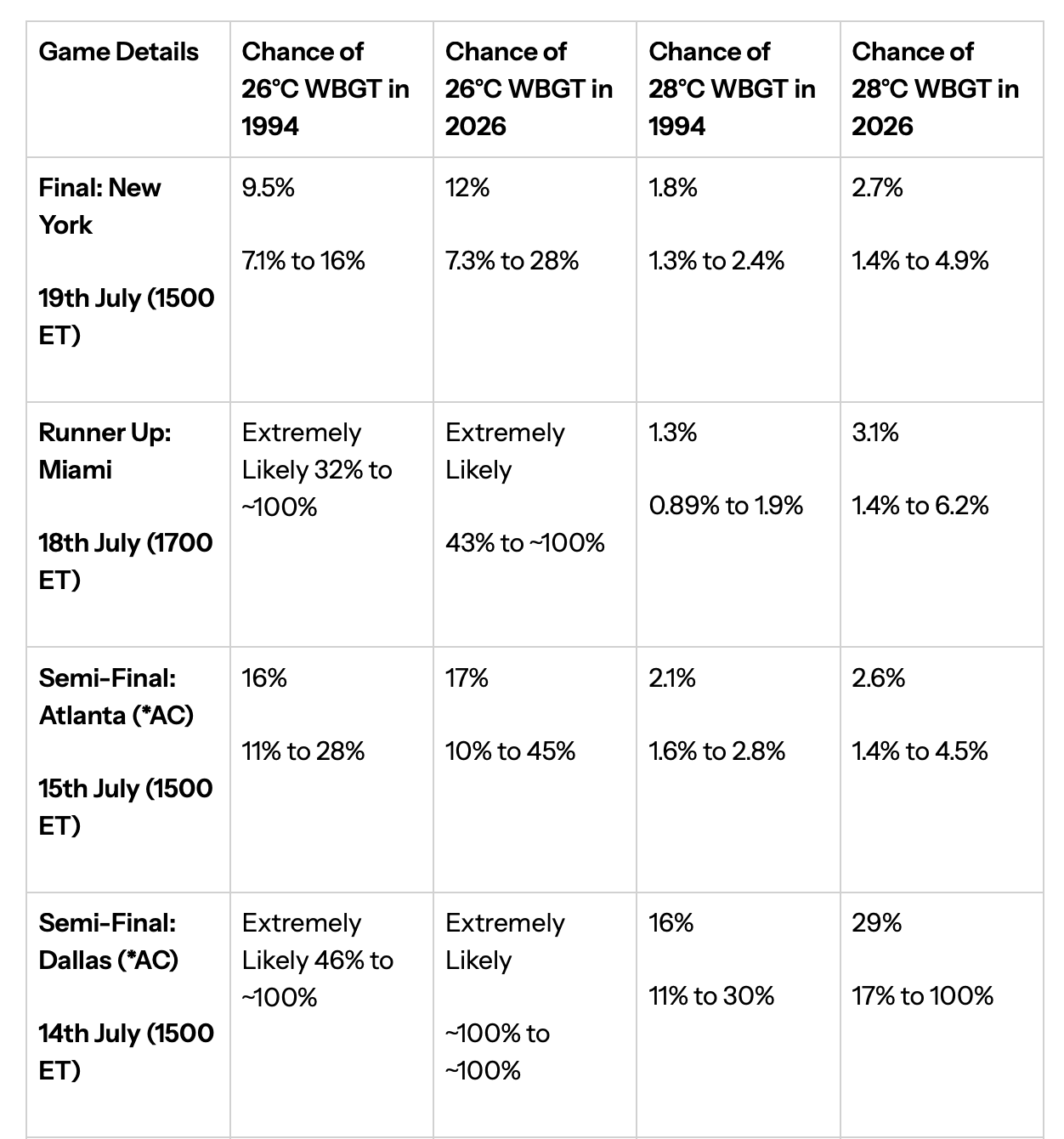
Plenty of matches at this World Cup have already been played in sweltering conditions, and, as we go deeper into the tournament, the heat is only going to increase. According to a study by World Weather Attribution, 25% of World Cup matches could be played in dangerously hot conditions. It also stated that the last time the World Cup was hosted in the US, in 1994, the climate was .7°C cooler.
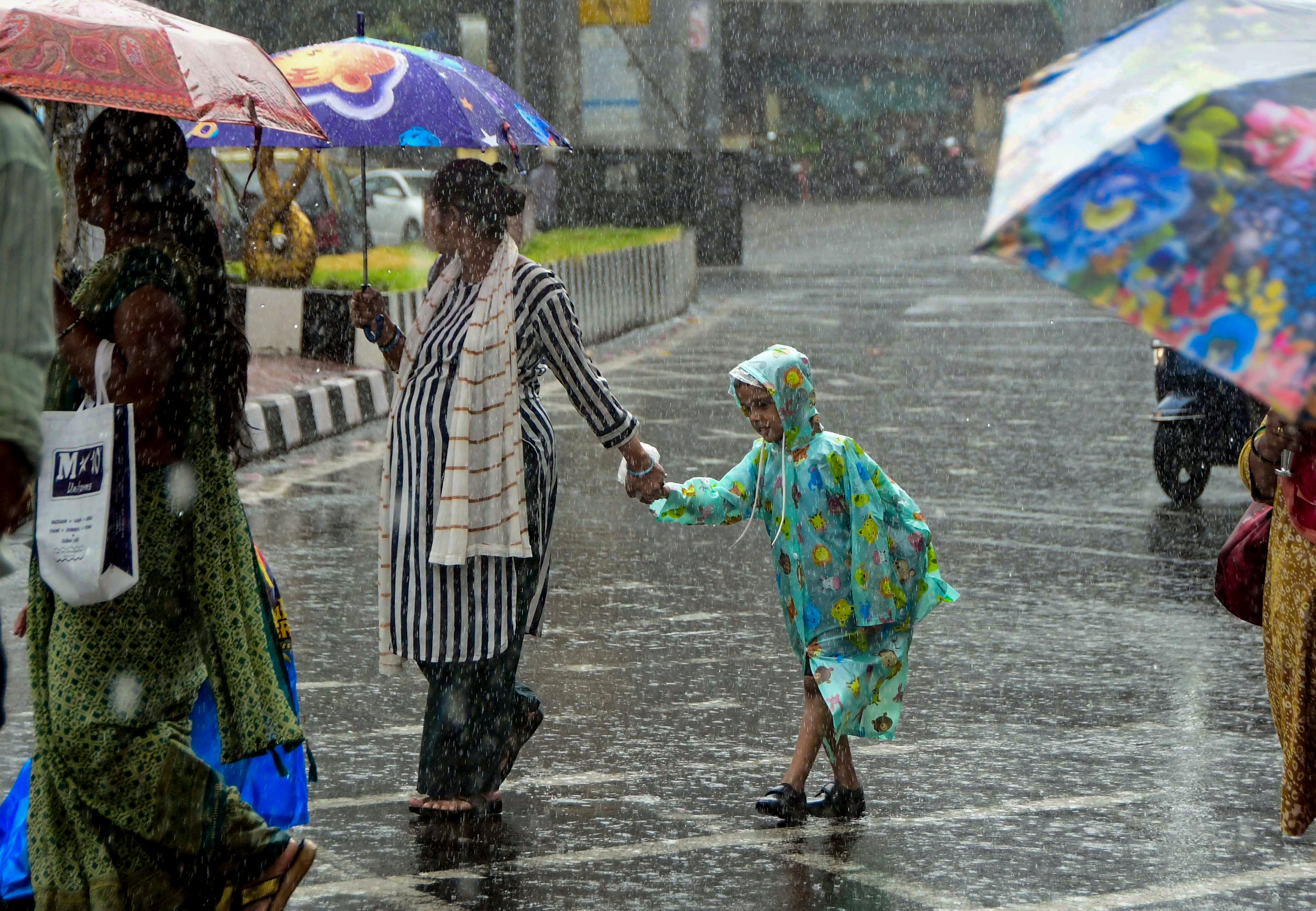
A UNICEF report published last week lays out the extent to which children around the world are being exposed to climate hazards. According to the Children’s Climate Risk Report, 337 million children live in areas at risk of riverine floods. Another 33 million children are exposed to coastal floods, 1.8 billion children live in regions at risk of drought, and 662 million children live in areas at risk of tropical storms.
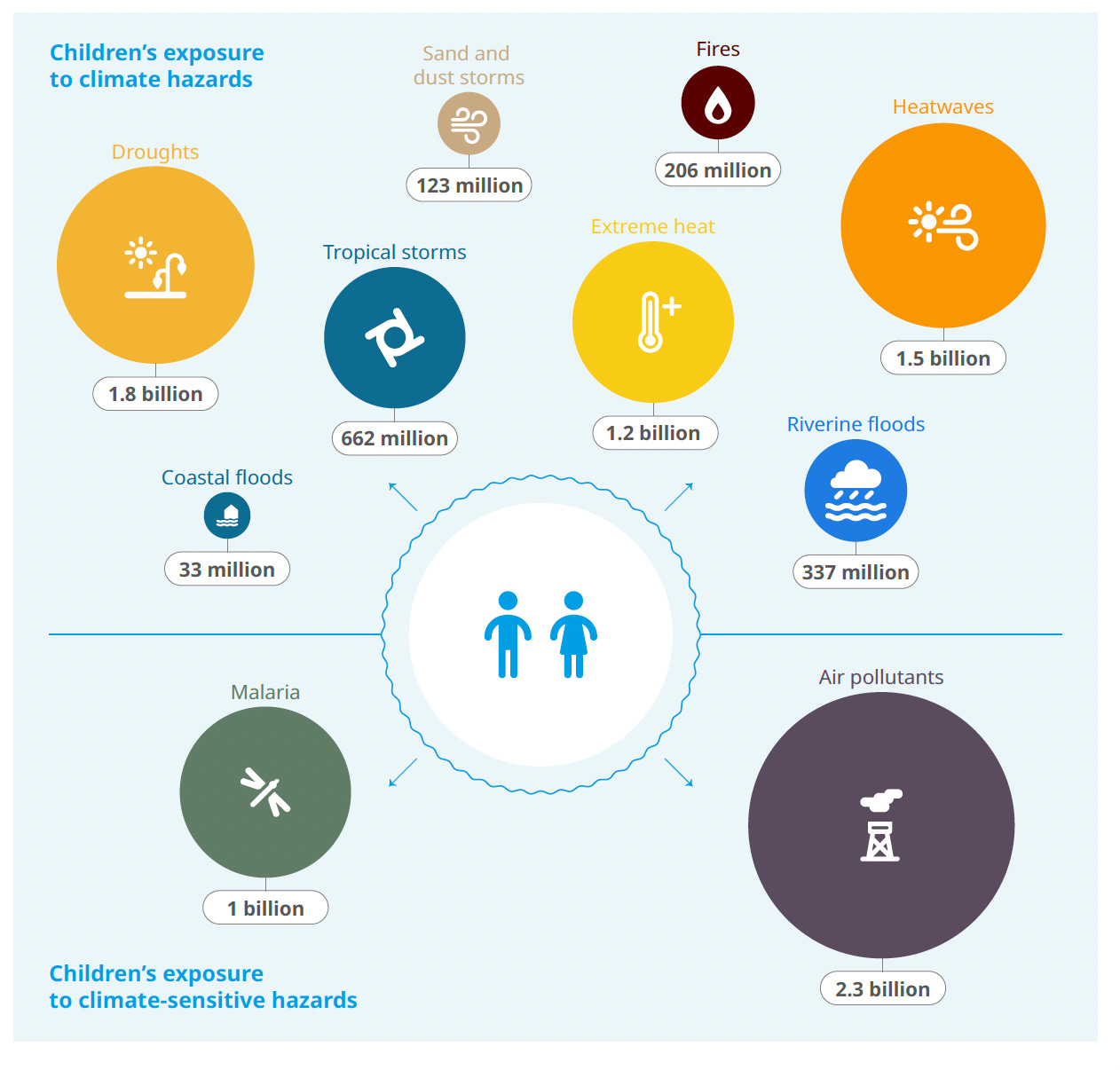
And that’s not all. About 1.5 billion children are exposed to severe heatwaves, and 1.2 billion live in extreme heat. Meanwhile, frequent and severe fires threaten 206 million children, while 123 million are exposed to sand and dust storms. Climate hazards are posing a disease risk as well, with 1 billion children living in areas where malaria—a highly climate-sensitive disease—is active. Finally, a staggering 2.3 billion children live in areas with high air pollution.
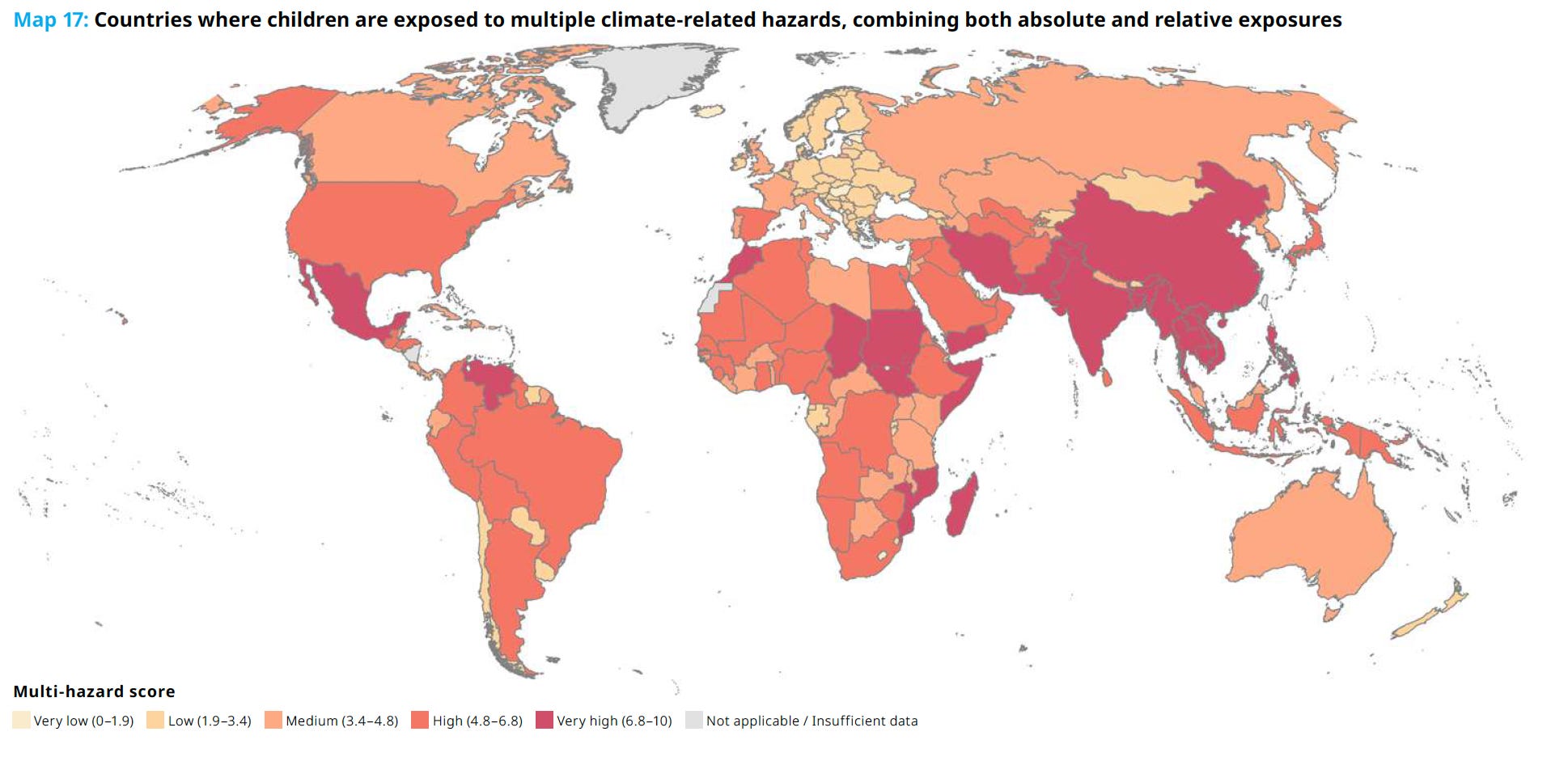
The report also shows that, in some regions, several of these hazards are present simultaneously. It uses an interactive map to show the extent to which children of a country are exposed to at least 3 of these hazards. It is extremely high for South Asian nations, with 54.9% of Indian children exposed to at least three hazards. In Pakistan, this is 81.2%; in Bangladesh, 89.5%; and in Sri Lanka, 73.3%. While India ranks high on the list of multi-hazard risks to children, the risks are particularly high for air pollution, droughts, extreme heat and riverine floods.
THE NEWS IN BRIEF
The Guardian recently did an important ground report on how intense heatwaves are shutting down Indian schools for weeks on end. This is causing working mothers to leave the workforce to focus on children.
Read this excellent travel story by Rohini Nilekani in Lounge, where she writes about her trip to the Arctic, and what she learned about climate change and sustainability.
If you want to understand how El Niño conditions are affecting the Indian monsoon, read this primer by Mint journalists Manas Pimpalkhare and Vijay C. Roy.

Summer daytime temperatures of 43°C are more associated with a tropical city like New Delhi, not with northern European cities like Bordeux in France. And yet, this is the case, as countries like France, Belgium, and Spain reel under severe heatwaves. Much of France is on red alert, with night-time temperatures also expected to reach record highs. More than 800 schools were closed on Monday, and 10 railway services around Paris were cancelled. Temperatures were even higher in Spain, and public screenings of World Cup matches were cancelled, while in Germany, the Berlin Open tennis final was suspended due to high heat and thunderstorm warnings.
Meanwhile, the Indicators of Global Climate Change 2025 report, published earlier in June, states that as the Earth’s energy imbalance worsens—the planet is now absorbing more of the sun’s heat than it reflects into space—due to rising carbon emissions, the pace of climate change is accelerating. It has doubled since the 1976-1995 period. The report also found that the global ocean—the great regulator of planetary heat—has warmed significantly, with the number of marine heatwave days tripling between 1991 and 2025.
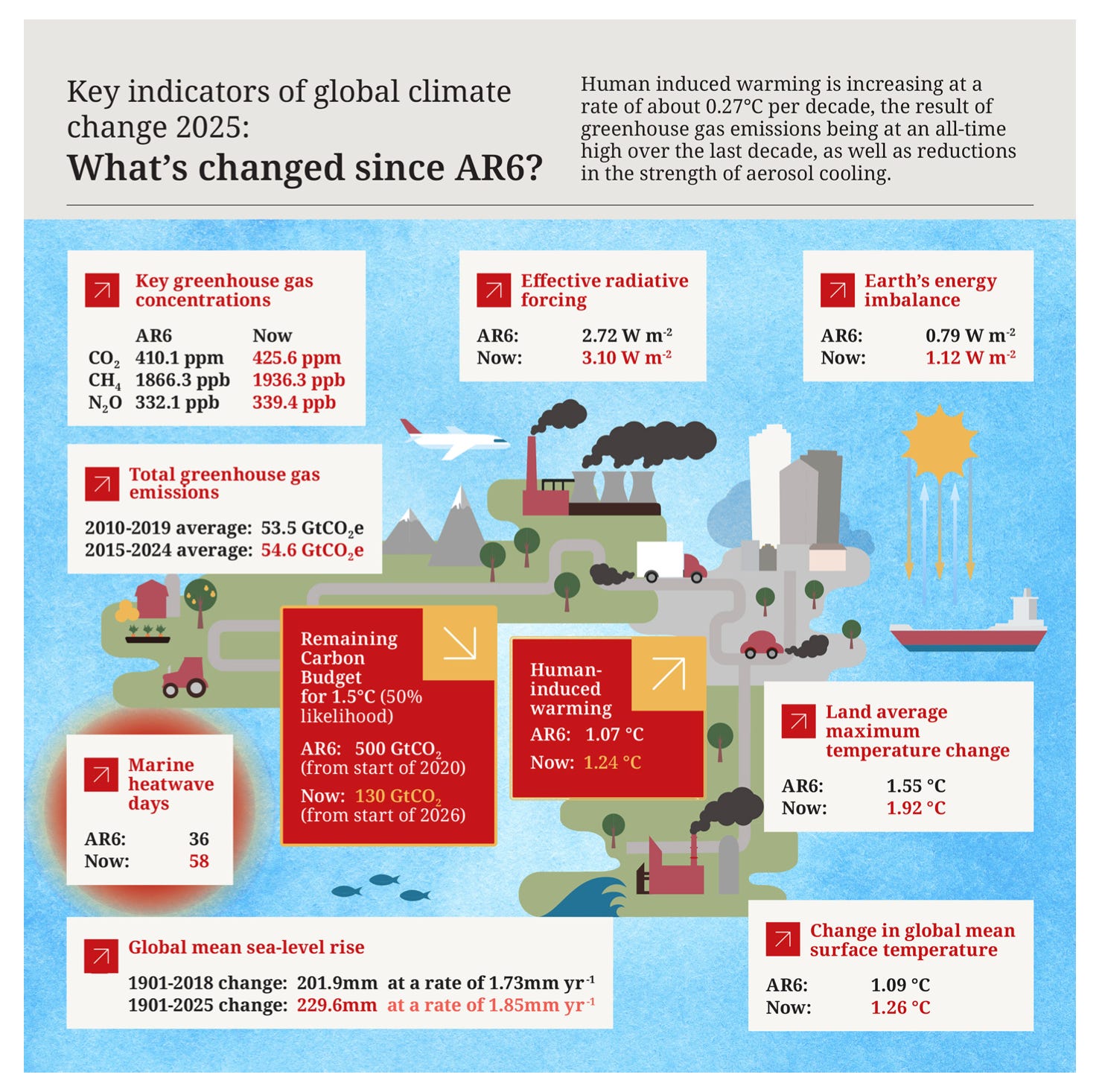
The report is the work of over 70 researchers from more than 50 global institutions. Its headline numbers include the fact that over the last 10 years, the world has warmed by about 1.26°C (above 1850-1900 levels), and that 1.24°C of this warming can be directly attributed to the human use of fossil fuels. Moreover, over this same time, the rate of heating has increased to 0.27°C per decade. As global air pollution levels decline, the amount of heating is increasing, since air pollution particles reflect sunlight back into space. The report also finds that about three years of global GHG emissions at the present rate will exhaust the carbon budget required to keep the temperature rise within the ‘safe’ limit of 1.5°C.

We are all aware of the term ‘greenwashing’. It refers to the ways in which polluting industries try to portray themselves to the public as environmentally conscientious through misleading claims and advertising.
‘Sportswashing’ occurs when such industries—and countries—attempt to gain a favourable public image by associating themselves with a popular sport.
This term is in the news primarily due to the World Cup. Viewers of the matches would not have failed to miss the constant pitch-side advertisements from companies like Saudi Arabia’s Aramco (this World Cup’s ‘Global Energy Partner’), a firm that is the world’s biggest emitter of greenhouse gases. Petro-state Saudi Arabia is also notorious for consistently obstructing international climate mitigation ambitions every year when the COP climate conferences take place.

Even the fact that the world’s biggest historical—and current—emitter of fossil fuel emissions, the US, is the most prominent co-host of the World Cup, amounts to sportswashing. This report on the World Cup and climate change makes for very interesting reading.
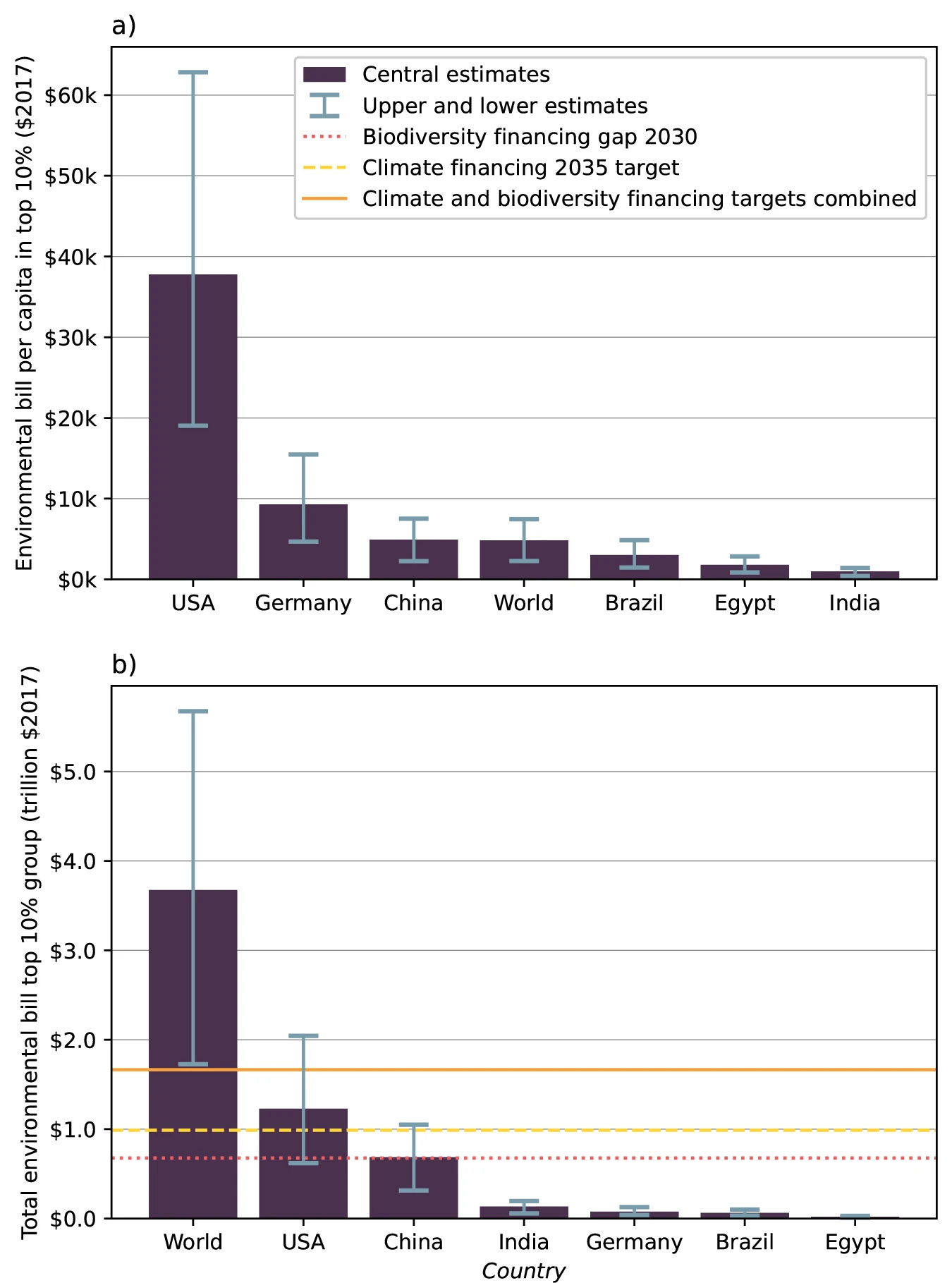
A new study published in the journal Communications Sustainability finds that the world’s top 10% consumers are racking up an environmental damage bill of about $5.7 trillion a year. That amount is greater than the economies of every country in the world except the US and China. These mega-consumers are from the global North—over 50% of the US population is on this list, as are 40-45% of people living in the European Union.
The study finds that the per-head damage bill for the top 10% ranges from $2,300 to $7,500. For US consumers, this ranges from $19,000 to $63,000 per head. The damage caused by these mega-consumers affects both the world’s biodiversity (up to 56% of total damage) and the climate crisis (up to 44% of total damage).
A separate study from Greenpeace found that the world’s top 0.01% wealthy people are responsible for nearly 25% of global emissions through their investments in fossil fuel-intensive businesses. The ‘climate debt’ of this cohort amounts to about $992 billion in annual damages from their investments alone. Their consumption-based climate debt amounts to another $405 billion.
That’s it from me this week. Sayantan will be back in a fortnight with the next edition of Climate Change & You.
Comments
Nothing yet. Say the first thing.
Sign in to join the conversation.