
Holidays are a good time to take a step back and reflect on our values. In the daily hustle and bustle, you may have noticed that just about everybody is too busy, spending too much time on things that mean too little. We should prioritise family, meaningful work, community, relaxation and the simple pleasures. Many of us work way too much. Such feelings are common and have been for some time.
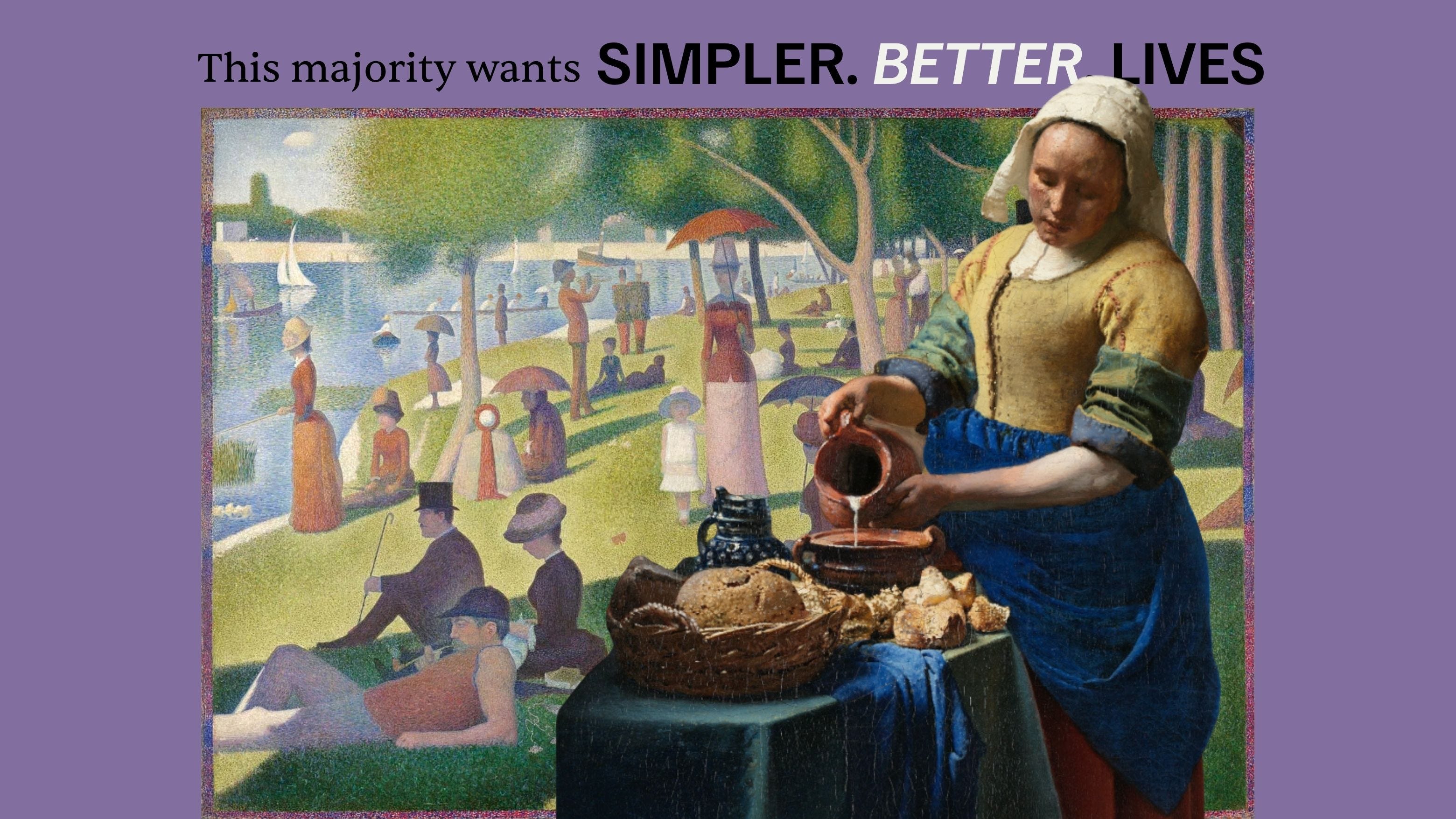
The Common Cause Foundation found that, in 88 out of 89 countries, citizens believe internal, human (intrinsic) values are more important than outer, material (extrinsic) values. Spending time with family and friends, doing what makes us happy and fulfilled, and learning new things for curiosity’s sake are all things we value … just because they matter to us. Extrinsic values are means to an end, prized for the money or social status they bring. Polls show that as early as 2001, citizens of almost all countries (and all rich countries) agree that a less materialistic outlook would be helpful.
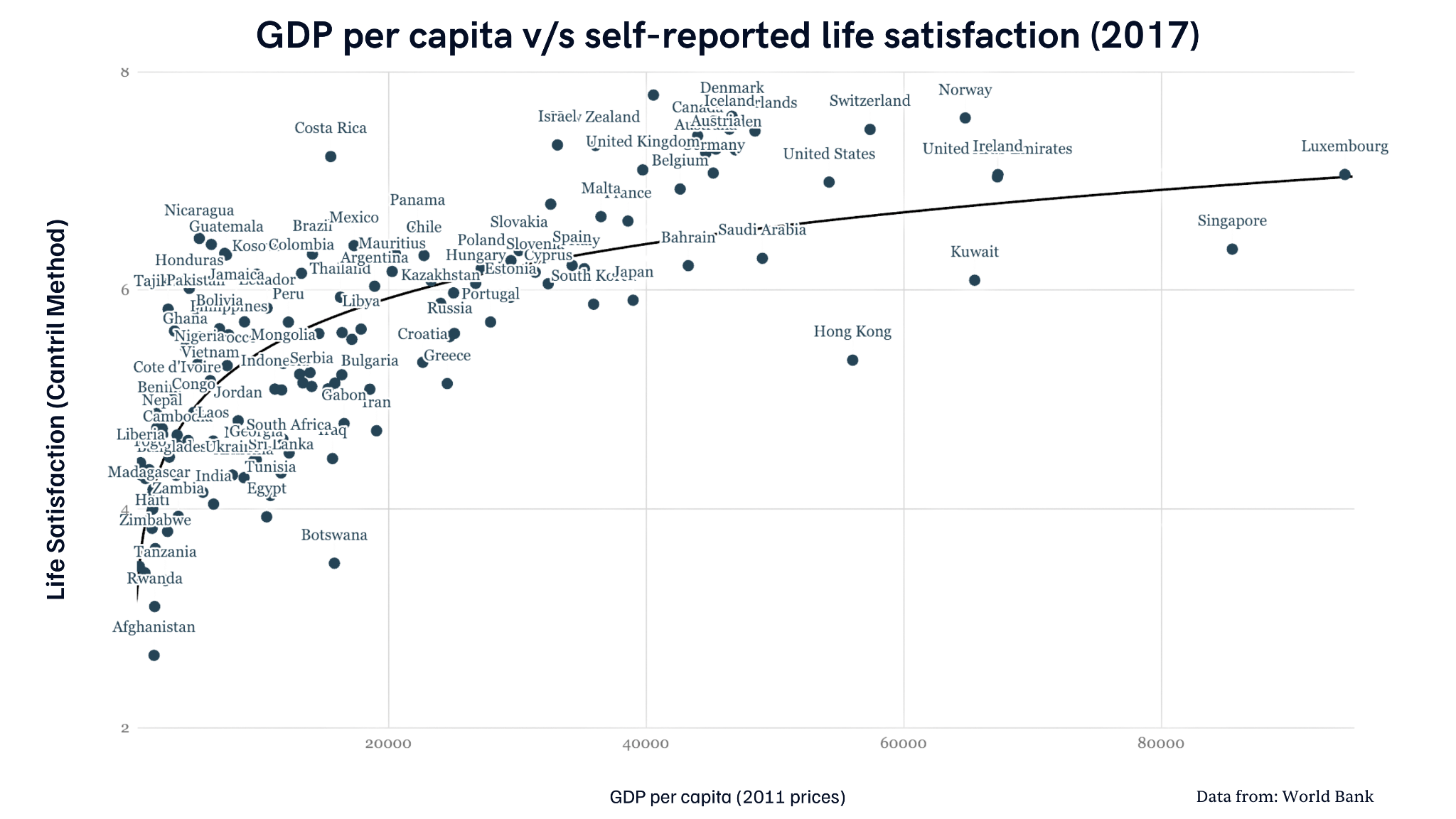
There is a lot of evidence that continuing to pursue policies predicated on material growth won’t lead to more happiness in the industrialised world. The chart below plots income against happiness ... Even under this ‘optimistic’ view, doubling a person’s income increases long-term happiness by just 0.3 points on a 10-point scale.
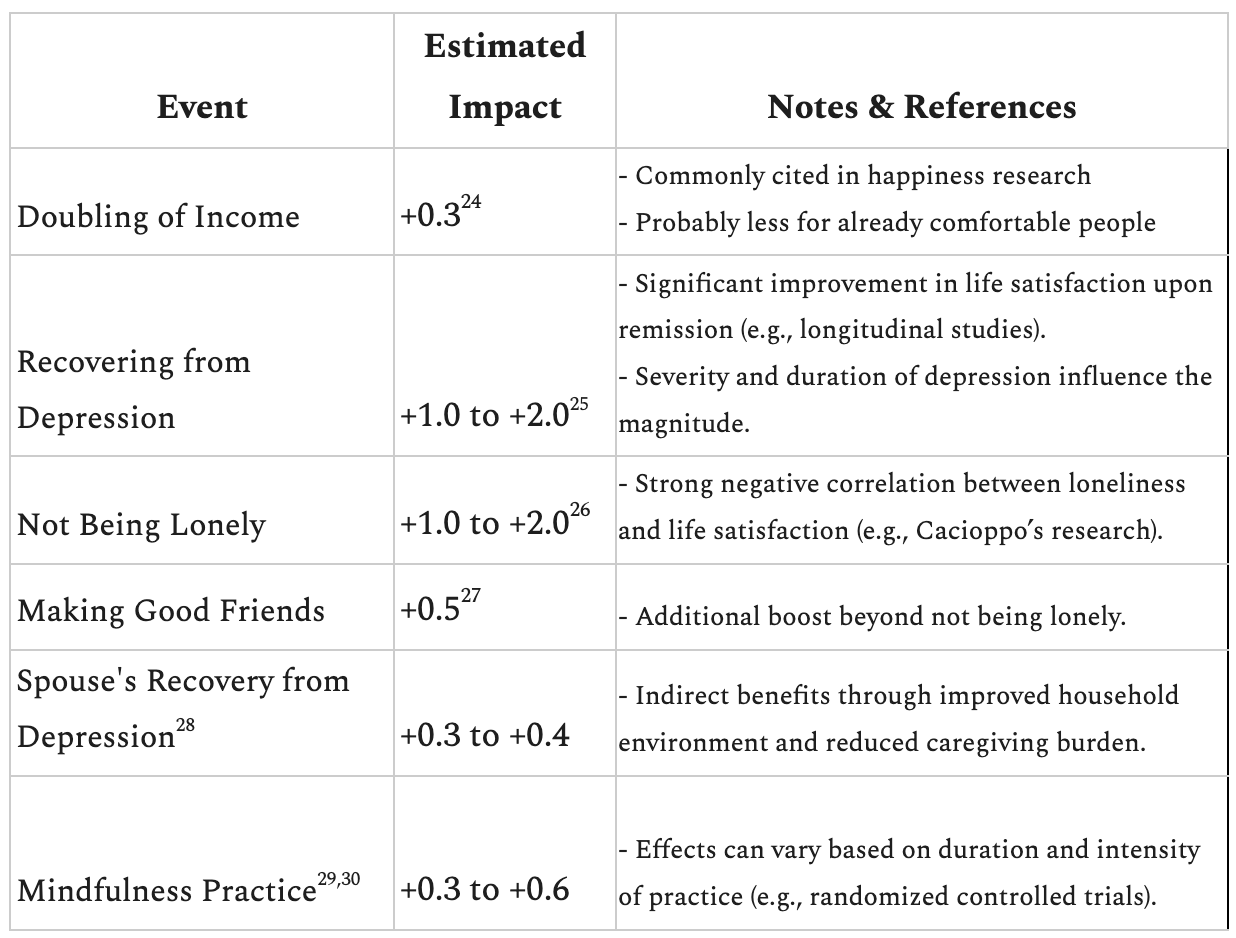
Several factors that raise happiness more than a doubling of income, beginning with relief from loneliness (around five times the well-being gain).
Research suggests that especially in the rich countries on the right hand of this chart there has been a trend away from valuing money and achievement, and more on fulfilment (meaning) and justice. Some have called this process a ‘silent revolution‘ because it is slow, peaceful, and not fully reflected in public behavior or conversation.
More important, perhaps, is that less rich countries put more emphasis on intrinsic values. It seems that most populations never became as motivated by money and status as the industrialised countries once were. Furthermore, extrinsic values were never dominant for most people in rich countries, though in the 1980s they had a larger importance
There are good reasons to expect that the intrinsic majority is not yet self-aware , particularly in societies where materialist priorities have long dominated institutions. In the UK, for example, most people feel that non-material priorities are more unusual than they really are. A vast majority of Britons, at 77 per cent, think their fellow citizens’ are more extrinsically motivated than they truly are. This finding held regardless of gender, age, and political orientation. People who hold this skewed impression of their fellow citizens are less hopeful about others’ civic participation, and they feel a weaker sense of belonging.
A convincing set of US workplace studies shows that most people underestimate how much their colleagues and bosses prefer flexitime, vacation days and reduced working hours, and many Britons have normalised receiving texts on holidays and working nights. Many more try to fit the image of the tireless ideal worker than actually see this as a good thing. We place too much weight to the behaviour that we see in other people, so outward choices are mistakenly seen as reflecting people’s true values.
The majority makes choices within an economic system which is built around the pursuit of extrinsic values (chiefly profit), and these choices can appear more materialist than they are. A telling example is data from the long-running survey of US college freshmen, which has been used to argue that materialism is on the rise. Students in the 1950s reported that their chief reason for attending college was to achieve a ‘workable life philosophy’, but getting a high-paying job is now the top priority of more than 80 per cent of students. What these statistics hide is that inflation-adjusted college fees quadrupled during the same period, but the ability of getting good pay without a degree also plummeted. College graduates have been saddled with ever -larger loans while economic security has frayed for all citizens. Apparent materialism may simply be a response to these conditions.
More widely, the choices of jobs that workers are presented with are driven by whether labour results in profit. People would prefer work with positive social impact, that has reasonable hours, that allows them to live more simply, and to work within and on behalf of their community. However, the ability to find such work is limited, because employers often find it unprofitable to provide such jobs. The viability of employment is determined by the laws we live under. And the governments that write laws are dominated by profit-driven lobbying largely directed by older generations with more materialist values. Lobbying by vested interests fails to reflect many employees’ values, but still systemically determines the options that workers have. The choices emerging from this dynamic produce a false sense of our collective priorities.
Around the world, single employers cannot, for example, move to 30-hour work weeks in the face of their fears around economic competitiveness, and the same fear prevents nations from passing laws that favour work-–life balance. Parents struggle to find jobs that offer a lower impact lifestyle and proximity to their wider family while affording housing and education. Switching to part-time work hits a barrier in the form of a loss of status for some, though people seeing this choice as a stand for a new, saner approach may reconsider. As with 40-hour work weeks and other initiatives in the past, mass lifestyle change will only be made available to everyone through policy change. And the opportunity for such policy change might just, at last, be coming: we literally cannot go on like this. Ecological constraints are seeing to that.

Trends in non-materialist concerns suggest that this majority is deepening. The increased emphasis on security rather than just income levels and adoption of practices aimed at non-financial growth or non-material satisfaction is well documented. Though the West has probably embraced materialism more than other societies (but not fully) trends suggest a swing back towards non-materialist pursuits. A trend towards intrinsic values was noticed in the 1990s and is confirmed by studies showing increases in intrinsic motivations. This evolution in values seems to have changed since 2008, however. People increasingly value security and attaining greater life satisfaction through ‘inner life’ and wellness. This latter trend is also not confined to the West. Interest in wellness and inner practices have gone viral worldwide. Meanwhile non-western countries have never approached the levels of materialism once seen in the West—though many Westerners expected them to. Together with an enduring dominance emphasis of ‘timeless’ intrinsic values, these trends show the possibility for public embrace of more-than-materialist paths to better lives.
One starting point in the rise of intrinsic orientation in the West is therapy, and formal attention to mental health. Therapy of some kind is administered to 1 in 6 people in the UK, an increase of 100 per cent since 2007. Wider adoption isn’t simply a function of worsening mental health figures or rising loneliness. The proportion of adults with symptoms of any common mental health condition who received treatment rose from 24.4% in 2007 to 47.7% in 2023/4. So, willingness to be treated for mental health issues has doubled in the last 17 years, with the stigma reduced: between 2007 and 2023 more people became willing to see a person who’d been treated for mental illness marry into their family, 53 per cent versus 80 per cent, or provide childcare for the family, 23 per cent versus 61 per cent. International mental health statistics are of poor quality, but the data indicates rising expenditure, but much higher growth in industrialised countries.
Likewise, the loneliness epidemic is international news worldwide, while therapy, meditation, mindfulness and yoga have experienced significant growth over the last twenty years. These trends across the world.

As for wellness, McKinsey surveys of consumer attitudes show that 79 per cent of UK respondents say it’s a ‘top’ or ‘important’ priority, while that figure is 83 per cent in the US, and 94 per cent in China. The worldwide wellness economy as a whole, valued at $5.6 trillion in 2023, is projected to grow by 8 to 10 per cent annually through 2027, a far higher rate than applies to most products. Non-materialist pursuits are not only culturally mainstream, these figures suggest, but their adoption is accelerating. (We acknowledge the tension of citing market-growth figures for wellness activities that are characterised as consumerist themselves.)
Global developments falsify the assumption, once popular in the West, that the ‘developing world’ would also focus on pursuing material wealth until they had attained Western consumption. Well-being trends have taken hold in countries with income levels much lower than those of the US. China’s per-capita income is roughly one-third of that of the US. Study of Google search trends shows a global uptick in interest in meditation, yoga, and psychedelics, while careful reviews of global discourse on mindfulness meditation and mental health conclude that these are spreading worldwide. International surveys show that a desire for meaning is a worldwide phenomenon among millennials and Generation Z.
An example of the active (re-)prioritisation of inner life worldwide is provided by the Inner Development Goals (IDGs) initiative, which seeks to make inner development on par with economic development as a goal. Launched in 2020, there are hubs or affiliated partners in 89 countries along with more than five hundred registered organisations. Their framework covers 23 skills grouped under ‘Being,’ ‘Thinking,’ ‘Relating,’ ‘Collaborating,’ and ‘Acting’, and it has been officially referenced as part of UN and EU processes and integrated into national policy dialogues in Sweden, Denmark, and Chile. Attendance at the annual IDG Summit rose from roughly 500 participants in 2021 to over 4,000 in 2024, while the network’s online reach exceeds 100,000 professionals,.

Finally the declining global dominance of the West may result in these intrinsic values becoming more visible. Outside Europe, more than 70 per cent of the population says religion plays an important role in their life. The West’s embrace of materialism is historically unique and part of the same cultural paradigm which is now losing the faith of its own people – and the world.
Other countries express pride that their national character differs from the US based precisely on lesser materialism.
China’s powerful premier Xi Jinping states his aim to avoid the ‘one-dimensional’, materialist-only vision of Western development, instead ‘promoting coordination between the material and spiritual civilization’.
In fact, China officially labels itself an ‘ecological civilisation’. Narenda Modi positions India based on its commitment to peacefulness and wisdom, routinely offering quotes like
‘We have moved from a model of frugal consumption, to needs-based consumption, to greed-based consumption … Has this been development or has this been our downfall?’
Whether these ideas are reflected in the policies of either superpower is questionable, but these statements depart from Western leaders’ rhetoric in recent decades. Xi and Modi (or aligned successors) are expected to rule for some time and their nations will exert greater influence in international spheres.
A collective re-prioritisation, shifting more attention towards family, community and our inner life and less towards material pursuits, would be a return to normal from a historical perspective. Just a century ago the ancestors of Westerners lived around close relatives and operated according to the rhythm of religious ritual. They spent between thirty minutes to an hour in collective spiritual activity every day.
Increasing acceptance of the self-destructive consequences of bowing to money may help community and inner life regain the top priority that they enjoyed for almost all of human history. China and India are positioning themselves as leaders of such a turn, perhaps as part of their bid to claim the mantle of world leadership. These countries, and Europe, can most easily see themselves as competitors to the US for international pre-eminence if they reject GDP as the measure of their national success. While the US might continue to lead on GDP for some time, this less and less will define success. Polls on intrinsic values suggest that redefining success in accordance with values other than riches resonates with most of the world.
No posts
Comments
Nothing yet. Say the first thing.
Sign in to join the conversation.