
by Scott Mathews
Editor-in-Chief and Co-Producer of Climatelligence
July 27, 2026
Source: Jim Roemer - Meteorologist - Commodity Trading Advisor - Principal, Best Weather Inc. & Climate Predict - Publisher, Weather Wealth Newsletter and Co-Producer of Climatelligence
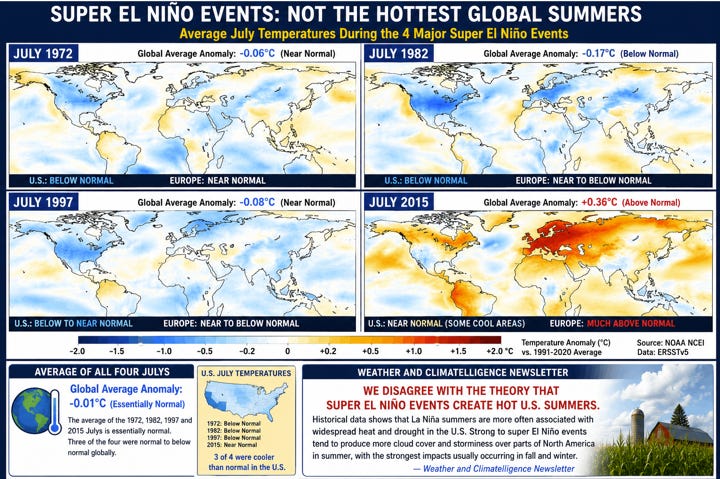
Jim’s special report on the Elephant in the Room:
Every heat wave? El Niño. Every wildfire? El Niño. Every sweaty afternoon? You guessed it—El Niño!!!
Reality is a bit more complicated.
The extreme drought gripping parts of the Plains and western United States, along with the devastating wildfires in Oregon and western Canada, didn’t suddenly appear because El Niño arrived. Much of this landscape was already primed by the lingering effects of several years of La Niña, which favored persistent dryness across much of western North America. Dry soils, stressed forests, and depleted mountain snowpack created the fuel. Add record-warm global oceans and a warmer climate, and the atmosphere has become even more efficient at producing heat extremes and drying the land.
Yes, a strong El Niño can boost global average temperatures, especially when combined with long-term climate change. But that doesn’t mean North America automatically experiences its hottest summers. In fact, several of the strongest El Niño events—including 1972, 1982, and 1997—featured widespread areas of the United States with near-normal or even below-normal July temperatures. Historically, the hottest and driest Corn Belt summers have been more closely associated with La Niña than with El Niño.
Where Super El Niño often leaves its biggest fingerprint is during autumn and winter, when it can reshape the jet stream and bring milder conditions too much of the northern United States.
The bottom line? Climate change has raised the baseline. Record-warm oceans add more fuel. The legacy of recent La Niña drought has left the western landscape vulnerable. El Niño is part of the story—but it isn’t the whole story, and it’s certainly not the only reason this summer has been so extreme.
Jim Roemer’s answer (for Climatelligence’s paid subscribers) is below:
Comments
Nothing yet. Say the first thing.
Sign in to join the conversation.