
“Resilience is not simply abundance. It is continuity and dependability. When knowledge, decision-making and labour are shared, the load becomes bearable even under pressure. When they are not, even plenty becomes precarious.” by Margi Prideaux, PhD from her Substack Radically Local.
The quiet architecture of one community Harvest Box system—and what it reveals about food resilience in the city, the suburbs, and the country.

A coalition led by Indigenous Land Defenders has written this Declaration on the protection of Mother Earth and are inviting all Indigenous Peoples, Indigenous communities, allied organizations, and individual supporters to sign before July 1.

Support National Indigenous People’s Day,
Fri June 19 at Victoria Park (dancing, music, vendors until 11am-3pm)
Sat June 20 at the Cavendish Food Hub, Join us on as we gather in community to welcome the rising sun and reflect on its gifts of light, warmth, growth, and renewal.
Elder Mary Lou Smoke will lead us in a traditional Sunrise Ceremony, including offerings, song, prayer, and reflection.
This is an opportunity to come together in a spirit of gratitude, connection, and respect as we greet a new day and the beginning of summer. All are welcome.
Please arrive by 5:30 AM to participate fully in the ceremony.
Sun June 21 at N’Amerind Friendship Centre. Sunrise Ceremony at 5:30am following by a community breakfast. All are Welcome. 260 Colborne Street (at the back)
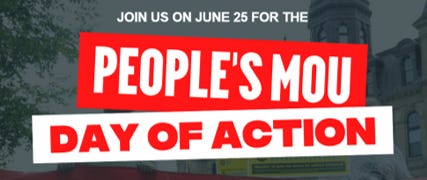
Climate Action: Join SCAN! on June 25 for 350.org‘s Day of Action for the climate. We will be presenting a Memorandum of Understanding for the People to London MPs. The Canadian government has been prioritizing the profits of oil and gas companies over the safety of our communities, the survival of our wildlife, and the future of our planet. Join the National Day of Action as we push MPs to put people first!
12-12:30pm outside MP Arielle Kayabaga’s office, 390 Commissioners Road West
1:30 -2:00pm outside MP Peter Fragiskatos’ office, 231 Hyman St.
3:00 -3:30pm MP Kurt Holman’s office, 920 Commissioners Rd East.
All people of any age are needed. The well-being of everyone, of future generations is at stake.
Petition: Support Nature Canada’s campaign to send a message to your MP urging them to defend strong nature laws, reject any proposals that treat nature as an obstacle to progress, and ensure that robust environmental assessment remains a credible, non-negotiable tool for sustainable economic prosperity.
Your MP needs to hear clearly that Canadians do not support rolling back environmental safeguards in the name of speed or development. Nature protection is not a barrier to Canada’s future, it is foundational to it and these safeguards are not “red tape”.
Public consultation on these discussion papers that has been extended until July 22.

At the June 17, 2026 Audit Committee Meeting, an audit report by MNP on the city’s Climate Emergency Action Plan.
(p.5) Strengths:
Regulatory and Infrastructure Progress in Buildings & Transportation
elimination of parking minimums,
mandatory EV charging in new developments,
strengthened secure bike parking requirements, and a
revised Site Alteration By-law with City-wide natural heritage protection.
rapid transit infrastructure,
Level 2 EV charging stations grew from 58 to 281, and Level 3 DC fast chargers from four (4) to 44.
Waste Diversion and Landfill Gas Management
The Curbside Green Bin Program. Curbside diversion increased from 51% to 60%, and waste fell from 191 to 159 kg/capita.
The W12A landfill management system was upgraded with a higher-capacity flaring installation, increasing the amount of methane captured by 40%.
Climate Considerations Embedded in Core Planning and Asset Systems
The Mobility Master Plan incorporates 'taking bold action on climate change' as a guiding principle, with mode-shift objectives at its core.
Stormwater and wastewater teams incorporate climate resilience into plant siting, flood protection, and infrastructure design as standard engineering practice.
The 2023 Corporate Asset Management Plan identifies climate risk as a driver of future investment decisions.
Budget Guidelines require Environmental, Social, and Governance (“ESG”) climate disclosures in all business cases for the budget.
Building Energy Retrofit Outcomes
In 2024, 2,502 households participated in Enbridge's Home Efficiency Rebate Plus program,
6,004 lower income households received free electricity upgrades through IESO's Energy Affordability Program,
the City secured $2.3M in federal funding for a heat pump and thermal battery storage retrofit at Earl Nichols Arena, expected to reduce facility emissions by 246 tonnes and cut energy consumption by 42%.
Average residential natural gas use per customer declined meaningfully from 2,259 to 1,794 over the audit period.
Community and Business Engagement Infrastructure
Smart Commute London launched in May 2024 and, in its first year, enrolled 15 employers representing over 26,000 employees.
The Memorandum of Understanding with the London Chamber of Commerce formalized collaboration with the business community.
The CEAP portal recorded over 43,200 visits and 1,000 survey submissions, and downloads grew from 4,000 to nearly 10,000 over the audit period.
Next week, we will explore the observations rated “high risk”, the management action plans, and associated recommendations.

The city’s Strategic Plan Performance Dashboard has 8 Areas of Focus.
Strategic Area of Focus: Climate Action and Sustainable Growth
Outcome 2: London is one of the greenest and most resilient cities in Canada in alignment with the Council-declared climate emergency and the Climate Emergency Action Plan.
Expected Result 2.1
London is on track to achieve community milestone target 2030 and to be a net zero community by 2050.

Fri June 19, until 3pm, celebrate Indigenous Solidarity at Victoria Park with food, crafts, Powwow Drumming, Powwow Dancing, prizes, community
Sat June 20, 9:30am-11:30 Antler River Rally cleanup
Sat June 20, 10am-2pm, Join Atlohsa and Chase Nethercott for an Indigenous-led edible and medicinal scavenger hunt focused on learning about the land and the gifts that it provides! 550 Wellington Road, Building J (behind Wiigiwaaminaan Lodge)
Food and drinks provided.
Wed June 24, 10am-11am Garden Club, featuring a talk by Dr. Brendon Samuels. Hosted by Salvation Army, London Community Services, 310 Vesta Road served by LTC#10, 15, 27. Free. Open to everyone.
Wed June 24, 8pm Webinar: Unlocking Plug-in Solar in Canada (aka Balcony Solar, aka Camping Solar) hosted by the Climate Reality Project.
Sat July 11, 11am-12:30pm Workshop: A Greener Home Starts Here. Hosted by the London Environmental Network at the London Food Co-op, 621 Princess St.
Fridays for Future 2:30 - 3:30pm continues every Friday at the corner of Dufferin and Wellington streets. Bring a sign, or just come to chat and experience fellowship with other concerned citizens. This is a small group, dedicated to holding a place for youth in support of Greta Thunberg’s global movement.
LEARN MORE at ClimateActionLondon.ca

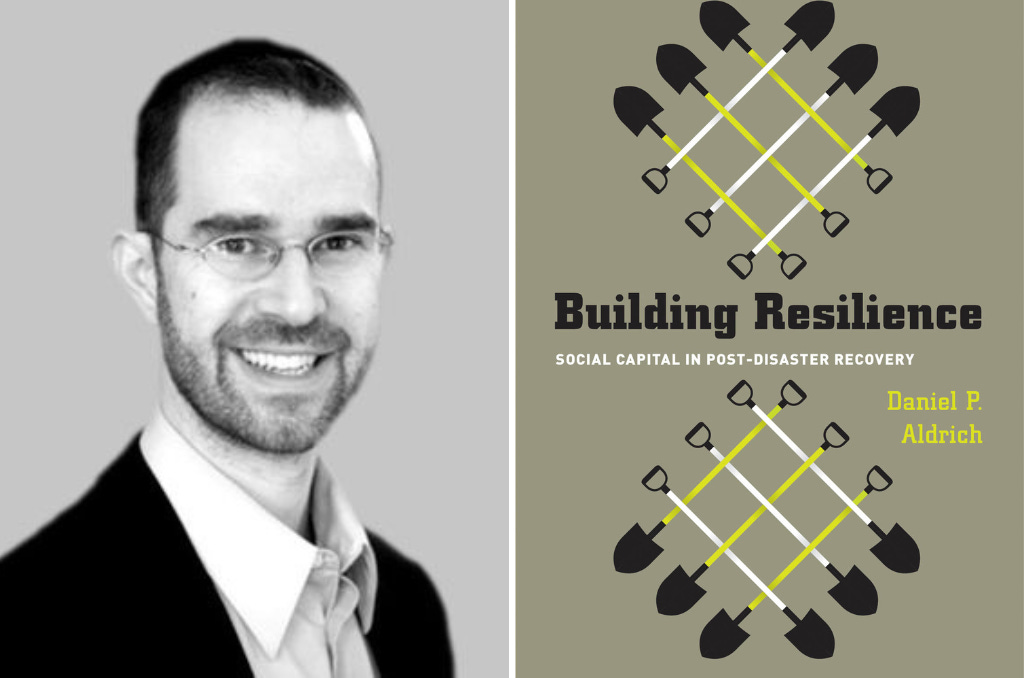
A conversation with Daniel Aldrich about his new book: Beyond Common Ground
By Richard Heinberg, originally published by Resilience.org
For decades our default answer to almost every threat has been what I call gray infrastructure: seawalls against floods, prisons against crime, hardened buildings against attack. The book argues that social infrastructure—meaning the physical and virtual places where relationships form and are maintained, such as parks, libraries, and radio programs—is often a more effective and far cheaper alternative.
My argument is that social infrastructure works as a kind of polysolution, one investment that pays off across climate, crime, health, and extremism at the same time, and that we keep treating it as a Cinderella service—underfunded and overlooked—when it should be central and distributed equitably.
The hopeful part is the part that has stayed constant since my own family fled Katrina. Unlike a fault line or a coastline, social ties can be built. We know how to strengthen them, and we know where the gaps are. The book is a love poem to the places that can both help knit our society back together and provide the launching pad for real transformative resilience.
No posts
Comments
Nothing yet. Say the first thing.
Sign in to join the conversation.