
By Sara Nelson
On March 31st, the Trump Administration announced a sweeping plan to relocate the headquarters of the US Forest Service (USFS) from Washington to Salt Lake City and close most of its research facilities and all of its regional offices. This has prompted alarms from many progressive commentators about the agency’s dismantling or even the privatization of its lands (prospects which are not in close range but can’t be discounted), while agency leadership has downplayed the impacts on staff and wildfire response and claimed the move will “strengthen local partnerships.” The details are still highly uncertain, but our past research on the USFS sheds light on how this move is likely to undermine forest resilience and the partnerships that could maintain it in the long term.
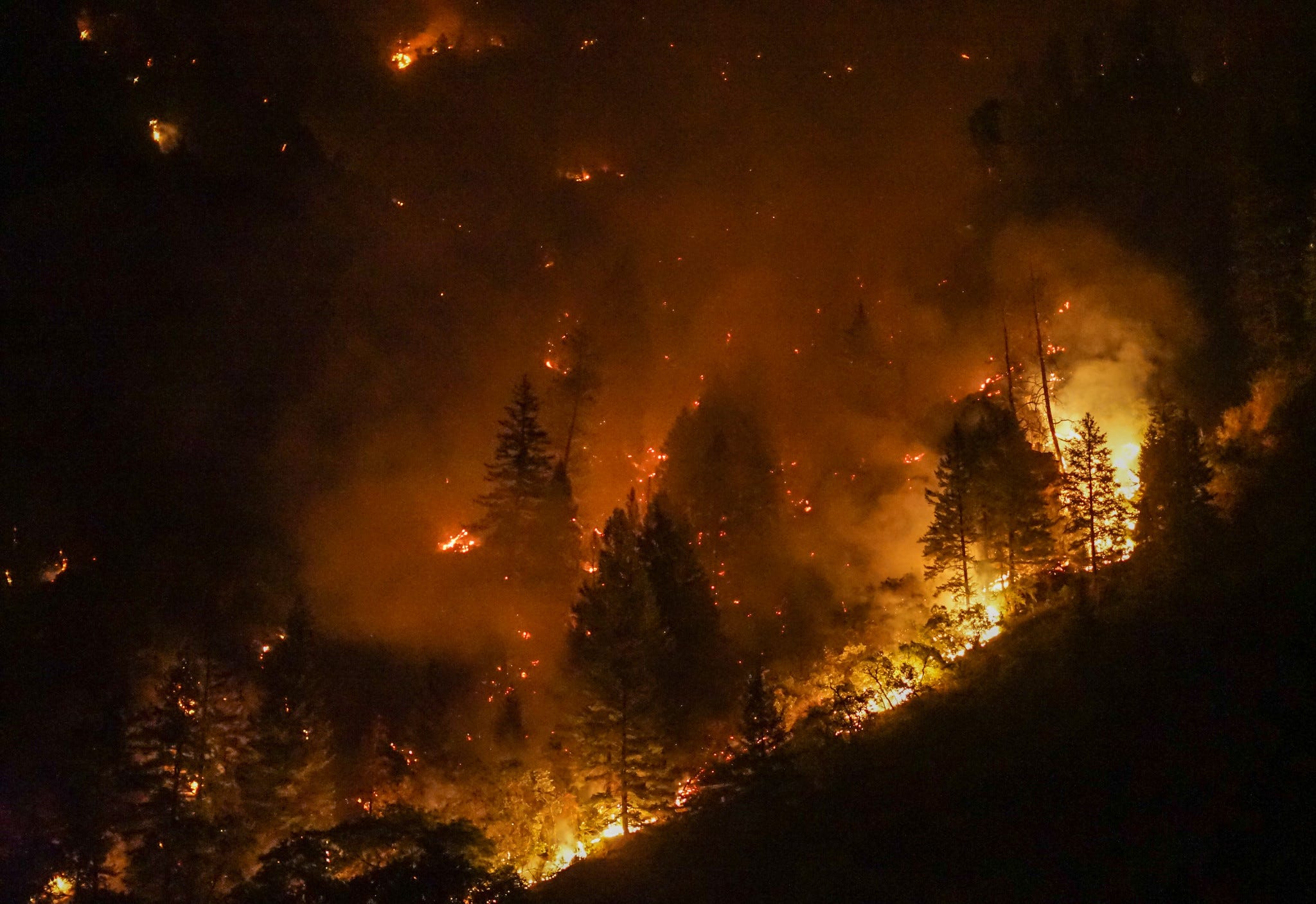
The reorganization follows a playbook to erode the administrative state.
This plan will eliminate the USFS’s regional structure, closing its nine remaining regional offices and creating 15 new state offices led by state directors. It will shutter 57 of USFS’s 77 research facilities across 31 states, consolidating them into a single facility in Colorado. Many have noted the similarity to the relocation of the Bureau of Land Management (BLM) headquarters from DC to Grand Junction, CO in 2019. Of the 328 positions that were officially relocated in that move, only 41 employees chose to relocate (many of those leadership positions were moved back to Washington by President Biden). The move increased vacancies by 169 percent while sidelining BLM from government decision-making and other federal agencies.
Union representatives for federal workers and others have noted that the USFS reorganization follows the same playbook. Moving key agencies out of Washington is a strategy spelled out in Project 2025, and in Trump’s campaign promises. The Forest Service reorganization was anticipated last year in plans to restructure the USDA, and on April 23rd of this year the agency announced similar plans to relocate the Food Safety and Inspection Service to Urbandale, Iowa. Defenders of public lands have also pointed out that the Utah location puts the agency in the “beating heart of the anti-public-lands movement in America.”
All of this comes on the heels of DOGE’s “Valentines Day Massacre” of at least 3,400 USFS employees in 2025. Despite successful legal challenges, thousands of vacancies remain due to DOGE firings, coerced resignations, and the steady decline in the agency’s workforce over decades.
The administration claims, as it did with the BLM relocation, that the Salt Lake City headquarters will put land managers closer to the (mainly) Western lands they manage and increase state partnerships. There’s a lot of talk of community, local responsiveness, and of course “common sense” in the agency’s communications. Agency spokespeople have argued that these changes will only impact about 500 employees. But the federal union representing many Forest Service workers estimates that up to 6,500 could be affected, and agency veterans as well as state leaders have questioned whether the move will support more local cooperation.
It may be that some reorganization is necessary to address some of the bureaucratic hurdles to Forest Service contracting and partnerships. But this specific set of changes comes in the context of the administration’s broader intentions to dramatically ramp up timber production while rolling back the safeguards that would ensure it does so responsibly.
In at least the medium term, the move will not only cause attrition but also hinder the agency’s effectiveness by creating upheaval at a time of record-low morale and an outlook on a difficult fire season. One anonymous USFS staffperson summed up the overall feeling in a conversation on The Smokey Wire:
“I also think what’s being lost in all the drama is that regardless of whether or not the ultimate structure we end up with is adequate or not, it’s throwing us even deeper into chaos, anxiety, confusion. We’re (sic) lost so much productivity, morale is worse than I’ve ever seen it… And simultaneously we’re being told to do more… about 6,000 of us received letters that we’re affected… I’m confident we’ll see many more people and institutional knowledge leave. It’s been extremely difficult to get work done and do anything efficiently for the last year and it’s only getting worse.”
Partnerships cannot make up for lost USFS capacity.
In 2022, we published a report examining workforce issues in forest and fire management in California’s central Sierra Nevada region. Based on survey data and 46 interviews with USFS employees, independent contractors, and local land management organizations, we showed why a robust and well-funded USFS is critical to supporting forests and communities that can withstand climate change.
Ironically, while the Trump administration argues that the reorganization will “strengthen local partnerships” that will offset staffing cuts, our research found that understaffing actually makes it more difficult for the agency to work effectively with partners.
Staffing trends in USFS point downward across decades, and a 2018 “budget modernization” process established the understaffed levels at that time as the new baseline—meaning current vacancy estimates understate the problem. One district ranger we interviewed estimated that his forest had around 40 vacancies at the time when that baseline was drawn. USFS staff we interviewed were consistently in roles that had historically been the job of two or three people. One resource specialist told us:
“The only consistent thing I’ve seen in this agency in my 19 years is that our workforce has continued to shrink. I think nothing else has been consistent with this agency, other than the shrinking, the slow and steady decline of the workforce.”
Under Trump, that workforce has declined a further 16 percent, by about 5900 employees.
While USFS staff were enthusiastic about partnerships, they also emphasized that partnership “does not reduce our workload. It actually increases it.” Organizations that routinely partner with USFS also told us that limited USFS capacity hindered or discouraged them from partnering with the agency. Staff in the kinds of positions we identified as key for these partnerships—including research, compliance, monitoring, and project management—are already receiving word that their positions will be impacted.
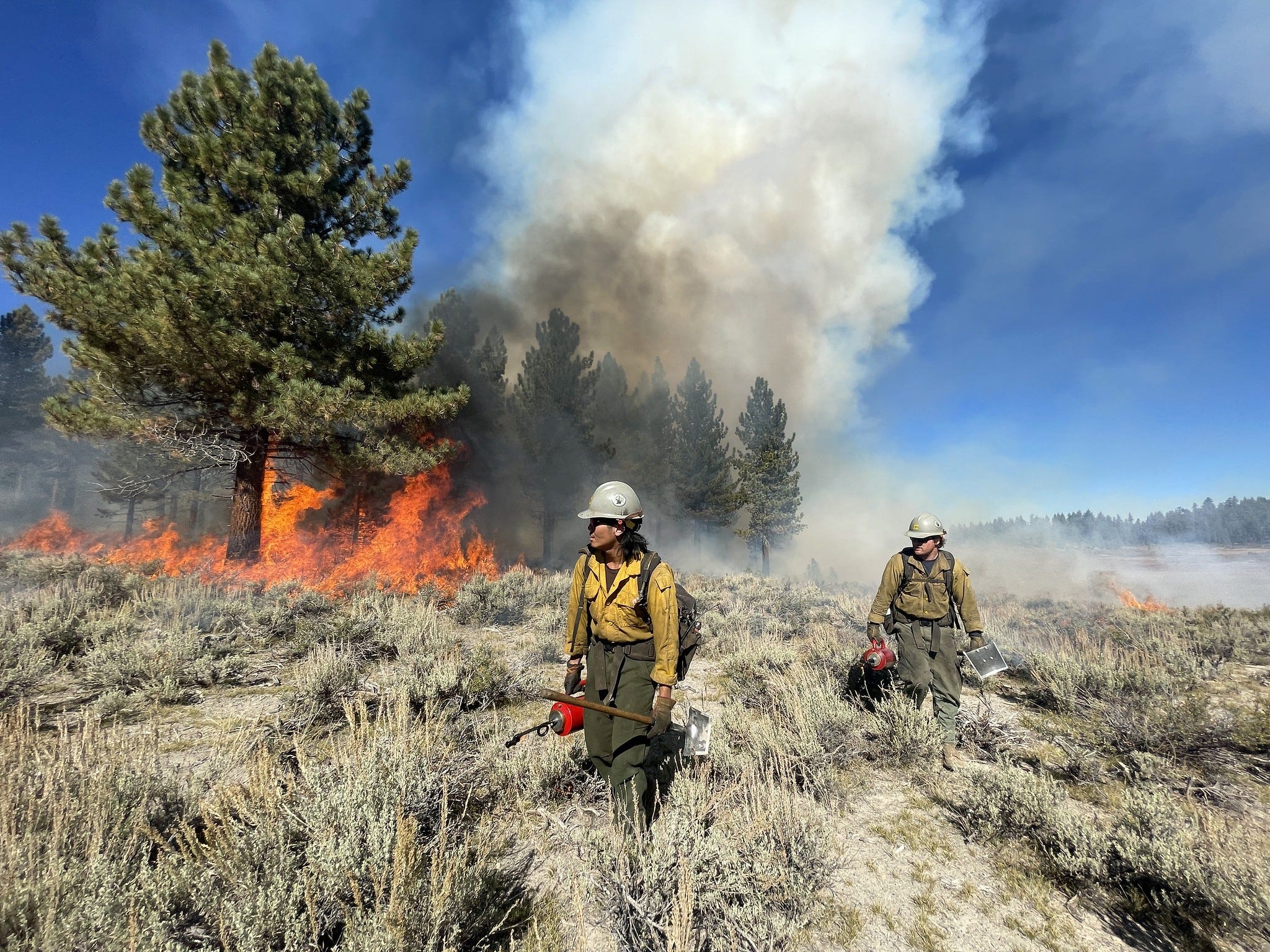
Forest restoration for wildfire resilience already lags far behind needs. The reorganization will likely make that worse.
Deputy Chief of Fire and Aviation Management Sarah Fisher and other agency spokespeople have tried to quell concerns about the impact of the reorganization on wildfire response, emphasizing that fire suppression work will not be impacted. But mitigating wildfire is more than just incident response. It also requires proactive land management and restoration.
There is now broad consensus among scientists and land managers that a century of wholesale fire suppression has been detrimental to forest health. Ecological restoration aims to address this by recreating more diverse forest structures and species mixes. But forest restoration work is costly, underfunded, stymied by barriers to prescribed burning, and continually loses out to funding and focus on fire suppression: in Sierra Nevada counties we evaluated, 79 percent of spending was on suppression costs. This work does not easily pay for itself, requiring public investment to kickstart viable local industries and accomplish work at an impactful landscape scale. Restoration already lagged far behind agency goals, and this has only gotten worse under Trump, with a 38 percent drop in hazardous fuels reduction on USFS land in 2025.
The loss of USFS research will set back our knowledge of climate change and how to respond to it.
One of the biggest blows to wildfire mitigation and climate adaptation, however, would be the loss of USFS’s research infrastructure. The agency maintains 84 research forests and employs hundreds of scientists across the country, who produce critical research on land management, wildfire, forest ecology, and climate change. The agency’s ability to maintain long-term research that is rooted in local needs and conditions makes it a critical part of the United States’s research infrastructure, especially with regard to climate impacts and adaptation.
USFS claims that “the closure of facilities on experimental forests will not affect the ability to conduct research at these locations,” and that affected teams will simply be relocated to new locations. But the union representing USFS employees estimates that 2700 workers at research facilities may be affected. USFS researchers have questioned the ability to retain data and research activities with the closures. Even more consequential, however, would be Trump’s 2027 budget proposal, which would eliminate all $309 million of the agency’s research and development budget and cut its non-fire staff by up to half of 2024 levels. These losses would be devastating for the local relationships the administration talks about supporting.
The closure of USFS research facilities, stripping of its budget, and widespread attrition of staff all threaten the long-term, if uneven, trend toward more ecologically-informed management that has been informed by the agency’s own research. Much like the United States’s forests, the agency now faces the cumulative impacts of bad management decisions designed to “get the cut out” with little regard for its diverse functions and overall resilience.
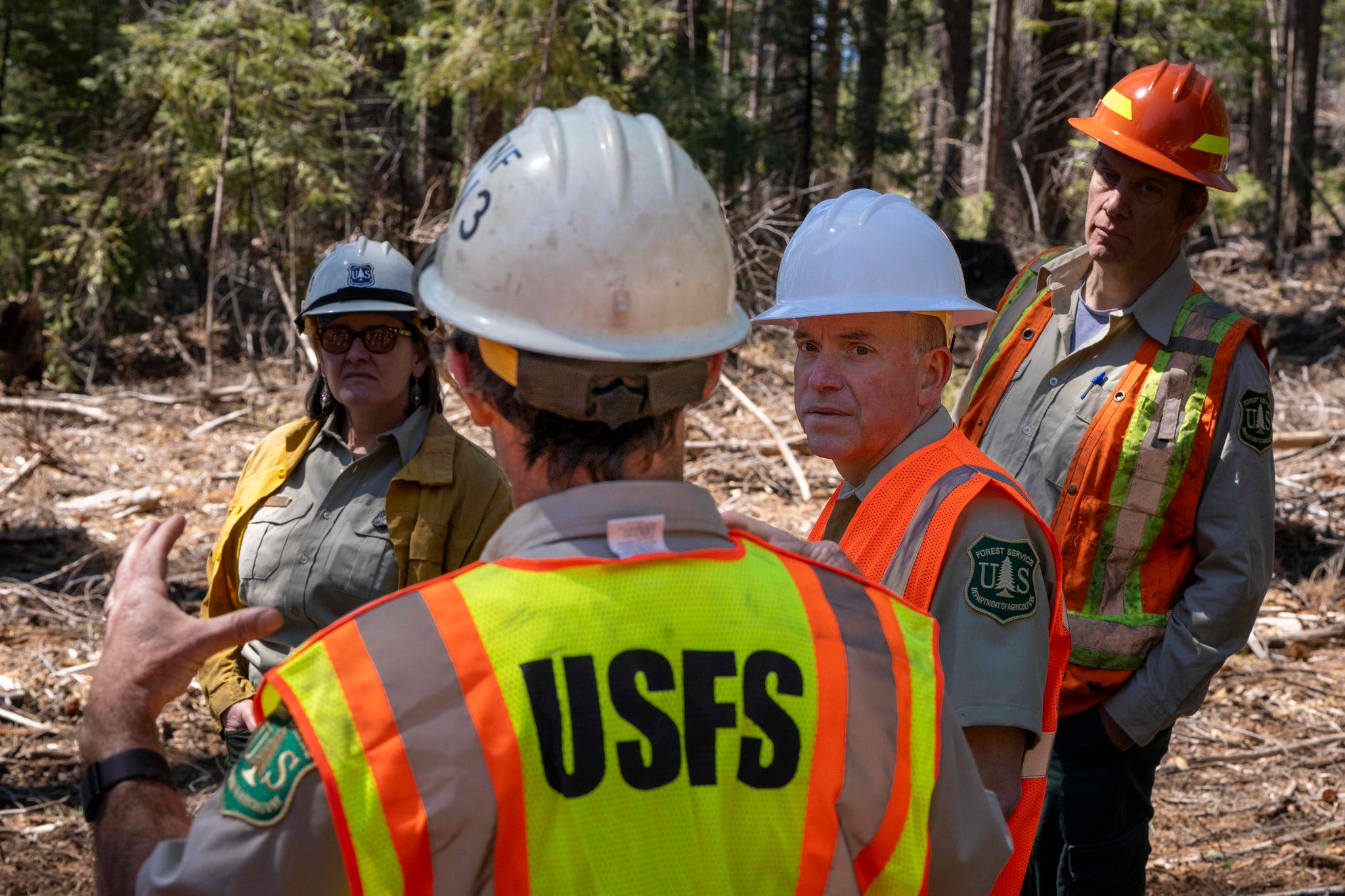
Investment in wood products industries could have social and environmental benefits. But these changes are unlikely to bring those benefits.
Timber production is not necessarily incompatible with forest resilience: it is part of USFS’s multiple-use mandate alongside recreation, watershed health, fish and wildlife, among other uses, and timber sales help to finance ecological restoration work. Evidence shows that for some fire-adapted Western forest types, strategic, ecologically sound logging of smaller-diameter trees will increase wildfire resilience. Our research in the Sierra Nevada called for a suite of policy supports and public investment, including in key USFS staff, to support local utilization of small-diameter and non-timber biomass to create new local forest industries.
But this is not the scale of logging that President Trump or Forest Service Chief Tom Schultz, a former logging industry executive, have sought to promote. The administration’s timber targets incentivize the removal of larger, more lucrative trees—the ones that are also most ecologically valuable. This kind of intensive logging contributes to wildfire risk by making forests more homogenous and less healthy (despite Trump’s misleading claims). Its emergency declaration also sidesteps environmental review of timber removal on over 112 million acres. Together with the loss of research capacity, staff, and regulatory rollback, the changes underway would backpedal on decades of progress toward more ecological forest management. Malcolm North, a USFS Research Ecologist who wrote the book informing USFS’s ecological management practices, told Stanford’s Peninsula Press that on hearing the administration’s 2025 Executive Order on timber production, “I felt like I was back in the 1970s… It was like, let’s get the cut out, we need to get rid of these decadent old trees and grow some stuff that grows faster.”
A better Forest Service is possible.
Our research showed how a locally responsive and effective USFS can help create a mutually reinforcing system in which restoration generates local economic benefits, strengthens workforce capacity, and expands the pace and scale of future restoration. But this reorganization will not bring the kinds of local partnerships that would support that vision. Strengthening the local embeddedness of the agency would involve investing in positions at the district and forest level—the direct interface with communities—and the creation of new roles in project management and oversight for large partnerships; Tribal Liaisons; and planning, permitting, compliance, and monitoring. It would require reestablishing research infrastructure and, more difficult, rebuilding local trust and relationships with communities. Outreach to community colleges and organizations working with formerly incarcerated firefighters could build new pathways into the agency’s workforce. All of this depends on increased federal appropriations and strategic staffing choices—demands that will not be met by current leadership, but which could be the basis for unlikely alliances across political divides in the rural communities that stand to lose the most from the agency’s restructuring.
Comments
Nothing yet. Say the first thing.
Sign in to join the conversation.