
The two week conference and the mountain of commentary about it provides us with lots of opportunities to question knee-jerk or intuitive reactions - our own or those of others - when engaging in climate debates. Let’s start with one we’ve already included in our World News Cards…
This must be an unmitigated bad thing right? That’s certainly how we initially read it, and is why one of our cards highlights that, “at COP 26 in Glasgow, there were 503 oil & gas lobbyists - more delegates than any single country.”
But during the most recent conference, one of our favourite platforms, We Don’t Have Time, made us think twice with graphics like this one:
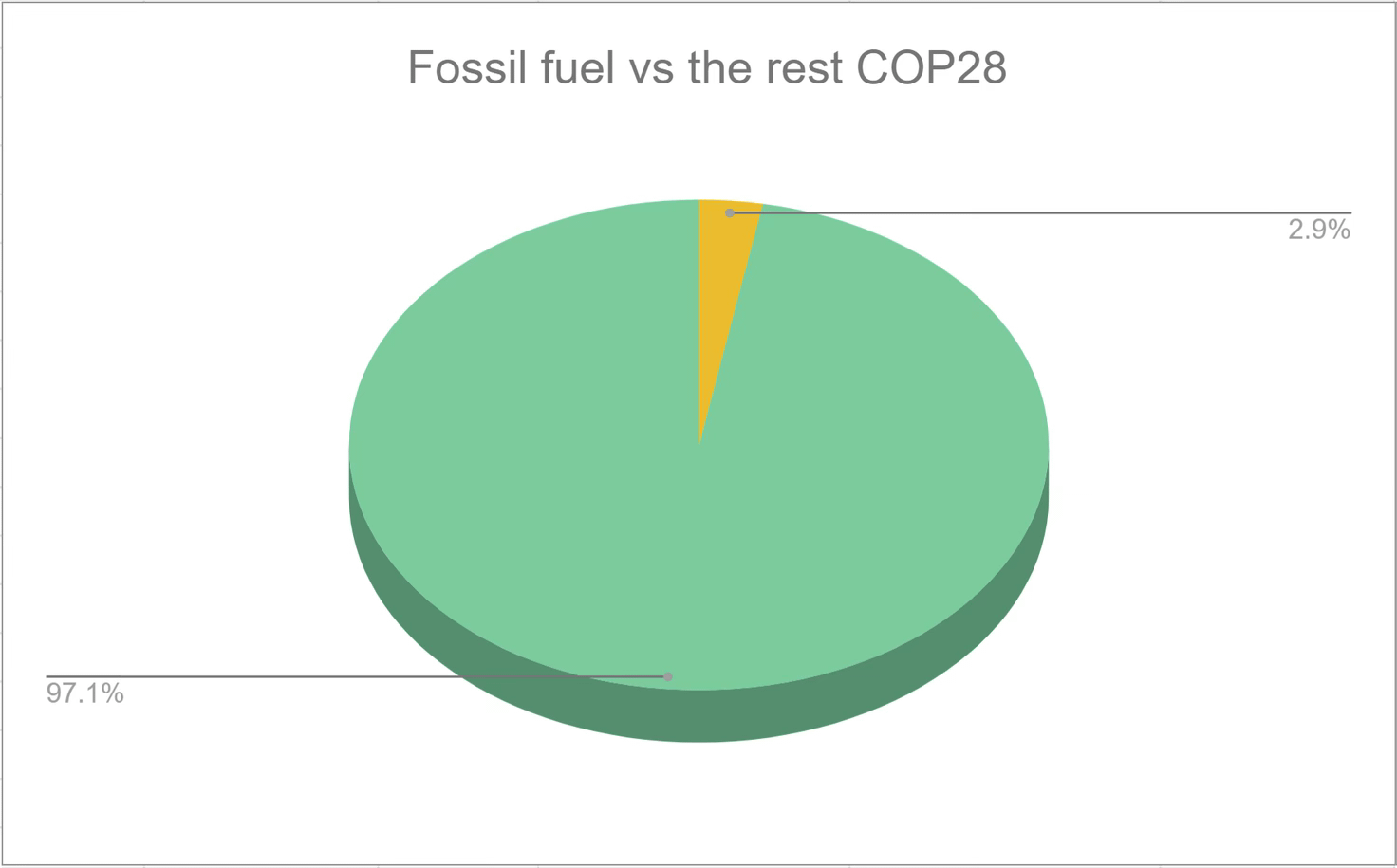
Now, of course, there are lots of things this graph doesn’t address. How big is that share relative to other interest groups or members? Might it be more important to ask how much money that segment can wield, and their connections to key decision makers or ability to exert veto influence? Another key question is about who counts as a fossil fuel lobbyist. To get insight into those questions, check out this report from Global Witness, which very effectively demonstrates why even this small percentage of representation is problematic.
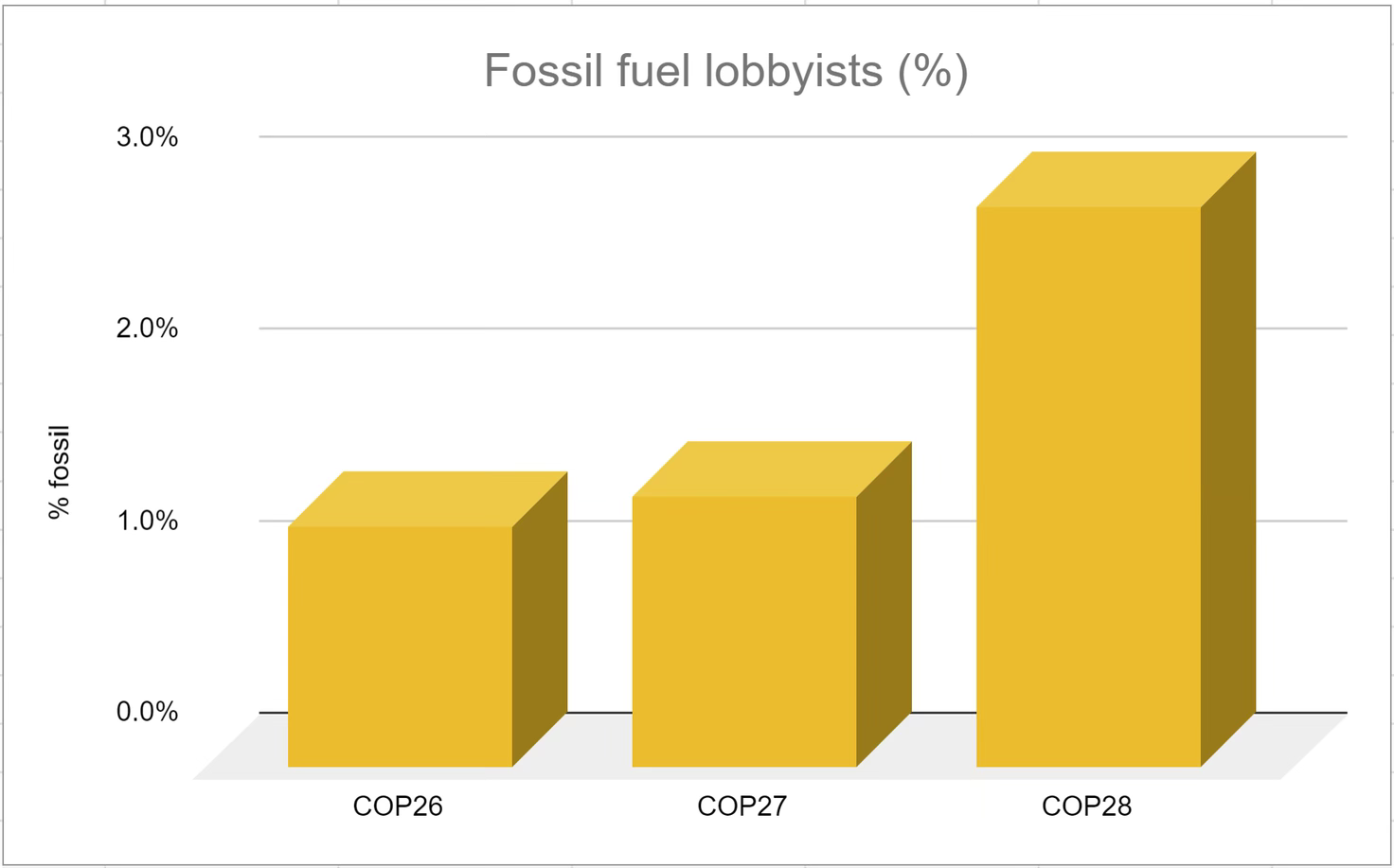
The article these graphs comes from suggests that it’s important to have a diverse representation from the sector present, in order to be able to understand and negotiate with them. And indeed, any durable climate solution will have to work with the fossil fuel industry, so we should expect them to be represented at each session of the world’s most important climate conference. Are they throwing more resources into influencing the discussion because they sense a genuine turning of the tide, which could give us cause for optimism? How should we limit their numbers to be enough, but not too much? Answers on a postcard…
This was an even bigger one than the lobbyists’ presence. Anyone who heard anything about COP 28 must have noticed the howls of outrage that the UAE, a petrostate, should be hosting an event which, for many people, should aim to permanently end fossil fuel production. The president of COP is Sultan al-Jaber, the UAE’s Minster of Industry and CEO of the state oil company, and he recently announced plans to double their output by 2027 - crazy, corrupt, cynical…right?
"It is the equivalent of appointing the CEO of a cigarette company to oversee a conference on cancer cures."
Zeina Khalil Hajj, head of global campaigning for 350.org
But here’s something that didn’t make the headlines, and I certainly never read until doing a deep dive for this article: he’s the founding CEO of the state clean energy and sustainable development company, Masdar, which is undeniably investing big money in solar and wind power, and is taking big risks with the creation of projects such as Masdar City (which is not without its critics).
At this point, two infamous quotes come to mind:
“It's probably better to have him inside the tent pissing out, than outside the tent pissing in.”
President Lyndon Johnson about FBI Director J. Edgar Hoover.
…and…
“He may be a son of a bitch, but he’s our son of a bitch.”
Most famously said by FDR, about both/either Somoza or Franco, of prior origin.
The point being, you need guys like this at the table if you’re going to strike a serious, binding deal. And one of the amazing things about these COP statements and resolutions is that they have to have 100% agreement. Almost every single country in the world must ratify and approve every element of the text (198 members consisting of 197 countries plus the EU - to the best of our research, although North Korea attended they are not UNFCCC signatories and, in this event, not Iran who left in protest at Israel’s behaviour in Gaza). That’s pretty impressive! So is it any surprise that the text doesn’t satisfy everyone? That’s how you know you’ve had a successful negotiation - if nobody is truly happy but they’re willing to shake on it.
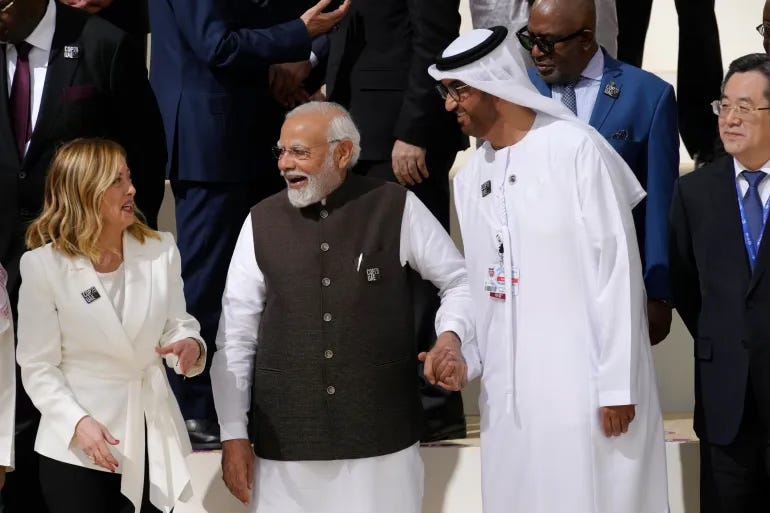
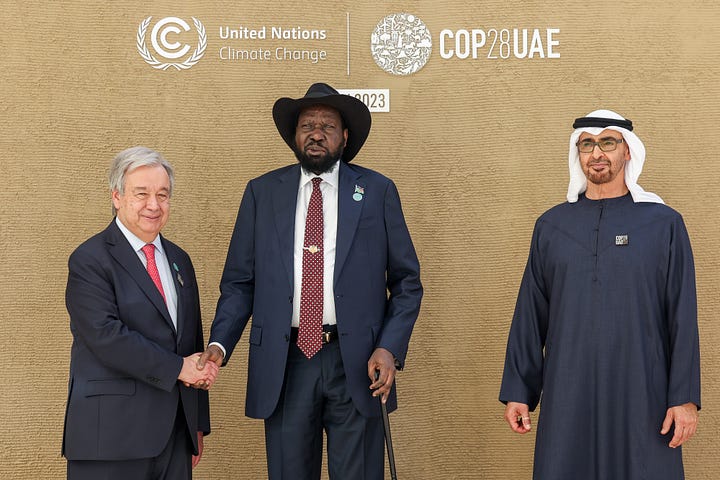
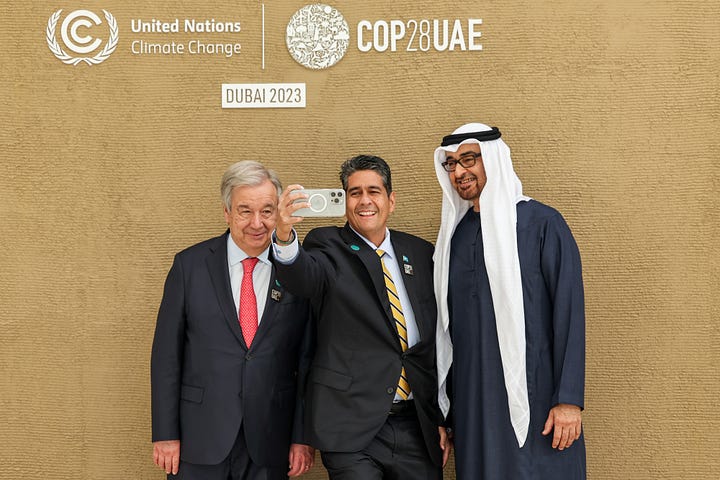
Whatever your feelings about these four jokers (leaders of Italy, India and China with the aforementioned Sultan al-Jaber), these conferences always create opportunities for some funny/scary/amazing photos. Here’s just a few from the UN’s official Flickr account.
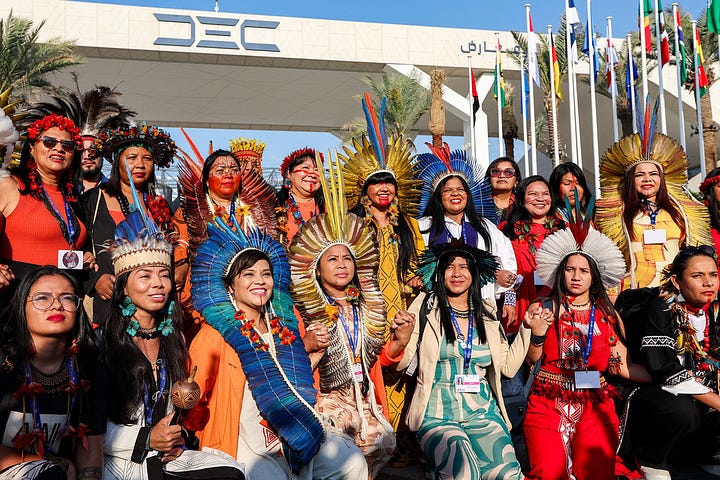

Now this was a particularly shocking and dirty secret that got exposed in the days before the conference, and one which we intend to honour with a card in the game. The ODSP revealed that Saudi Arabia was actively seeking to get developing countries ‘hooked’ onto fossil fuel infrastructure, in order to ensure demand for their primary export for decades to come. This is directly contrary to the trajectory which pretty much everyone agrees is necessary - that developing countries should leapfrog the development model of the West, who built their economies around polluting, extractive, linear industries. Instead what is needed is for them to meet their rapidly growing energy demands through decentralised grids of renewable energy and circular material flows which don’t bring them to similar levels of CO2 per capita as we have in the West.
Here’s one neat summary of the situation which you can read more about here (emphasis added):
Mohamed Adow, the director of the think tank Power Shift Africa, said: “The Saudi government is like a drug dealer trying to get Africa hooked on its harmful product.
The rest of the world is weaning itself off dirty and polluting fossil fuels and Saudi Arabia is getting desperate for more customers and is turning its sights on Africa. It’s repulsive.
Africa cannot catch up with the rest of the world by trudging along in the footsteps of the polluting nations. It would mean we miss out on the benefits of modern energy solutions that Africa can take advantage of due to its massive renewable energy potential. We have the latecomer advantage, which means we can leapfrog to a genuine energy transition.”
You’ve probably heard this as one of the big headlines by now, but it’s worth restating. In all 27 previous years, the main source of climate change, the primary problem ie. fossil fuels, wasn’t even mentioned in the main text! So, you can rightly throw up your hands in despair and say we are doomed…
But you can also celebrate the fact that the era of ostrich-head-in-sanding is now over! Here’s a quote from an excellent article out of the LSE that sums up this double edged sword (emphasis added):
Historic but inadequate sums up the results of the COP28 climate summit hosted in the United Arab Emirates (UAE). The UAE Consensus that was finally agreed by governments certainly contains a number of important climate firsts:
- the first endowment of the new Loss and Damage Fund,
- the first ever goal for renewables and energy efficiency,
- the first mention of transitioning away from fossil fuels and
- the first just transition work programme, cutting across all climate activities.These are neither sufficient to keep the goal of holding global warming to 1.5°C alive or to protect those increasingly harmed by climate impacts, notably in the Global South. But what these milestones do signal is where governments and citizens, business and finance now need to focus their efforts to go beyond the consensus and deliver the leadership that the climate crisis demands: leadership that has justice at its heart.
We always wanted the game to reflect the realities of our crazy contemporary world, and to enable people to explore key dynamics in the climate crisis in a safe, fictionalised space that promotes creativity and novel thinking. It was James who first proposed that the two end states of the game should be either climate catastrophe or the banning of all fossil fuels. And I admit I found the latter outcome hard to imagine actually happening. But this COP text clearly points in that direction. It’s actually a realistic world to imagine: one in which it’s impossible (for most people or businesses) to power or heat anything using fossil fuels.
Now, there are lots of caveats. For many decades to come, we will probably continue to use fossil fuels to make plastics, glues, explosives or, very significantly, create nitrogen fertiliser through the Haber-Bosch process. <3% of GHG emissions come from this process, which enables the majority of global agriculture to function, albeit in a highly unsustainable way! (Haber-Bosch, its history, its alternatives and contemporary challenges linked to it (eg. Dutch farmers’ revolt) deserves a whole article to itself. Just see for example this report from the Royal Society.)
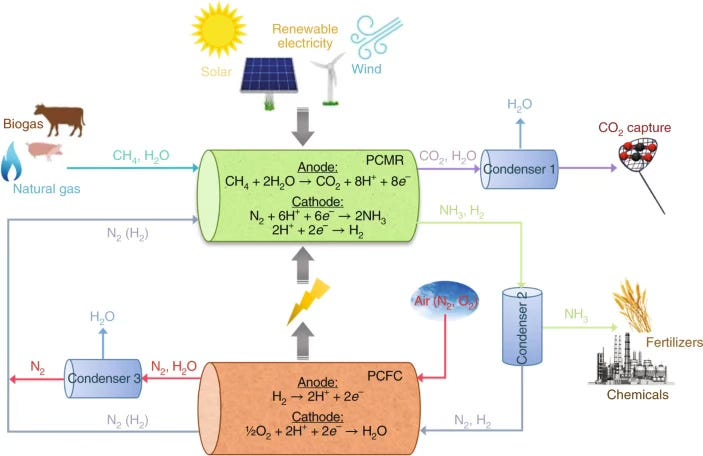
As the Dutch, and now German farmers revolt demonstrate, climate policies have to walk a tightrope between climate chaos and socio-cultural chaos. The transition away from fossil fuels cannot come at the expense of people’s livelihoods…well, that’s rather simplistic…the journey to a just and sustainable global economy is along a precipitously high tightrope; so it’s a balancing act of the highest order to avoid swinging too far one way, harming huge swathes of a population in the short term, and then finding no support for green policies in the ballot box, which in fact results in less long term action. This is one of the many reasons why our ambitions here are limited to making a game, and not being politicians!
As always, we have tried to provide comprehensive links to all sources in this article. In addition to those, we can recommend the following eight articles, which we simply didn’t have space to analyse and unpack beyond providing some key quotes:
This is the triple inequality that defines the climate global equation: the disparity in responsibility for producing the problem; the disparity in experiencing the impacts of the climate crisis; and the disparity in the available resources for mitigation and adaptation.
Food systems – what we eat; how we grow, ship and cook it; and how we dispose of (and sometimes waste) it – are responsible for roughly a third of global greenhouse gas emissions. But for the better part of three decades, the final agreements that emerge from the UN’s yearly climate summits have left out the impact food systems have on our climate.
Good Cop, bad Cop: what the Cop28 agreement says and what it means
COP28 Agreement Signals “Beginning of the End” of the Fossil Fuel Era
…indigenous peoples only received 2.1% of the 2022 funding from a pledge made at COP26 to deliver $1.7bn in financing to support indigenous tenure rights and nature protection efforts.
The GST also kicks the door wide open for expensive, niche and largely ineffective abatement technologies such as carbon capture and storage, blue hydrogen, carbon markets and geoengineering with negligible safeguards, and which will probably lead to further land grabs, water scarcity and deadly pollution for mostly Indigenous and other communities of colour.
Think we’ve left out important points or totally missed the point? Don’t keep it to yourself!
Thank you for reading our work. There will be more news about the game coming soon. We’re still building our mailing list so really appreciate you spreading the word.
Comments
Nothing yet. Say the first thing.
Sign in to join the conversation.