
Its been a scorching week here with temperatures way above what is usual for this time of year. It has really curtailed what I had planned to do in the garden.
Kew Gardens recorded the highest ever May temperature of 35.1 °C (95.2 °F), while a record of 32.9 °C (91.2 °F) for Wales was recorded in Bute Park. Its dropped back a bit now but we really need some rain – my garden has had virtually nothing for the last three months.
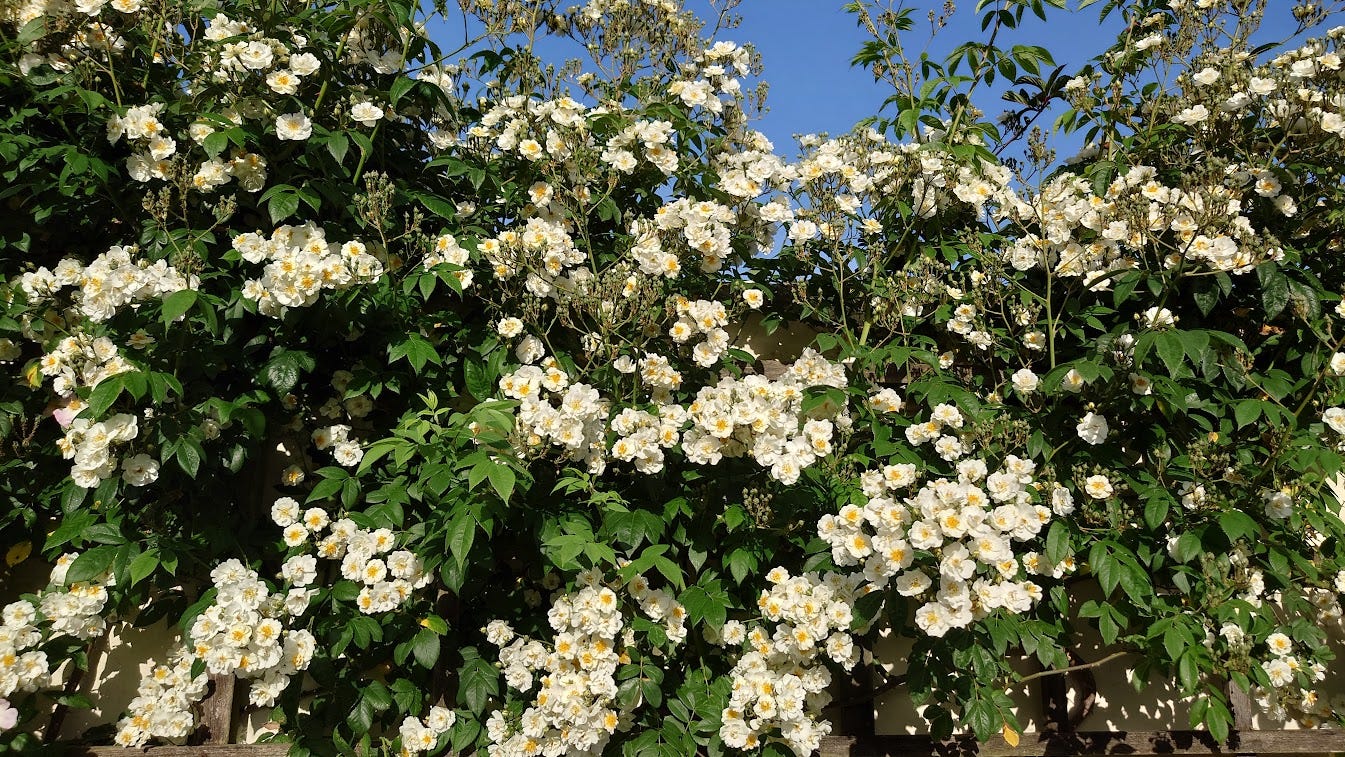
When temperatures exceed 30C in the shade, I get worried about wildlife. Like many, I have been putting out water for animals, but clearly there will be consequences for them.
In recent years, there has been a flurry of research into bees and the changes to their foraging behaviour during drought. When the weather is hot and dry, flowers produce less nectar, they don’t last as long and there is less pollen. There may be fewer flowers too, all of which means there is less food for pollinators. When there is less nectar around, there can be intense competition between the bees and they spend much longer foraging, using up more energy. Research just published by a team at Department of Animal Ecology and Tropical Biology at Julius-Maximilians-Universität Würzburg found that drought severely impacted on the reproductive success and survival of the common carder bumblebee (Bombus pascuorum), with fewer queens produced to overwinter and start new colonies the following year.
I hope the heatwave was short enough not to have too many long term consequences.

Apologies for the late running of this post which is due to a last minute addition of content - Jo Thompson made a fascinating observation regarding one of her roses and that lead me down a rabbit hole……
Jo Thompson mentioned in her Saturday post that she had noticed that her rose, Munstead wood, was changing colour: ‘magenta going into almost scarlety-blue’ and wondered if this was a response to climate change. This got me thinking as I had recently read a paper on how plants can tweak the pigments in their flowers so they absorb less heat. This is a protective mechanism to protect the pollen from being damaged by high temperatures.
So would a shift in the colour of the petals have a knock on effect on pollinators? Bees don’t thrive in high temperatures, so if the flower was cooler, would this help them?
I am sure plants must be reacting to warmer summer, droughts and heat waves in ways that we don’t understand, so a gentle shift in their floral colour could help them become more resilient to high temperatures.
I have been listening to the high pitched squeaks of a batch of blue tit chicks all week. Their parents have built their nest accessed via a tiny crack in the wall and I hear them every time I pass by, and I often sit and watch their incredibly busy parents fly back and forth.
Blue tit chicks eat a lot of caterpillars. In fact, it’s estimated that they each need around 100 caterpillars a day, so a large brood needs hundreds of caterpillars a day. Songbirds, like the blue tit, time their egg hatch to coincide with the opening of oak tree leaves because there will be an abundance of winter moth caterpillars feeding on the young, tannin-free leaves.
But timing it critical. Some years there may be a mismatch, with leaves opening early (as this year) or very late as happened in 2021 when we experienced the coldest ever May. That year, brood success was low. If there is no nearby tree with an abundant larval supply, the parents have to spend more time on the wing looking for alternative food sources and that means a poorer success rate.
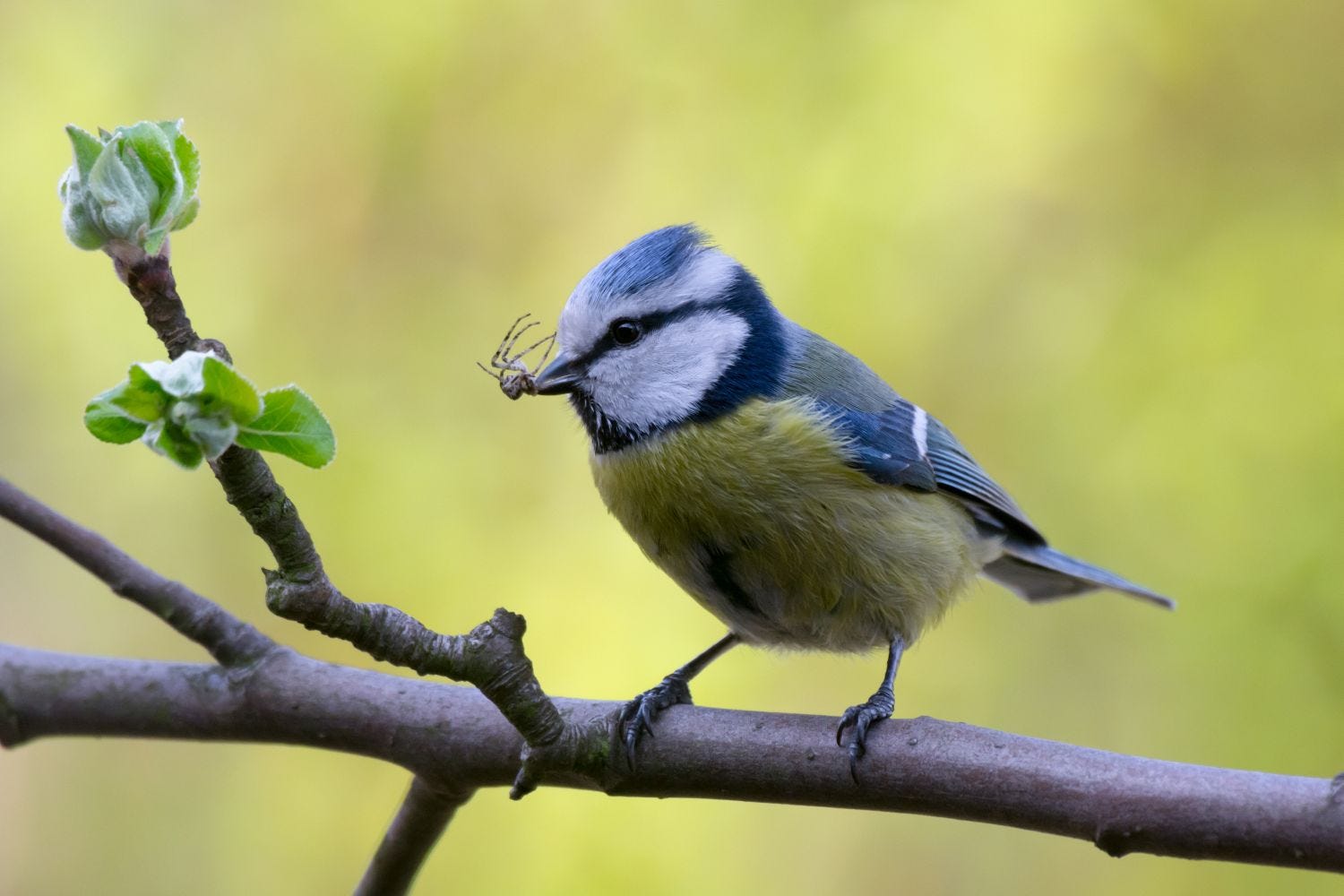
But another interesting element of chick development is the need for spiders in the diet. We know spiders are valuable in our gardens, especially for keeping pests in check, but did you know chicks need spiders in their diet too?
When blue tit chicks are around 5 days old, their parents feed them loads of spiders. For ages researchers wondered why the parents went to all the bother to find spiders when caterpillars were so much more abundant and easier to find. The answer – spiders are rich in taurine and this amino acid is essential for the development of their visual acuity and intelligence. Almost 20 years ago, researcher Kathyrn Arnold, an ornithologist at the University of Glasgow, compared the intelligence and courage of the taurine-supplemented blue tit fledglings to those that lacked the supplements. She found that the addition of taurine to the diet resulted in chicks that were braver and showed more intelligence at the point of fledging!
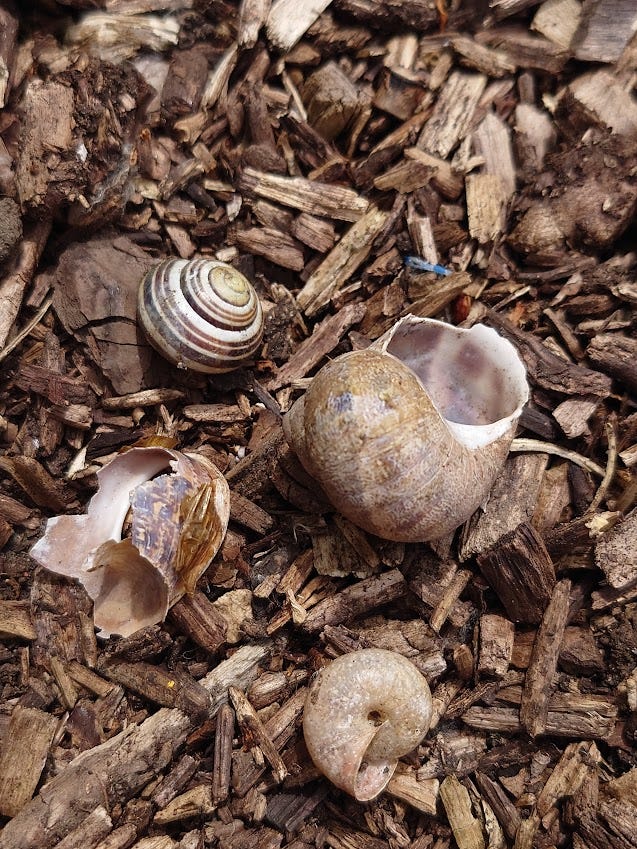
Female birds also look for calcium sources, which they need when egg laying. It can be beneficial to provide a source of crushed egg shell, but their favourite is snail shells. The best thing you can do is leave out any snail shells you find while gardening and the birds will come down and peck it them. There’s no need to crush them, just leave them out on the path.
As many as 100 species of spider have been found in UK gardens, from the common garden, ground, orb web and wolf spiders, to laceweb, money, and zebra spiders.
There are lots of things we can do to encourage more spiders into our gardens.
Spiders love to hide amongst fallen leaves., so one of the most important things to do in autumn is to leave those leaves - don’t use a leaf blower and don’t pile them up and burn them as I know some people do. Just brush them off the paths on the the flower or veg beds.
Don’t be too tidy, Have piles of leaves, twigs and logs so there are plenty of places for spiders to hide.
Leave old hollow stems and seed heads to stand for as long as possible as many spiders love to spin their webs around them.
A pile of rocks, stones or bricks will create perfect spider hiding spots.
And don’t forget that the web spinners need places to spin their webs, so make sure you have some trees and shrubs.
Ground cover is great as it helps spiders move around without being spotting, so don’t pull up all the ivy spreading over the ground – it’s a valuable habitats for many ground loving invertebrates.
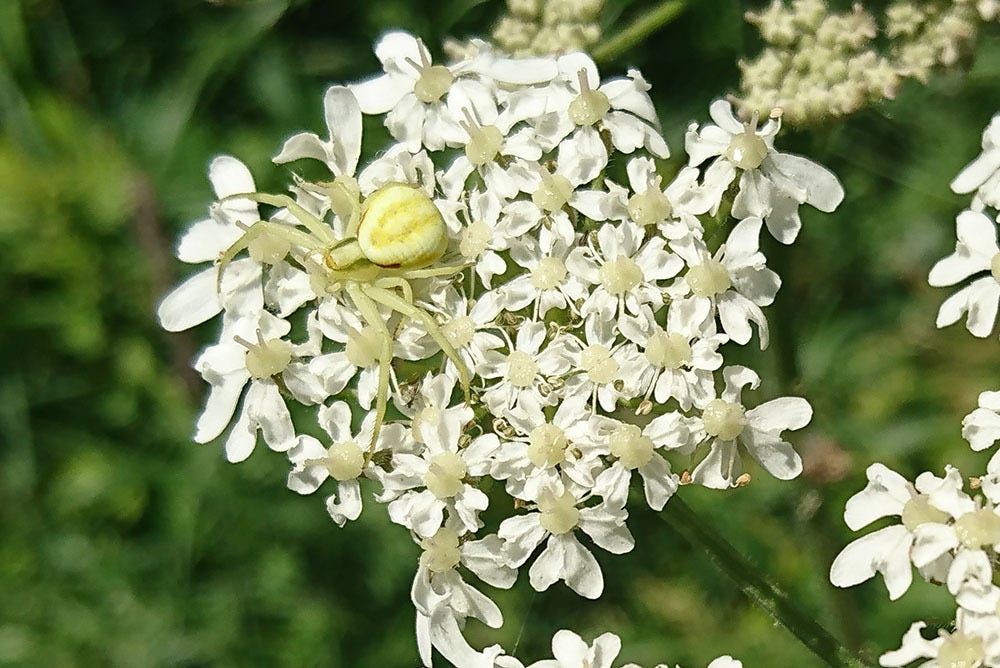
And don;t forget spiders need food too. They love the flowers you plant to attract the pollinators as they can lie in wait for an unsuspecting insect – just like my favourite the crab spider!
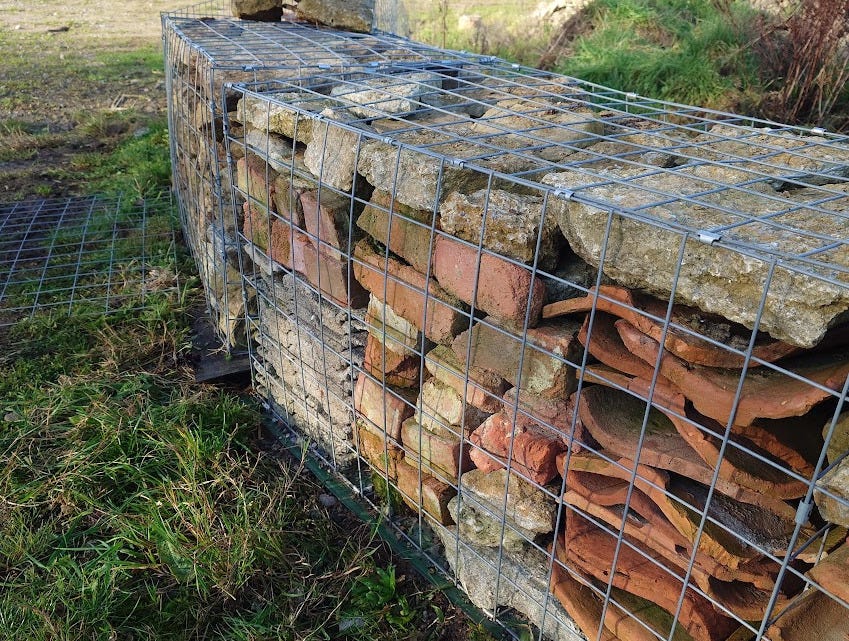
Do you have any other spider-friendly ideas for the garden?
A good place to learn more about the different types of spider in your garden is the British Arachnological Society where you can finds out more about our commonest as well as rarest UK spiders. www.britishspiders.org.uk

PS If you enjoyed reading this post, please click the ‘like’ button at the bottom, it really helps make my posts more visible on the SubStack app. Thank you xxx
These are mostly garden clubs and they usually welcome guests
7 June St Peter’s Hospice Open Gardens, Brentry, Bristol. I am speaking at this event which is run to raise money for the hospice. If you live in or near Bristol so come along. There are several speakers including Jean Vernon who is talking about bees. More info here
16 July Trull Garden Club near Taunton The Kitchen Garden
28 July Melksham The Climate Change Garden
1 August and 6 September My walled garden is open for NGS
5 August South Bristol Garden Club
Comments
Nothing yet. Say the first thing.
Sign in to join the conversation.