
Cover Photo - Humans and Artificials
Welcome to Issue #56 of The Classroom Astronomer!
- Biting the AI BulletAI in Astronomy Communication (at the CAP Conference in Armenia)
- AI Uses in Science Communication
- AI Ethics in Citizen Science
- The Role of Humans in AI
- AI in Storytelling
- Conclusions?Cosmic Connections -
- Alphabetical Astronomy for the Public
- Astro Music to Start a Class for Non-Majors
Dear TCA Readers,
It took me quite a while to digest this topic. I’ll be honest. I am no fan of the tidal wave of interest in putting Artificial Intelligence (a.k.a. AI) in just about anything. I personally have a low opinion of the people behind AI; in fact, to me, AI means Artificial Idiocy. I can see uses for AI but the drive to make AI rule the world sickens me. So it took me considerable time to work into this topic.
I like AI in Google Search. Yes, I can see value in AI graphics programs, seeing that I am generally horrible at anything more than line-art. I do NOT like AI in content creation, as in stories or textual works or even that aforementioned artwork, nor do I like it in making judgement calls. For the first, the content is created by using other persons writings (or artwork) as a base and that to me is no different than student plagiarism or copyright violation. The latter is making ethical decisions because the algorithm says so and we’ve had enough hard-assed-ness in history—-and today— [“It’s not my decision it is protocol. Just following orders.”] than we ever needed.
So I bit the bullet and attended a bunch of sessions at the CAP (Communicating Astronomy to the Public) meeting recently and attempted to understand how other people see AI in astronomy communication and education. In some cases, I heartily agreed with their conclusions. In others I cringed.
In this issue I am summarizing relevant talks and iposters and assessing them against my own standards.
Enjoy! Feel free to comment back to me directly or on Facebook or in Substack’s Notes.
Dr. Lawrence Krumenaker, Publisher
Email: newsletter@classroomastronomer.com
Website: Classroomastronomer.com
AI Uses in Science Communication
What is AI used for in Science Communication? Hong Kong’s Exodus Chun-Long Sit gave an overall view of how he uses AI to communicate popular astronomy topics. The tools he used fall into several functions.
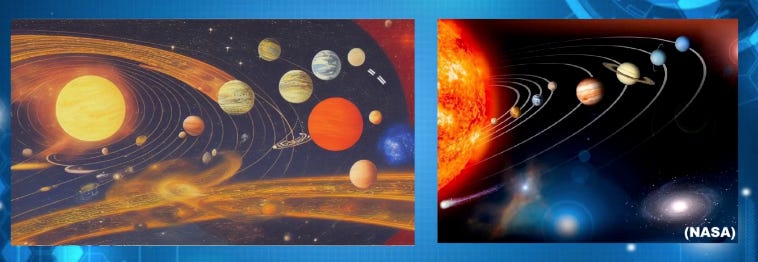
Visualization of AI-generated Images via Prompt Engineering. This is basically using AI to generate realistic images a la NASA’s artists. An interesting twist is to use erroneous facts to make visuals and then compare them to NASA-made ones on the same topics, such as telescopes, the Milky Way or the Solar System. He also uses it simply to make interesting artwork to get attention, such as for poster announcements.
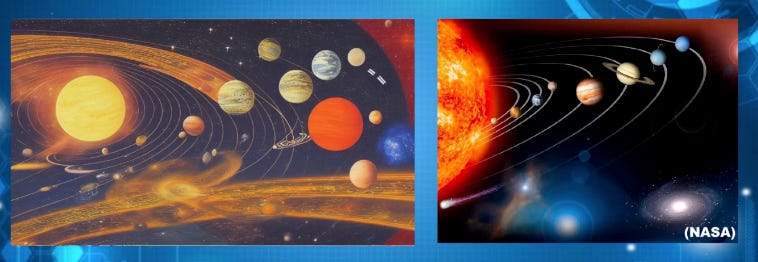
Prompt Engineering is learning how to make better prompts into the AI software to get more accurate results. An example he gave was on asking about the number of planets, with a bad prompt and a good one. This assists students with self-learning.
Supervised Learning for Enhanced Image Classification and Object Detection. Basically this is not using AI as a teaching method for students but using students to teach AI. This is a machine language method of Citizen Science programs such as Zooniverse.
AI-assisted Programming and Astrophotography. Sit uses AI to adjust exposures, shadows, de-hazing photos, adjusting colors.
AI Ethics in Citizen Science
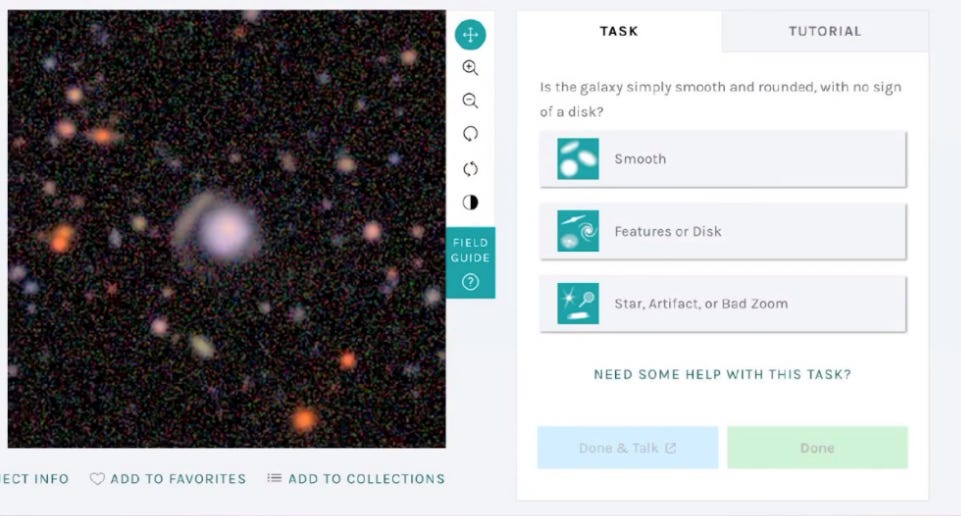
Speaking of Zooniverse, Laura Trouille of Adler Planetarium, Chicago, and a Zooniverse principal investigator, pointed out that the Big Data deluge of information has gotten beyond even what the normal CitSci projects can work with using human volunteers.
Zooniverse has dozens of projects — astronomical and in other sciences — in which volunteers look over …something… and with a few prompts or choices identify and classify some objects. For example, in ‘GalaxyZoo’, volunteers look over photos of galaxies and classify it with a few choices.
In the project ‘Planet 4’, surface features on Mars are classified by shape.
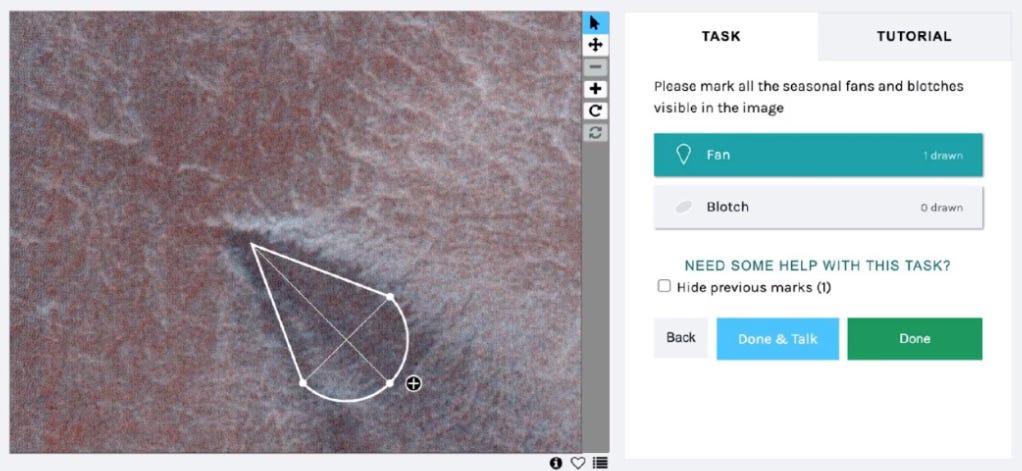
But in some projects there are just too many things to look at. But here the volunteers do the work along with AI programming and teach the AI software how to do their work on the bulk of the dataset.
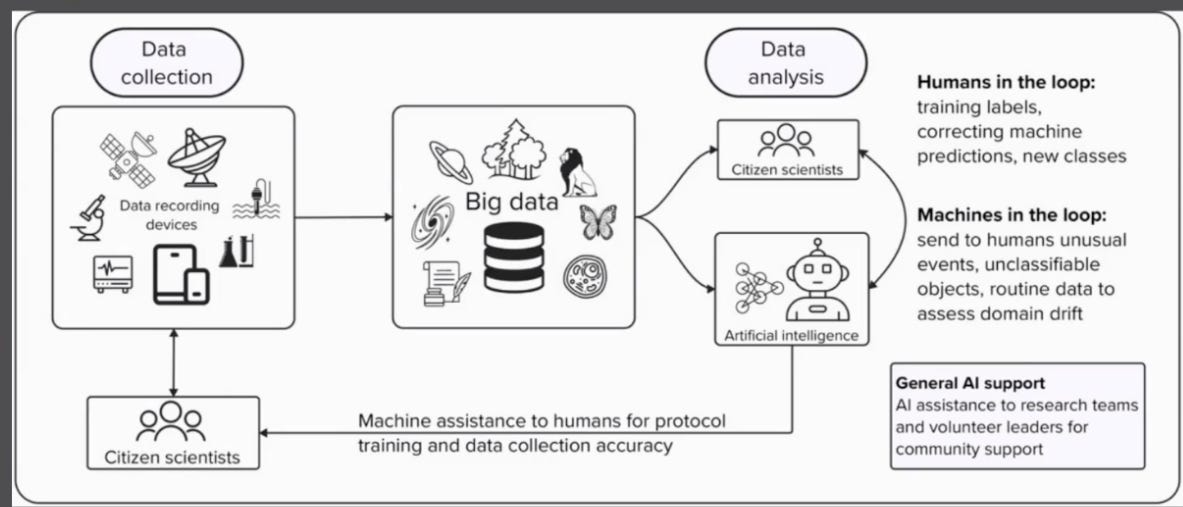
The Role of Humans in AI
Plenary presenter Pamela Gay went through the history—decades of it—of technology and how it grew and improved over time. Until AI gets into the picture. Following increased use of computer programming from the primitive Apple computers and Apollo spacecraft computers up to now when modern computers have the textual knowledge…of a four-year-old.
‘But a child’s data is visual, continuous, noisy and tied to actions,’ says an email Dr. Gay showed the audience. An LLM (language learning model) only ‘sees disconnected text and are trained to just see the next token. So they are very good at symbol patterns, exams and code, but they lack grounded physical understanding, real common sense, and efficient learning from a few messy real-world experiences.’ - P. Gay
A study on the completion rate using AI indicated that it reduces completion by 20%….BUT….allowing AI to complete it alone actually increases completion time by 19% because AI toolers had to slow it down to get it to do it right.
AI in Storytelling
Astronomy can be hard to understand. It can be technical and out of everyday normal experiences. It can feel separated from daily human activity. Good science communicators take the science and bring it down to the audience’s level of understanding and relate-ability.
Jive Lubbungu of Zambia believes that AI enhances communications in social media. “Storytelling transforms scientific knowledge into relatable human experience,” he says. “Narratives have emotional resonance and narratives create curiousity, wonder and personal relevance.” He believes that it also helps cognitive retention but, importantly in this day and age, it enhances personal trust in science by humanizing researchers and their journeys of discovery.
Lubbungu researched a methodology in using two AI programs, Claude and GPT4. A loop of repeating steps were used—Prompt Generation followed by Scientfic Verification followed by AI Content Generation followed by Editorial Refinement and starting over again with new prompts. Initial results created rather vivid scientific and speculative scenarios indicating a strong need for human editorial refinement. Cliche responses came from too general a set of prompts. Lubbunga called it Scientific Hallucination-fabricated terminology and unrealistic astrophysics, often resembling science fiction more than science. The content lacked originality and emotional complexity. [Author note: He said it often was Western bias and did not include indigenous cosmologies but then are those actually science?].
His corrective measure—human editorial intervention. Human editors correct scientific inaccuracies, deepened realism of emotions and characters, disrupted formulaic narratives and refined language and repetitive phrasing.
“AI generates raw possibilities. Human judgment transforms them into meaningful narrative art. AI is augmentation, not replacement.”
Conclusions?
In all these presentations, it is clear that relying on AI alone to do whatever job it is assigned is fraught with problems. Do a massive work on Big Data may get lots of quantity assessed but the quality is fraught with issues. Using a software equivalent of an extremely fast 4-year-old on its own is likely to end up with the equivalent of a 4’s mess and inaccuracy. It needs human guidance at all stages. -LK
Alphabetical Astronomy for the Public
An interesting project worth copying was presented by the Italian National Institute for Astrophysics at the CAP conference. Claudia Mignone and colleagues presented a “Cosmic Alphabet”, a collection of small, 2-minute videos, one for each letter of the alphabet on basic astronomical concepts that are in the news.
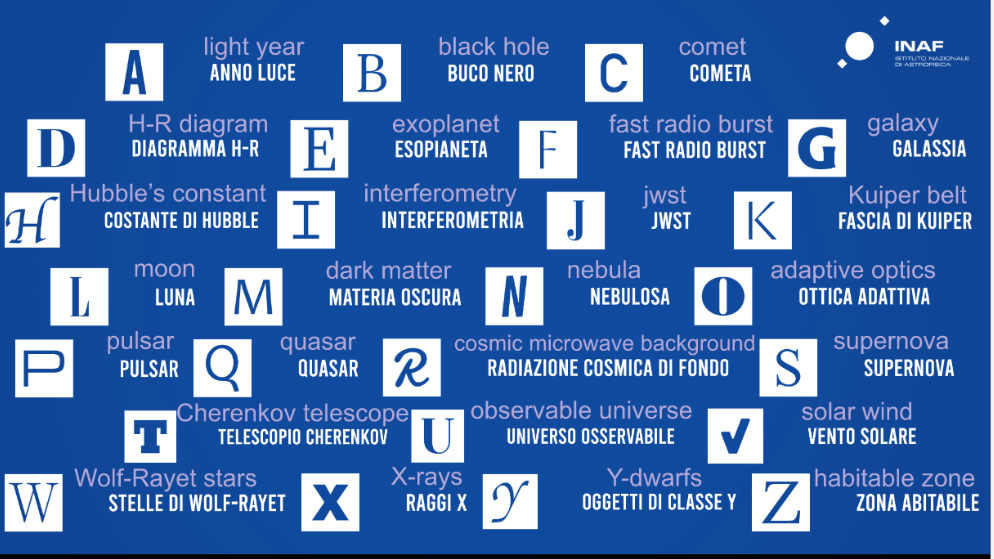
Found on YouTube, LinkedIn, Facebook, Tik Tok and Instagram, it is in Italian (naturally) but with English and Spanish subtitles. It can be put on a touchscreen monitor.
This idea seems easy to copy as a project by any educational institution or educator.
Astro Music to Start a Class for Non-Majors
At this week’s American Astronomical Society meeting, an iposter by Dr. Istem Ozen of the Pasadena ArtCenter College of Design teaches an astronomy course for non-science majors. Among her various alternative methods of instruction is initiating each week’s lessons with a work of music relevant to the overarching topic of the week.
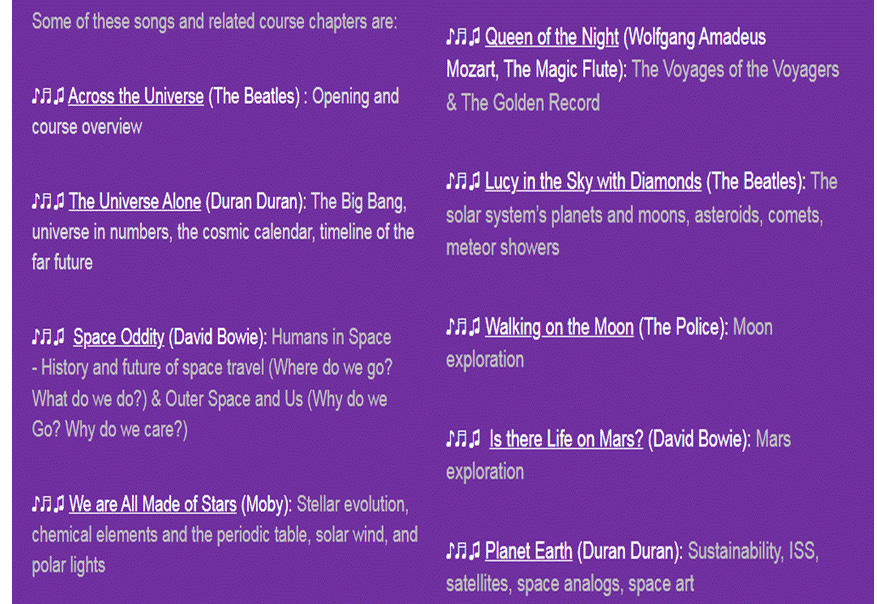
Ozen uses music “as an entry point to begin discussions about the song’s history and lyrics, to debate the scientific validity of space-related terms and ideas in the lyrics. The discussions can talk about the philosophy and future of human space exploration” as well as the astronomy. Why do we even go into space? What is our place in it? What alternative space futures do we want to create? Students later after the academics are taught utilize their own interests to create a project.
When yours truly was teaching astronomy, I had never thought to do this. I went through my collection of recorded music of all genres and have at least 100 songs that would work with this idea. How about you?
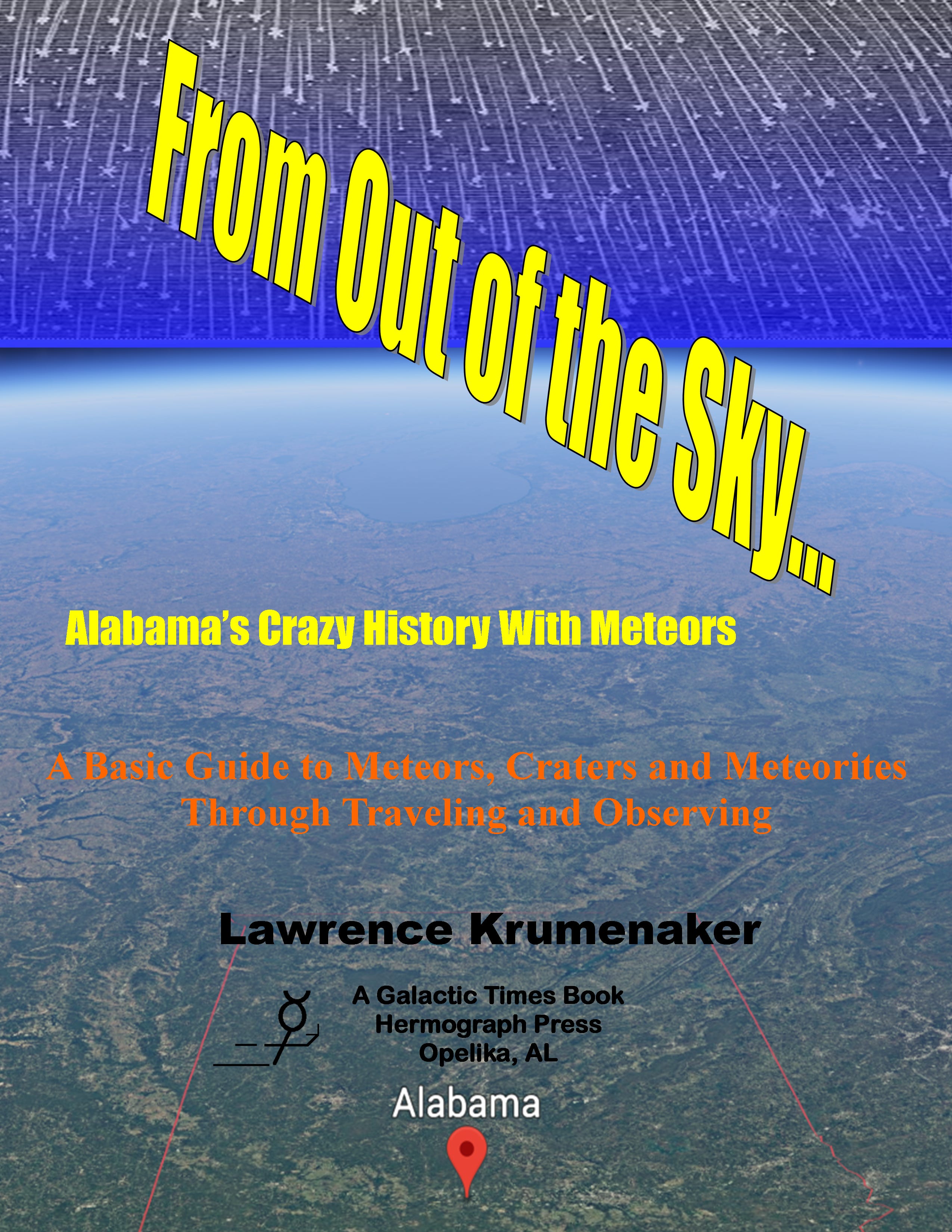
Table of Contents
What is a Falling Star Anyway?
The Wetumpka Crater, Space Tourism on Earth
The Meteoric Bruising, the Sylacauga Event
The Not-Yet-Stormy Lion
What Other Places in Alabama Did Stars Fall?
Determining a Meteorite from a Meteor-wrong
What Can You Do With Meteor Showers?
What Can You Learn from Fireballs?
Pictures and sample text are on the book’s website!
From Out of the Sky… can be purchased for $19.99 at the Hermograph Press online store (https://www.hermograph.com/store ).
— Dr. Larry Krumenaker, Publisher
- - - - - - - - -
This newsletter is (c) 2026 Hermograph Press LLC, Opelika, AL. All rights reserved. No part of this may be reproduced without permission in any other medium, such as newspaper columns, webpages, blogs, etc. Please contact the undersigned for permissions, etc., and please do not feed the hungry lawyers…….
No posts
Comments
Nothing yet. Say the first thing.
Sign in to join the conversation.