
I’m writing this week’s Cwtch from Gay Paris...well, Eurocamp Paris, which is about an hour outside. I’ve resisted the urge to go all double entendre for post #69 and am trying to keep it appropriately cultured...being a Welsh bird though, I’ve done this in a rather wonky way.
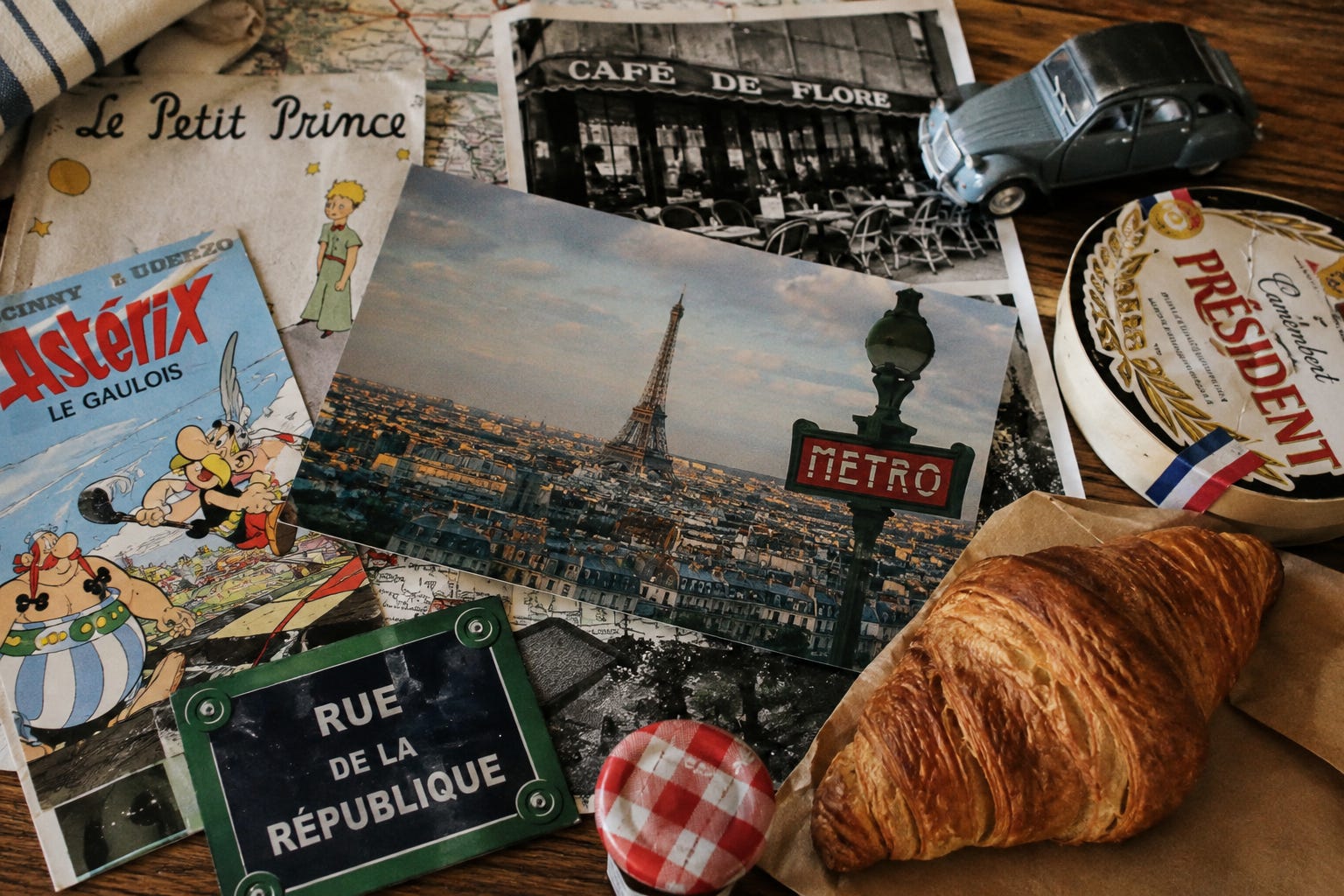
This week has made me realise that quite a lot of what I thought of as “French” growing up wasn’t actually French at all. It was France filtered through British television, American films, car adverts, Kylie Minogue, musical theatre, cartoons and whatever else happened to find its way into my cultural orbit.
Don’t get me wrong...some of it was genuinely French. Some of it was a British version of French...French-ish if you like, and some of it was about as authentically French as Michelle saying, “Listen very carefully, I shall say this only once!” in a café full of British actors (snorts at the memory).
Rather than attempting anything remotely sensible like a list of the greatest French films, songs or works of art, I thought I’d look at some of the things that helped create France in my head...and put them alongside the genuine article. No offence intended. Other than to my own ignorance!
The French one: Ils se marièrent et eurent beaucoup d’enfants, or Happily Ever After, as it was called in English
I can’t pretend I’m some great connoisseur of French cinema. Amélie would probably have been the much more obvious choice here, and while j’adore ce film, my brain went instead to this 2004 film starring Charlotte Gainsbourg and Yvan Attal. Partly because Johnny Depp randomly turns up in it and back in the day I was a fan of his work, something my eldest daughter has now picked up the baton for.
As an aside, these French words that we use in English have ended up here accidentally (connoisseur, baton, cameo, café, château), which proves the influence France has had.
Johnny Depp’s appearance is little more than a cameo. He plays a mysterious stranger who encounters Gainsbourg’s character and eventually kisses her in a lift.
Apparently that’s enough to have lodged the film somewhere in my brain for more than twenty years.
My France: Bon Voyage, Charlie Brown (and Don’t Come Back!!)
Now we’re talking.
Charlie Brown and Linus go to France as exchange students, accompanied by Peppermint Patty and Marcie, while Snoopy and Woodstock come along for the ride, with Snoopy somehow taking on driving duties.
Was this an accurate representation of France?
Almost certainly not.
Did I care?
Absolutely not.
There’s a mysterious château belonging to the bad neighbour, winding country roads, French bread, little villages and Snoopy driving a car despite being a beagle.
Another French-derived word! Apparently I can’t escape them.
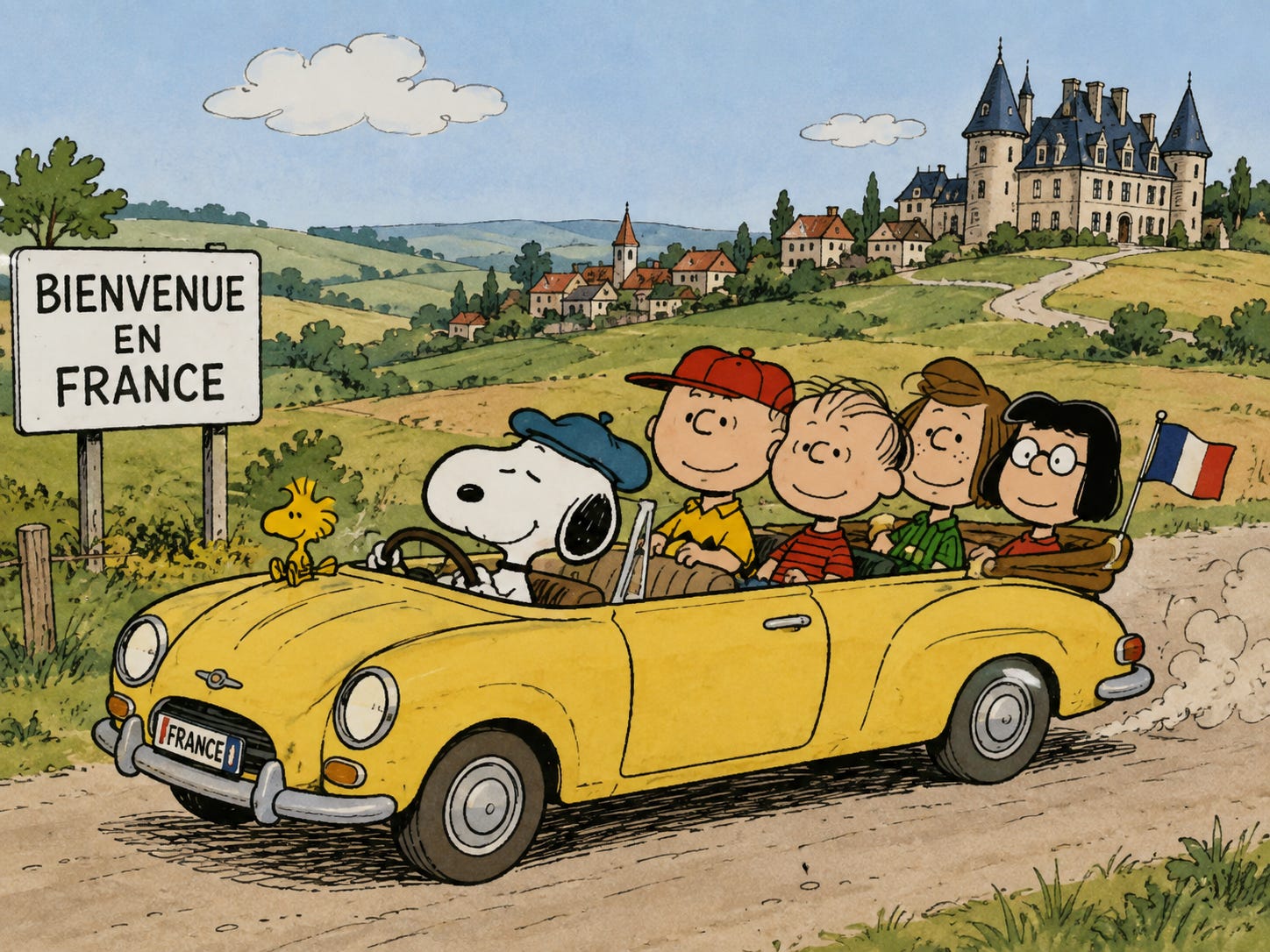
This was probably one of my earliest encounters with France on screen and, frankly, Snoopy could have driven through Pontypridd and I’d have accepted it as documentary realism.
Somewhere in the middle: The Missing
This is an interesting one because The Missing isn’t actually a French television programme. It’s British.
But its first series takes place largely in France, moves naturally between French and English and gives us Tchéky Karyo as Julien Baptiste.
France isn’t simply a backdrop populated by British actors doing comedy accents. French characters actually speak French.
What a concept.
My France: ‘Allo ‘Allo!
And then there’s this.
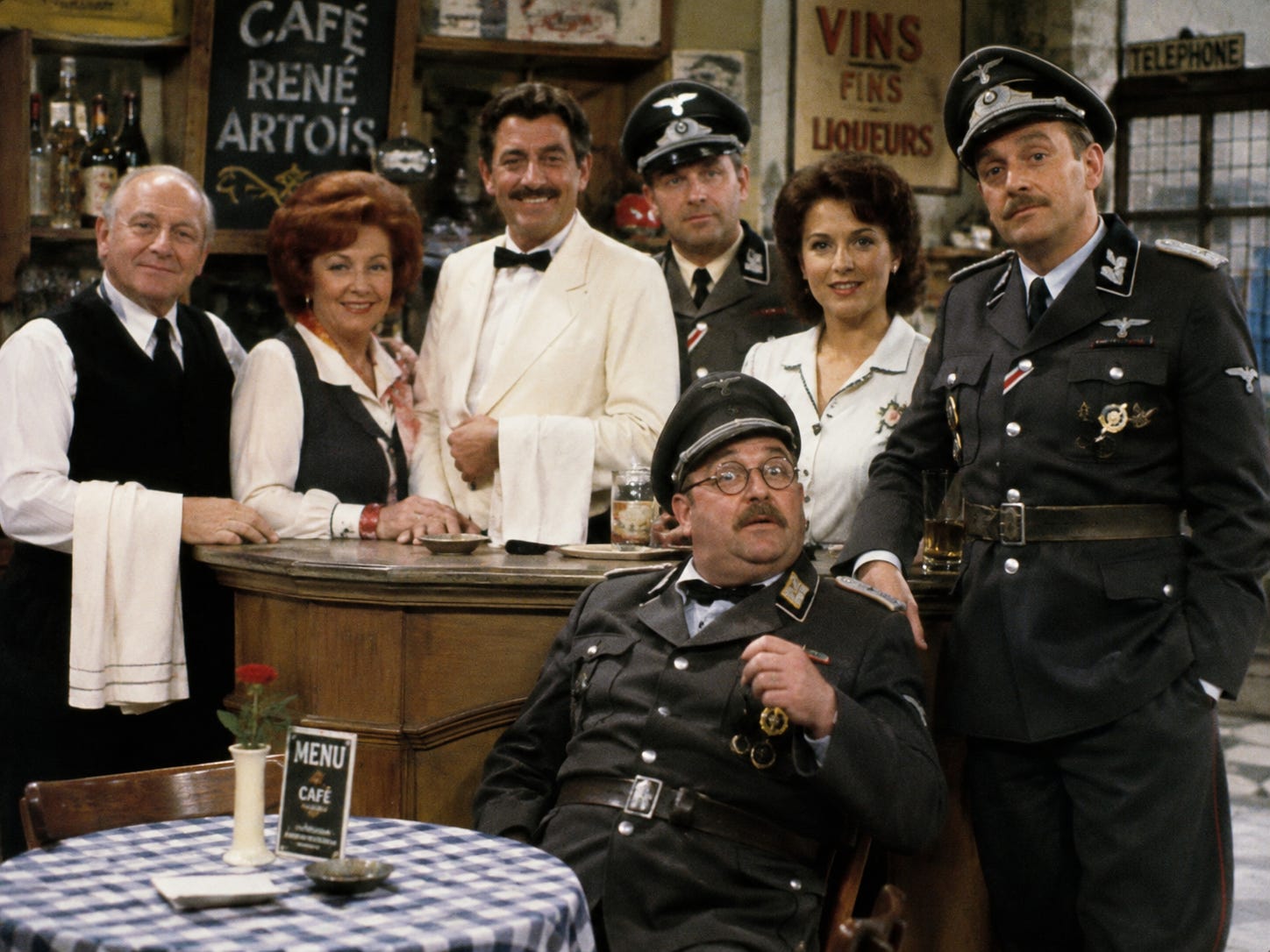
I loved ‘Allo ‘Allo! as a kid. I have fond memories of watching it with my parents.
It probably taught an entire generation of British children that occupied France consisted largely of cafés, Resistance fighters, sausages containing paintings and people communicating nationality by changing their accent.
Nobody was even pretending to speak French.
The French characters spoke English in French accents. The British characters spoke English in British accents. Officer Crabtree spoke English in an absolutely mangled French accent to indicate that he was speaking terrible French.
It made complete sense.
Somehow.
The French one: Poulet à l’orange
I’ve made poulet à l’orange plenty of times over the years. As well as duck in plum. Chicken, orange, sauce. I’m easily pleased.
It still feels like something specifically French to me in a way that our next contender strangely doesn’t.
The supposedly very French one: The croissant
It’s the most French thing I’ve eaten daily so far on this trip.
Which is considerably more ridiculous when you consider that I eat them a couple of times a week in Wales. Greggs sells them. Hardly stretching my palate.
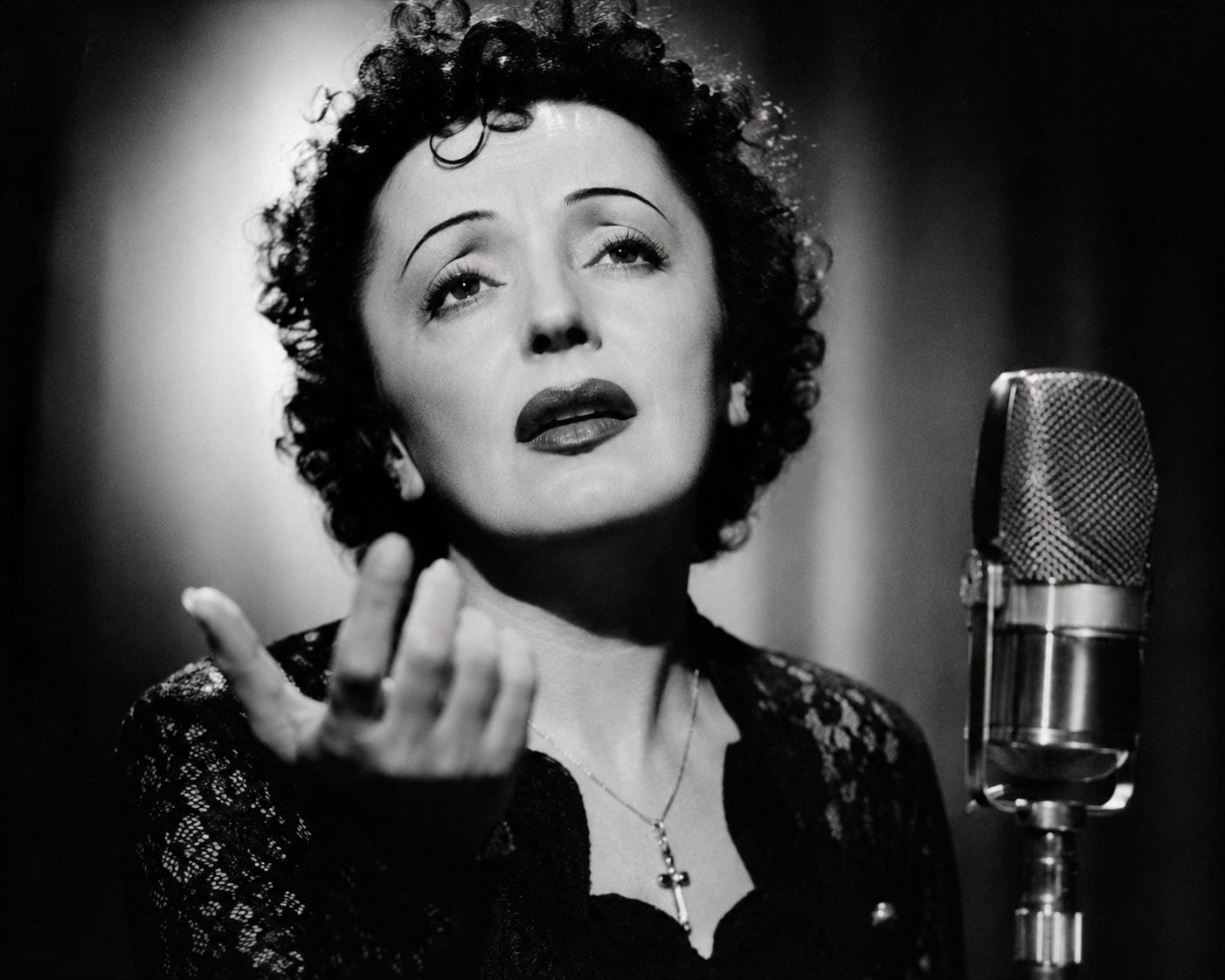
The French one: Édith Piaf, “Non, je ne regrette rien”
Even if you don’t think you know it, you probably know it.
Piaf’s voice seems almost inseparable from a particular cultural image of France. It’s dramatic, unmistakable and has travelled far beyond the country where it originated.
Which brings me neatly to...
My France: Inception
Christopher Nolan took one of the most recognisably French songs imaginable and made it part of the mechanics of a huge Hollywood science-fiction film.
“Non, je ne regrette rien” is used as the musical warning that the dreamers are about to receive their “kick”.
And because time moves differently at different levels of the dream, the music becomes stretched and distorted as it filters down through them.
It’s one of those ideas I wish I’d thought of.
I didn’t.
Annoyingly.
The French one: Les Misérables
Well...sort of.
Victor Hugo’s novel is unquestionably French. The story is French. The history is French. The musical itself actually began life in France.
But the Les Misérables that became an international theatrical juggernaut was substantially reshaped for its English-language production.
So one of the world’s most famous pieces of “French” culture reached many of us through a British producer, English lyrics and the West End.
I first knew revolutionary France through people belting songs from barricades.
There are probably worse introductions.
The French one: Jacques-Louis David’s Napoleon Crossing the Alps
You probably know the image even if you don’t know its title.
Napoleon on a rearing horse, cloak billowing behind him, looking considerably more composed than I would if my horse suddenly decided to stand on two legs.
It’s heroic French myth-making on an enormous scale.
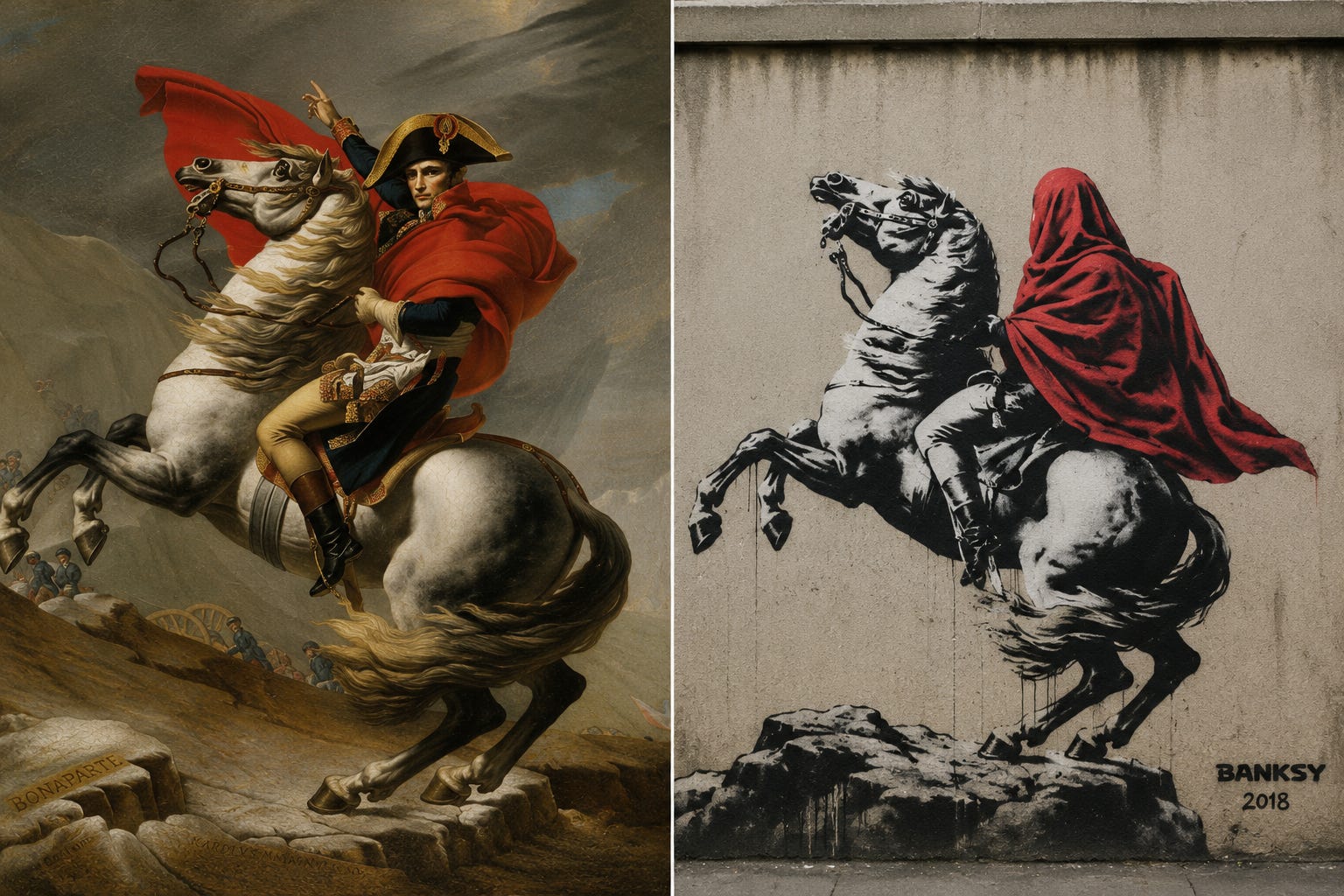
The British interference: Banksy
Then, more than two centuries later, a British graffiti artist turned up in Paris and messed with it.
Banksy’s 2018 version recreates Napoleon on horseback but pulls the red cloak completely over his head.
I love that.
I like the conversation between them.
A famous French image survives for two hundred years, wanders into the visual vocabulary of a British artist and comes back wearing its own coat over its face.
The French one: Le Petit Prince
The Little Prince is a rather peculiar piece of culture, in that it has travelled so widely that it almost feels like it belongs to everyone.
Yet Antoine de Saint-Exupéry was French, and he wrote it in French.
A petit prince’s interplanetary journey, where he discovers how humans live.
That’s right up my alley (alley...another French-derived word).
The French one that got everywhere: Astérix
I realise I’m cheating slightly by moving from literature into comics, but this is my Cwtch so sue me...another English word that arrived via French.
Astérix is thoroughly French, but he also became one of France’s great cultural exports. By the time I encountered him, he had already been translated, repackaged and sent wandering around British childhoods.
Which is perhaps the point of this entire list.
Culture travels.
Christopher Nolan can stick Édith Piaf inside somebody’s subconscious and the British can turn occupied France into ‘Allo ‘Allo!.
Being in France hasn’t suddenly revealed that everything I thought I knew about the place was wrong. If anything, it’s made me notice how much of our idea of another country comes from culture long before we ever set foot there.
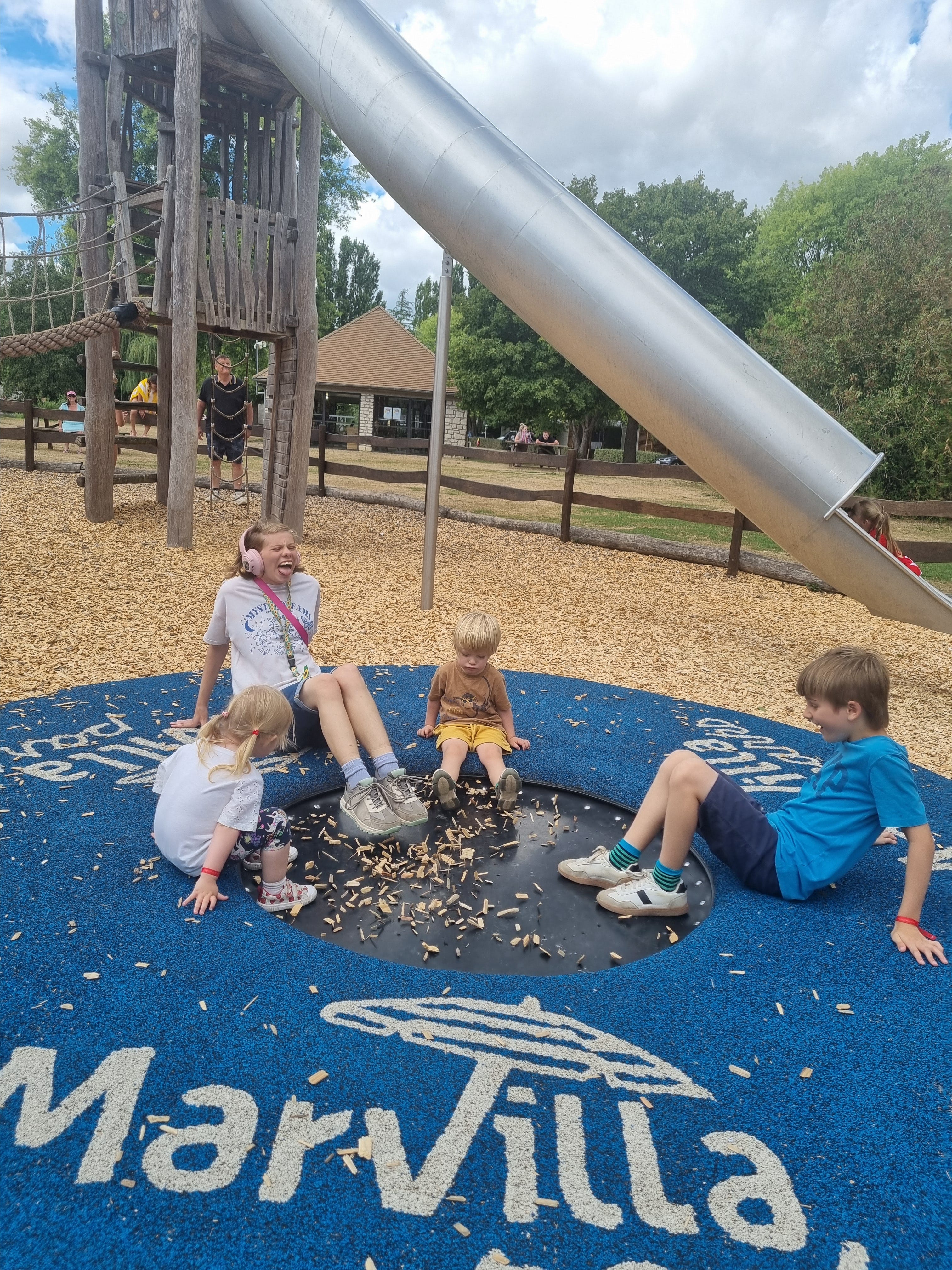
My France had been accumulating for years.
It contained Snoopy, René Artois, Jean Valjean, Édith Piaf, Napoleon, Astérix and a pastry I’ve spent my life eating.
Now I’ve finally made it here myself.
Oh, and I’ve even written a song called ‘Croissants at Noon’ for my wife (for last year’s anniversary). Seems fitting to share it now as we’re here for our ten year anniversary.
It’s cosy in here. Fancy a cwtch?
(Ooh la la...fancy is another French-derived word!)
X
No posts
Comments
Nothing yet. Say the first thing.
Sign in to join the conversation.