
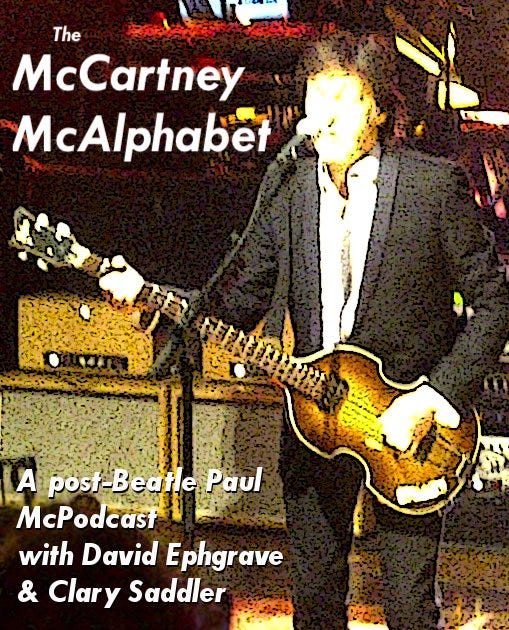
If I asked the average Joe to name a famous musical instrument, they'd probably say Paul McCartney's Höfner bass or, at a push, Elvis Presley's Gibson Super 400 CES from the '68 Comeback Special. OK, even my mother, arguably the biggest Elvis fan ever, couldn't have named the actual model. I've just outed myself as a proper muso geek. Other music geeks might throw in Tori Amos's Bösendorfer piano, John Lennon’s white Steinway & Sons Model Z upright piano or Kate Bush's Fairlight CMI.
We remember those instruments because of the music they helped create: ‘Come Together’, ‘Heartbreak Hotel’, ‘Cornflake Girl’, ‘Imagine’ and ‘Running Up That Hill (A Deal with God)’.
None of my instruments are famous, and none of the songs they've helped create have changed the world. They're battered, repaired, dented and, in a few cases, complete eyesores...but the memories they've accumulated are priceless to me.
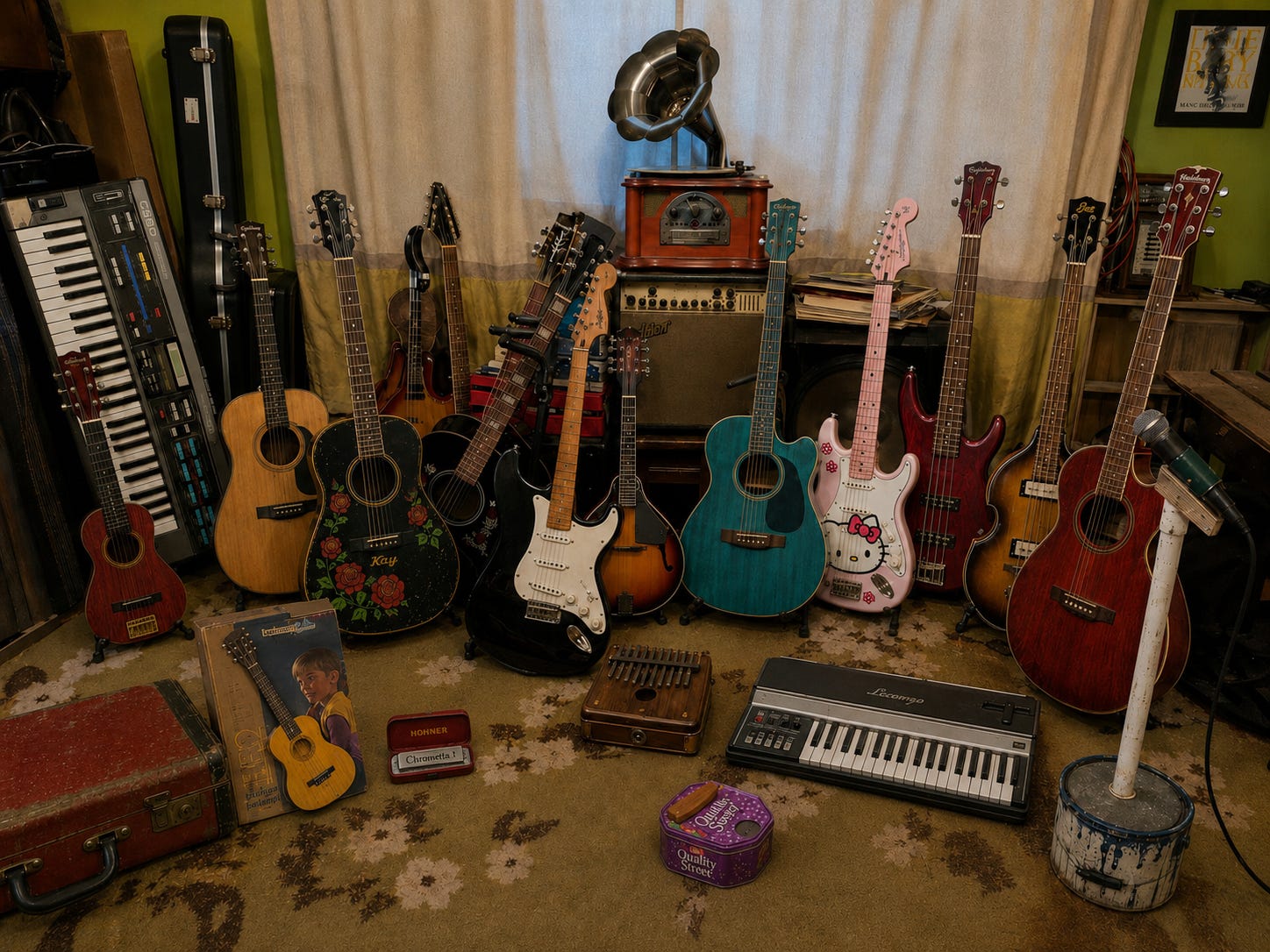
Because each one tells part of my story and, as I started gathering them together recently for a little photo gallery of misfits, I realised my musical journey began with a man I never met, rather than an instrument.
My paternal grandfather, Gwynne Saddler, died before I was born but in many ways he's the musician I've always felt closest to. In my memoir, Hero to Many: A Saddler Family Memoir, I wrote about discovering just how much music shaped his life:
"Gwynne was a talented musician, and much like me, he was self-taught. He couldn't read music but played by ear and could pick up any instrument he tried."
As far as I know, he was the only musician on my father's side of the family. On my mother's side, the only musical ancestor I'm aware of was my great-grandfather Johnny Jackson, who played the harmonica, or "mouth organ" as he called it.
Dad kept Gwynne's electric reed organ in the attic. To be honest, I more or less helped myself to it. My brother has always called me a magpie because I've never been very good at leaving interesting things alone. I was fascinated that pressing a small key could fill the room with sound, even if that sound was less than pleasing to the ear.
0:00
-0:23
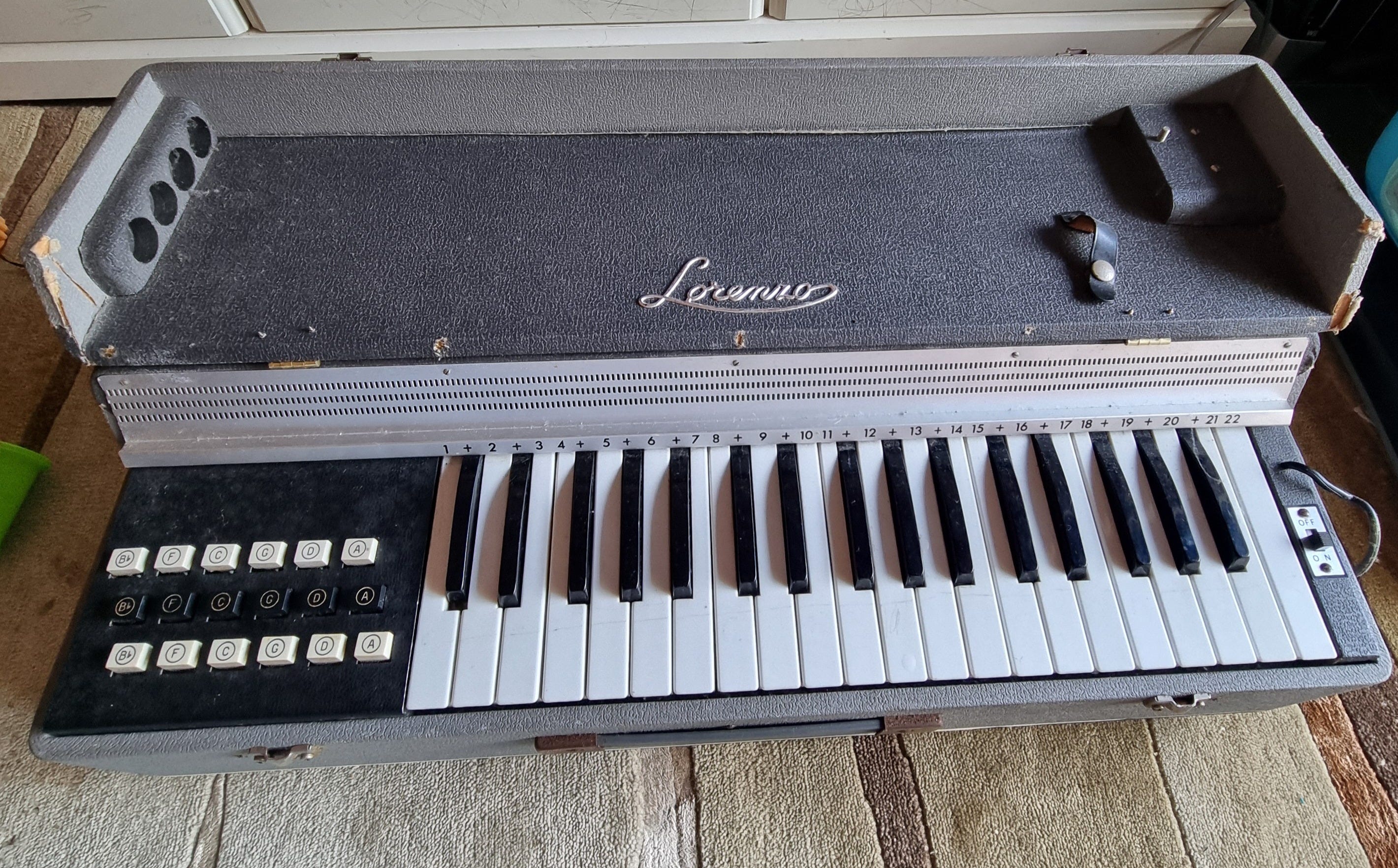
Years later, after I’d gotten into the habit of naming my instruments, she became Reedy. I can only imagine the racket she’d make if I switched her on today. If my neighbour mows the lawn before 9am on a Sunday again, I might just do that.
Around the same time, another house was feeding my early curiosity about music: number 70 Mackworth Road, Porthcawl.
Every Boxing Day we'd visit my dad's aunties in Porthcawl. Geggy and Lolly were nicknames they’d acquired because none of the children could say Aunty Gwen and Aunty Olive.
I loved visiting them and that house was a treasure trove. Hanging in the hallway near the front door was an orange Emu marionette and a ukulele, and I'd make a beeline for them every time we visited (the magpie strikes again). I still don't know why they owned either.
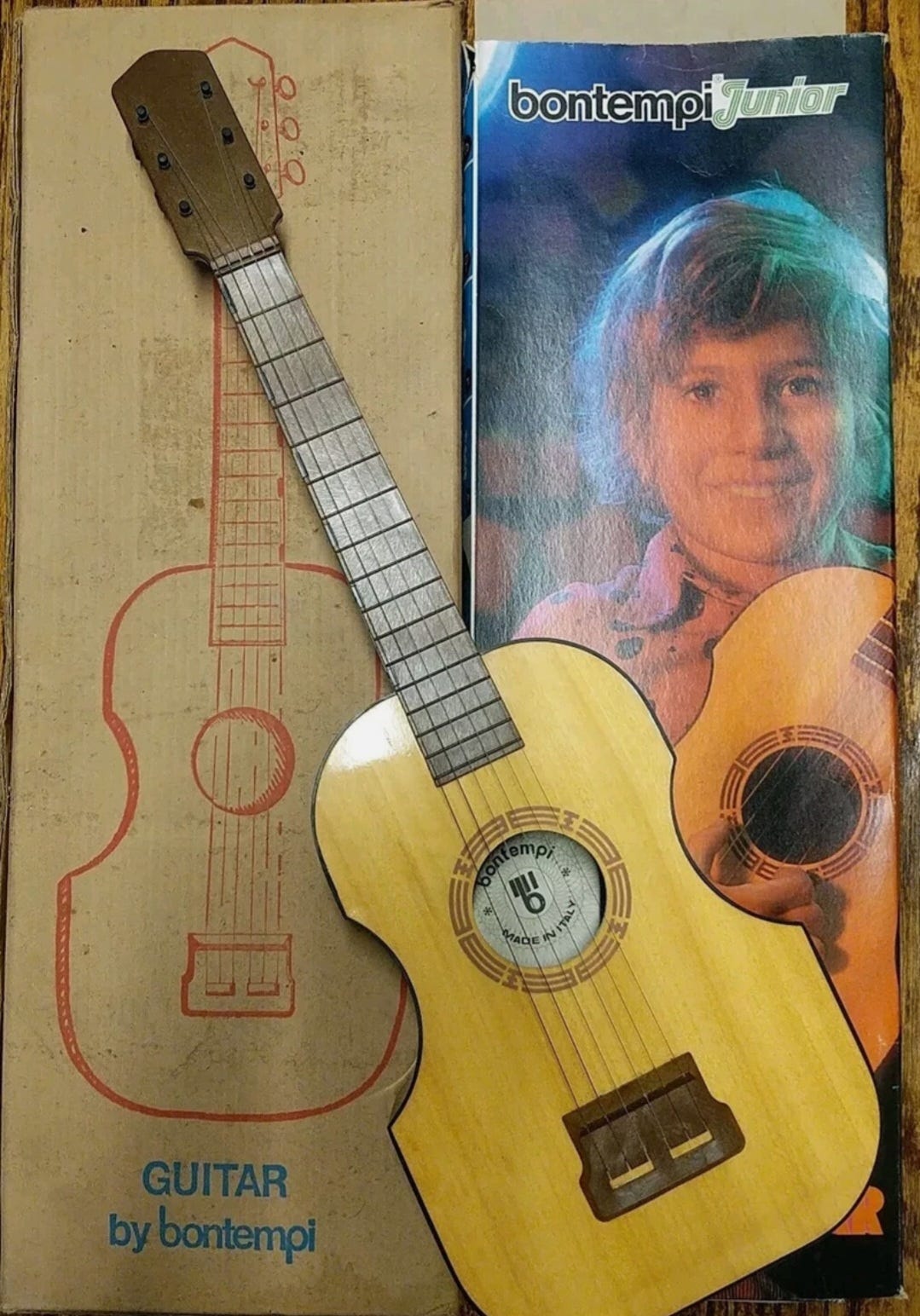
Christmas 1985 was even more special because Geggy and Lolly bought me my first guitar. It wasn't much more than a toy, with cheap wooden tuning pegs (hence the name I would go on to give her, Peggy) and very loose nylon strings, but I loved it. I think it may have been a vintage Bontempi children’s acoustic guitar. By the following year, my enthusiasm had outgrown it (and the strings had nearly outgrown the tuning pegs) so my parents bought me an upgrade.
I still wonder what became of Peggy.
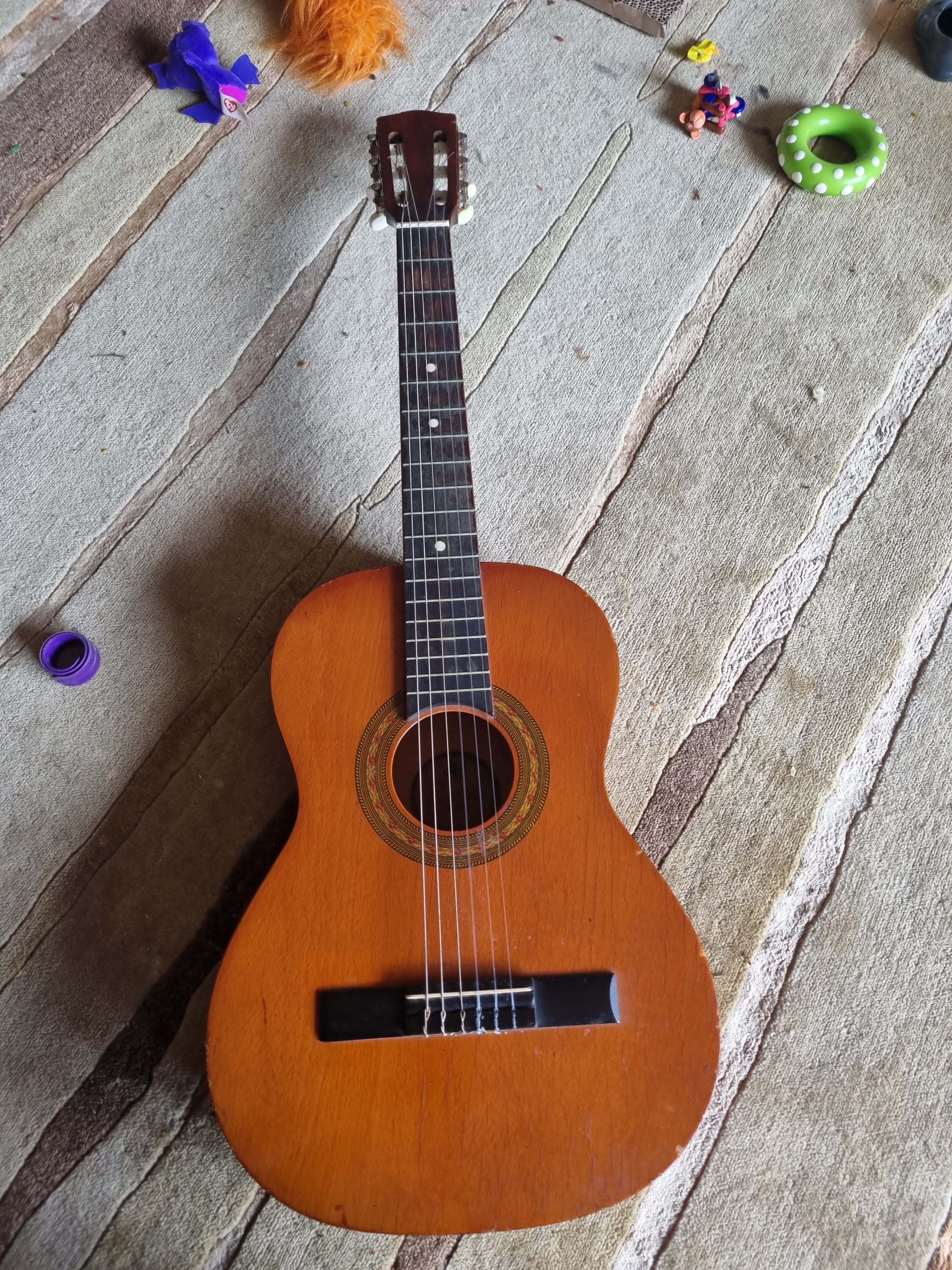
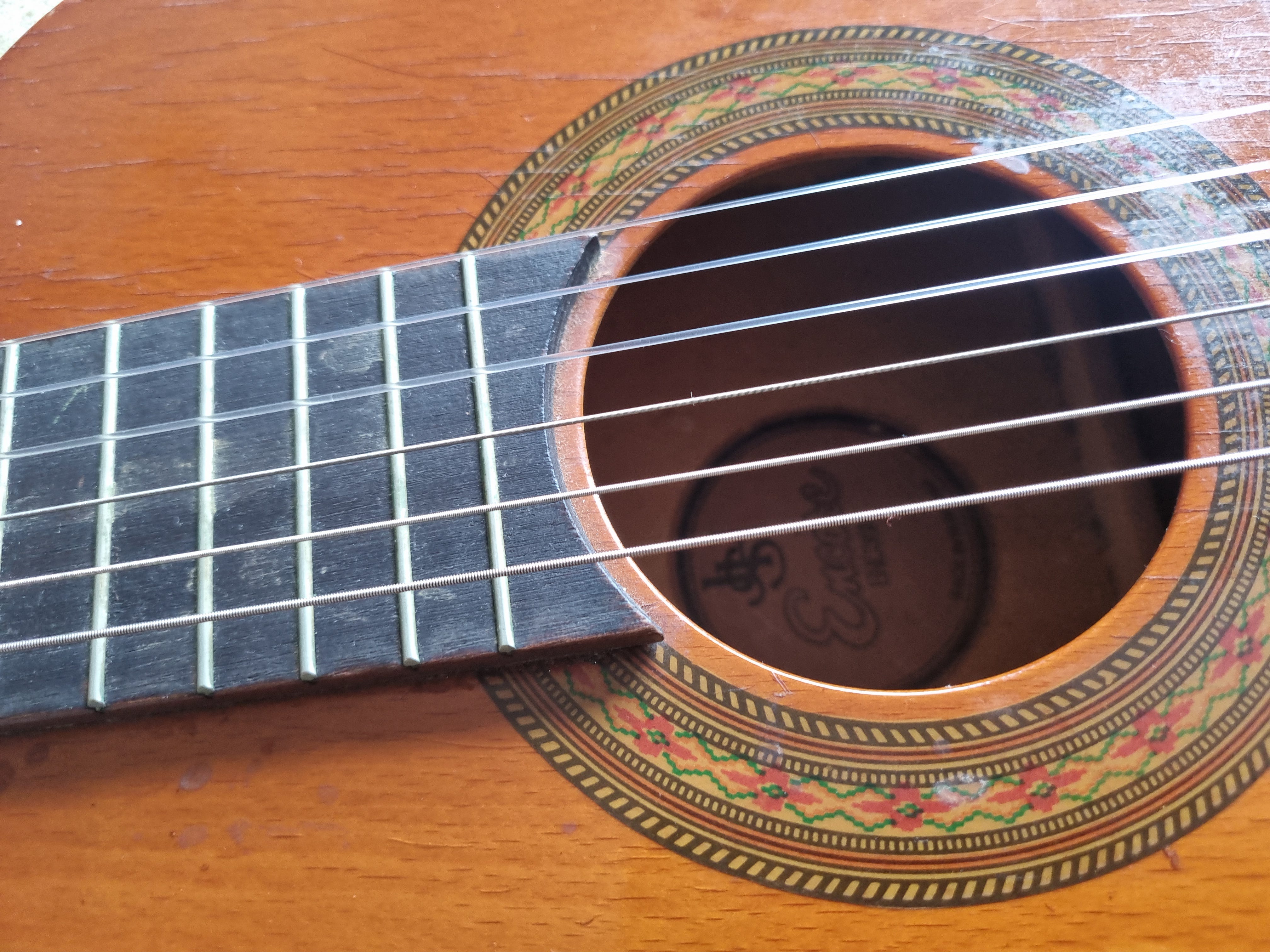
My parents got me a 3/4 size Encore acoustic (which I named Charlie Brown) when I was six years old. Like most six-year-olds, I expected to pick him up and instantly sound like someone on Top of the Pops. Instead I mostly produced a collection of alarming noises that resembled the Cat Next Door from Peanuts, before giving up in frustration. Good grief indeed.
It wasn't until 1991 or 1992 that I finally decided enough was enough. I permanently “borrowed” a guitar book from the school library and taught myself. No YouTube or online lessons. Just a library book, sheer determination and a lot of sore fingers. I certainly wasn't the social butterfly I eventually became, so the guitar became a useful distraction from the loneliness.
Years later, Charlie Brown became the guitar on which I wrote one of my earliest angst-ridden songs: 'I Guess (The Cliché Song)'.
"I guessed one day that I'd lose you,
I guess that all the clichés in the world are true.
Happiness is hard to find,
And I guess love is really blind."
0:00
-0:43
It's hardly going to trouble Lennon and McCartney, but somehow it earned me an A in my GCSE Music Composition.
For my fourteenth birthday I was given my first electric guitar. It was a black and white Encore, complete with a whammy bar. Strangely, despite naming almost everything else I've owned since, this one never acquired a nickname. These days I just think of her as Whammy.
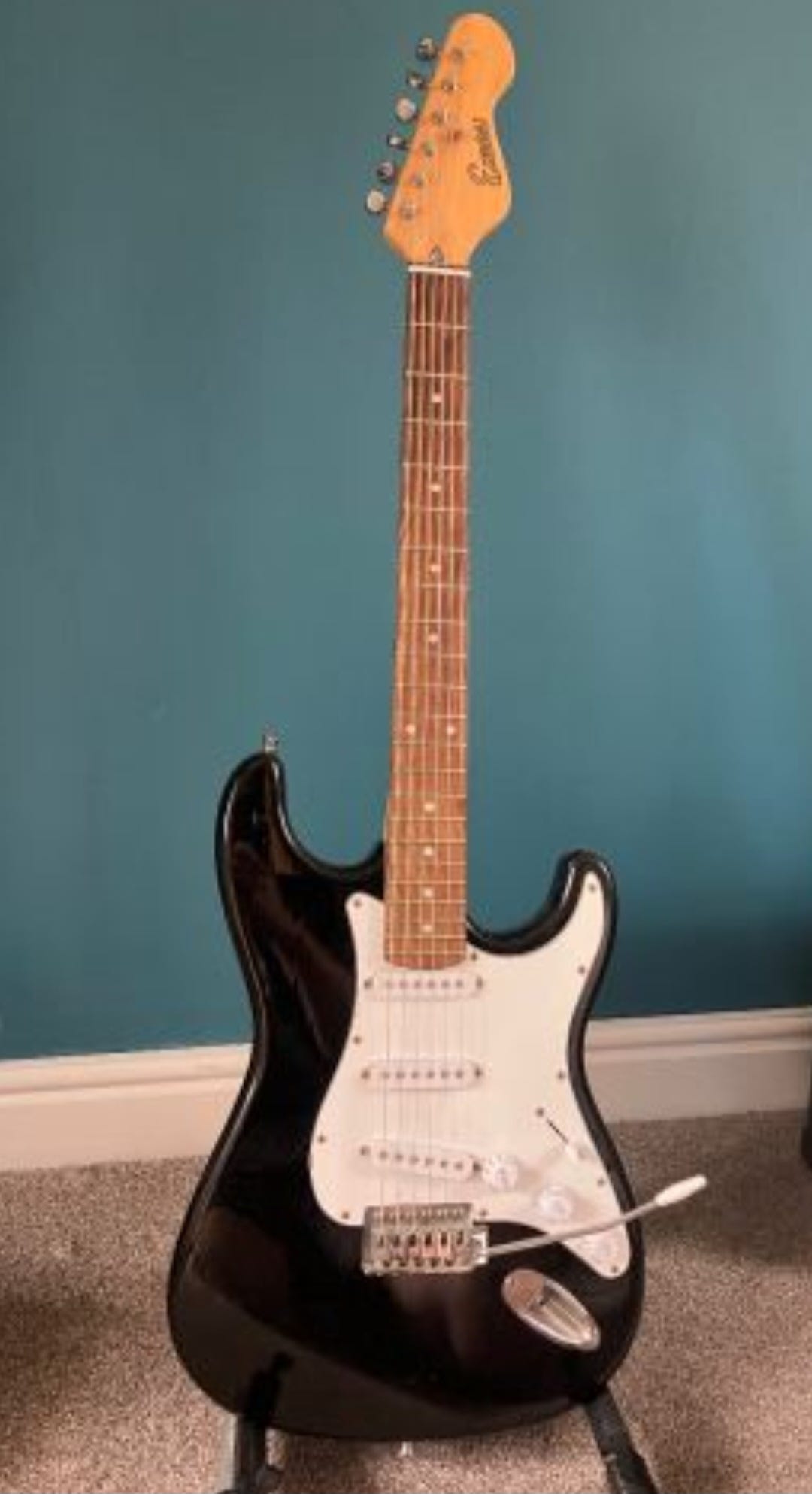
What she did give me was a bit more confidence.
It was the guitar I took to the Friday Performance Workshop in Crosskeys College, where I first stood in front of an audience and played songs like 'I Guess (The Cliché Song)' and 'Expressionless' when I was still finding my feet as a songwriter. Somewhere there's a rather ropey VHS recording of that early Whammy performance. At the time I was mortified by it. Now I'm simply glad it exists.
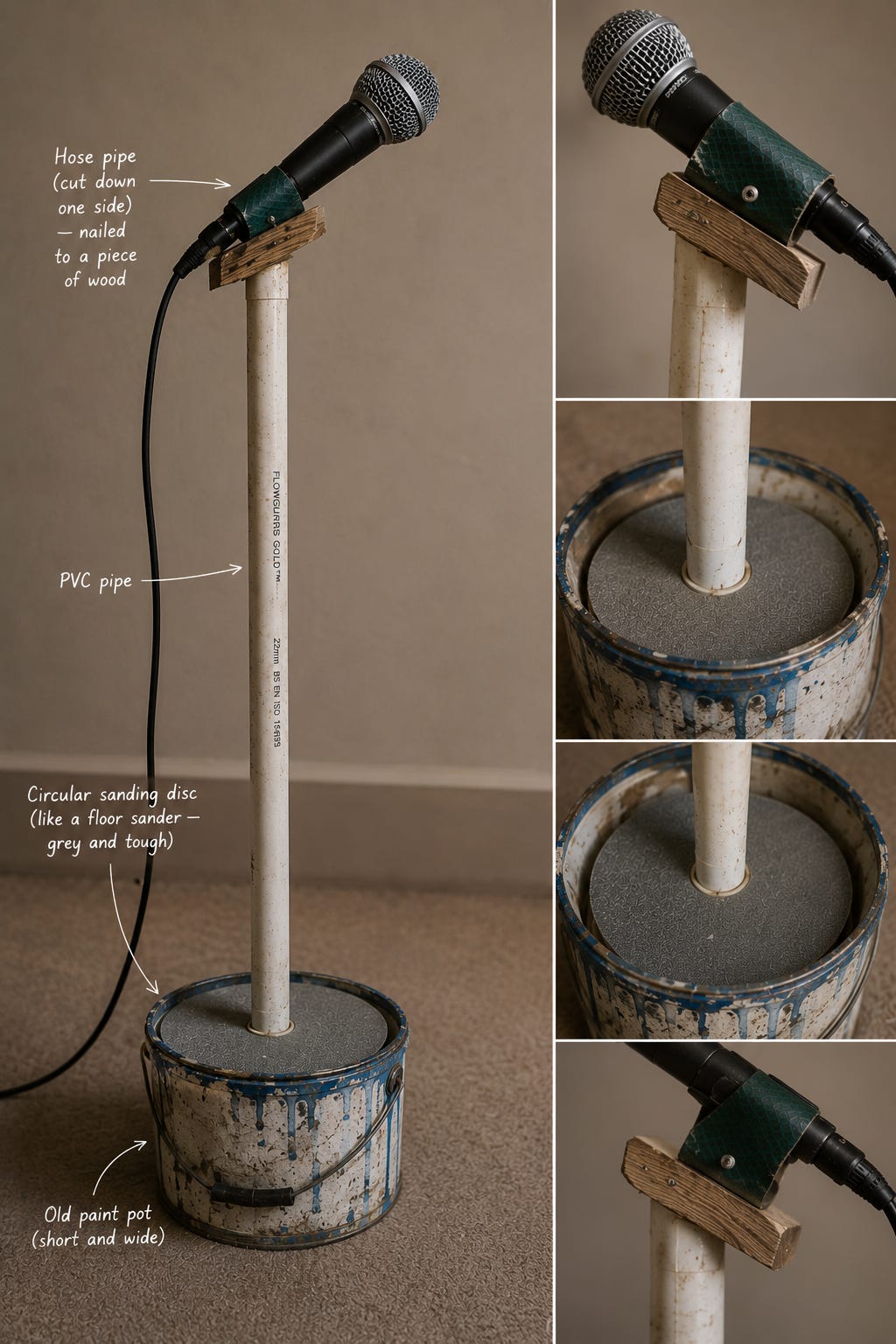
Dad even made me a microphone stand, though I never used that in public. The base was an old paint pot. The upright was a length of PVC pipe. Between them sat an old circular sanding disc that looked remarkably like a vinyl record, while the microphone itself was held in place by a hose pipe end that he'd cut down one side. It wasn't glamorous and neither was I, but it didn't really need to be. It did the job.
In 1997 my then boyfriend Tim gave me an old Eko bass after it came his way through the church. To my teenage eyes it looked vaguely like Paul McCartney's Höfner, so it eventually became known as my Macca Wannabe.
Tim had gutted the pickups to repair another guitar, so for years it stood silently in the corner, looking suave but unable to make a sound. Thanks to that "beautiful boy...that Christian boy..." it remained "silent all these years" while I was quietly finding my voice.
A while later, my aunty passed on her black Kay K-500 acoustic, decorated with painted red roses. She’d bought it in the mid-1970s and, like Reedy, Rosie already had a history before she became part of mine.
0:00
-1:12
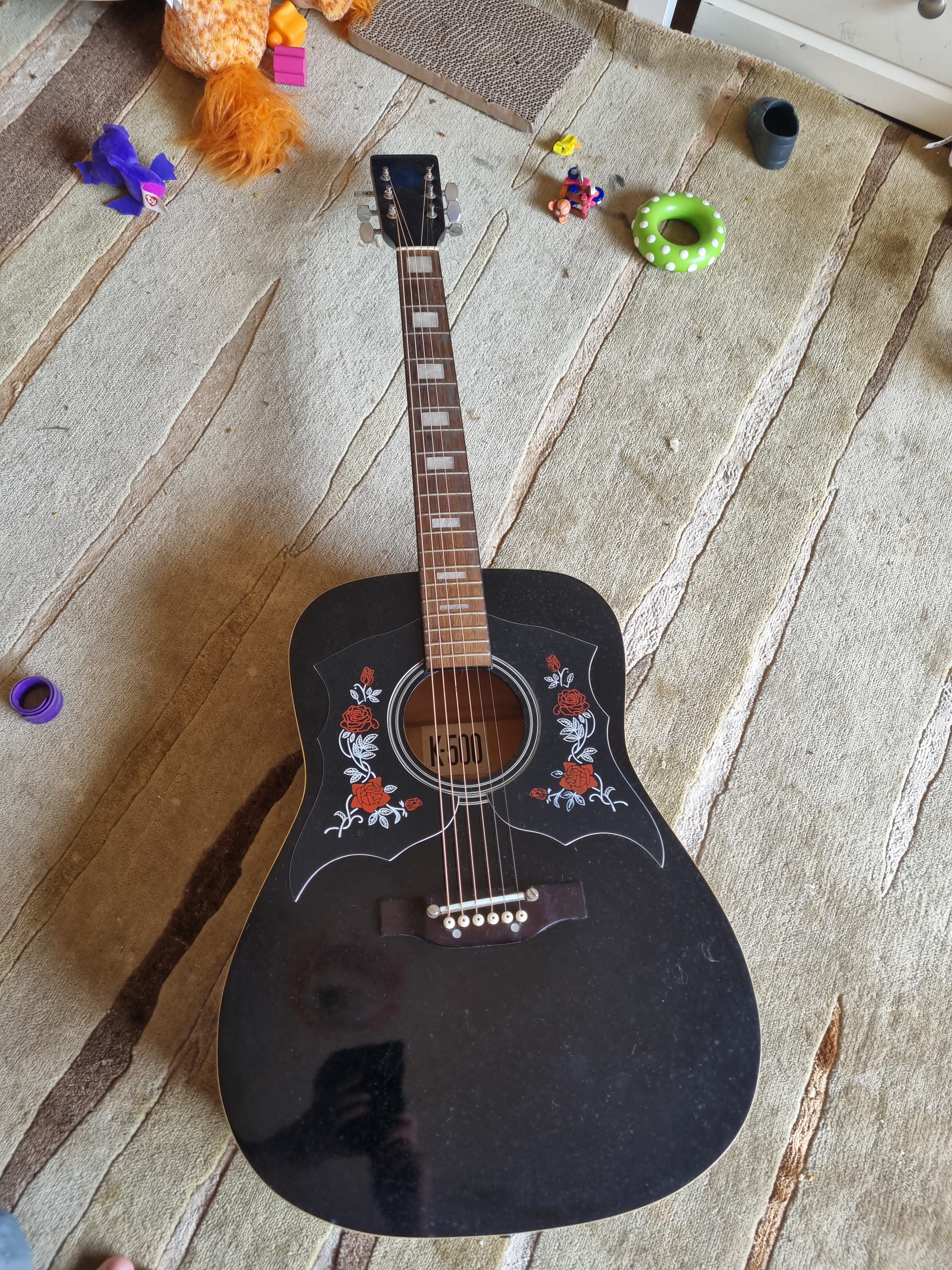
On Rosie I wrote the music for ‘Full Moon’, the song I remain proudest of. The lyrics came later, while travelling with my best mate in Pai, northern Thailand.
"You are my torch in the night.
You are my shade when it's too bright..."
At the time it was a tribute to a dear friend. Now it also carries the memory of one of the happiest adventures of my life.
0:00
-6:38
But I'm skipping ahead. In 2002 I bought what felt like my first proper instruments. A Washburn EA18TR acoustic and a matching Epiphone bass. I named them Linus and Marcie, naturally.
These were the first instruments I'd chosen for myself and bought with my own, hard earned cash.
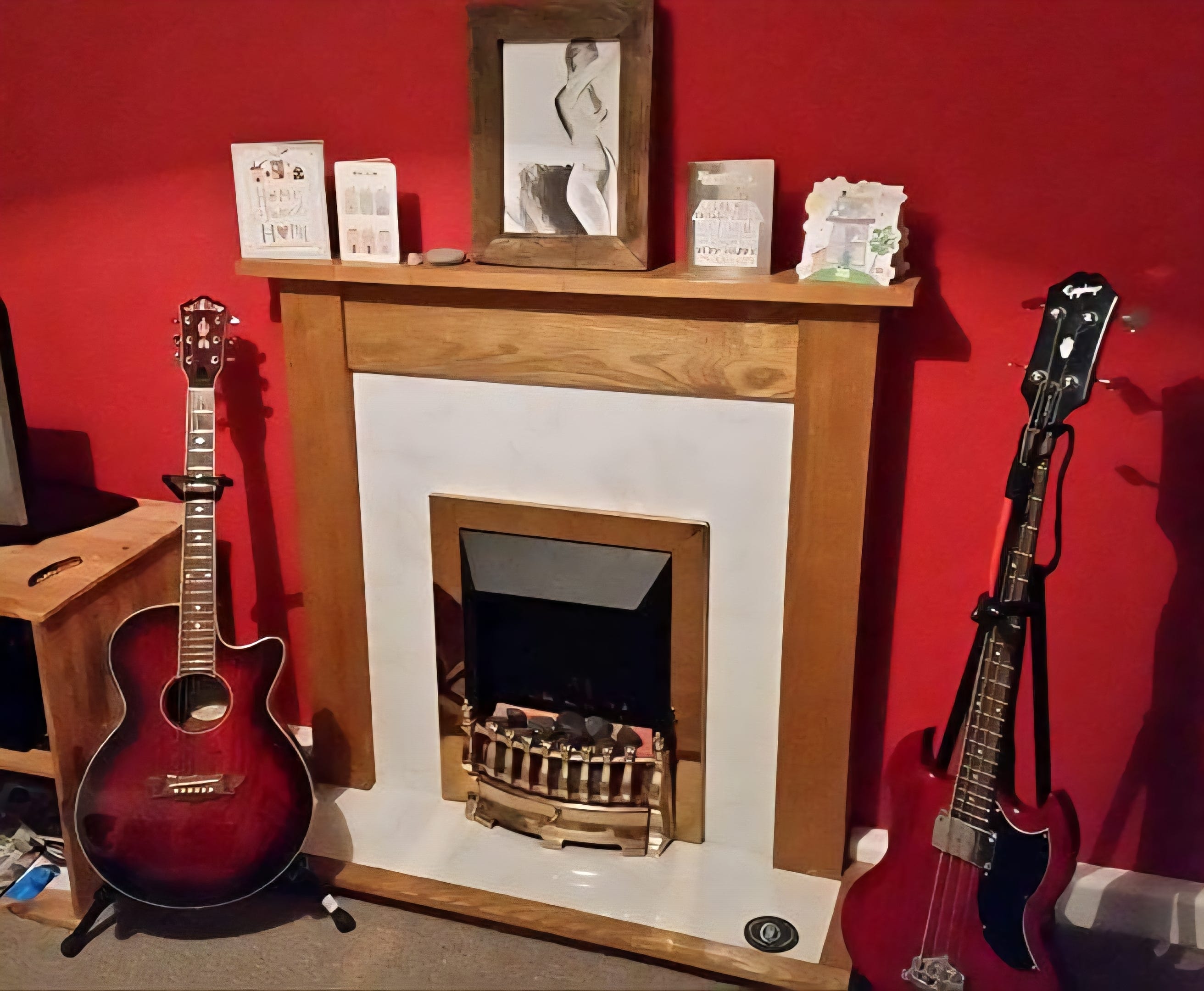
Before setting off travelling in 2004, a friend insisted I shouldn't take Linus around the world, in case it got damaged or stolen. Instead she lent me her green Hohner acoustic guitar. It needed a name too, so became Peppermint Patty. She definitely had some sapphic energy, much like her namesake.
Peppermint Patty travelled with me through Thailand, Laos, Bali, Singapore, Malaysia, India and Australia; on buses, trains, tuk-tuks, planes, speedboats and into beaches, cafés, bamboo huts and hostels. I filled almost three songbooks during those fourteen months away.
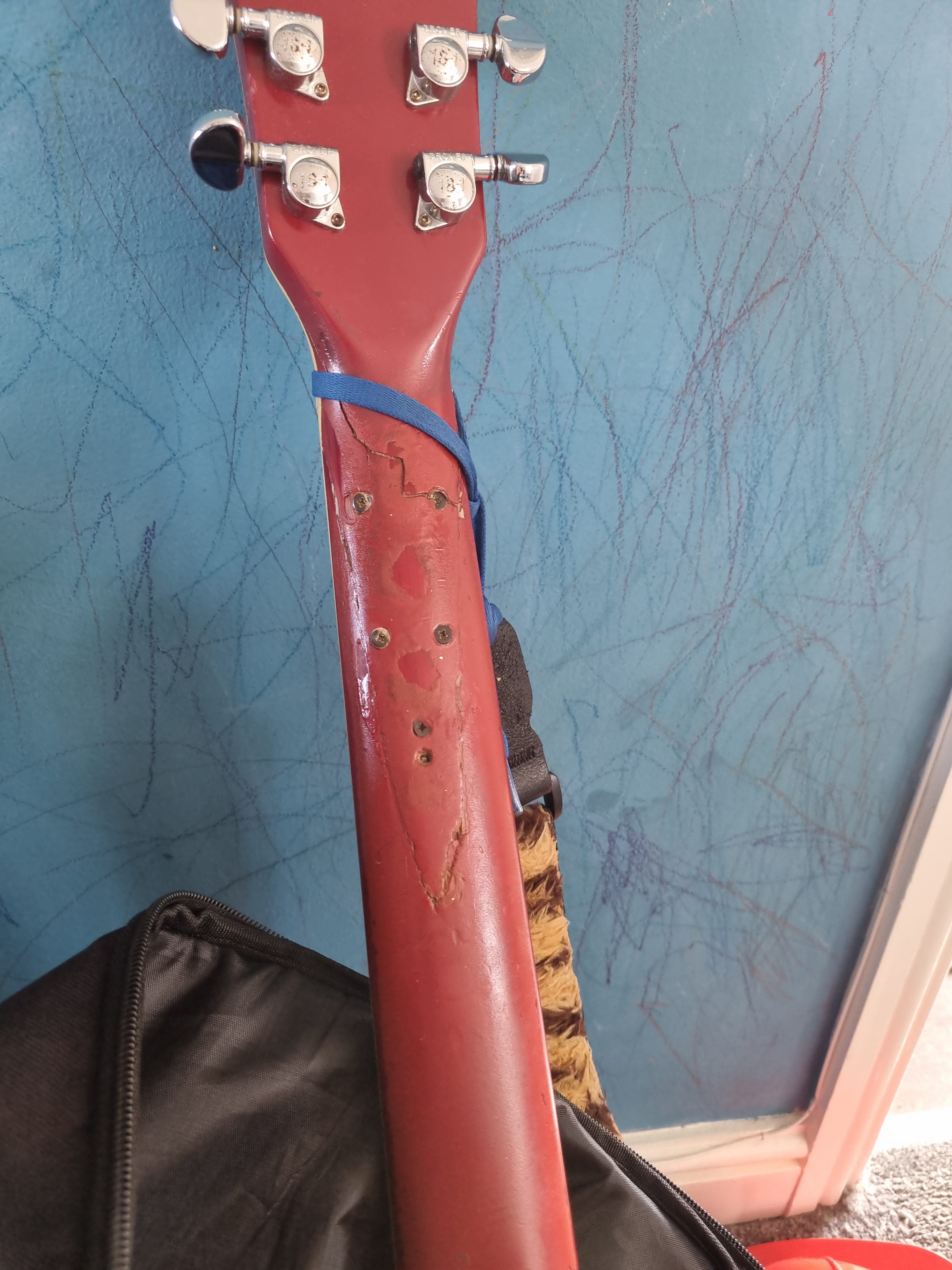
I’d left Linus at home to keep him safe. While I was away, the friend who had lent me Peppermint Patty threw a party, and Linus came off far worse than anyone else. By the time I got home, his neck had split completely. I don’t blame her. These things happen.
Dad was an extraordinarily talented carpenter...a legend if you ask me. My house is full of his Driftwood Delights.
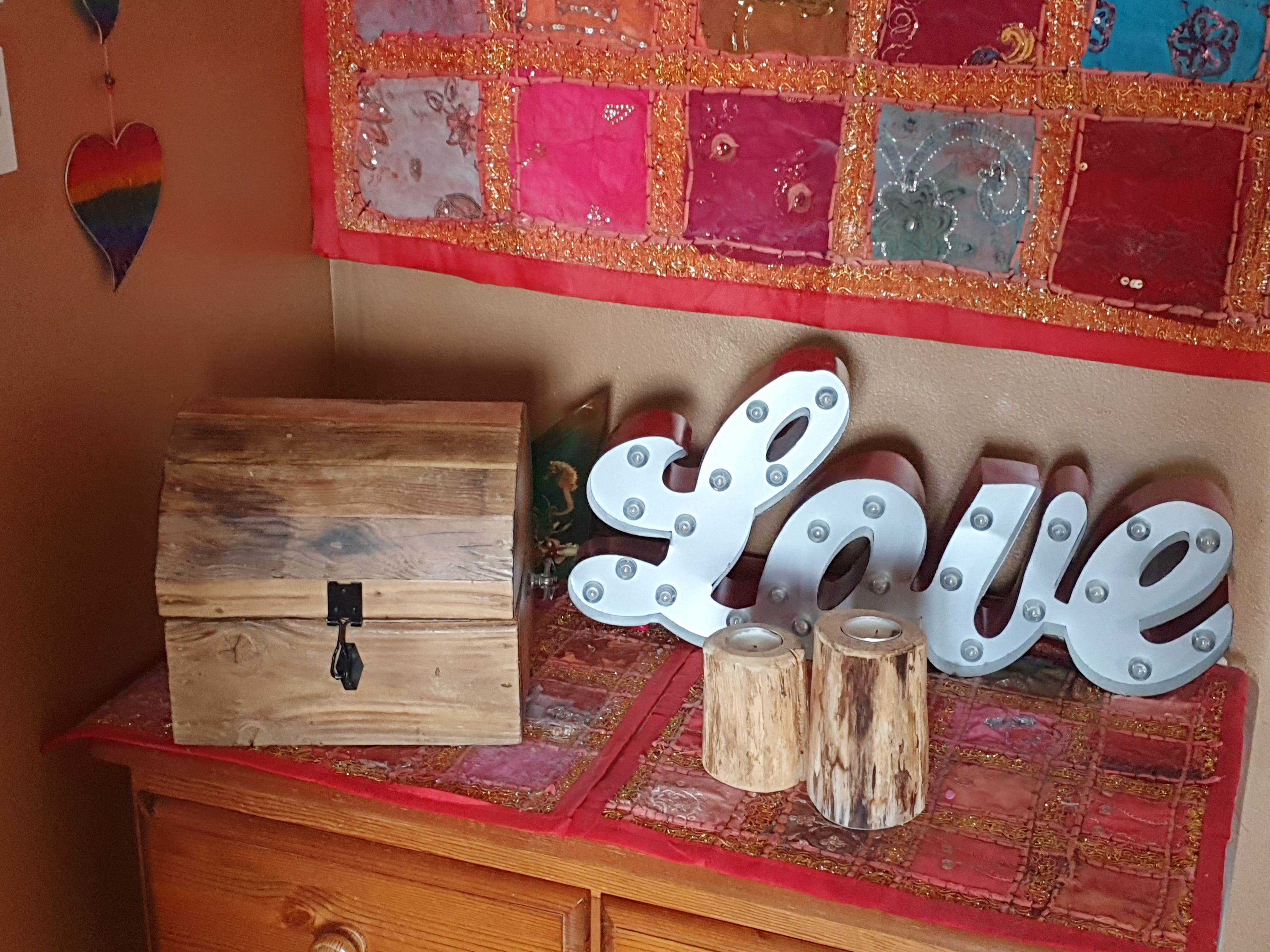
He patiently glued and screwed Linus back together...That repair lasted for over twenty years, and many producers commented on its lovely and unique sound.
More than twenty years later, I knocked Linus over in a carpark while he was still in his case. I damaged a different part of the neck. A local music shop patched him up but warned me there probably wasn’t another repair left in him.
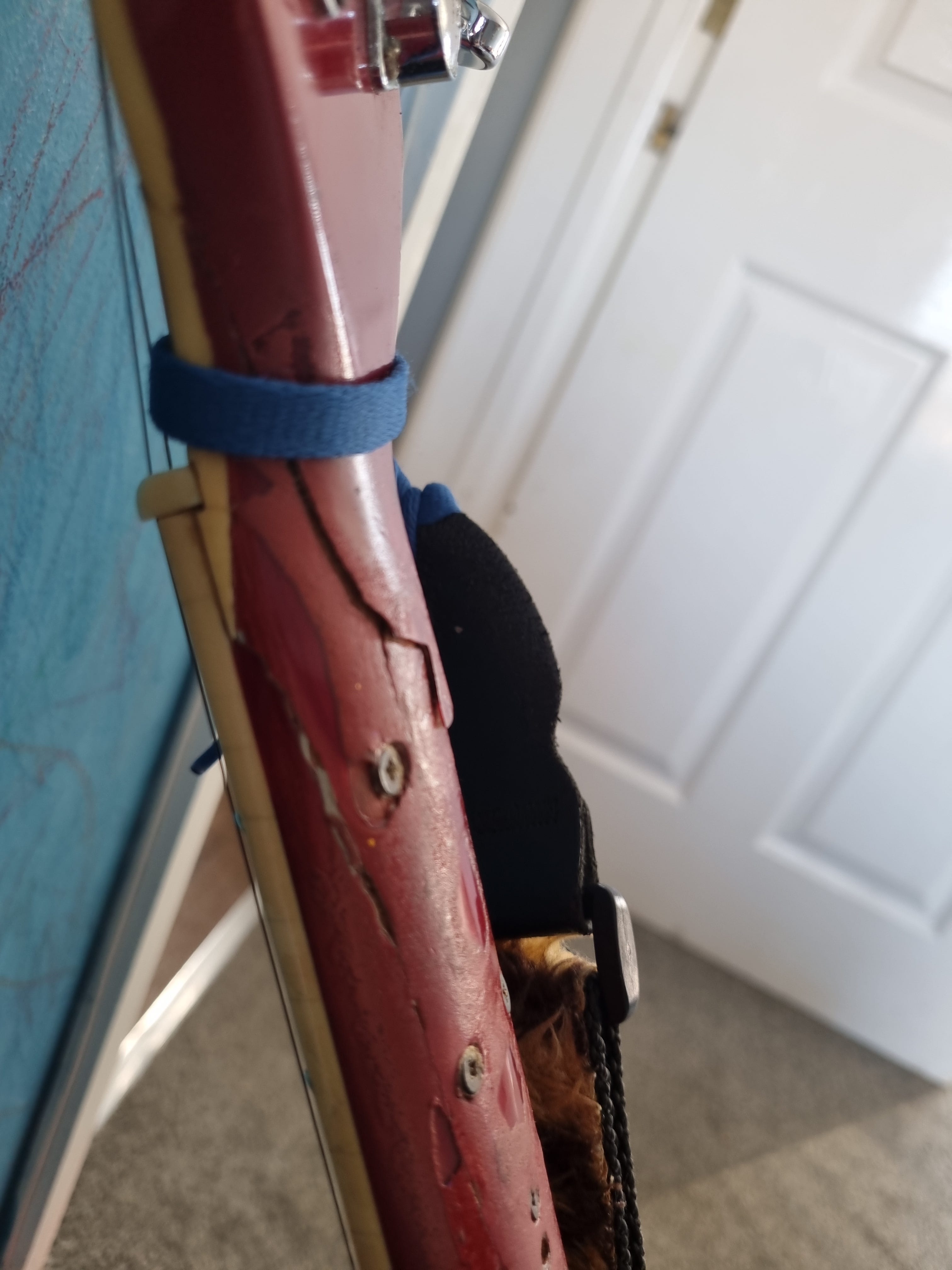
During the 2026 heatwave, the glue began to fail. This time I took him to a proper luthier, not holding out much hope. When he opened Linus up, he admired Dad’s original workmanship and decided to leave it untouched, repairing only the newer damage and reinforcing the neck with a metal rod. Linus is still in the guitar hospital as I write this, but I’m feeling more hopeful. Dad would've been quietly chuffed by the luthier's compliment, though he'd probably have pretended not to be.
While I was still travelling I bought the most ridiculous instrument I've ever owned: a Hello Kitty Fender Squier Stratocaster electric guitar. My alter ego of sorts.
She was cheap at the time (though apparently worth a small fortune now), completely impractical and impossible to ignore. A bit like me in those days.
Back home she became (and remains) my main electric guitar.
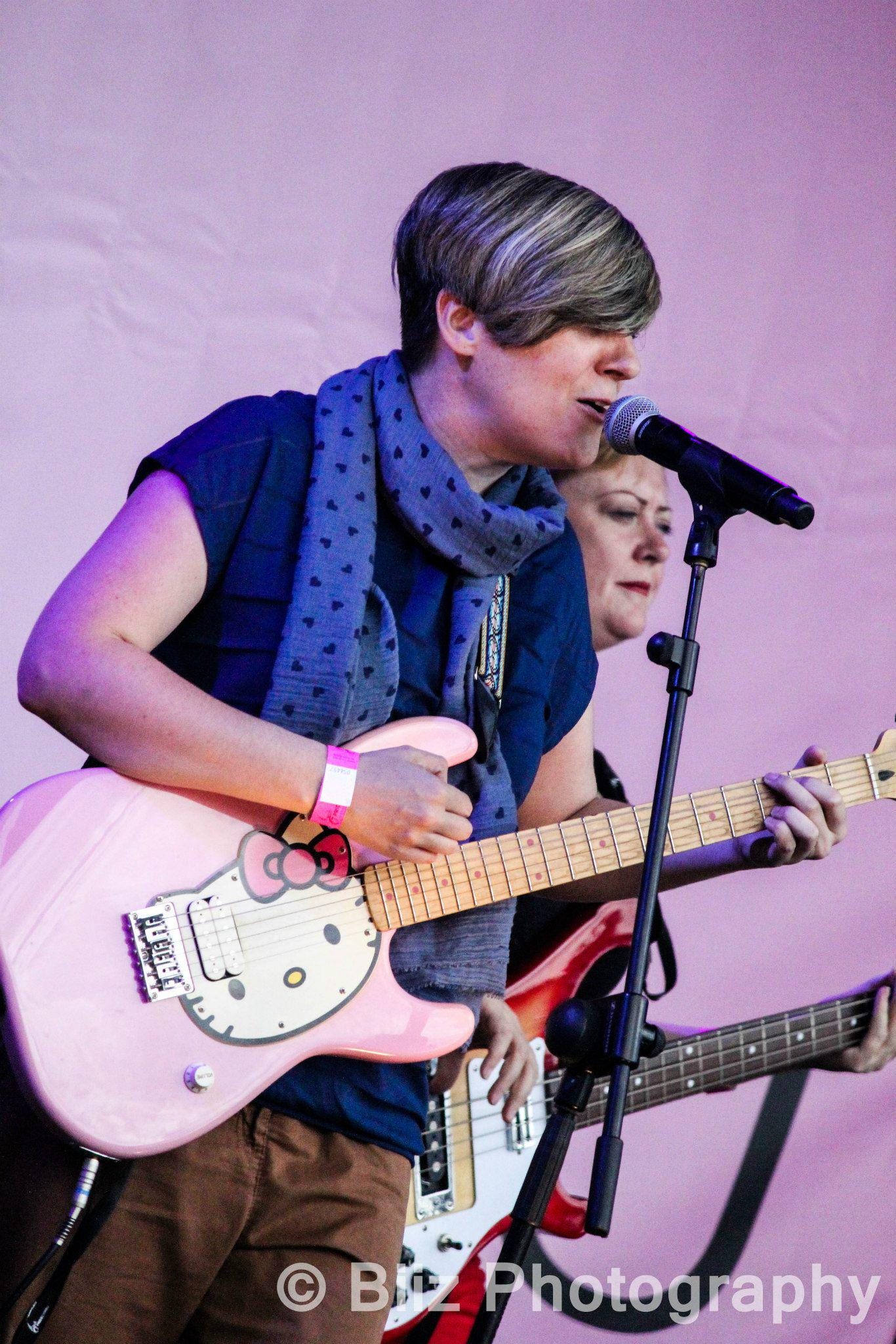
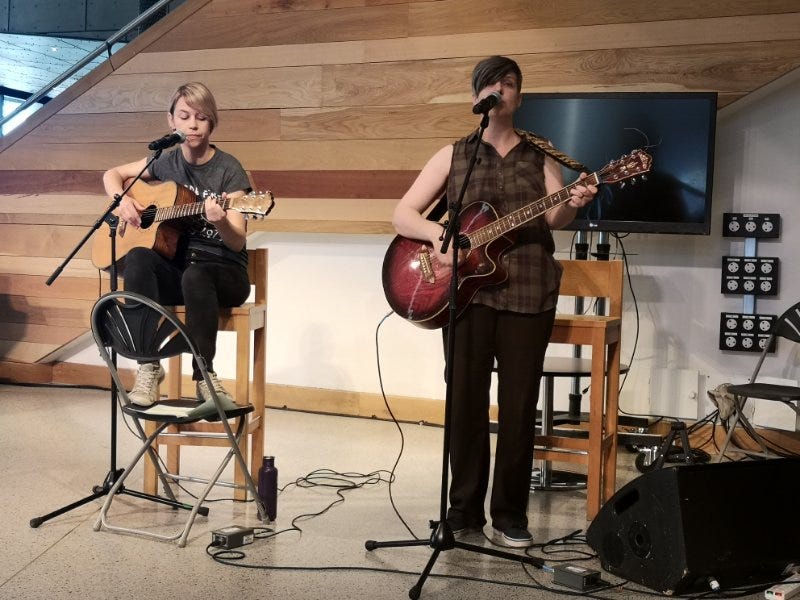
Around the time I returned from my travels, I genuinely believed music might become my career. Sali and I had formed our duo, Cwtch, and Kitty and Linus came with us to festivals, pubs and open mics across South Wales and beyond.
When we landed our first Pride gig at Cardiff Mardi Gras in 2007, we were told to beef up the sound. Our drummer friend Sally Anne joined us and was, inevitably, known as Beefy from then on.
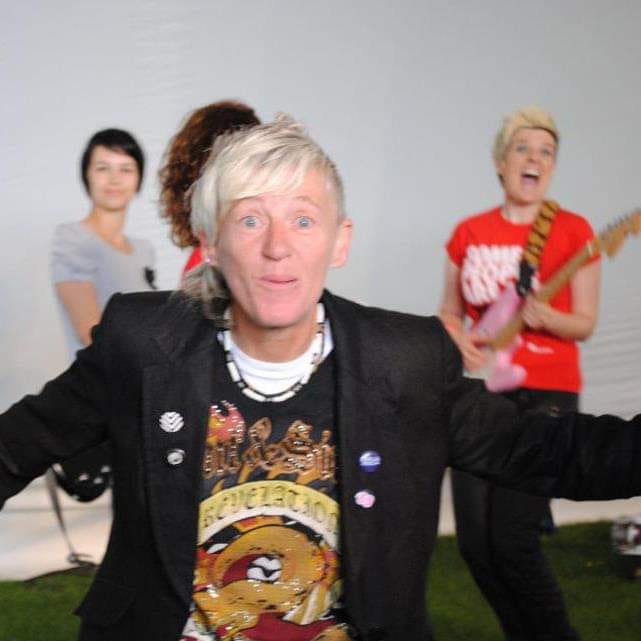
I taught Sali enough bass tab to get through the set, and we rehearsed at Sally Anne’s uncle’s studio. Her uncle was the wonderfully eccentric Eddie Preese, better known as Eddie Pinkhouse.
He could begin almost any conversation with, "When I worked with Mick Jagger..." before reminding us that his recording desk had apparently been used on 'Bohemian Rhapsody'. Whether every story was true hardly mattered. Eddie made us believe anything was possible. We even recorded our first live, studio demo with him.
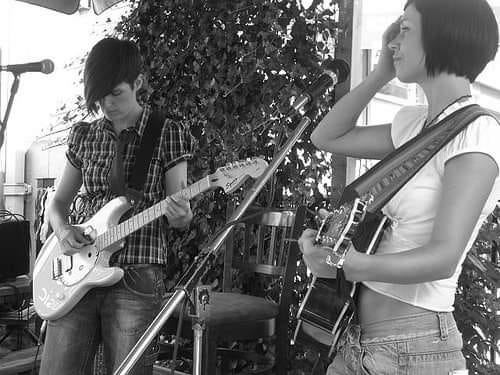
When Cwtch needed a bassist, Marcie finally came into her own. Sali learned the simple root notes our songs needed. She wasn’t trying to become a bassist; she was helping our songs exist, and she nailed it.
During lockdown I finally had the Macca Wannabe restored with working pickups.
At almost exactly the same time, I taught myself GarageBand and later Logic Pro X.
After sitting silently for decades, that old bass finally found its voice.
Much of the bass on our forthcoming double album (including Sali’s ‘Quit the Habit’) was recorded on an instrument that had spent most of its life waiting to be heard.
0:00
-0:07
In 2014 I bought my first upright piano for the princely sum of £50. Naturally, he became Pigpen. Although I am no pianist, I can get by. I have always found pianos rather majestic, like horses of the music world.
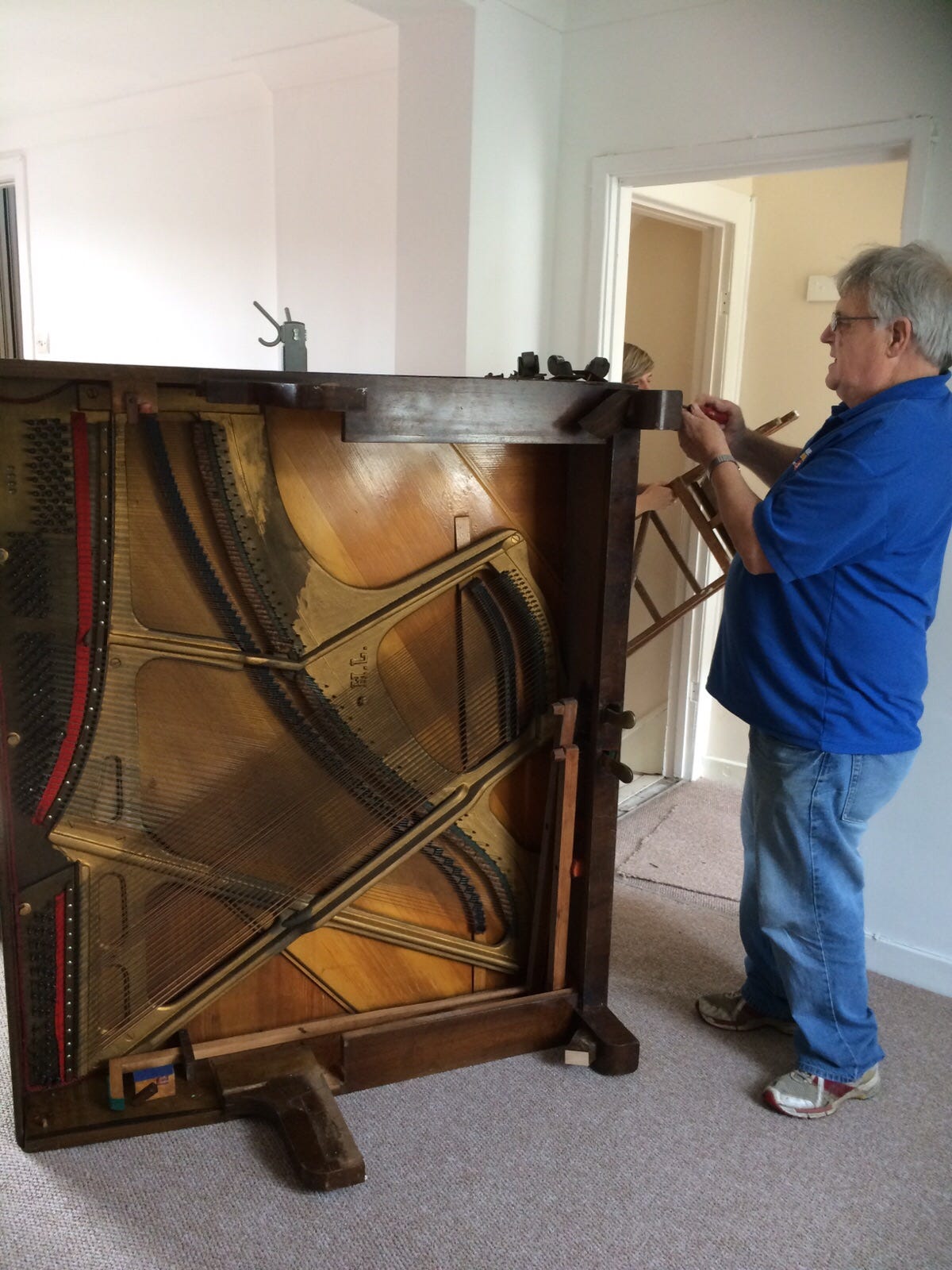
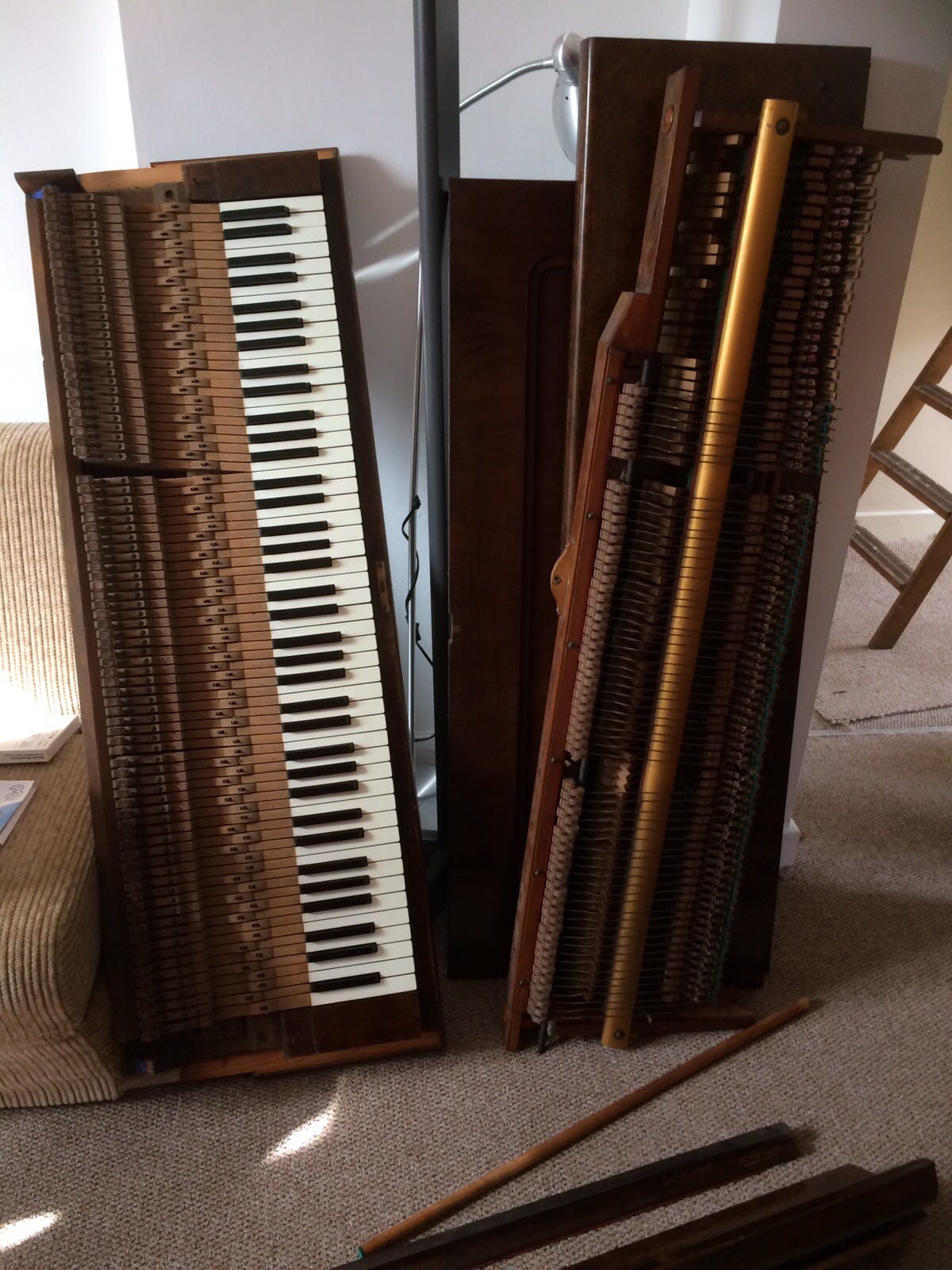
Getting Pigpen home cost considerably more effort than buying him. Dad hired a van, only to discover the piano wouldn't fit through my hallway. Most people would have admitted defeat. Dad dismantled the entire thing, piece by piece, then rebuilt it perfectly in my new home and I loved tinkling on him.
0:00
-0:25
Sadly, Pigpen didn’t survive our 2016 house move. He wasn’t secured properly, toppled over in the van and was damaged beyond repair.
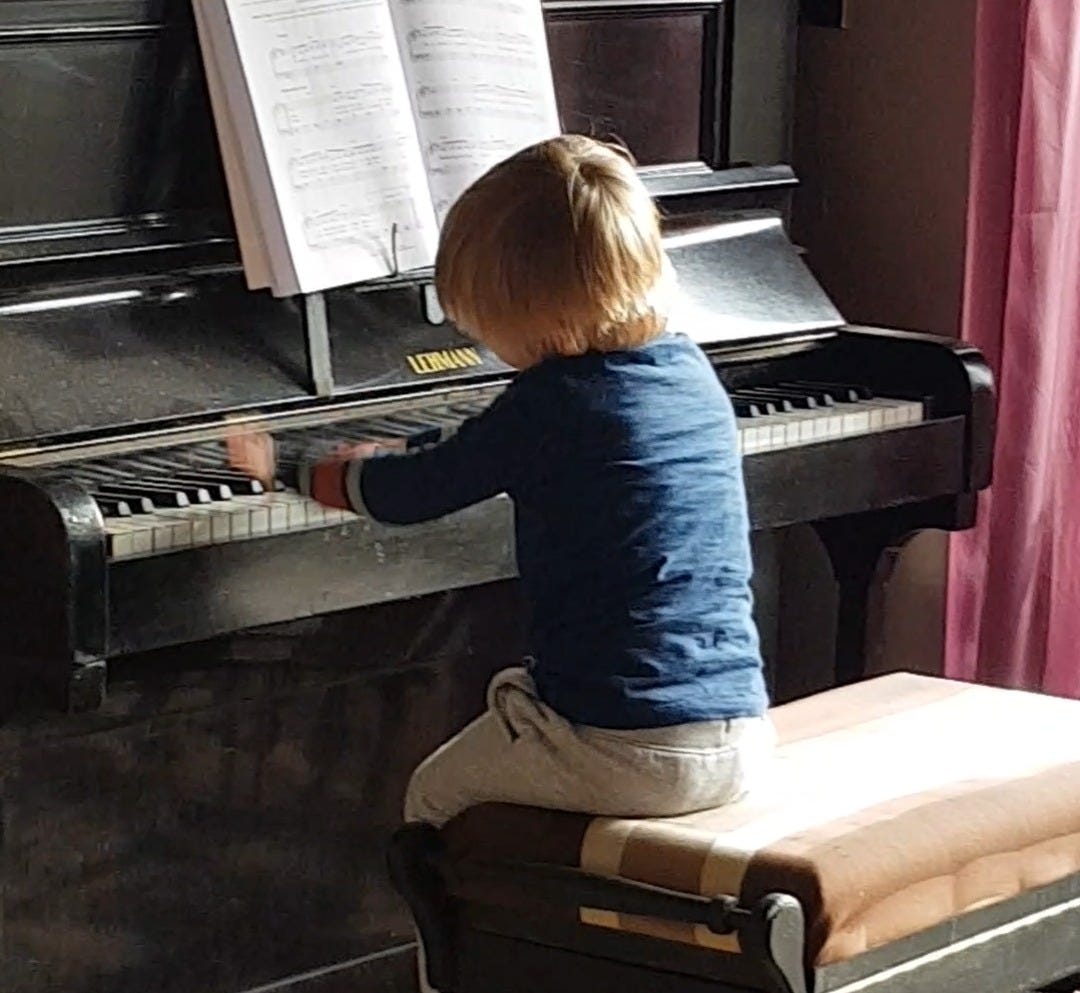
Lucy, a church piano, replaced him. We never really bonded. She was permanently out of tune and determined to remain that way. Yet, despite all that, she gave my eldest son his first taste of sitting beside me at a piano, perched on a piano stool my dad had made, enthusiastically hammering away at whatever tune we happened to be playing. Looking back, perhaps she deserved a little more credit than I gave her.
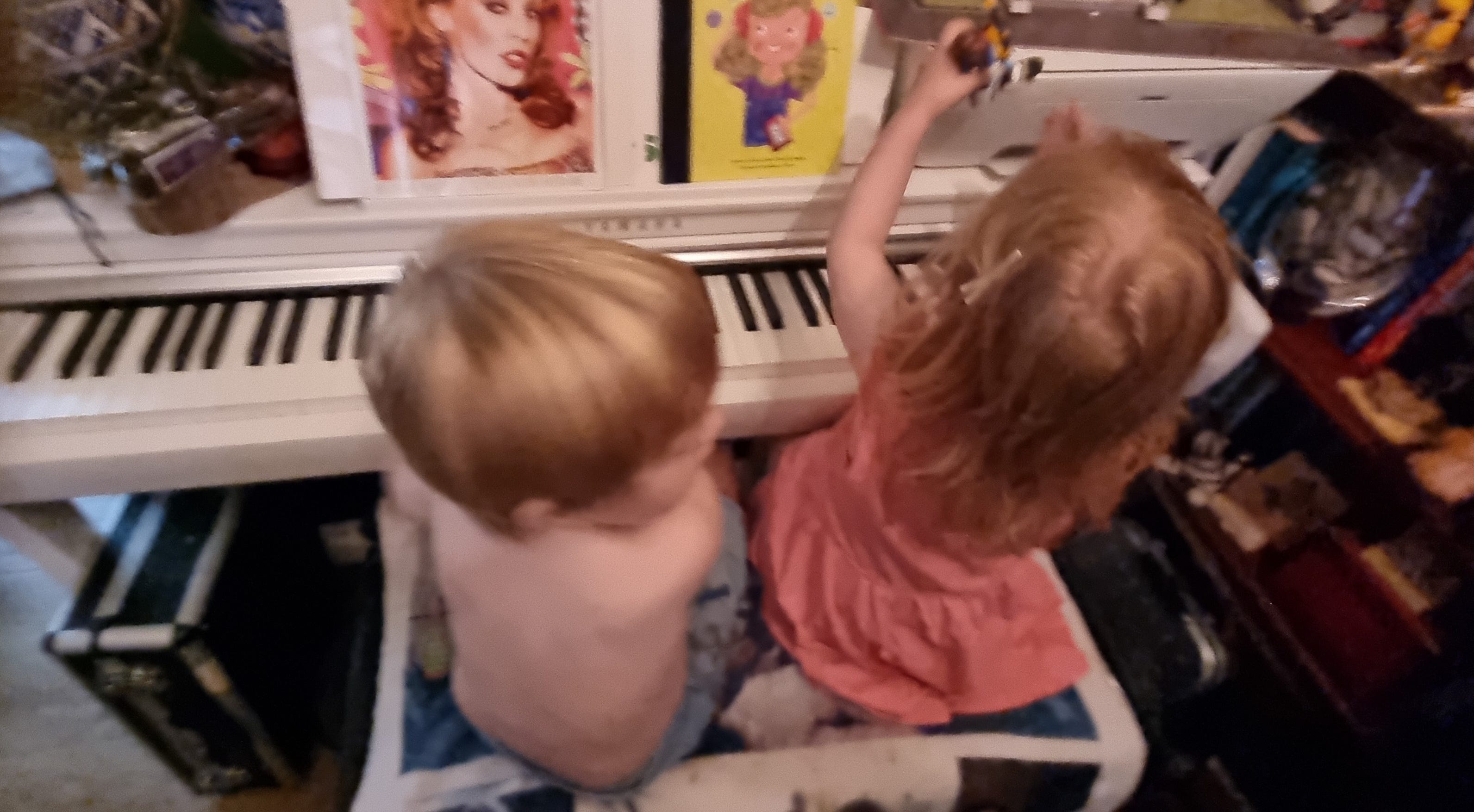
In 2022 she was replaced by Snoopy, my white Yamaha digital piano. He’s the one I play most now, whether I’m writing, recording or simply unwinding.
He’s also the piano my toddler twins climb onto beside me, a bit like his namesake snoozing on top of his kennel. After all the travelling, gigs, repairs and house moves, that feels like the right place for the story to arrive.
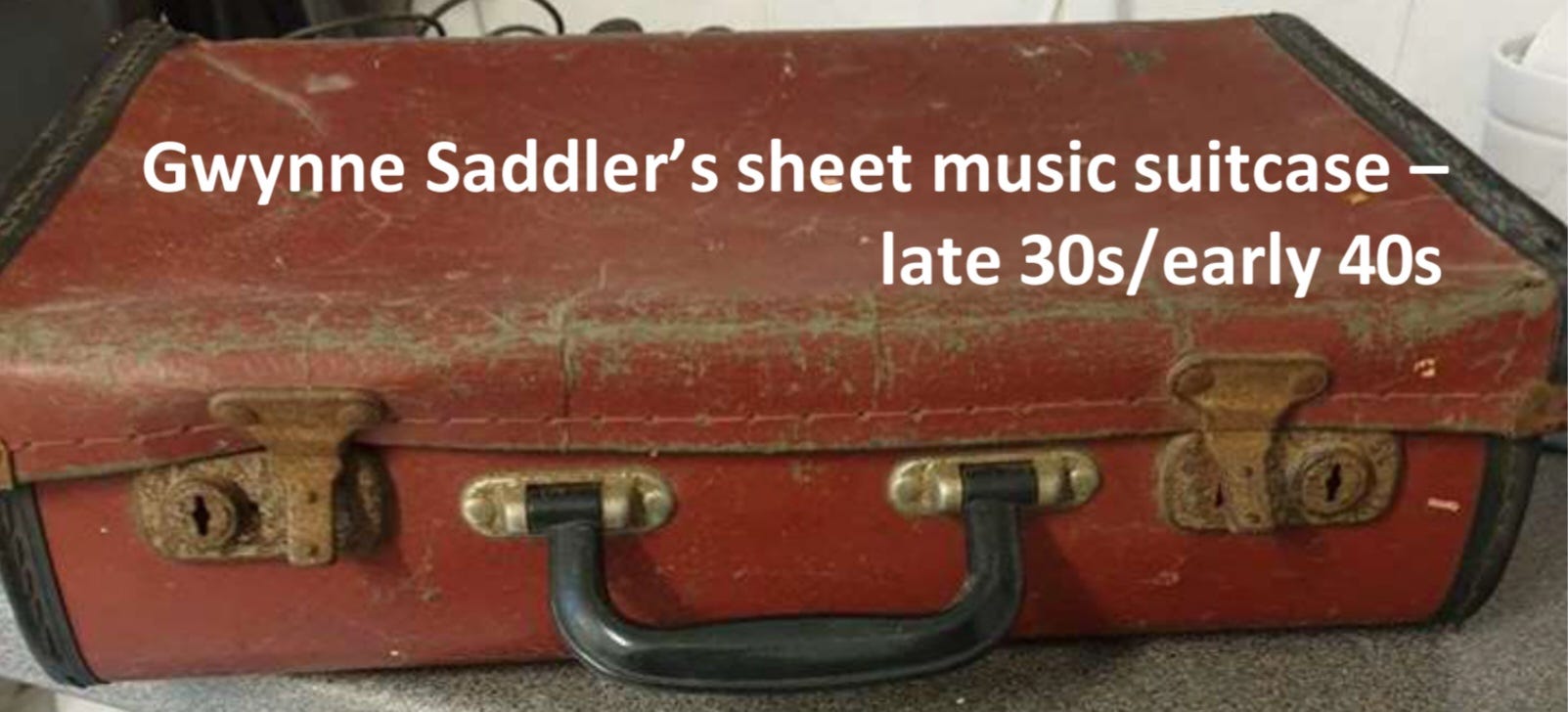
Around my fortieth birthday, Aunty Jayne handed me something that had belonged to Gwynne for decades: his battered old sheet music case.
She said,
"I thought it would be nice for you to have something, especially with your music connection. He would be so proud of you and [your brother] Robert. He took this case absolutely everywhere."
That old case now means more to me than almost any instrument I own.
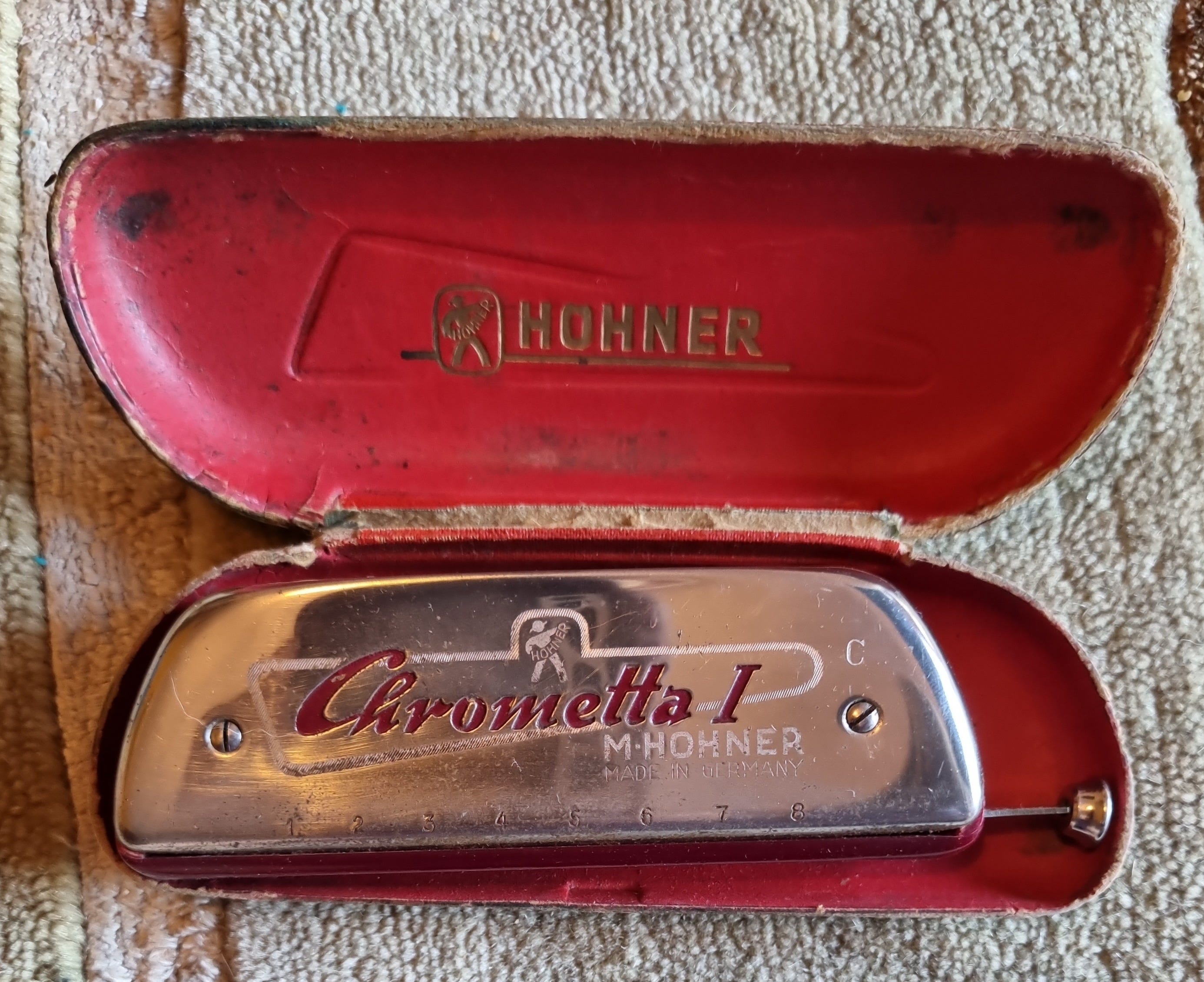
I also inherited Johnny Jackson’s battered Hohner Chrometta I. Johnny always seemed to have a harmonica in his hands back in the day. Inspired first by him and later by Bob Dylan, I bought one of my own when I was about twenty.
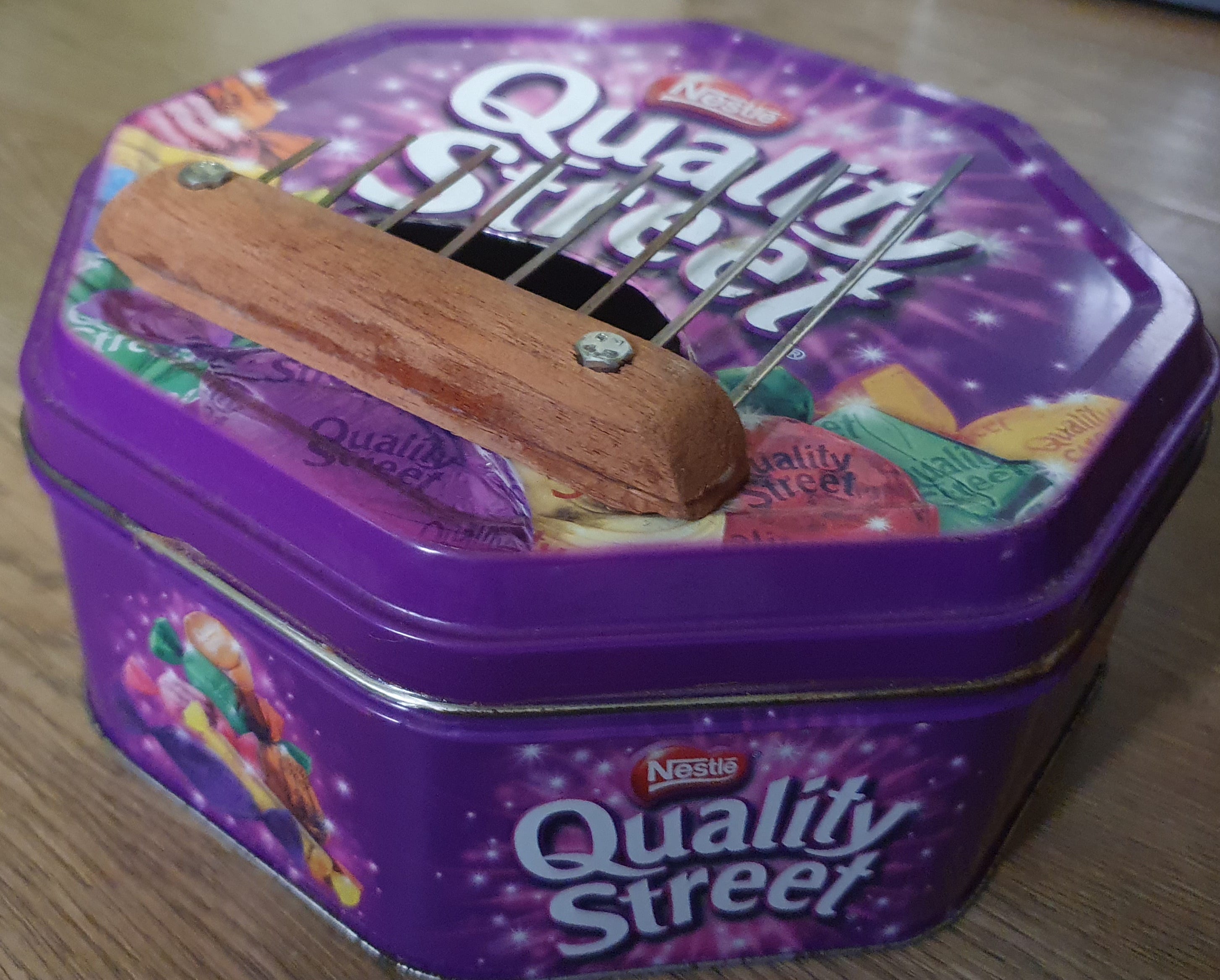
Johnny's trademark greeting was "Shwmae!", so there was never much doubt what his harmonica would be called. It's not an instrument I pick up much, but it remains a prized possession, alongside a thumb piano my dad made for me from an old Quality Street tin. Between them, they remind me that music doesn't always arrive in expensive instruments; sometimes it arrives through the people who put a little of themselves into making them.
Looking around the room now, I don't really see guitars, pianos and harmonicas.
I see the hallway at number 70 Mackworth Road, with the orange Emu marionette and the little ukulele hanging by the front door.
I hear Johnny bellowing "Shwmae!" with his mouth organ in his hands.
I hear Eddie Pinkhouse beginning another conversation with, "When I worked with Mick Jagger..."
I see Sali patiently learning bass because our songs needed one.
I see my children climbing onto Snoopy to play ‘Waffle Doggy’.
Most of all...
I see Dad.
Every repair.
Every ridiculous homemade solution.
Every instrument he somehow found a way to save.
I started this piece thinking it was about the instruments.
It isn't.
It's about the people who left themselves inside them.
That's the music I still hear.
It's cosy in here.
Fancy a Cwtch?
X
No posts
Comments
Nothing yet. Say the first thing.
Sign in to join the conversation.