
Hello everyone and welcome to my monthly post, free for everyone to read. Paid subscribers get a weekly diary post from me detailing all the plants, people and gardens I come across in my job. Some examples of recent diary posts include my epic trip to Kyrgyzstan to see wild tulips, a visit to Charleston Farmhouse to walk through the hollyhocks, and a conversation with Sarah Cook, who has spent many years collecting Cedric Morris’s irises. As a paid subscriber you’ll get access to the whole archive - three and a half years worth of articles, including a whole series on designing a border with plant lists and planting combinations, as well as a series on cottage garden planting. I am a passionate gardener myself and am constantly learning from the inspirational people I meet, and I hope to pass all this on in a readable, understandable and hopefully enjoyable way. It costs £4 a month to subscribe - or even less than that if you subscribe for a whole year (£40).
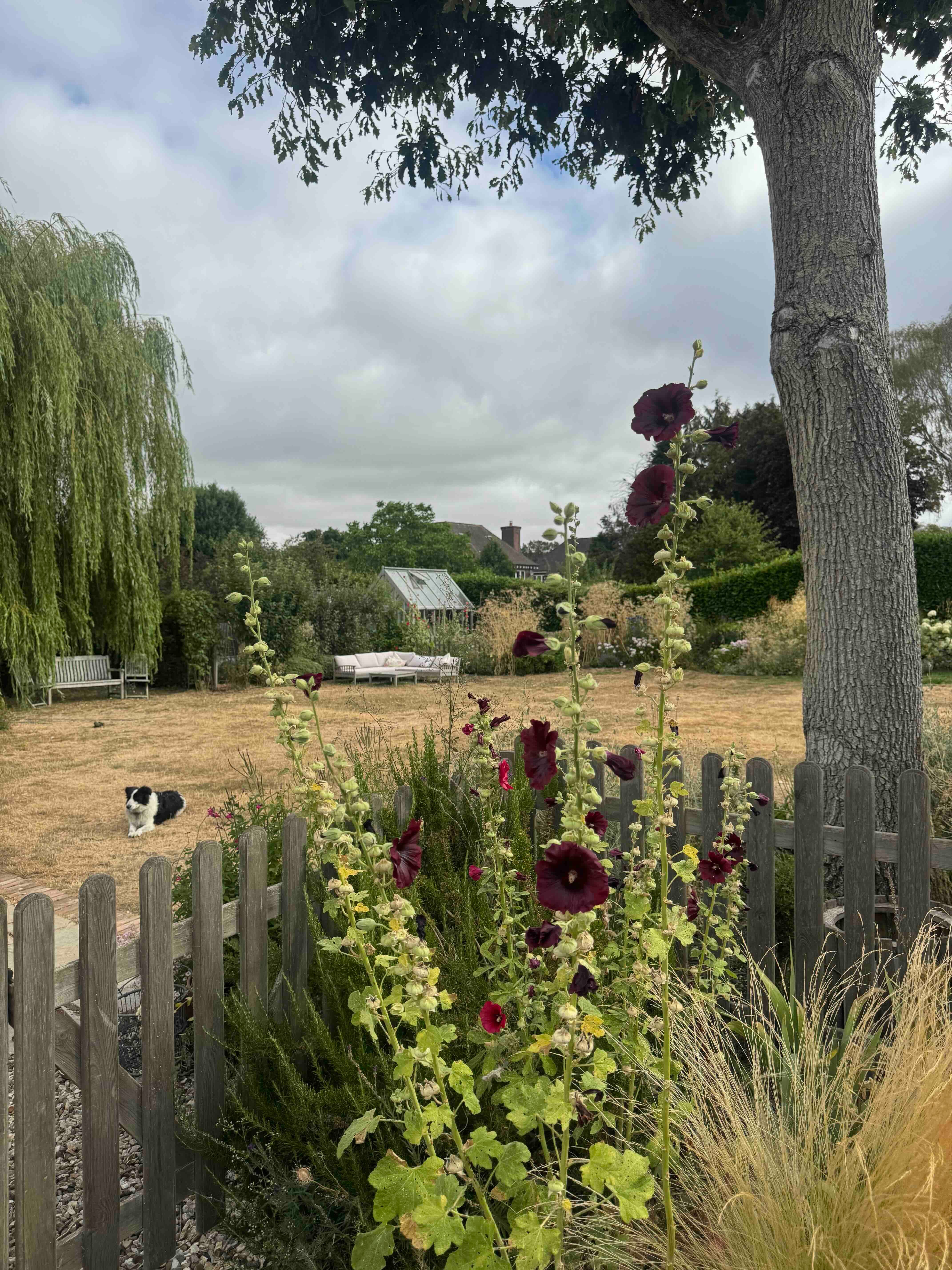
The last couple of months have been challenging to say the least, with bursts of incredibly hot weather and very little rain. It was one of the driest Mays on record in my area, 50 miles west of London. In June, we had a day or two of heavy rain at the beginning of the month, which ensured that the garden was looking green and full of flowers for the open garden day in aid of Maggies. But since then, for almost nine weeks, there has been nothing more than a hint of drizzle. It’s tough, and we’re reminded every day of the catastrophes that this extreme warming is bringing with wildfires breaking out in Suffolk, Scotland, France, Italy and so many other places. Climate change denial is a joke, and we all need to face the music and encourage our policy-makers to make sensible decisions.
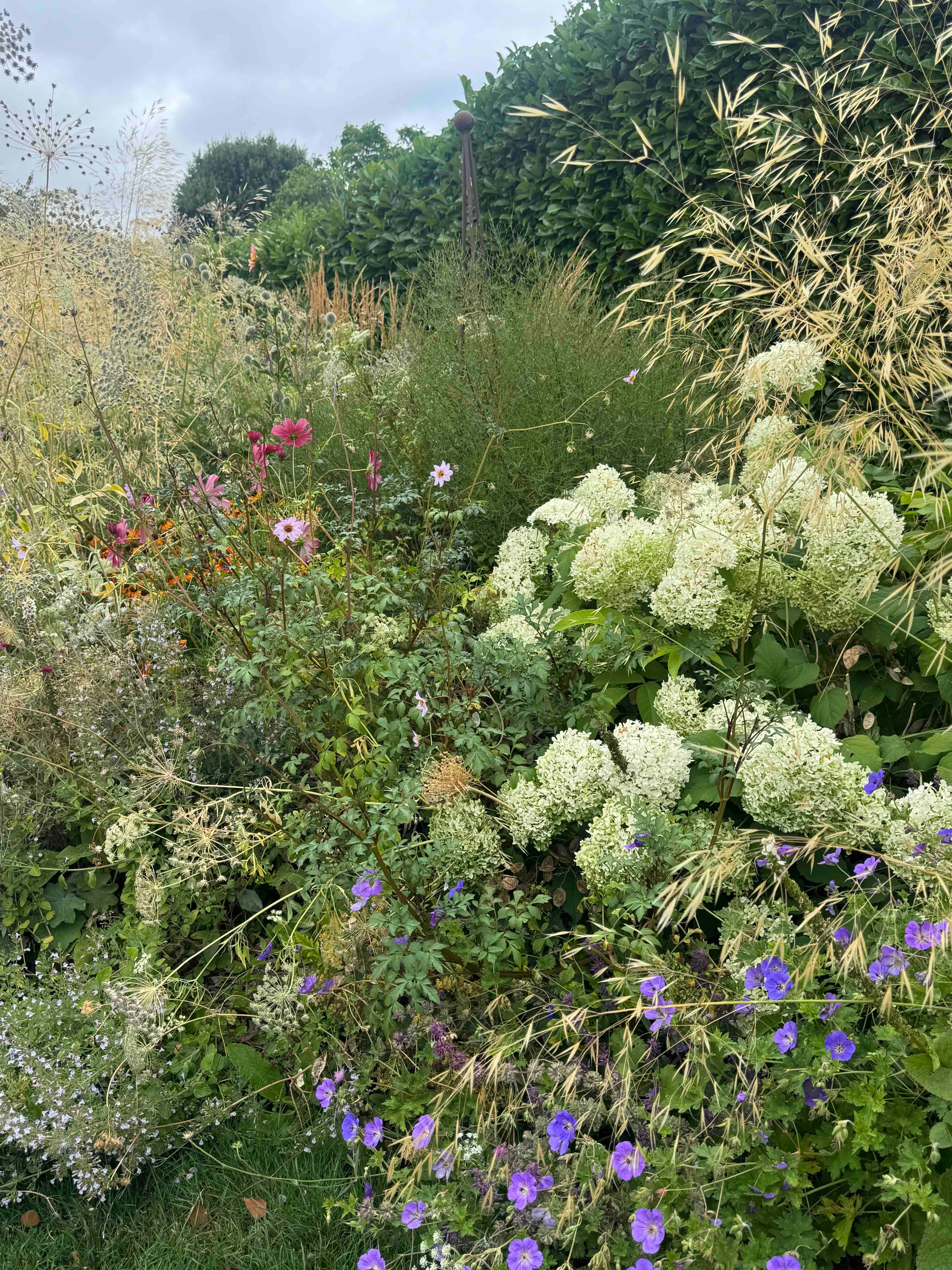
My garden is looking muted, turning into itself. The grass is like straw and even the plants I thought I could depend on (like Salvia involucrata) aren’t flowering much. Some plants have to be kept going with buckets of water - including the poor Hydrangea ‘Annabelle’ whose huge white flowers are nodding downwards in pain, above wilting leaves. The beautiful ‘Annabelle’ in the middle of my back border may have to come out next year - on my walk this morning I was imagining perovskia in its place.
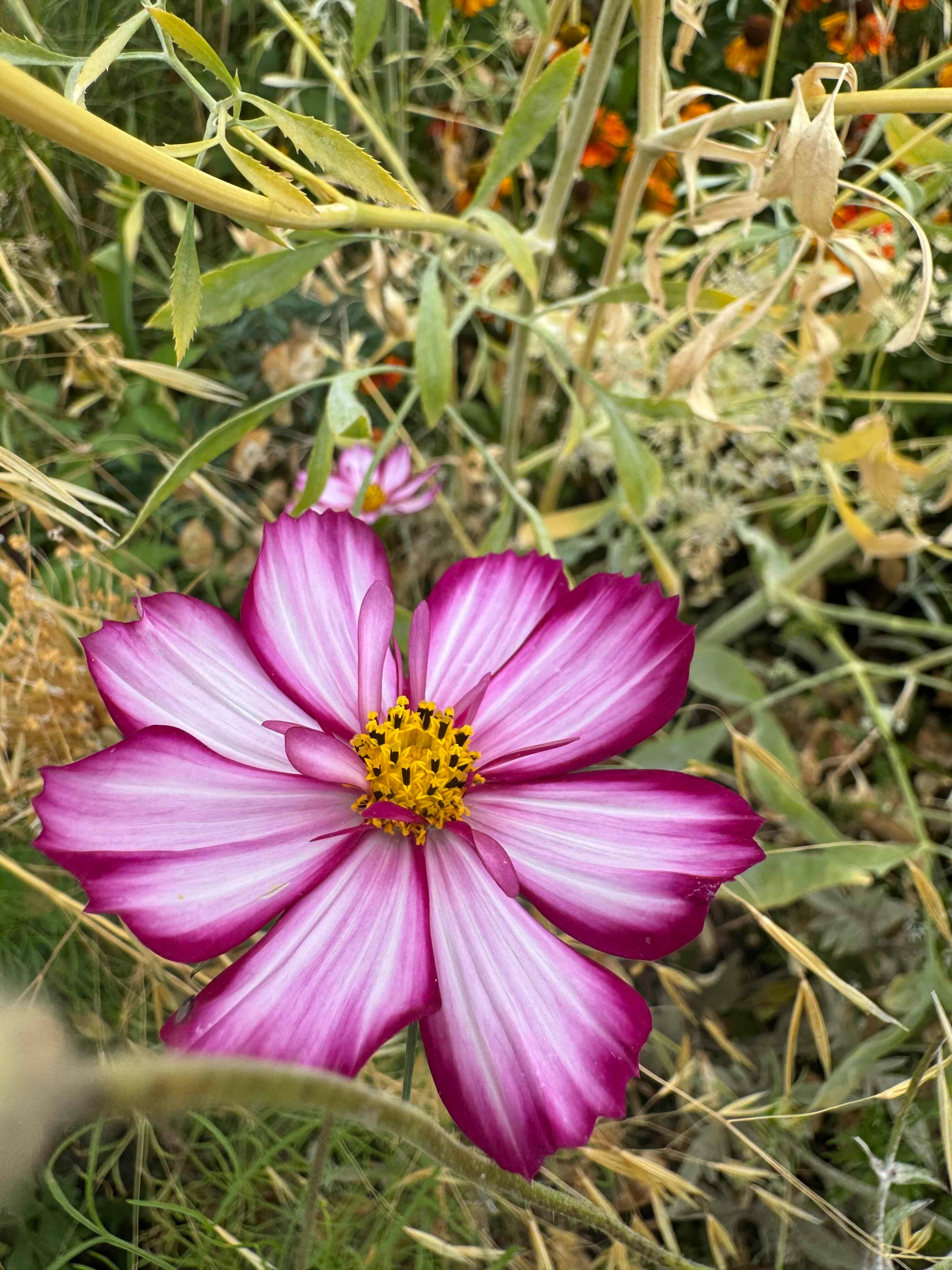
Most of the cosmos plants I carefully grew from seed have had to be sacrificed now that we have a hosepipe ban. I planted a few in big containers and these are being kept going with washing up or shower water. The rudbeckia that used to be a big feature dotted around the front garden is now reduced to a few paltry patches, its wilted leaves showing how much it hates the drought. And the delphiniums I foolishly planted to add an injection of colour for the open day will undoubtedly succumb now that I can’t water the borders.
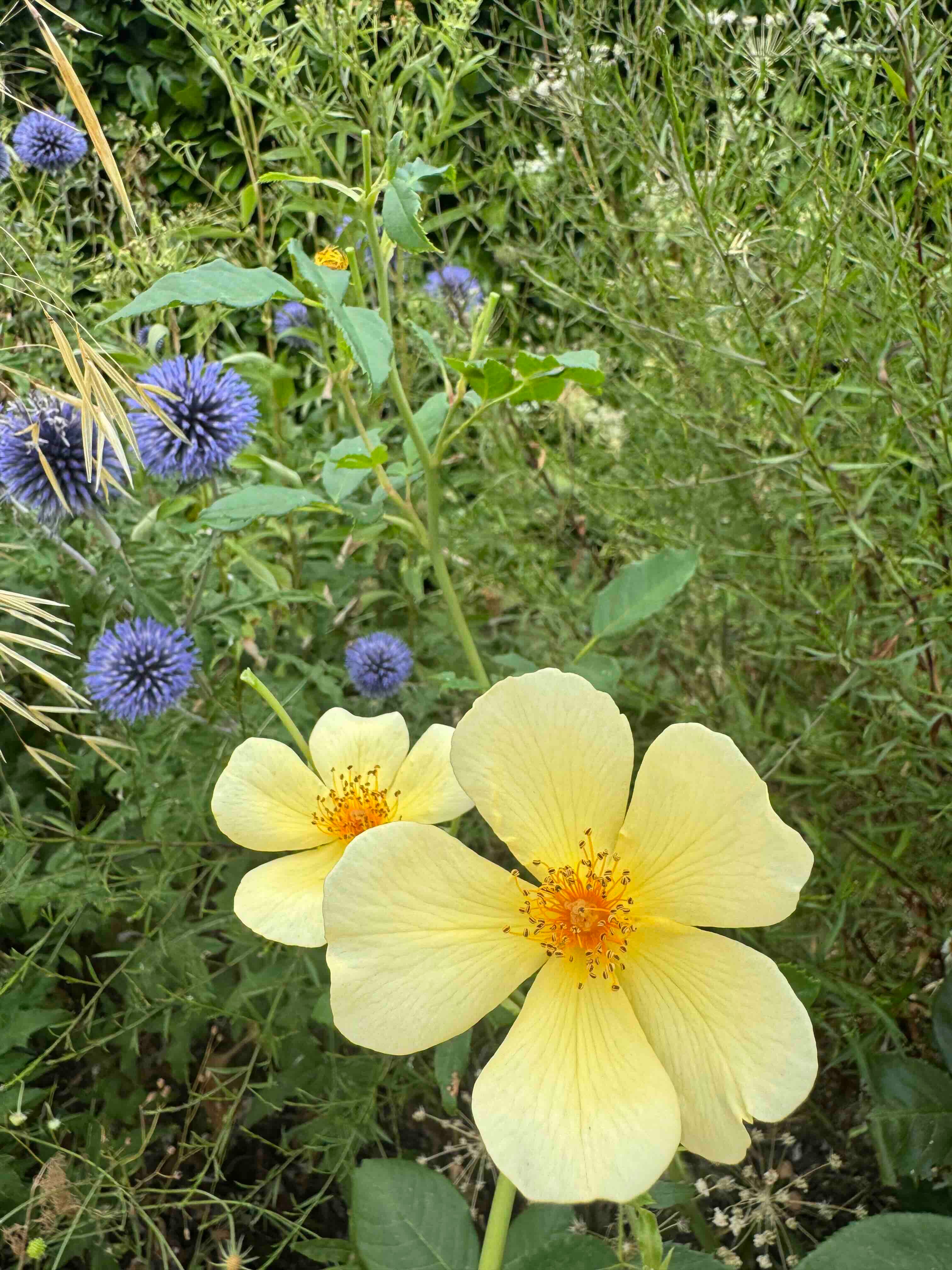
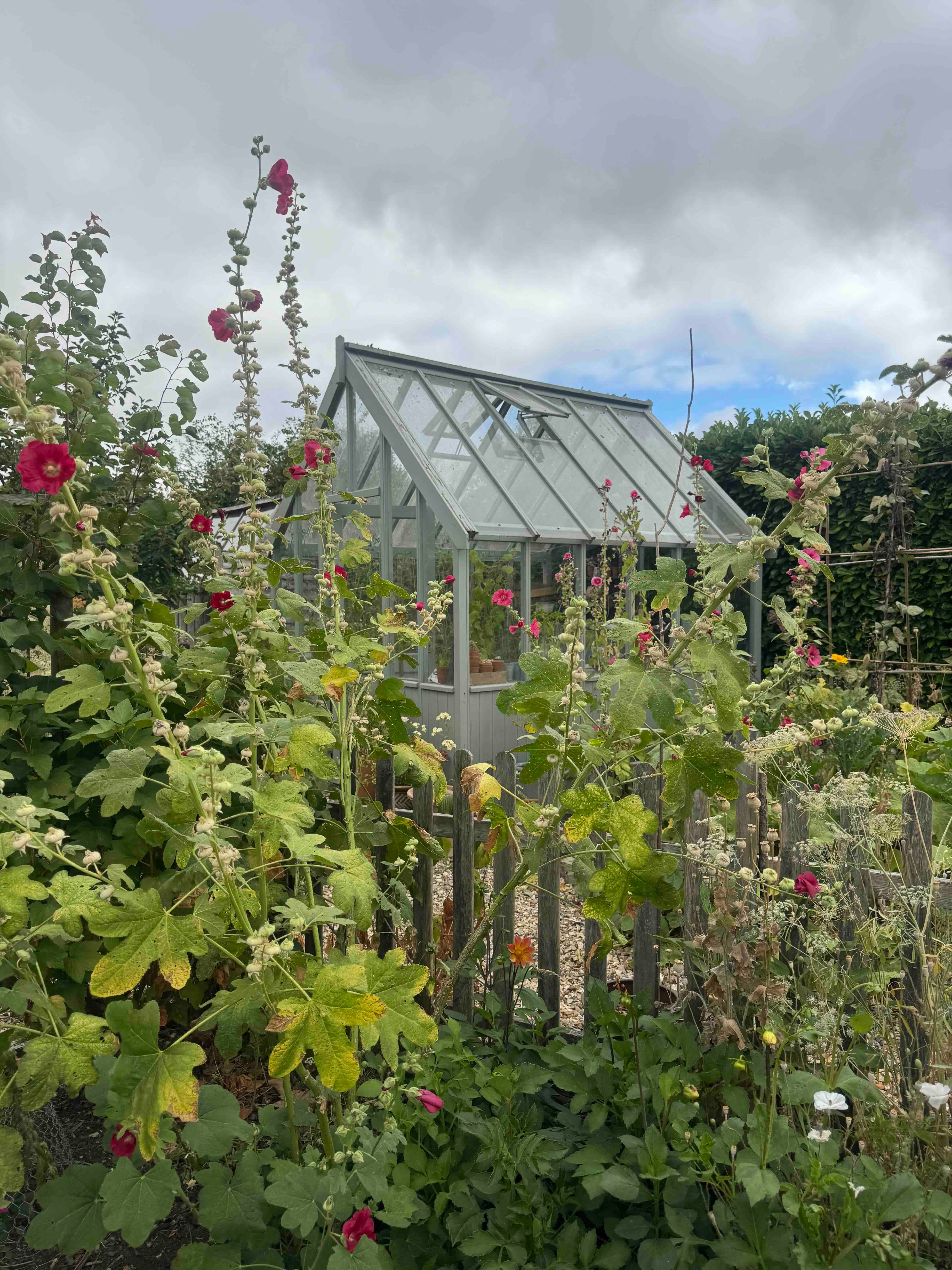
I wrote about the most resilient plants that seem oblivious to the heat and drought in last month’s post. This month the penstemons and Dianthus carthusianorum have gone over and the large-leaved Salvia involucrata has stopped flowering. The small-leaved salvias like ‘Violette’ are generally OK, especially those I planted in pots near the house, which get special treatment. Some of the roses are still flowering, including the valiant ‘Tottering by Gently’ and the pale pink ‘Silver Wedding’. And the hollyhocks are still with me, just. The breezy Oenothera lindheimeri (which used to be Gaura) is a saving grace.
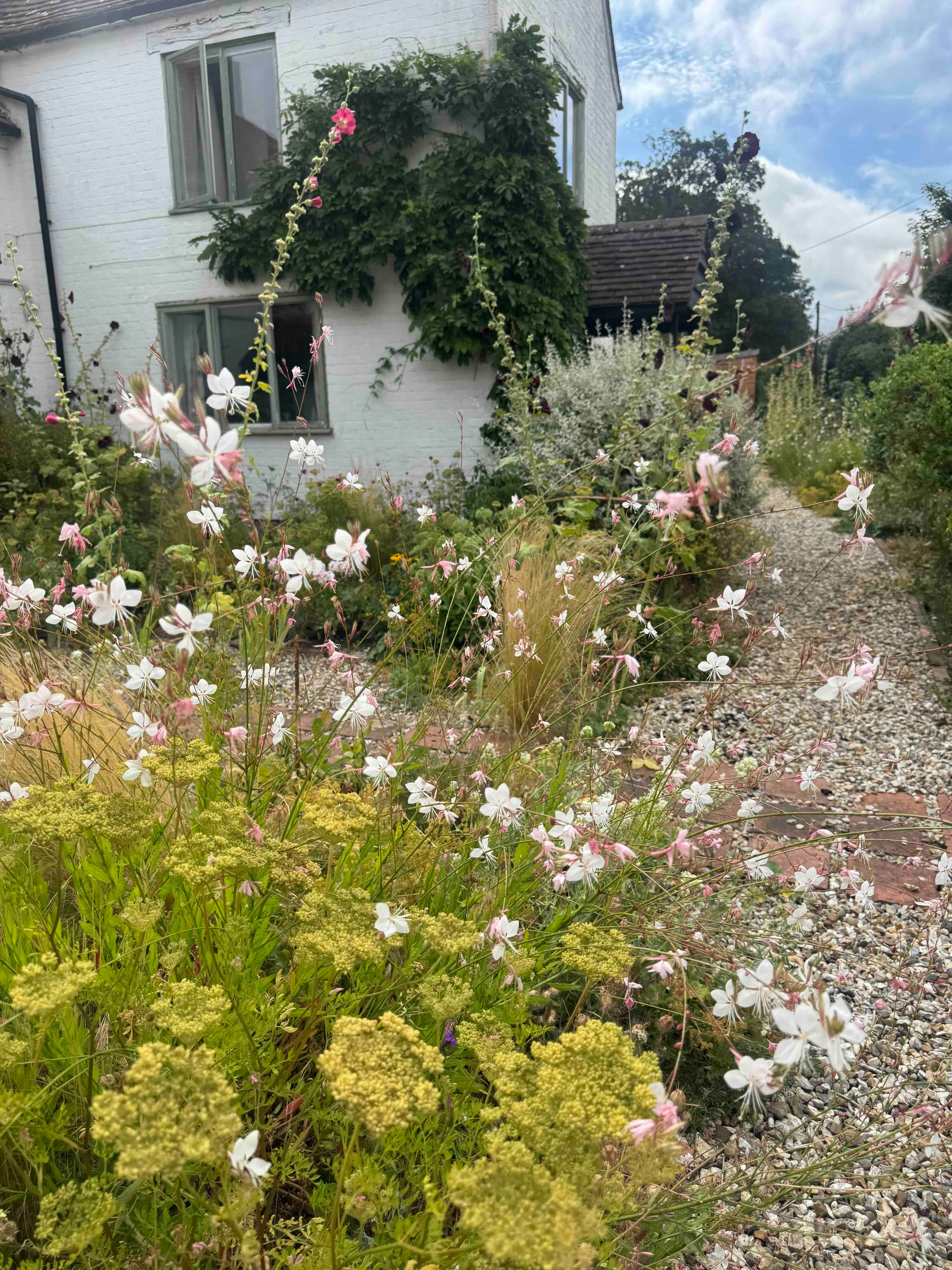
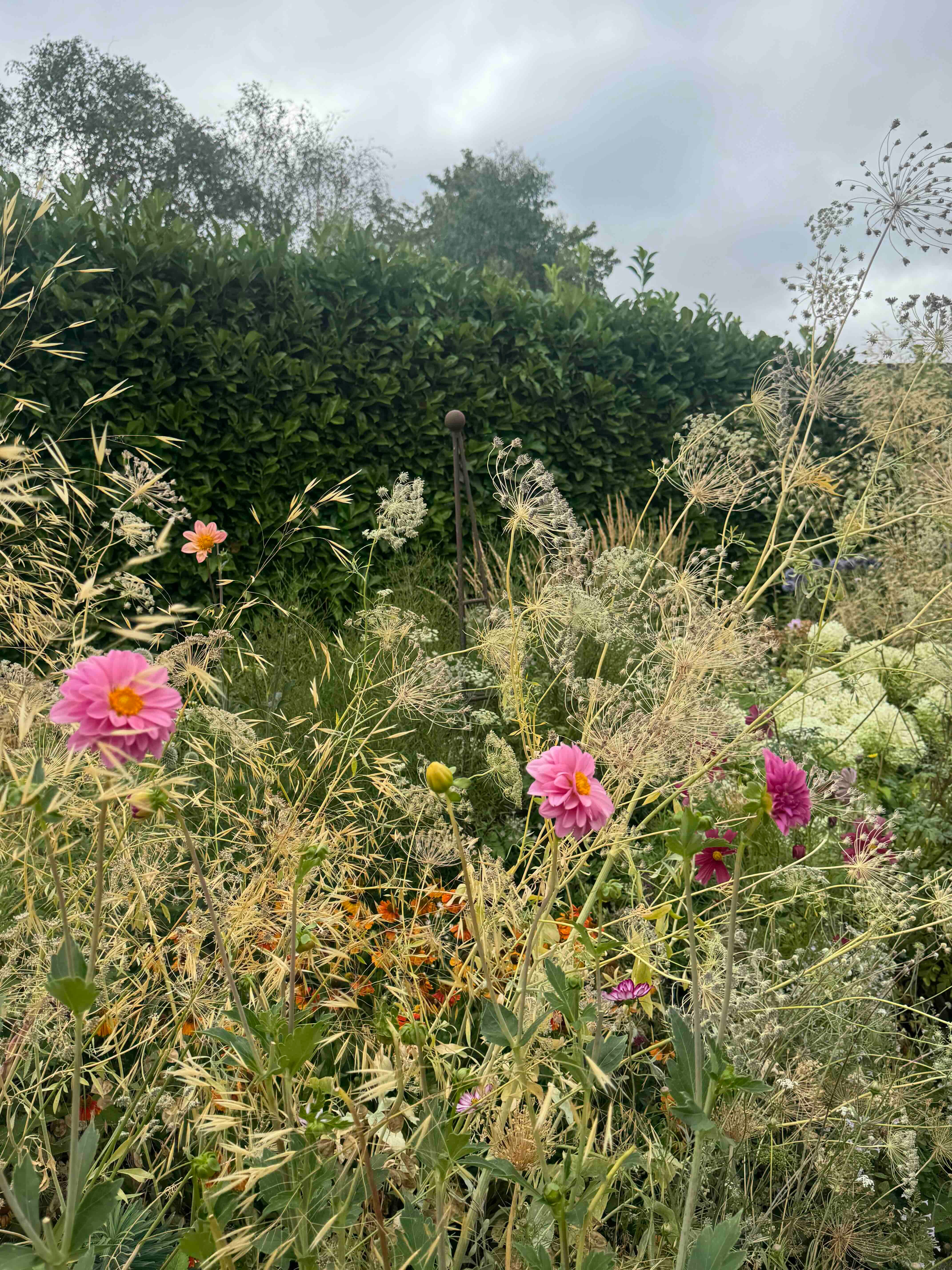
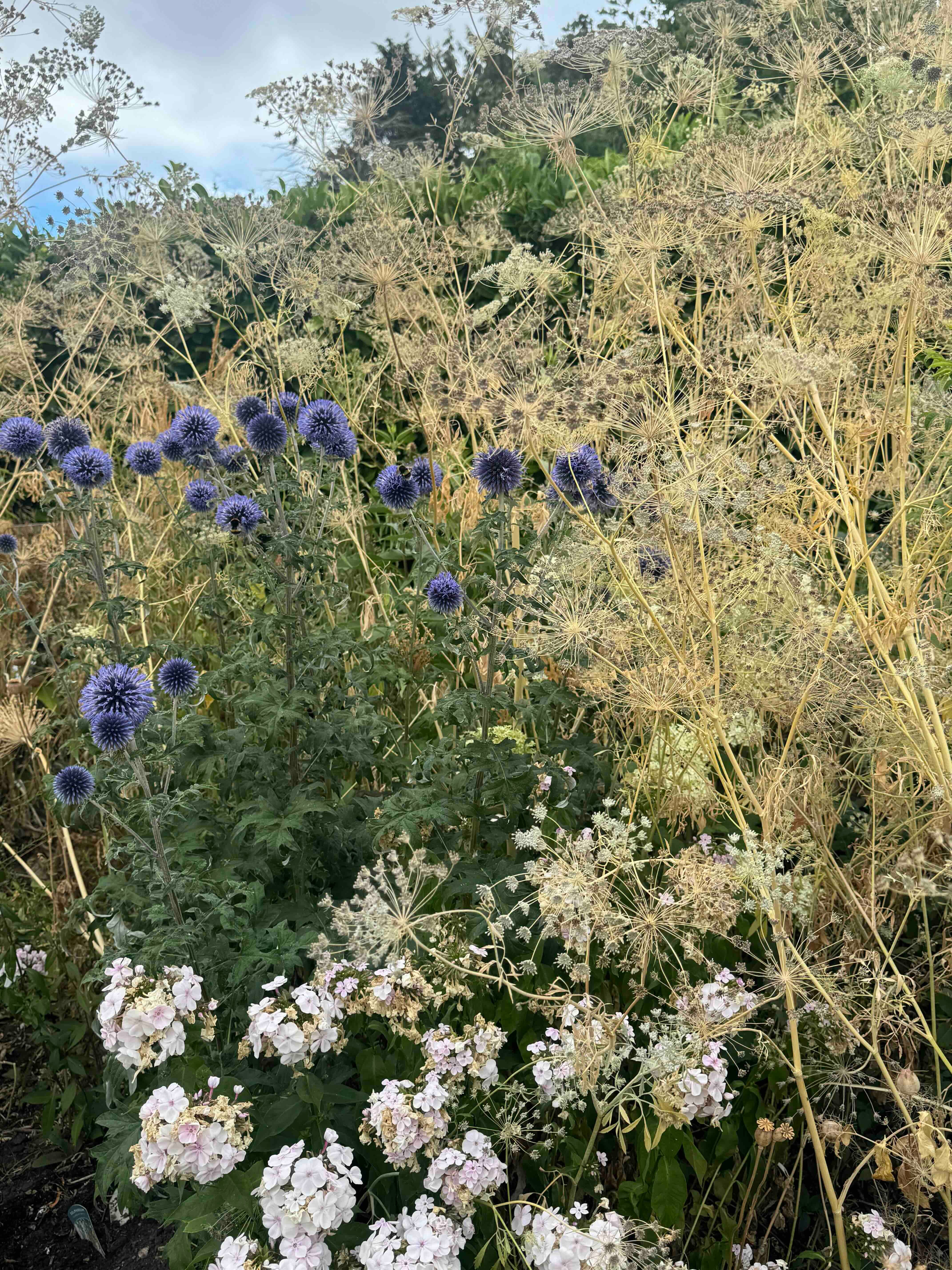
The ornamental grasses are undeterred by the heat - especially the golden oat grass Stipa gigantea, which matches the colour of the faded ammi that I’ve left in the borders for structure. The stipa is a Mediterranean plant that I’ve seen in the dry meadows of central Spain, so it is well adapted to the drought, as is Stipa tenuissima, the Mexican feather grass from the dry, mountainous slopes of Mexico and western Texas. I have a single Pennisetum villosum growing in the gravel garden and it looks lovely weaving in with the tiny dotty flowers of Scabiosa ochroleuca. It comes from the dry climates of northeastern Africa and the Arabian peninsula so is also well adapted to this weather. It hasn’t self seeded here so I need to find a way of getting more plants into my garden.
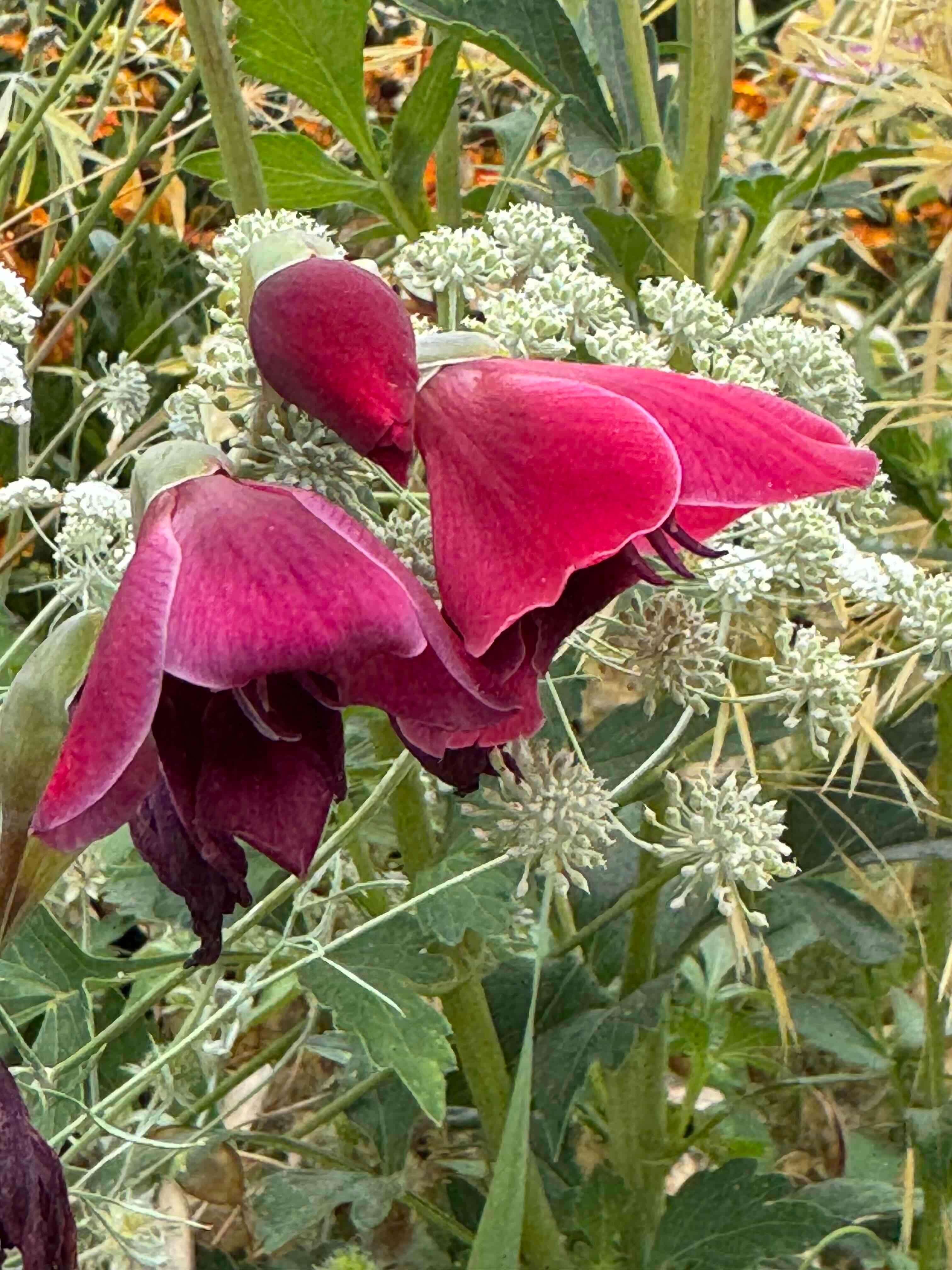
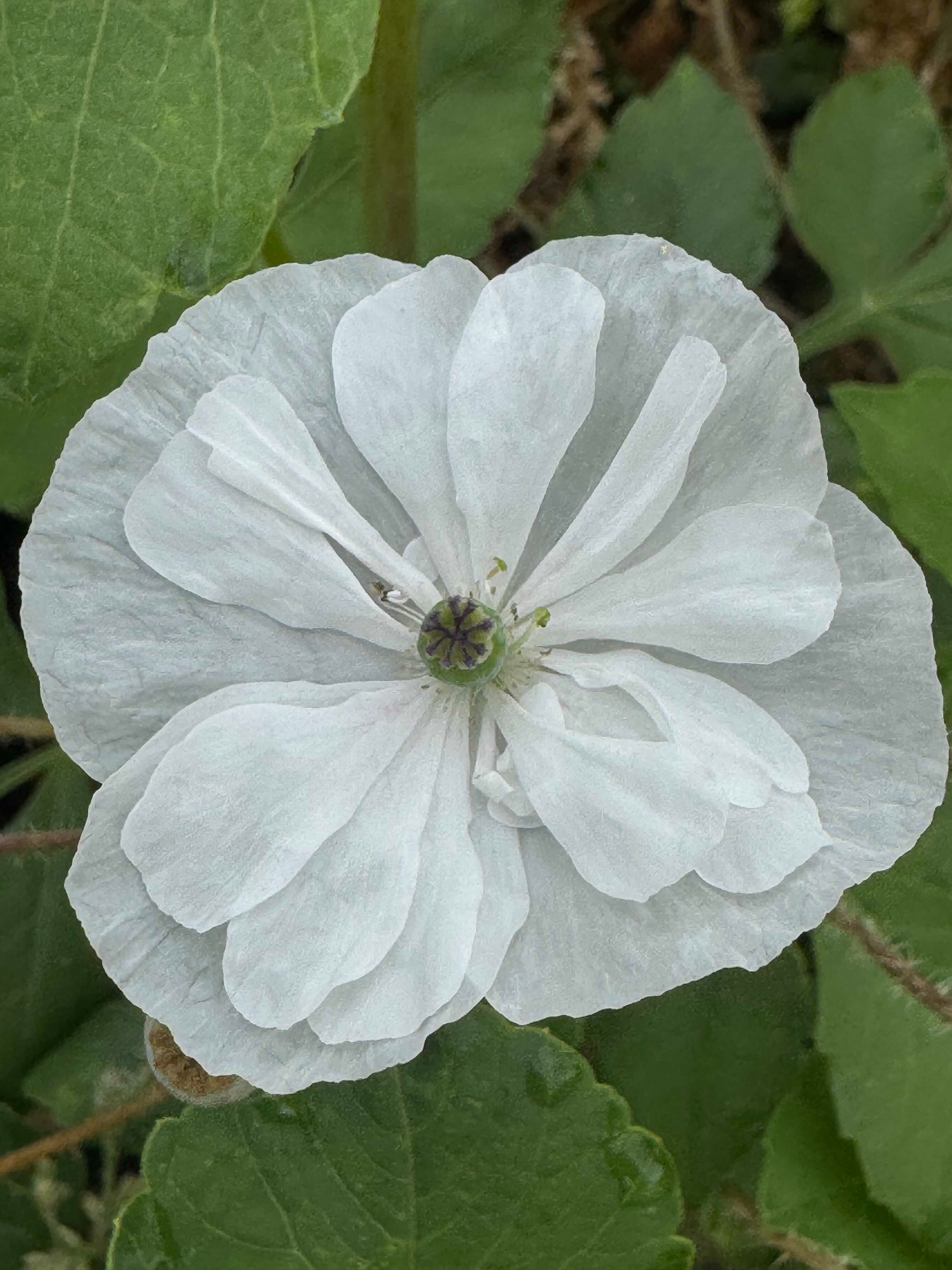
Other plants doing well in the heat include the South African Gladiolus papilio ‘Ruby’, the bee-magnet globe thistle Echinops ritro ‘Veitches Blue’ and a curious white poppy that I can’t remember planting. The pleasantly minty Calamintha nepeta is oblivious to the heat, while some of my seed-grown dahlias are at last being coaxed into flower, although they aren’t quite as abundant as they might be.
I find it fascinating to learn about how plants adapt themselves to conditions of drought. Plants like rosemary or Pinus mugo have tiny, needle-like leaves less surface area to be exposed to the sun or wind. Others, like the holm oak (Quercus ilex) or the strawberry tree (Arbutus unedo) have thick, leathery, sclerophyllous leaves with a waxy coating that locks in moisture and resists the heat.
You’ll often find that Mediterranean plants have silvery or grey leaves - lavender, santolina or teucrium for instance - that reflect the sun and keep leaf temperatures down. These plants are often aromatic, with essential oils that reduce evaporation and protect the plant from grazing animals. And some, like the appropriately named lambs ear, Stachys byzantina, have leaves that are covered in fine hairs that protect the plant from desiccating winds. Some Mediterranean plants such as cistus drop some or all of their leaves as they go into a summer dormancy, ready to re-emerge in autumn when the first rains arrive.
Most of these plants have deep, penetrating root systems once established, seeking out any existing moisture deep underground. This post from fellow Substacker Virens Studio documents some fascinating research into the root systems of plants from a book called Wurzelatlas which publishes black and white drawings made over 40 years in Austria. The root systems of over 1000 plants were painstakingly excavated and accurately drawn to show the underground parts of the plant. When you see visual representations of the amazing, spreading and densely fibrous roots of Deschampsia cespitosa and the metre-long, probing roots of Dianthus carthusianorum, you can see exactly how they are able to survive in such tough conditions.

Clever watering: using saved water wherever possible, water deeply with a watering can, pouring slowly to give it time to soak down to the roots. Don’t water with a sprinkler which results in evaporation loss and can encourage mildew on leaves. A trick I learned from my allotment days was to cut the bottoms off large plastic water bottles and dig them into the soil with the screw top off, before filling the bottle with water. This directs water even further down around the roots. Only water in the early morning or late evening, to minimise evaporation loss. After watering, mulch plants with compost or other organic matter that will help lock moisture in. Prioritise edible crops, container plants and recently planted trees, shrubs or perennials. Ignore lawns and let them turn brown - they always bounce back as soon as the rain returns.
Save water: I’ve started taking buckets into the shower, as well as using washing up water. Whenever I’m running the tap waiting for the drinking water to get colder I collect it in a tub or jug. It’s just a matter of getting into a mindset of not wasting a single drop.
Stop pruning: delay pruning hedges, topiary or fruit trees until the weather has cooled down. Pruning plants increases stress on the plant, accelerating moisture loss and increasing the risk of sun damage. Pruning will lower a plant’s ability to retain and regulate moisture, which is obviously crucial in a heatwave, and freshly-cut stems can attract pests and fungal disease.
Provide shade: if you have easily moveable container plants, move them into an area of shade for the duration of the heatwave, or use light fleece or a parasol to protect plants.
If you aren’t currently in the middle of a heatwave, let normal gardening continue, with the usual round of watering, harvesting and deadheading.
• prune wisteria. If you regularly prune wisteria in summer and again in February, it will flower more freely, as you are reducing vegetative growth which will encourage more buds. A summer pruning opens up the plant to allow air circulation and more sun to ripen new shoots. Watch a video here.
• summer prune trained fruit trees. This involves cutting back new shoots to allow light to get to the fruit. Cut back stems to three shoots above the basal cluster of leaves.
• keep deadheading cosmos, roses and dahlias to encourage new blooms
• start collecting seed from early summer plants such as foxgloves, poppies and sweet rocket
• cut back herbaceous plants such as alchemilla, nepeta and hardy geraniums to encourage a new flush of growth
• take cuttings of tender perennials like salvias and pelargoniums
• sow fast-growing crops such as radishes, salad leaves, pak choi and spinach
Enjoy the weekend, and if you are in the same boat as me, don’t despair just yet. Celebrate the small triumphs and bursts of colour and have faith in the steadfastness of some of your tougher plants. This is a period that we will get through - and it will teach us lessons about how to get through the next one.
Clare x
No posts
Comments
Nothing yet. Say the first thing.
Sign in to join the conversation.