
Housekeeping stuff 👋🏼:
I’ve posted a community policy here and added some reply rules in the comments section. Make sure to check them out before trashing me. :)
At the beginning of this publication, I shared the story of my journey from a Young Earth Creationist to an evolutionary biologist. If you are new here, I recommend you check it out first.
In that post, I didn’t get into the thought process of how I changed my mind on the age of the earth and evolution. I only said that I examined the evidence myself and found it convincing. Here, I will highlight the process of my investigation.
I started my investigation by focusing on the age of the Earth issue because compared to evolution, it’s a less heated and sensitive topic (in my opinion and experience). Plus, there are Christians who accept an old earth – old earth creationists – who reject biological evolution. So, it seemed to be a good starting point to me.
In hindsight, I now understand why creation science ministries like Answers in Genesis press so aggressive on the age of the earth issue. Because if you can convince people that the Earth is young and the Gospel depends on it (which isn’t true), then you can virtually ignore the rest of the topics including evolution, death before the fall etc.
Young Earth Creationism might be theologically convenient at first, but it’s intellectually dishonest (here I’m referring to the kind of YEC preached by AiG and other creation science ministries).
I often tell people that it’s pointless to talk about evolution if they do not accept the fact that Earth is billions of years old. Six to ten thousand years is just not enough time for the history on Earth to unfold. There’s physically not enough space for the biomass we see in the fossil record to occupy the Earth within such a short timeframe. Darwin recognized that his theory of evolution would require a long timeline as well, and he hypothesized that the earth must be at least 100 million years old. But even his own estimate was far too small from what we know now. The earth is 4.54 billion years old, almost 45 times older than he anticipated.
Just FYI, the evidence for an ancient universe and Earth — such as distant starlight and radiometric dating — is largely independent from the evidence for biological evolution, such as genetics and fossils. It’s a misconception that scientists “invented” millions of years to accommodate evolution.
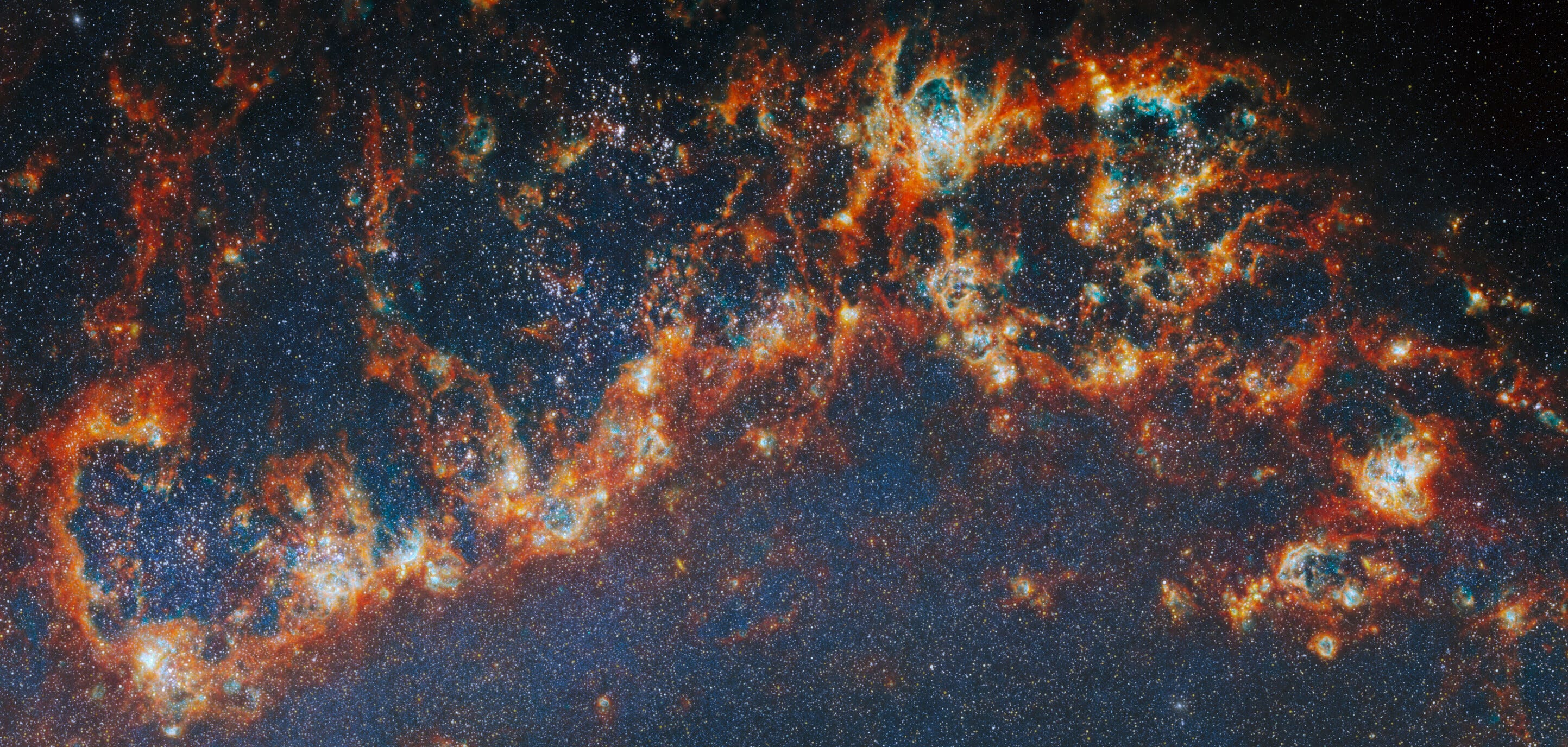
I’ve written down the most compelling evidence for the age of the Earth here. From the distant starlight to paleontology, the multiple independent lines of evidence tell the same story: our universe is ancient, much much older than a few thousand years old.
Additionally, the 6,000-year-old earth conclusion is based on many assumptions (all of which are either debatable or simple untrue).
The Bible intends to teach us scientific information (this is concordism).
The Hebrew word yom must mean 24-hr days here.
There is no time gap between Genesis 1:1 and the rest of the chapter.
Bishop Ussher’s calculation from the genealogy in Genesis is correct (and it must be unbroken, but the rest of the Bible suggests that genealogy often doesn’t include everyone).
All the scientific methods of dating and counting are unreliable (this is simple untrue).
Not only do the independent lines of evidence strongly support an ancient universe, the evidence makes it essentially impossible for any Young Earth model to work (e.g. the distant starlight and the biomass problem).
At the end, the mental gymnastics one must perform to overcome the scientific challenges, and the intellectual dissonance that Young Earth Creationism requires is just unsustainable and impossible to many Christians including myself.
It did not take much to convince me that the earth is not 6,000 years old. When you let go of the idea that Christianity requires a young earth model to work, the scientific evidence becomes utterly compelling and almost undeniable. The evidence cries out for an ancient earth and cosmos.
If you haven’t checked them out, see my articles: “Old Earth or Young Earth? What Does the Bible Actually Say” and “The Surprising Origins of Modern Young Earth Creationism”
“If the creation account is not literal 24-hr days, then how should I understand it?” I asked myself as I wrestled with it.
By God’s grace I discovered John Walton’s The Lost World series1, which was very helpful to me and many others. I highly recommend it.
The creation story makes more sense in light of its Ancient Near Eastern culture. When you stop trying to scientifically explain why there was light before the sun, you are a step closer to understanding what Genesis meant to the original audience.
Before we talk about evolution, we need to recognize one simple fact, which is that different groups of animals lived in different periods of earth’s history. The fossil record is the place to start. It’s very simple: In undisturbed sedimentary rock layers, the deeper you dig, the deeper in time you find yourself. The most recent layers are on top, and the oldest layers are at the bottom. It’s pretty straightforward, and most geological strata follow this pattern. When they don’t, it is usually because the strata have been folded, faulted, overturned, or disturbed. But the order of rock layers is virtually consistent across the globe.
To my YEC friends, here is something you need to know: No human fossils have been found with dinosaurs. Not even one. Why? Because humans never lived with the dinosaurs! I know this might be heartbreaking for some people. But we need to stop lying to them that there were dinosaurs on the ark, like how we lie to them about Santa Claus (sorry for the tangent).
You don’t need to be a paleontologist to notice the pattern in the fossil record: species changed over time, generally from simpler life forms to more complex body plans in later Earth’s history.
Okay, if you are still following along, we have now established two facts:
1. The earth is really, really old.
2. New species appeared throughout deep geological time.
The most natural question following this is: How? How did we get new species?
As I explored how God could have created, I broadly had two options: Old earth creationism and evolutionary creationism. Both views accept an ancient timeline; they mainly differ in how God created. The former generally believes that God miraculously intervened (de novo creation of species) throughout history to sustain and produce new life forms, while the latter believes that God simply used natural processes (biological evolution) to bring forth the diversity of life.
Now, some have accused me of not believing that God could have created miraculously (snaps a finger and bring them into existence). But this is not true. I believe in miracles and divine interventions (I will write something about it in the near future; exorcism), but when it comes to the evidence, it strongly suggests that God used natural processes (evolution) to create new species.
Additionally, I recognized that evolution is often taught with multiple layers of misunderstandings and misconceptions, but only among Christians. It’s also described as a straw-man argument in many Christian apologetics (both a bad and dangerous thing). Therefore, I investigated the evidence for evolution presented not by those who reject it, but from both Christians and atheists who accept evolution.
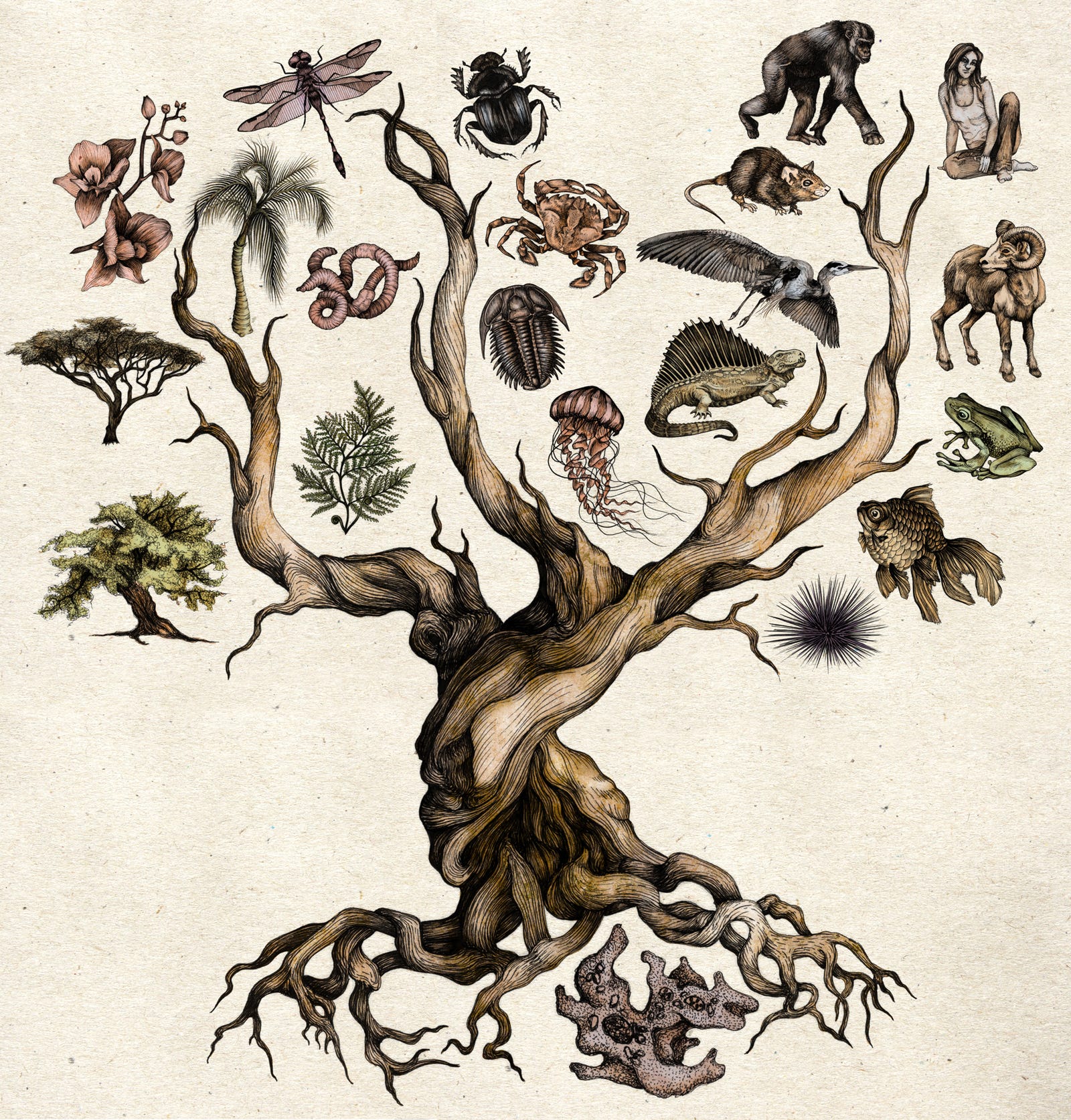
First, the reason why the majority of scientists and virtually all biologists accept evolution is because it is the Inference to the Best Explanation, meaning that you conclude a hypothesis is most likely to be true because it provides the best and most plausible explanation for the available data.2
Second, the evidence for biological evolution comes from different fields of study. The independent lines of evidence tell a unified story: species changed over time and are related through common descent.
When Charles Darwin and Alfred Russel Wallace independently reached the same conclusion about evolution, they did not have the same evidence we have today. They relied on evidence from the fossil record, comparative anatomy, biogeography, artificial selection, and other observations from the natural world.
But the most compelling evidence for me lies within our DNA.
When Darwin proposed the theory of biological evolution, he didn’t know anything about genetics. So when scientists discovered DNA as the code of life, the theory of evolution was put to the test. And it turned out Darwin was right. (Dang it!)
Many Christians argue that the commonality between organisms only means they were designed and made by the same intelligent mind, not because they share common ancestry. Here, I discussed how genetics basically rules out that hypothesis. As a geneticist, the evidence for common descent outweighs and surpasses the argument from “common designer”.
Common descent is the best explanation, not common design.
Since On the origin of species was published in 1859, the evidence for biological evolution has only been growing. Transitional fossils have been recovered from the exact place and time in the rock layers we would predict if evolution were true. Numerous examples of macroevolution (whales, humans, horses, ceratopsian dinosaurs etc.) have been described in detail based on the fossil and genetic evidence.
The molecular clock (how fast DNA evolves) of a species matches the fossil age of when it diverged from the last common ancestor. The predictability of evolution: where (geological location) and when (which rock layers) we should expect to find the transitional fossils. The vestigial structures in organisms and the harmful elements and genetic scars in the DNA point to common ancestry rather than de novo creation. Biogeography explains where animals are found today; why we only have kangaroos in Australia for example. The consistency between independent lines of evidence that support biological evolution is not only beautiful, but utterly convincing.
Have we discovered more questions about evolution since Darwin’s time? Absolutely, that’s how good science and research work. But we also have uncovered other mechanisms that drive evolution too. The overall evidence continues to support biological evolution - that we share common ancestry with other life forms.
In the end, evolution is the inference to the best explanation of how life diversified over time.
Note: evolution explains diversification after life exists. It doesn’t explain the origin of life - abiogenesis - which is a different field of research.
Many Christians also hold to the Intelligent Design (ID) belief – promoted by Stephen Meyer and others - which essentially claims that we can scientifically detect God’s hands behind creation. They say that life we see today is too complex to have evolved, it’s impossible, therefore there must be an Intelligent Mind behind it.
This is different from the traditional intelligent design (lower case to note the difference!) theology which most orthodox Christians would agree with: creation is intelligently designed because the Creator is intelligent. This traditional view has nothing to do with whether we can scientifically prove God’s fingerprints behind his creation. The birth of Intelligent Design was to counter having to learn about evolution in the classroom. There is a whole history behind this (maybe one day I will write about).
At the end, Intelligent Design is essentially a god of the gaps argument against evolution. The irreducible complexity argument by ID proponents is based on misunderstandings of how evolution actually works.

If you are an evolutionary creationist or theistic evolutionist like me, who is a Christian and accepts evolution as the way God created, we still affirm the following:
God is the ultimate creator of all things.
God desires a relationship with mankind.
The more I engage in this topic, the more I find Christians who see no contradiction between evolution and Christian faith, including C.S. Lewis, Tim Keller, Billy Graham, Karl Barth, J.I. Packer, N.T. Wright, just to name a few.
There’s a book published by BioLogos and InterVarsity Press called “How I changed my mind about evolution”. It’s a collection of stories from evangelical Christians, theologians, and scientists who have come to accept evolutionary science and faith. I recommend to check it out.
I examined the evidence for the age of the earth and found it virtually impossible for any Young Earth model to work.
I learned that there are more faithful ways to interpret the creation account in Genesis other than the Young Earth Creationism preached to us as kids.
As I investigated the evidence for biological evolution, it became clear to me that Darwin’s theory of evolution isn’t “just a theory”. It is the inference to the best explanation of the origin of species. The consistency between independent lines of evidence shows why it’s beyond reasonable doubt that evolution happened and it is real.
I discovered many faithful Christians (both theologians and scientists) who do not see a conflict between biological evolution and the Christian faith, and there are ways to harmonize what we read in Scripture and what we observe in the natural world. Praise God for that!
I hope this helps you understand how someone like me came to the conclusion of evolutionary creationism. As someone who grew up as a young earth creationist, I was not brainwashed by the “secular” mainstream science to “believe” in evolution. Rather, I examined the evidence myself - from Scripture and science - and listened to both Christians and atheists on this subject before changing my mind.
If starlight is screaming for an ancient cosmos and genetics is leaving compelling clues for common descent, then I think it is time to abandon Young Earth Creationism as the default “faithful” interpretation of Genesis. I’m not saying we should use nature to determine how we interpret Scripture. But often this is how we realize we’ve been interpreting the Bible the wrong way (geocentric readings and global flood for examples). When the physical evidence tells a very different story, we should at least be open to reexamining how we have interpreted the Bible.
P/S.
“Wait, wait, wait - hold on! What about human evolution? How did you change your mind on that?” I can see one of you shouting this.
I will get to that eventually, I hope. It will be a long series. And if you can’t tell, I am trying to build a case since the beginning, one post at a time.
Also, let me know if you have any questions, concerns, or maybe you’re just really enjoying or hating what I write here. I’m eager to hear form you :) See ya later.
Hi! I am Chi-Jing Leow, a Christian biologist. I am also a follower of Jesus, and I care deeply about exploring the topics at the intersection of science and faith.
References:
Walton, John H. The Lost World of Genesis One: Ancient Cosmology and the Origins Debate. Downers Grove, IL: IVP Academic, 2009
https://plato.stanford.edu/entries/scientific-discovery/index.html#DiscAbdu
No posts
Comments
Nothing yet. Say the first thing.
Sign in to join the conversation.