
Sometimes it takes an outsider to help identify who we are as a people and what we can become. The Presidential Medal of Freedom recipient, Professor James Q. Wilson, called Alexis de Tocqueville’s Democracy in America the most important book written on the subject by someone from abroad. As the United States marks the anniversary of its birth certificate and divorce papers embodied in the Declaration of Independence, it is time for both reflection and recommitment to the values that forged a new nation.
Tocqueville understood America was not held together by geography or ancestry, but by ideals and habits of liberty practiced every day. He admired a nation that continually renewed itself—not because its institutions were perfect, but because its citizens accepted responsibility for preserving them.
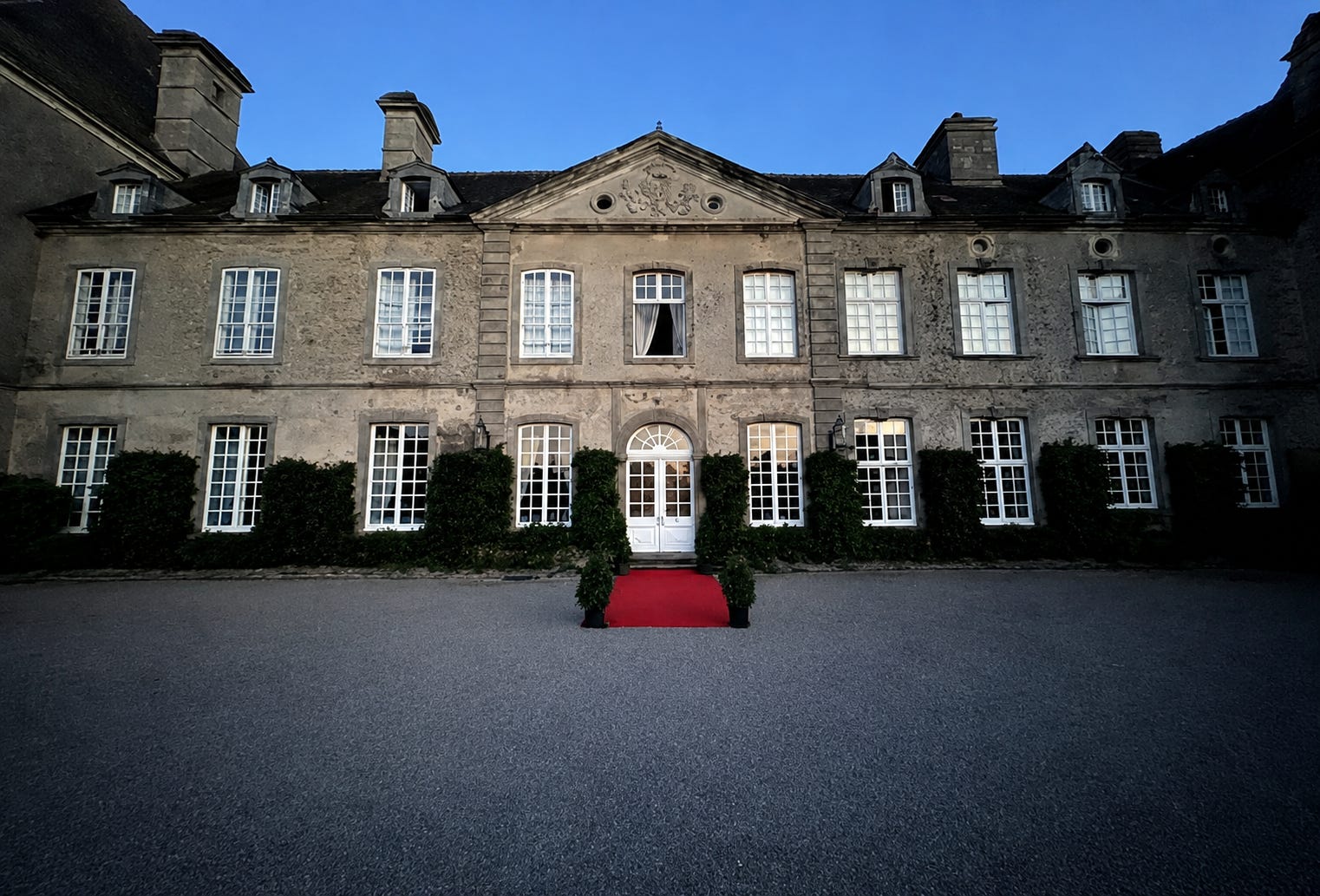
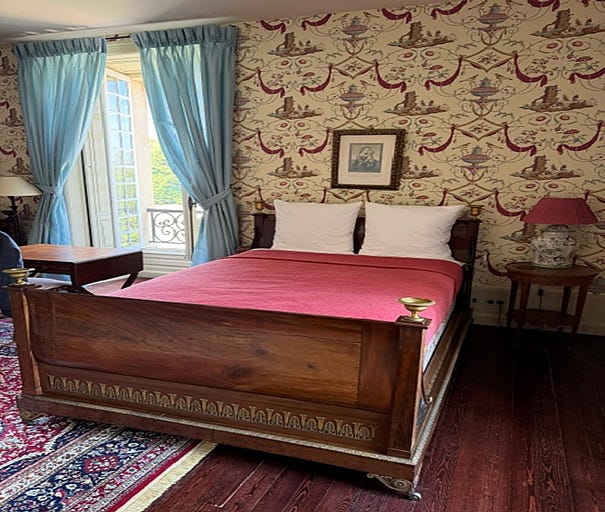
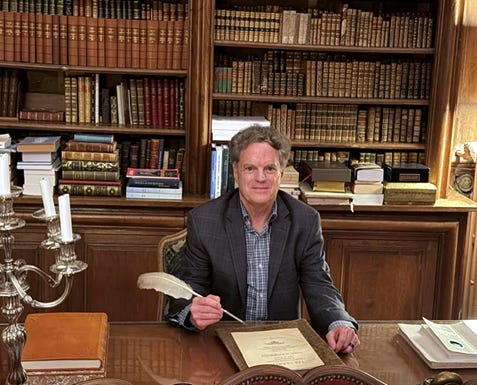
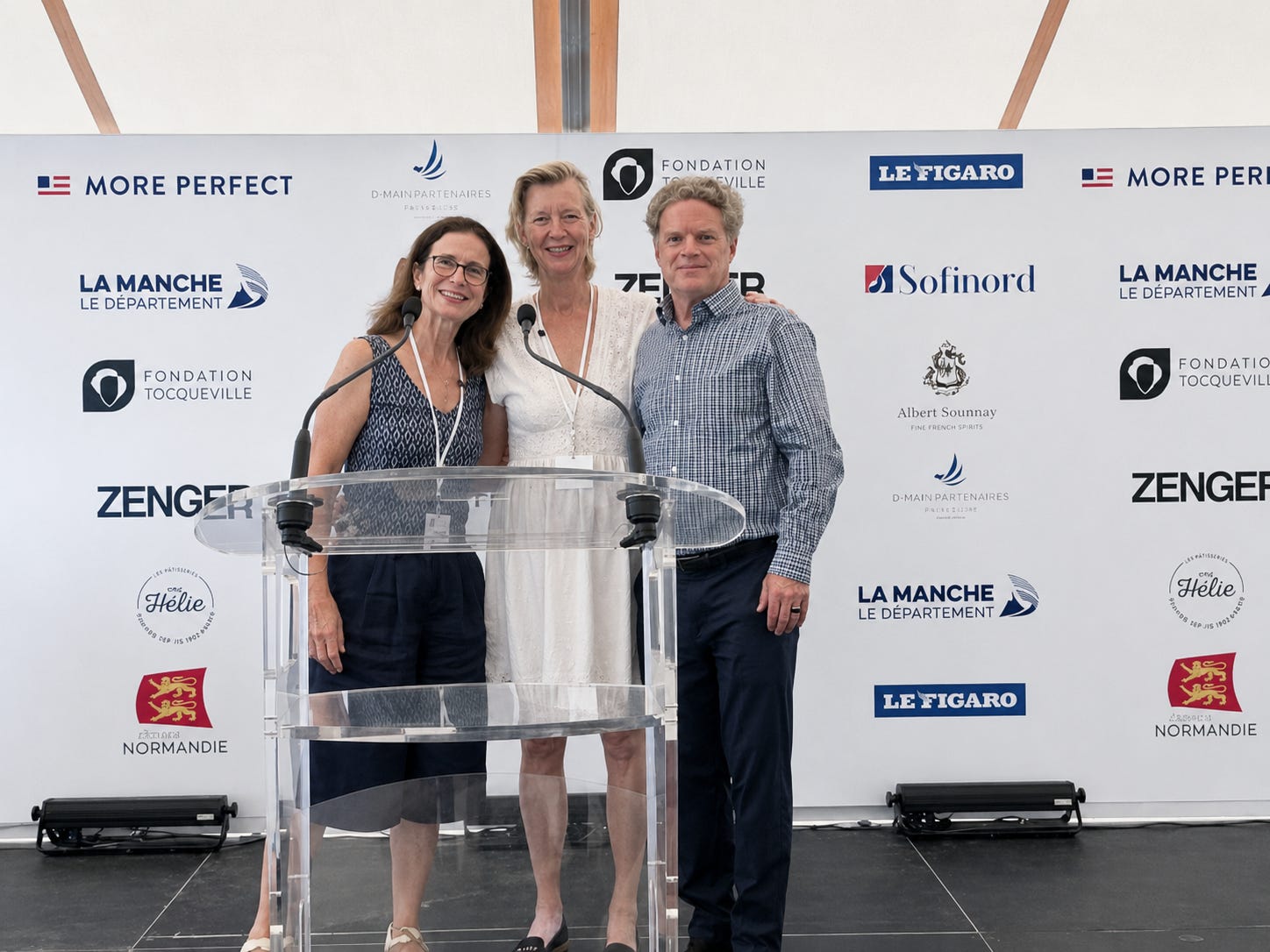
Last week, I visited with the descendants of Alexis de Tocqueville at the Chateau de Tocqueville in Normandy, France. I slept in Alexis de Tocqueville’s bedroom, saw his library, sat at his desk, and leafed through a first edition of Democracy in America. Jean-Guillaume de Tocqueville and I spoke in French to a crowd of 100 leaders from a dozen countries committed to democracy and launched our transatlantic partnership to rediscover Tocqueville’s genius and its relevance to our modern challenges.
He believed democracy would endure only if citizens learned the difficult art of balancing liberty with responsibility, equality with excellence, and individual rights with obligations to one another. Those questions remain as urgent today as when he first posed them.
Thomas Jefferson called the Declaration of Independence an “expression of the American mind,” so our More Perfect alliance wanted to take stock of American beliefs and attitudes at this historic moment. We partnered with NBC and the Daniels Fund, and the Carnegie Corporation of New York and Stand Together, to conduct a change over time analysis. Here’s what we found.
Most Americans believe we’ve made progress on our founding ideals. The extension of civil rights to blacks and women, space exploration that took us to the moon, and success in major wars to protect our freedoms and secure democracy in Europe are cited as our major successes. While Americans share similar values -- family, freedom, equality, and faith -- most Americans believe we are falling short in fulfilling the promise of equality, liberty, and self-determination, with important differences across subgroups.
Tocqueville admired Americans not because they had solved the problem of democracy, but because they possessed an uncommon confidence that free people could continue improving themselves. Democracy, in his telling, was always a work in progress.
At a time that should be a celebration of national unity, pride in being American has fallen a stunning 31 percentage points from 87 percent in January 2001 to 56 percent today. Only 34 percent of the next generation --18-29-year-olds -- express such pride.
Such trends would have troubled Tocqueville, who warned that democracy ultimately depends not only upon laws, but upon citizens who cherish their country enough to sustain its experiment in liberty. Patriotism, properly understood, is not complacency about America’s faults but confidence in its capacity for renewal.
American dreams are dying hard too. Compared to a generation ago, 84 percent of both Gen Z (18-29) and Millennials (30-45) believe it’s harder to attain the American Dream, with three-fourths of Gen X (46-61) and Baby Boomers (62-80) feeling the same way. These gloomy views are shared by Americans in the working, middle, and upper classes. While half the nation believed our best years were ahead of us in 1990, most Americans today (58 percent) believe our best days are behind us.
Tocqueville marveled at Americans’ confidence that tomorrow could surpass today. That confidence was not naïve optimism, but a conviction that free citizens, acting together, could shape their destiny.
While most Americans believe in our Constitutional system to safeguard our democracy, they expressed “no confidence at all” in 7 out of 9 American institutions. Only the military attracted a majority—60 percent—who express a great deal or quite a bit of confidence, while confidence in the federal government and Congress fell to 18 and 12 percent, respectively. Only 36 percent trust the U.S. Supreme Court, an institution that historically has garnered more support.
Trust in educational institutions, the tech industry, and religious leaders and organizations only attracted around one-third or fewer Americans, and all showed significant declines from previous years, with the high-tech industry taking the biggest hit. The national news media, which has been the subject of repeated attacks, ranked last in trust at only 11 percent.
These findings echo one of Tocqueville’s deepest concerns. He feared democratic societies could gradually lose confidence in mediating institutions—churches, schools, local governments, civic associations, and a free press—that stand between isolated individuals and concentrated power.
There are some silver linings. Americans believe there is more that unites us than divides us. When asked in a previous survey how Americans self-identify, they cite family, being an American, faith, work, and community, with political affiliation being dead last. Americans do feel divided by politics and wealth, and to a smaller extent between old and young. Americans in rural areas are much more likely to say the country is divided than those living in cities. The better educated see more that unites us, while the less well-educated skew toward division.
Here Tocqueville would recognize the enduring strength of the American character. He famously observed that Americans formed associations for every conceivable purpose, discovering in shared endeavors the antidote to polarization and isolation. The genius of democracy, he argued, lies not in unanimous agreement but in the habits of cooperation among people who disagree.
There are ways forward. One of the strongest findings is that 80 percent of Americans believe the country isn’t doing enough on civic education. This holds true across politics and other subgroups. More Perfect’s Democracy Goal 1 is Universal Civic Learning, and the country has been making significant progress in advancing it.
For Tocqueville, civic education did not end in the classroom. It was learned through participation—in juries, town meetings, neighborhoods, congregations, voluntary organizations, and other institutions. We need that broad view of civic education today.
In an encouraging sign, most Americans, including MAGA Republicans and Progressive Democrats, are willing to be involved with people with whom they strongly disagree politically – such as having dinner, attending a community event, serving or coaching, discussing politics, and attending religious services. Half of Americans say they volunteer. Such findings support our Democracy Goal 2 work -- National Service & Volunteering, and Democracy Goal 3 -- Building Trust and Bridging Divides.
No observation delighted Tocqueville more than Americans’ instinct to serve alongside one another. Voluntary service, he believed, transformed self-interest into what he called “self-interest rightly understood”—the recognition that we secure our own flourishing by contributing to the common good.
Again and again, we see a sharp division between the ties that bind Americans together and their worry that our national leaders are not modeling similar leadership. A whopping 82 percent of Americans agreed most ordinary Americans, regardless of politics, have more in common with each other than with people in our country who hold power.
Tocqueville placed his confidence not first in great leaders, but in ordinary citizens. He believed the health of the republic would always depend more upon the character and participation of its people than upon the personalities of those who temporarily occupied positions of power.
As happened at the turn of the last century, energy from Americans and institutions emerged from the ground up and led to a 60-year upswing in political cooperation, economic equality, social and institutional trust, and greater culture of “we”. And such a shift in the culture informed the local, state, and national leaders that we elected. All the signals in the system point to that as a solution, which in turn attracts leaders who express the American mind and work across differences to forge a more perfect union.
Tocqueville would remind us that democracies are renewed from the ground up before they are renewed from the top down. The enduring miracle of America has never been that we avoided moments of division or decline. It is that generation after generation, ordinary citizens chose once more to become stewards of liberty. As America approaches its 250th birthday, that remains our highest calling—and our greatest hope.
No posts
Comments
Nothing yet. Say the first thing.
Sign in to join the conversation.