
A reminder on a few upcoming events:
August 13th | Big Tent Urbanist Party: Join a wide range of advocates and volunteers at Pizza Lobo in West Loop to celebrate Chicago’s urbanist organizations and our accomplishments. Event is from 6-9pm. Register here.
August 19th | A Conversation with Ald. Bennett Lawson: Join Strong Towns Chicago, Chicago Growth Project and A City That Works to talk housing with Ald. Bennett Lawson. We’ll be at Big Gay Sal’s Pizza in Lakeview from 5:30-7:30pm. Our events are always free, but it’s helpful if you register here to let us know you’re coming.
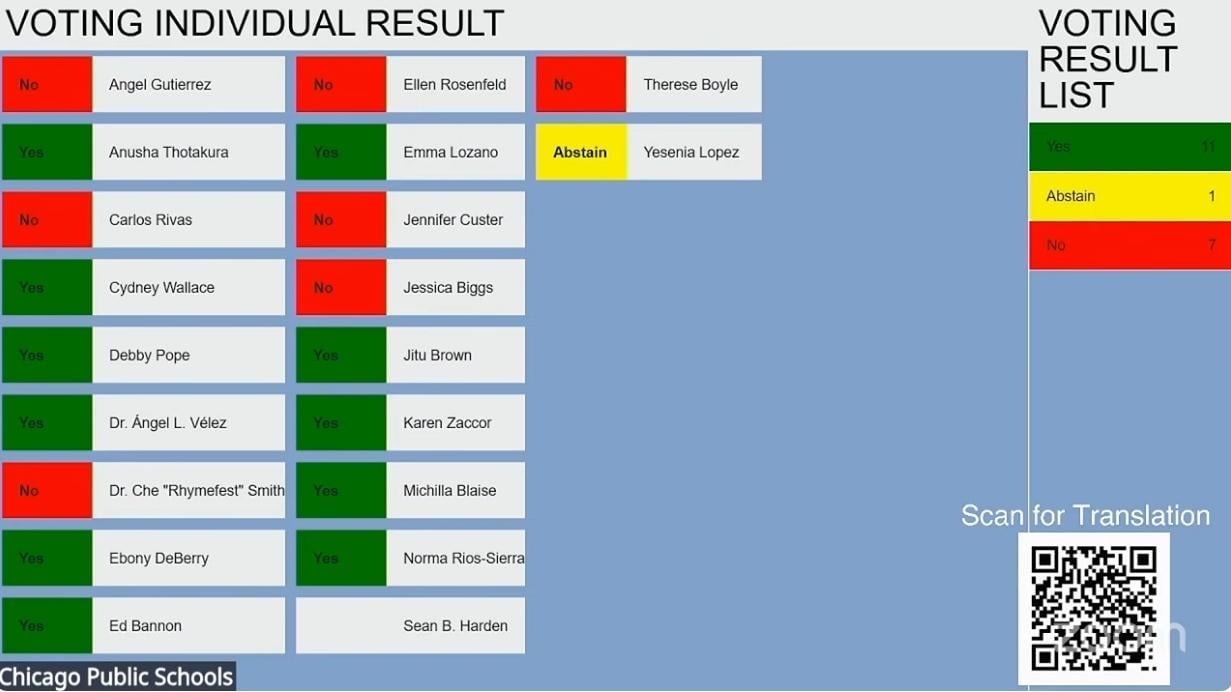
Last Thursday, the Chicago Board of Education passed a $10 billion budget for the 2026-27 school year by an 11-7 vote. The budget as passed involved several amendments to the district’s original budget proposal, which had included around 1500 layoffs and five furlough days in an effort to close a $732 million deficit. The amended budget instead relied on a higher assumed TIF surplus (up from $200 million to $285 million), as well as an assumption of $150 million in extra revenue from the State of Illinois through higher EBF funding ($100 million) and other grant programs ($50 million).
I’m not sure how I feel about that TIF figure, but the $150 million in new state funding does not strike me as a realistic assumption to make, and it is deeply irresponsible for the Board of Education to pass a budget relying on it. The district, its employees, and the public it serves will be worse off for it.
As we’ve covered before, CPS has often faced large budget gaps in recent years, including a $734 million deficit in 2025-26 and a $505 million deficit in 2024-25. This year’s budget followed a similar shape, with a $732.5 million gap to close. The district initially sought to do this through a series of cuts, including laying off 760 teachers, 801 teacher aides, and 162 central office staff, plus a midyear spending freeze and five furlough days for employees on non-student attendance days.
While such proposed cuts were quite unpopular, CPS CEO Macquline King also highlighted the fact that district staff has grown significantly since 2019 - up around 10,000 (or 26%) - while enrollment has fallen by over 45,000 students (or 12%).
In the short term, CPS’s financial situation this year is particularly precarious given delays in Cook County property tax revenue collections causing a cash shortfall for the district. Because of this - and because the district does not have a rainy-day fund - CPS has to rely on short-term borrowing to make payroll until property tax revenue is disbursed. This increased pressure to pass a budget, as CPS leadership had indicated doing so was a precursor to securing those short-term loans.
But while simply wishing more state revenue into existence might have been convenient for the school board, it’s simply not realistic. For starters, as many have pointed out, any supplemental appropriation passed in a fall veto session would need a three-fifths majority to take immediate effect. It’s difficult to imagine such a majority - relying heavily on non-Chicago legislators - is feasible.
And if legislation is not tailored as a Chicago-specific expenditure, it ends up quite expensive for the state (at a point rather late in the game from a budget perspective). As the Civic Federation president Joe Ferguson pointed out, given that CPS only receives about 20 cents of every dollar in EBF funding, $100 million in new EBF dollars to CPS requires around $500 million in new state spending. Governor Pritzker has also expressed a fair amount of skepticism already, stating that “there’s no revenue currently for what they’ve described” and pointedly noting that he was waiting for House Speaker Emanuel Welch’s purported plan. Capitol Fax’s Rich Miller has pointed out the inherent difficulties in any such plan.
All of this helps explain why CPS CEO Macquline King and the CPS finances team have expressed severe skepticism and concern around this course of action. CPS Chief Budget Officer Emila Zoko argued that the budget as passed could result in a credit downgrade, making borrowing more expensive for the district, and that “it will be a disaster” if CPS relies on this revenue and it does not come through. Acting CFO Wally Stock also expressed concern about whether the budget as passed would still allow the district to get the short-term loan it needs to make payroll in September, given their cash crunch, which King referred to as ‘catastrophic.’
To put it plainly, I simply do not believe it is realistic to view an extra $150 million in state revenue as a reasonable assumption in any way, shape, or form.
I am certainly sympathetic to the idea that the state needs to do more to support local education spending. As I’ve written before, the most obvious place is on the pension side, where the state is already picking up the tab for every district in the state except Chicago Public Schools. I also think it’s good to come up with creative solutions to fix our financial issues; given the district’s myriad of issues it behooves us to look at every opportunity we can.
But there’s a huge difference between fighting for more state funding and pretending you’ve already gotten it, or between finding creative solutions and imaginary ones. This is the latter on both counts, and when the imaginary revenue doesn’t show up, the district will be forced to make more painful cuts than it otherwise would have.
Given all that, it is difficult to look at this as anything more than a political stunt aimed at shifting the blame for unpopular cuts away from board members and to Governor Pritzker and the State Legislature. This tracks with reporting from Capitol Fax, which noted that board member Michilla Blaise commented as much on Facebook, remarking that if the state fails to allocate extra funds to the district, the board would “put all the layoffs and dead programs at the governor’s feet.” I don’t really know what else to say about that.
What comes next?
The CTU and others have applauded the budget amendment, claiming that doing so “hold[s] the adults in the room accountable” and that CPS and those board members opposed to the vote “fail to understand their role as advocates.” But there is a difference between advocacy and activism, and I think these kinds of budget shenanigans will make it less likely the district gets what it wants, not more.
Beyond Springfield, in recent cycles CPS budgets have relied on significant TIF surpluses to help balance the books, which come at the discretion of the mayor. We’ve also of course seen a game of hot potato over who pays pension contributions for the non-teacher employees of the district. Already at least one mayoral candidate - Susana Mendoza - has come out strongly against employing TIF surplus as a budget balancing tool, and I don’t imagine she’s alone.
What happens when a future mayor of Chicago is less beholden to the CTU? A dysfunctional Board of Education who’d rather pass the buck than accept the reality of its fiscal situation does not make for a good partner, and if future mayors don’t view CPS as a good partner then the long-term budget math gets much harder for the district. As bad a short-term move as this is, it might be a worse long-term one.
Despite whatever the CTU and the eleven members voting for this budget may claim, this is not a bold stand to hold the state accountable. It’s a reckless move which ignores the reality of the district’s finances this year, threatens our financial credibility, and kicks the can six months down the road until after the school board election.
Nine1 of the eleven members voting for this budget, by the way - including Ms. Blaise - will be on the ballot for school board in November. Voters should remember their irresponsibility at the polls.
Comments
Nothing yet. Say the first thing.
Sign in to join the conversation.