
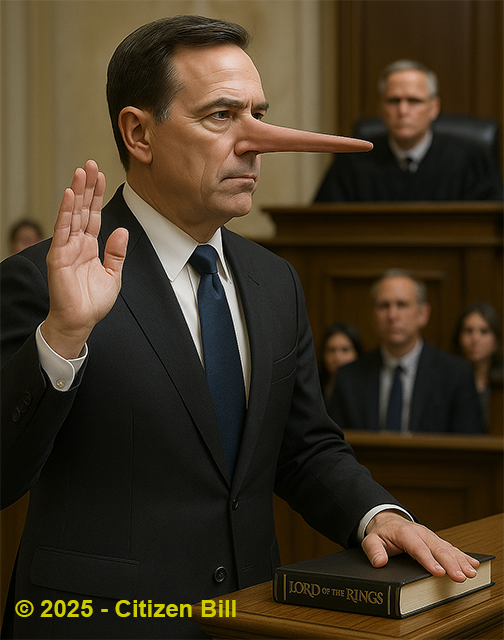
Attorneys in the United States swear an oath to uphold the Constitution, follow the law, and conduct themselves with honesty, integrity, and professionalism, both in and outside the courtroom. These obligations aren’t symbolic gestures; they are binding ethical commitments enforced by state bar associations and rooted in the American Bar Association’s (ABA) Model Rules of Professional Conduct. Violations can result in disciplinary actions ranging from public censure to disbarment—and in some cases, criminal charges.
But what happens when lawyers, who are supposed to be stewards of the legal system, use public platforms like social media, cable news, or Sunday shows like Meet the Press to spread falsehoods? Specifically, what happens when they make legally false statements about matters they are trained to understand—like asserting that Donald Trump was “convicted of rape,” when, in fact, the jury in Carroll v. Trump found him liable for sexual abuse (not rape under New York law) and defamation in a civil trial, not a criminal conviction?
The issue is not the nature of the case itself—it’s the public misrepresentation of legal facts by professionals who know better. Should that kind of public deception fall under ethical scrutiny?
The ABA Model Rules (especially Rule 8.4) are clear: lawyers are prohibited from engaging in conduct “involving dishonesty, fraud, deceit or misrepresentation” and from conduct “that is prejudicial to the administration of justice.” Many state bars, including New York, California, and Texas, mirror these rules. A lawyer who makes knowingly false statements in public about a matter of law or fact—especially one that may erode public trust in the justice system—could be violating these rules.
The argument some make in defense is that these statements are made in a political or personal capacity, not as an officer of the court. But the line between public citizen and legal professional becomes blurred when lawyers are speaking as lawyers—on television panels, legal commentary shows, or law-themed podcasts. Their credibility stems because of their legal expertise. When they mislead, the damage is compounded.
Imagine a doctor going on national television and saying a medication causes cancer when all the medical literature says otherwise. That doctor would be reprimanded, possibly stripped of their license for spreading misinformation that affects public health.
Why is the standard any different for lawyers—especially when their false statements sow confusion about due process, the rule of law, and the presumption of innocence?
It’s particularly egregious when the misinformation involves major legal figures or high-profile cases. Misstating the legal outcome of a case like Trump’s doesn’t just reflect ignorance—it reflects deliberate narrative-building. And when lawyers participate in that, it calls into question their commitment to the truth they swore to uphold.
There is precedent for lawyers being disciplined for public conduct. Rudy Giuliani and Sidney Powell have faced serious sanctions and disbarment proceedings for their public claims regarding the 2020 election. But most public-facing attorneys spinning misleading narratives face no consequences, especially when their statements align with dominant media narratives.
The ABA and state bars should consider whether these behaviors—particularly when persistent, knowingly false, and widely disseminated—constitute violations of professional standards. A system that disciplines lies in court but permits them on cable news is one that fosters cynicism and distrust.
The law doesn’t end at the courtroom door, and neither should a lawyer’s ethical responsibilities. When attorneys exploit their credentials to mislead the public, they don’t just damage reputations—they damage the integrity of the legal system itself.
If bar associations won’t hold their members accountable for knowingly misrepresenting legal facts in the public sphere, then the oath becomes hollow, and public trust in the legal profession will continue to erode.
Lawyers must choose: be political pundits or be officers of the court—but not both without consequence.
Here are some things we as citizens need to start doing:
1. File a Bar Grievance
What It Is: A formal complaint submitted to a state bar association regarding unethical behavior or misrepresentation by a licensed attorney.
When to Use: If an attorney knowingly makes false legal claims in public (e.g., falsely claiming someone was “convicted of rape” when no such conviction exists).
Where to File: Each state bar (e.g., Texas Bar, New York Bar) has an online process for filing complaints. Start by checking your state’s bar website.
2. Submit Complaints to the ABA
What It Is: While the American Bar Association doesn’t discipline attorneys directly, it sets ethical guidelines (Model Rules of Professional Conduct).
Why It Matters: Complaints to the ABA can influence rule revisions or pressure for enforcement, especially if patterns of public dishonesty are identified.
How: Submit through their ethics feedback forms or contact the ABA Center for Professional Responsibility.
3. Report to Networks and Media Outlets
What It Is: Call or email the news outlet that aired the false claim and request corrections, citing the legal inaccuracy.
Why: Networks are legally obligated to issue corrections for material misstatements in some cases—especially if a licensed attorney misrepresented facts as an expert.
4. Demand Equal Standards for Legal Commentators
Compare to Medical Ethics: Medical professionals who spread false information risk losing their license (e.g., anti-vaccine doctors).
Action: Lobby state bars and legislatures to enforce equal professional discipline for public legal misinformation, just as medical boards do with health misinformation.
5. Contact Elected Officials
Ask For: Laws or resolutions calling for greater ethical oversight of legal commentators who trade on their bar status while engaging in misleading political narratives.
How: Write or meet with your state legislators, members of Congress, or local bar board members. Join or form citizen ethics watchdog groups.
6. Create or Support Public Databases
Idea: Track and document legal professionals who repeatedly misstate facts or abuse their platform, including links to video or transcript evidence.
Goal: Create public accountability and pressure for professional sanctions—similar to media fact-checking organizations like Media Bias/Fact Check or PolitiFact.
7. Engage in Civil Discourse and Education
Write Op-Eds: Use local newspapers or online platforms to draw attention to unethical legal commentary.
Host Events: Invite legal ethicists or retired judges to speak at local forums about professional standards and public trust.
8. Support Legal Reform Organizations
Examples: Judicial Watch, FIRE (Foundation for Individual Rights and Expression), and others that monitor legal ethics, court behavior, and constitutional rights.
Comments
Nothing yet. Say the first thing.
Sign in to join the conversation.