
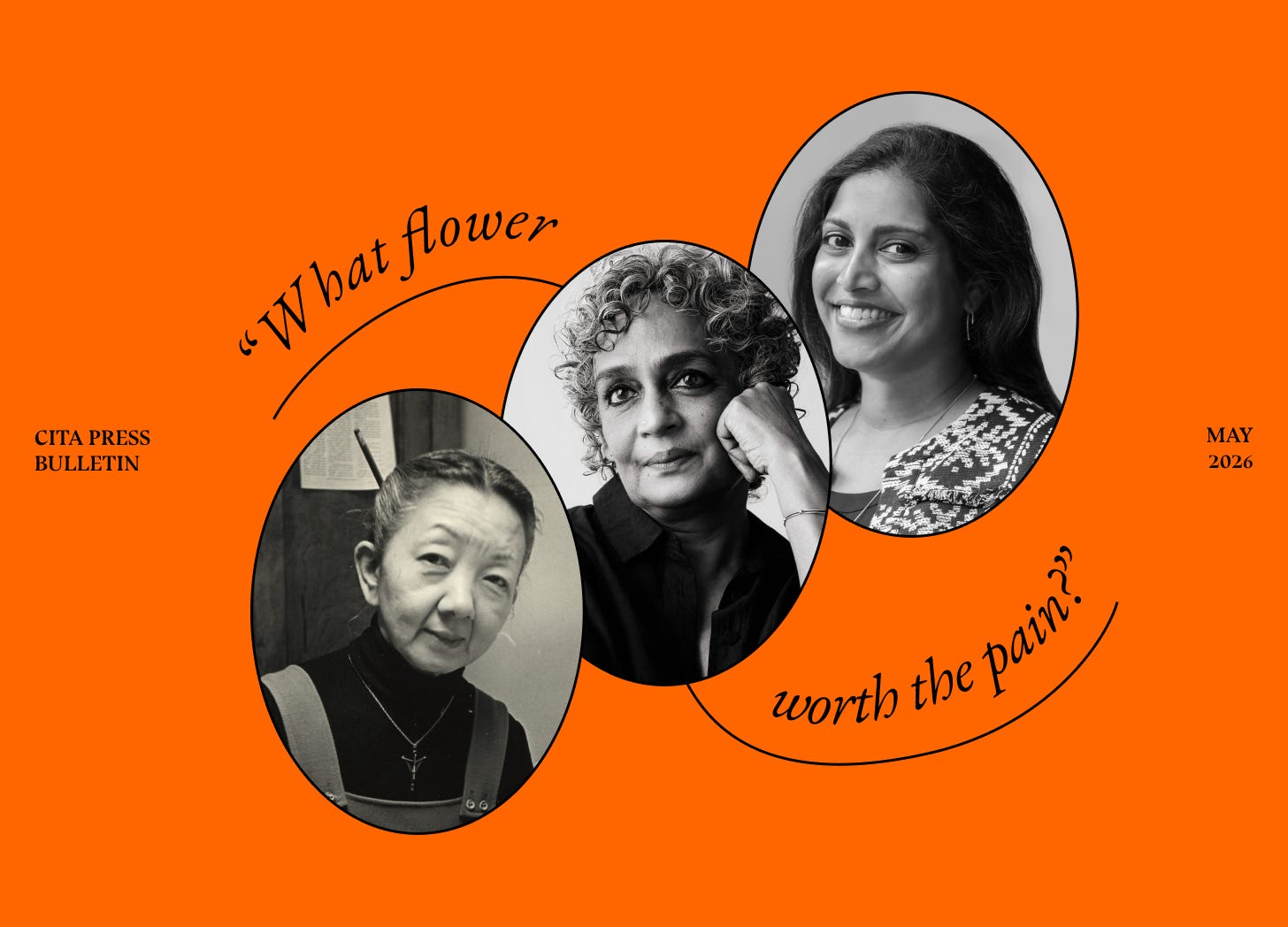
In I Call to Remembrance: Toyo Suyemoto’s Years of Internment, Japanese American poet Toyo Suyemoto reflects on the “uneasy spring of 1942.” Following the issuance of Executive Order 9066 that February, rumors of pending forced removal loomed over her family: infiltrating, but not fully disrupting, the challenges and joys of everyday life.
Of the morning the Suyemotos learned they were to be “evacuated,” Suyemoto writes:
Certain natural events like the punctuality of the changing seasons disregard the way people treat one another, and they enchant the observer with the perfection of the moment. So the wisteria bloomed again and purpled the exterior of an old church near the campus, and the new grass turned the winter-drab ground to a brisk green.
Morning in our household began with clatter, the sounds of a large family waking, one by one. There was a steady procession to the bathroom, then assembly around the breakfast table, and a gradual diminishing of voices as my brothers and sisters departed for school…This morning was not unlike the others that our family had experienced in this rented house.
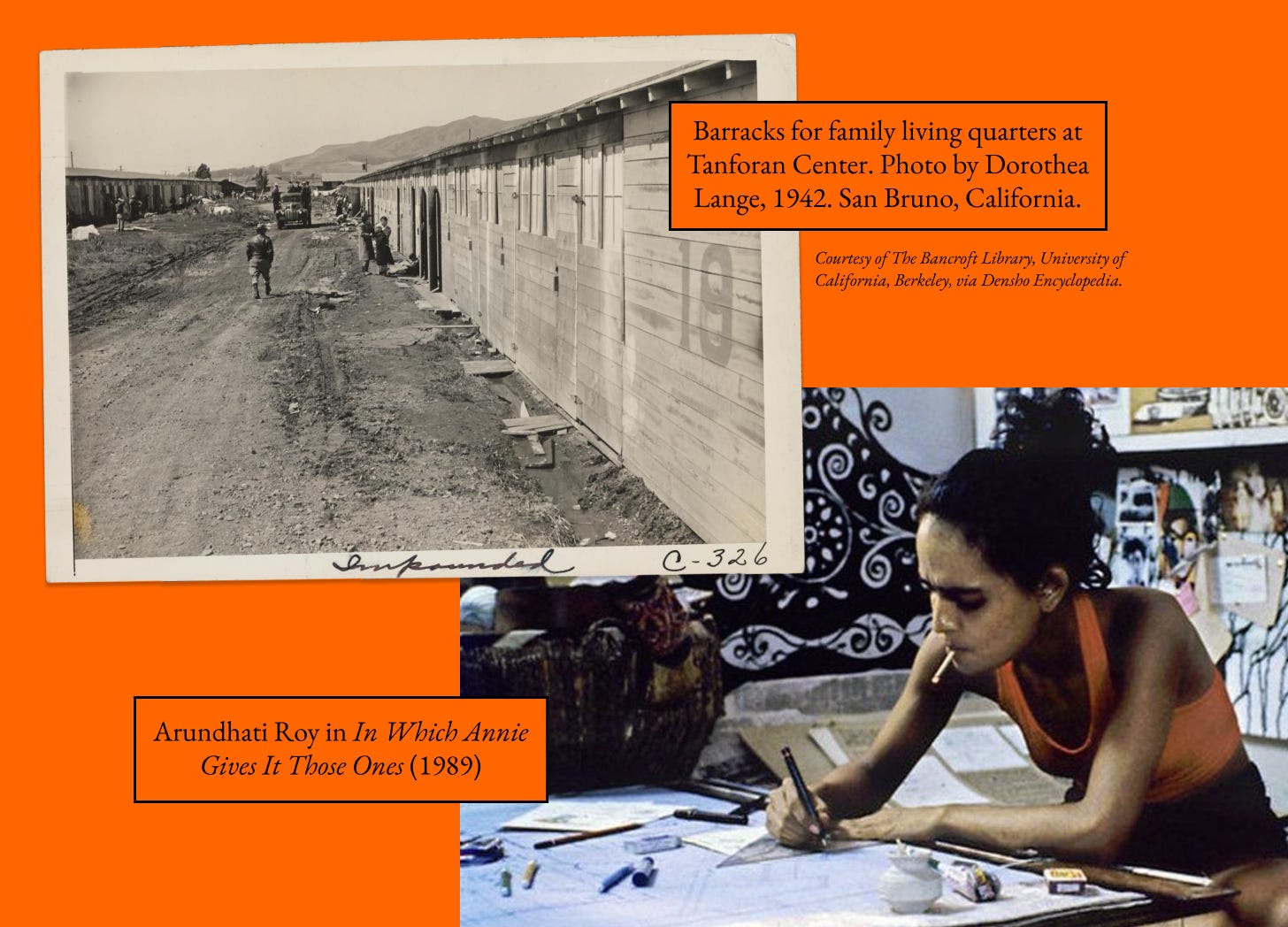
The family was first moved from their Berkeley home to a temporary camp at the Tanforan Race Track in San Bruno, where Toyo experienced an “abrupt gap” in her writing. After being transferred to the Central Utah Relocation Center (Topaz), however, the poet returned to her pen, spurred on by the camp’s creative community.1 Decades later, Lawson Fusao Inada referred to her as “our major Camp Poet and Nikkei Poet Laureate.”
While Suyemoto’s memoir recounts a specific historical circumstance that had a devastating impact on her family, her remembrances likely carry powerful familiarity for many twenty-first-century readers. We’ve all lived through seismic change in recent years, most of it related to “the way people treat one another.” Throughout various catastrophes, we’ve gone to work, done chores, and watched the seasons change. And we’ve turned to art—sharing it, creating it—to make sense of it all.
This month, we’re exploring the relationships between making art and living in the world together, by way of:
A conversation with writer and producer Christie George on creating a “book report” in response to Jenny Odell’s How to Do Nothing, and other “projects that bring our personal and collective responses from the margins to the center”;
Inviting Toyo Suyemoto and prose writer Arundhati Roy to the Cita Canon;
Teasing upcoming publications, events, and more.
Special thanks to Christie George for helping us create this issue, and for collaborating with us on recent in-person programming. Subscribe to Practice Practice to follow her work!
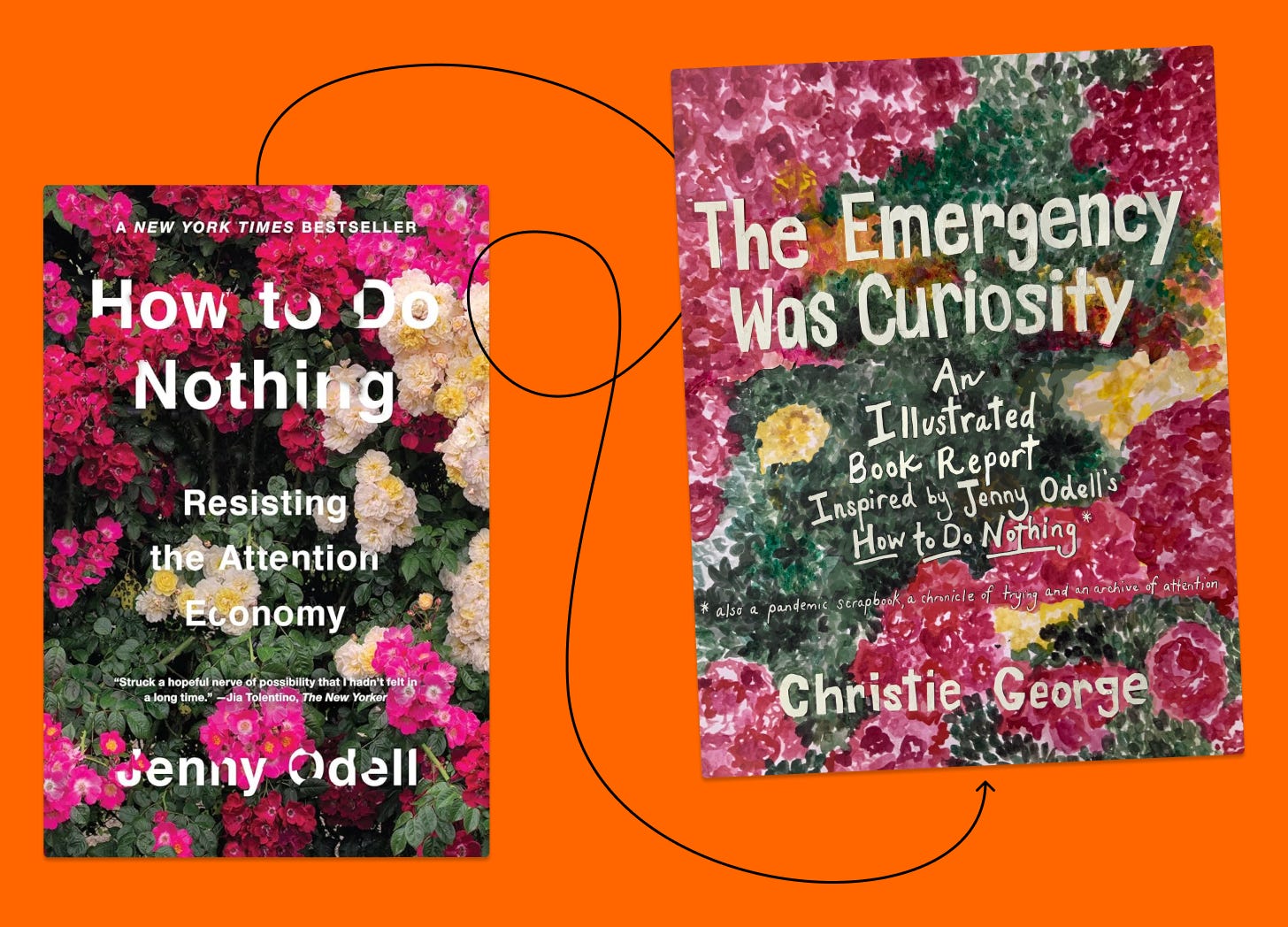
Christie George came into the Cita Press orbit through the Sitting Room Library, our publication partner for A Luminous Halo: Selected Writings by Virginia Woolf. First, we met her through her book: The Emergency Was Curiosity, which was on display in a Sitting Room exhibit alongside How to Do Nothing, Jenny Odell’s meditation on “resisting the attention economy.” How to Do Nothing is the inspiration for Christie’s project, which interpolates Odell’s ideas through close reading, photographs, drawings, charts, memories, and conversations. On a personal level, The Emergency Was Curiosity is both a pandemic diary and a synthesis of decades of reading, research, and curiosity. For readers, The Emergency Was Curiosity is—like How to Do Nothing—a call to action, an invitation to rethink how you participate in the world.
George has labeled the project a “book report,” but it is certainly not homework. A book report, to George, is a web woven around both its creator and its core source text, bringing many other thinkers into its structure. Thus The Emergency Was Curiosity is a deeply individual exploration that is built on a foundation of collective thought. Other books, essays, poems, projects and conversations are threaded throughout; George’s experiences and imagination provide the needle.
Sharing The Emergency Was Curiosity with the public sparked a series of collaborative projects tied together by the Togethering Lab, the initiative Christie runs with her partner. These have included virtual zine workshops, professional incubators, and place-based memory activities, all focused on “cultivating creative attention.” Encouraging others to make their own book reports is a key element in a lot of these efforts.
Christie has collaborated with us on in-person programming like Transcribe Harper pizza parties, the Santa Rosa Zine Fest, and a Sitting Room round table. Her collaborative approach is a natural fit for open knowledge projects, but what resonates with Cita most is the relational aspect of her work. She is interested in interrogating what reading is, what writing is, and the essential links between life, art, and each other—on and off the page.
Christie also uses the term “fan nonfiction” to frame her work. Though her definition centers the genre of inspiration (see below), the idea of various forms of “fan” creation as an alternative to more traditional scholarship echoes a lot of what we do with Cita. We are often building relationships with authors who we can’t ever know in a personal sense, as decades or centuries have passed since they were here to speak for themselves. Engaging with feminist thinkers of the past comes with responsibility and inherent asymmetry. Our work ideally functions as a form of stewardship, but it risks veering into misrepresentation, or worse: appropriation. Despite these risks, we believe in the possibility of relationships that transcend time and space, of building ongoing understanding, and of generating new work that honors predecessors who have confronted and reimagined their own times. Christie George’s work provides some models for doing this, together.
The following represents a conversation between Christie George and Cita editorial director Jessi Haley that took place across Google docs, email, and Zoom, and that builds on IRL discussions. Here’s to continuing the conversation, on- and off-line, and bringing in more people in the process!
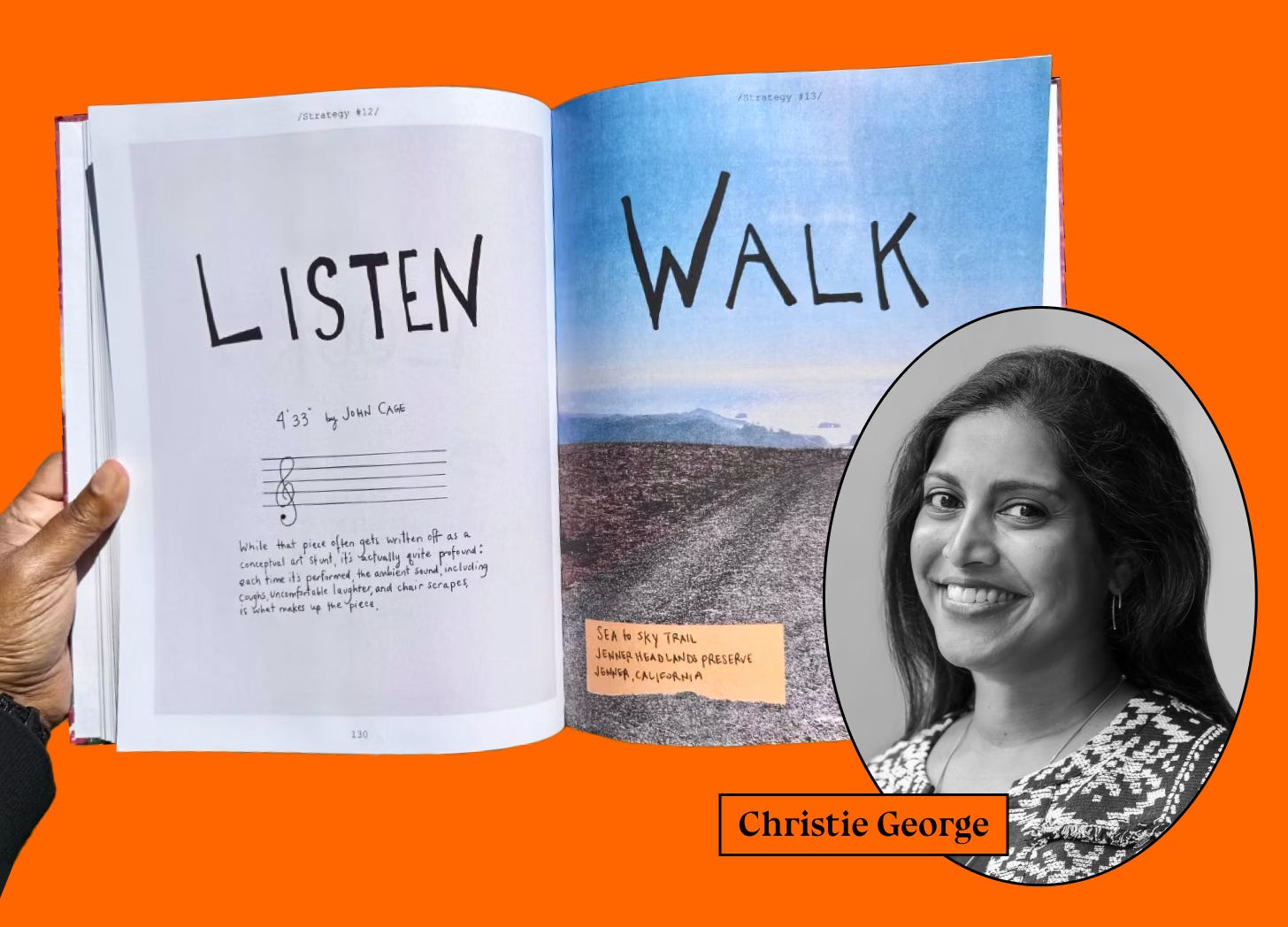
Fan nonfiction is a riff on the genre of fan fiction. According to Wikipedia, fan fiction is “fiction typically written in an amateur capacity by fans as a form of fan labor, unauthorized by, but based on, an existing work of fiction.” Fan nonfiction is a work of unapologetic fandom about a work of nonfiction. It’s not necessarily a critique or a review (although it may be critical). It is more than likely admiring, but more than anything else it is responsive and dialogic—a reader in direct conversation with the subject (or object?) of their admiration. Like fan fiction, fan nonfiction involves engaging one’s own imagination in active relation to an author’s ideas, creating something new in the process.
Many people (I’m guessing some Cita Press people are these kinds of people) mark up their books as they read, underlining passages as they go, scribbling their reactions in the margins. Marginalia is often considered minor, nonessential, secondary. But it is this work in the margins that I find most interesting, most relatable—sometimes even more so than the original text. In my work, I’m offering an invitation to consider book reports, fan nonfiction and marginalia as sites of substance and promise.
I feel quite certain that I would never have started my project, much less finished it, if I had had an audience in mind. An audience of myself is what allowed me to just move through the process of creation without listening to an inner critic. And even then, I still questioned why I was doing something so “unproductive.” That said, making this project was so much fun and gave me so much pleasure, it became about unlearning ideas about productivity and value. In other words, I learned that doing something just for myself—not for work, not for money, not for an external audience—had value in and of itself.
At some point, right before printing the book, I decided that I wanted to get some feedback on it. The draft wound up in the hands of a reader who did not know me but turned out to be the single most comprehending reader of the project.
“Was this ‘zine’ an excellent memoir? A pandemic essay? A conversation with not only Jenny Odell but also Robin Wall Kimmerer, Eula Biss, Walter Benjamin, and many other writers / thinkers that I know and love, plus many I now want to get to know?…Yes to all of the above, and then some.”
– Elizabeth Ü (Christie’s first reader), Writing Sangha
That initial exchange of sharing my book with one person was so affecting that I decided to keep doing it. I’ve shared the book via more traditional book talks but also through exhibitions, zine-making workshops, bird walks. My practice has evolved from being an individual exploration of reading one book to something more like a group project cultivating collective creative attention. I often say that collaboration has become both the means and the end of my creative practice. At this point, it is simply less interesting to me to be working on things alone. While I am still the primary driver of my projects, they have a more collective shape.
I’ve always taken notes on books, or copied passages that I liked and wanted to remember, but a couple of things were really different with this project:
The depth of engagement with just one book. My project is almost as long (232 pages!) as Jenny’s book itself.
I experimented with so many different creative forms: watercolor, collage, illustration.
The book report was a beautiful container to just try new things in a very low-stakes environment since the initial audience just was myself. And my process really felt like it embodied the message in Jenny’s book. As her friend Josh observes in this New York Times profile of her work, “She wants you to have an experience, not to listen to her.”
The books I read not only influence how I think and what I’m working on, but they’ve also become a way for me to mark time. Time has become so elastic, especially after the pandemic, but I now use books as a way to track particular seasons in my life. For example, if someone were to ask me about a specific date or even a year, I would probably just draw a blank. But if you asked me what things were like when I was reading Naomi Klein’s Doppelganger, I could tell you what chair I was sitting in, what the weather was like. Books almost instantaneously situate me in place and time, and, most importantly, feeling.
In general, I have become interested in more collective forms of knowledge work as compared to the myth of individual thought leadership. Even Jenny identifies herself as “one weaver among many in the tapestry that is culture.” The only sensemaking that makes any sense to me is collective sensemaking. I also tend to be interested in ideas that have been underrepresented or misrepresented in the culture, and I think the only way to figure anything out about them is through collective inquiry.
Initially, my more recent projects—about midlife, about mothering—seemed sort of random to me, and not necessarily connected to my book report project. But the gift of How to Do Nothing was in helping me pay attention to my own attention, to what I am interested in, to what I am curious about. So these latest interests and exploring them with other people feels directly connected to my work on Jenny’s book.
In terms of patterns, what I’ve learned is that although I start these projects simply because I’m interested in them, if I’m interested, then probably some other people are, too. Writing about my interests publicly (through the newsletter Practice Practice) is a way to not only explore in public but also to connect with others. Someone said to me, “You’ve got to howl to find your pack.” So one way I think of my public writing is as a means of finding other people that share these interests and building with them. And then we can do cool things together. (Like me and you!)
The other pattern I’ve noticed is that my own practice is a lot about permission, permission to pursue personal interests freely even if they’re not legible to other people. By modeling this myself, I am giving other people permission to pursue their own small, weird projects, a frame coined by my friend Courtney Martin and which continues to guide me.
The primary thing I’ve learned is that although I didn’t need anyone else to create my project, now that it is out in the world, it exists in the same attention economy as every other piece of content, entertainment and knowledge work. My intention for this project is for it to find its people, but it’s hard to know exactly what to do with it in order for that to happen. In a past life, I was an indie film distributor, so I should have known that this part would be the hardest, but it has still taken me by surprise.
“The only sensemaking that makes any sense to me is collective sensemaking. I also tend to be interested in ideas that have been underrepresented or misrepresented in the culture, and I think the only way to figure anything out about them is through collective inquiry.”
—Christie George
I’m reading a book right now that I think will be of interest to Bulletin readers: Riverwork by Lisa Robertson. The story follows a cleaner in Paris who inherits her missing aunt’s research about the buried Bièvre river. From the publisher’s description, “Riverwork unearths not just an urban river but also a philosophy of research and the archive, a politics of hydrology, an ontology of ageing and belatedness, and a consideration of the unrepresented labour of women, past and present.”
In the fall, I will be co-hosting a symposium in San Francisco about book reports, marginalia and other formats that facilitate deep engagement with the books that influence us. The symposium will take place in October during National Book Month and in collaboration with Problem Library and Same Page SF.
Download The Emergency Was Curiosity (free!) or purchase a (beautiful) physical copy here.
“In Defense of Useless Projects”: a visual essay by Christie George.
Christie’s guide to creating your own book report, via Practice Practice.
We made a “book report” of sorts for An Immortal Book: Selected Writings by Sui Sin Far. Download the book and its reading guide, “The Divine Right of Learning,” for free here.
Thank you to Christie George for nominating Arundhati Roy this month! This month’s Canon inductees both explored political realities through their art. Trace the full Cita Canon as it grows.
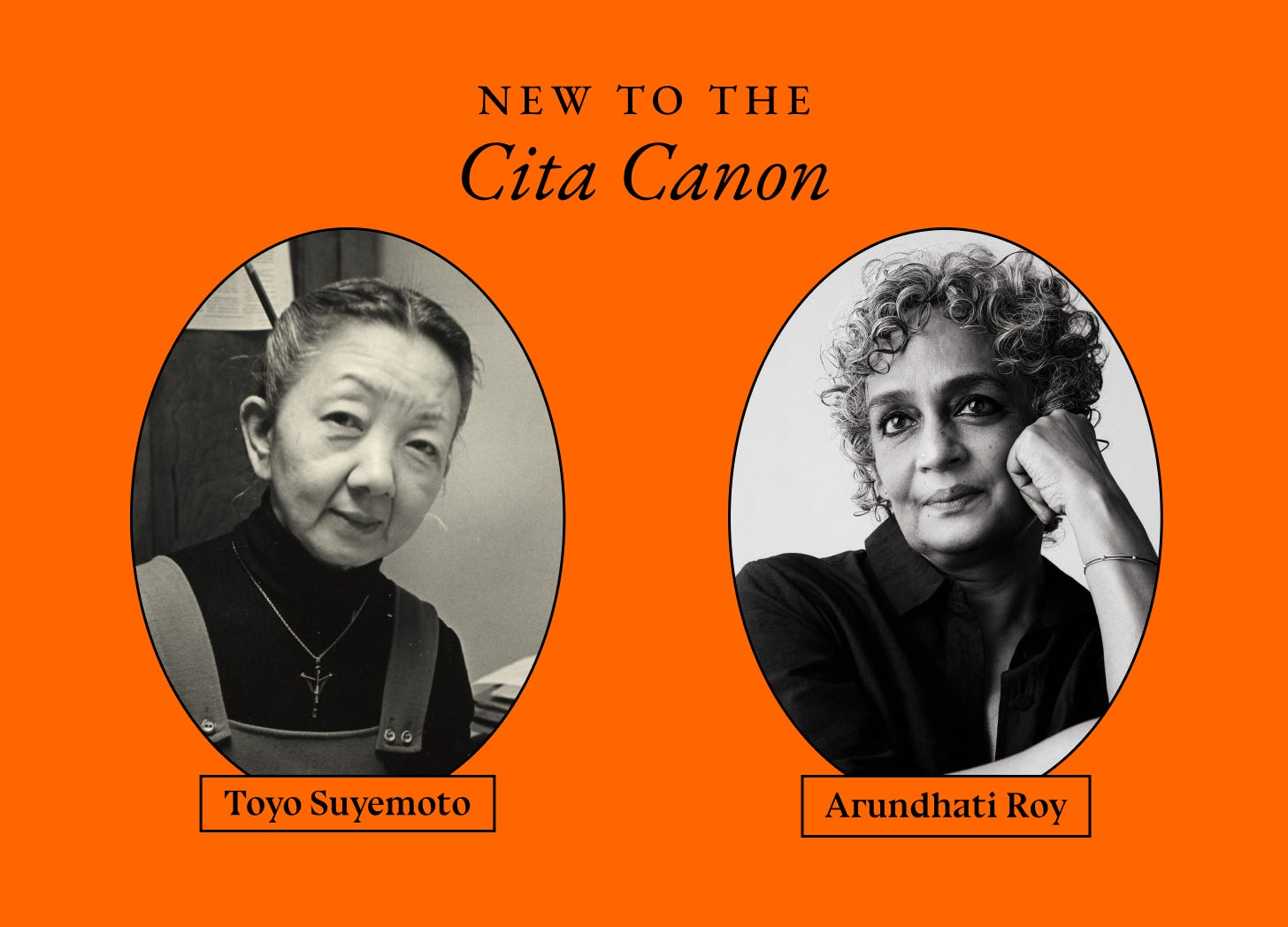
Toyo Suyemoto (1916-2003) began writing poetry in the fifth grade, inspired by her mother. Before the outbreak of World War II, she studied English at Berkeley and published poems across various Japanese American publications. Shortly after separating from her husband, Suyemoto was incarcerated with her infant son, Kay, and her extended family at Tanforan and then Topaz concentration camps. At Topaz, she worked in the camp’s ad hoc library and school and, alongside her friend Miné Okubo, for the literary magazines Trek and All Aboard. She contributed several poems to these publications, her language capturing the natural features of the Utah desert while illuminating the human context framing the poems’ composition.
While at Topaz, Suyemoto sent her work off to mainstream literary journals; two poems appeared in The Yale Review in 1946. She moved to Ohio after the war, where she worked in libraries at the University of Cincinnati, the Cincinnati Art Museum, and, eventually, The Ohio State University. At Ohio State, she built a career across three decades and became Head of the Social Work Library and Assistant Head of the Education Library. Later in her life, her poetry began to draw a wider audience, when younger Asian American writers like Lawson Fusao Inada and Frank Chin (two of the editors of Aiiieeeee!) sought out her work and her stories.
Suyemoto’s son, Kay, died in 1958 at age sixteen from respiratory disease caused by the conditions at Tanforan. In her later decades, she devoted herself to sharing the realities and consequences of internment through lectures, interviews, and her writing. In 1981, she testified before the Commission on Wartime Relocation and Internment of Civilians, describing what happened to Kay and to other children living in the camps. “It is for my son’s sake that I have just completed writing the first draft of a book on my internment years,” she explained. That memoir, I Call to Remembrance: Toyo Suyemoto’s Years of Internment, was finally published in 2007, four years after the poet’s passing.
[Toyo Suyemoto at Densho Encyclopedia; “Soft silver interwoven with quick fire”: Grant Din interviews Toyo Suyemoto for East Wind, 1984]
In the 2001 essay “The Ladies Have Feelings So…Shall We Leave It to the Experts?,” Arundhati Roy (b. 1961) compares the term “writer-activist” to “sofa-bed.” She notes that the label started popping up when, following the enormous success of her debut novel The God of Small Things, she turned to writing essays on politics. “Now, I’ve been wondering why it should be that the person who wrote The God of Small Things is called a writer, and the person who wrote the political essays is a called an activist?” It is isn’t simply genre that inspires “-activist” to be tacked onto “writer,” Roy asserts, but rather the reality that, as she puts it: “I take a position. I have a point of view.” She rejects the idea that doing so makes her less of a “writer.”
Indeed Roy’s entire career, across genres, forms, and fields, reflects her commitment to sharing a point of view. Roy was raised by her mother, Mary Roy, a women’s rights activist from Ayamanam, Kerala (the setting of The God of Small Things). She studied architecture in New Delhi and began her career at the National Institute of Urban Affairs before pivoting to film and television. Her screenplay for the 1989 television movie In Which Annie Gives It Those Ones dramatized her experiences as an architecture student and won her the National Film Award for Best Screenplay. (She also acted in the film.) It screened theatrically for the first time earlier this year at the Berlin International Film Festival.
The God of Small Things won the Booker Prize in 1997. Roy’s second novel, The Ministry of Utmost Happiness, came out twenty years later. Her nonfiction collections include The Algebra of Infinite Justice, Listening to Grasshoppers: Field Notes on Democracy, and My Seditious Heart. Mother Mary Comes to Me, Roy’s latest book, tells the story of her mother as well as her own coming to be as a writer.
[An interview with Arundhati Roy in The Yale Review, 2026; “For the Lovers, For the Haters”: Arundhati Roy in conversation with Parvathy Thiruvothu at the 2024 Wayanad Literary Festival]
The next Cita Press title is out very soon! We’re very excited for this one, which will bring a “new-old” translation of an essential Colombian feminist novella to readers in English, alongside the original Spanish text. Curious? We’ll be revealing more in coming weeks, and next month’s Bulletin…
“I am a woman in my thirties, and I am thriving”: Read Cita founder Juliana Castro Varón in The New Yorker’s “Shouts & Murmurs” column.
SAVE THE DATE! We’re talking about “New Life in the Public Domain” for the San Francisco Public Library’s Summer Stride series. Catch us at the Eureka Valley branch on July 25!
Text within this block will maintain its original spacing when published
I sought to seed the barren earth
And make wild beauty take
Firm root, but how could I have known
The waiting long would shake
Me inwardly, until I dared
Not say what I would gain
From such untimely planting, or
What flower worth the pain?
—Trek, Vol. 1, No. 1 (Dec. 1942)
In the “The ‘Pre-Poetics of Internment’: The Example of Toyo Suyemoto” (American Literary History, Spring, 1989), scholar Susan Schweik quotes the following excerpt from an interview with Suyemoto by Grant Din (read more here):
“And it took quite a lot of effort on the part of the young people to get a camp magazine going. I was asked to contribute poetry then, and it was really interesting because Mine [Okubo] would sometimes stop by and say, “Can you have a poem ready for this issue?” I said, “How soon?” “Tonight.” I said, “You mean I have to write a poem by tonight?” “Oh,” she said. “You can do it!” And I said, “When will you pick it up?” She said, “I’ll come by at three o’clock in the morning.” I said, “I won’t be up then!” She said, “Well, tack it on the door, and I’ll pick it up.” Sure enough, I’d finish a poem, write it out neatly, tack it on the door to the barracks, and along about three o’clock I’d hear footsteps on the path, and I could hear Mine’s voice talking to her brother, who always accompanied her, and, you know, the door opened, and a few steps, the door closed, and the poem would appear in the new issue of Trek! (laughter)”
Schweik suggests that, amidst all the trauma of forced relocation, “the anecdote conveys a surprising sense of freedom and access, of the necessary emotional conditions for creative energy of a developing writing community for women.”
Comments
Nothing yet. Say the first thing.
Sign in to join the conversation.