
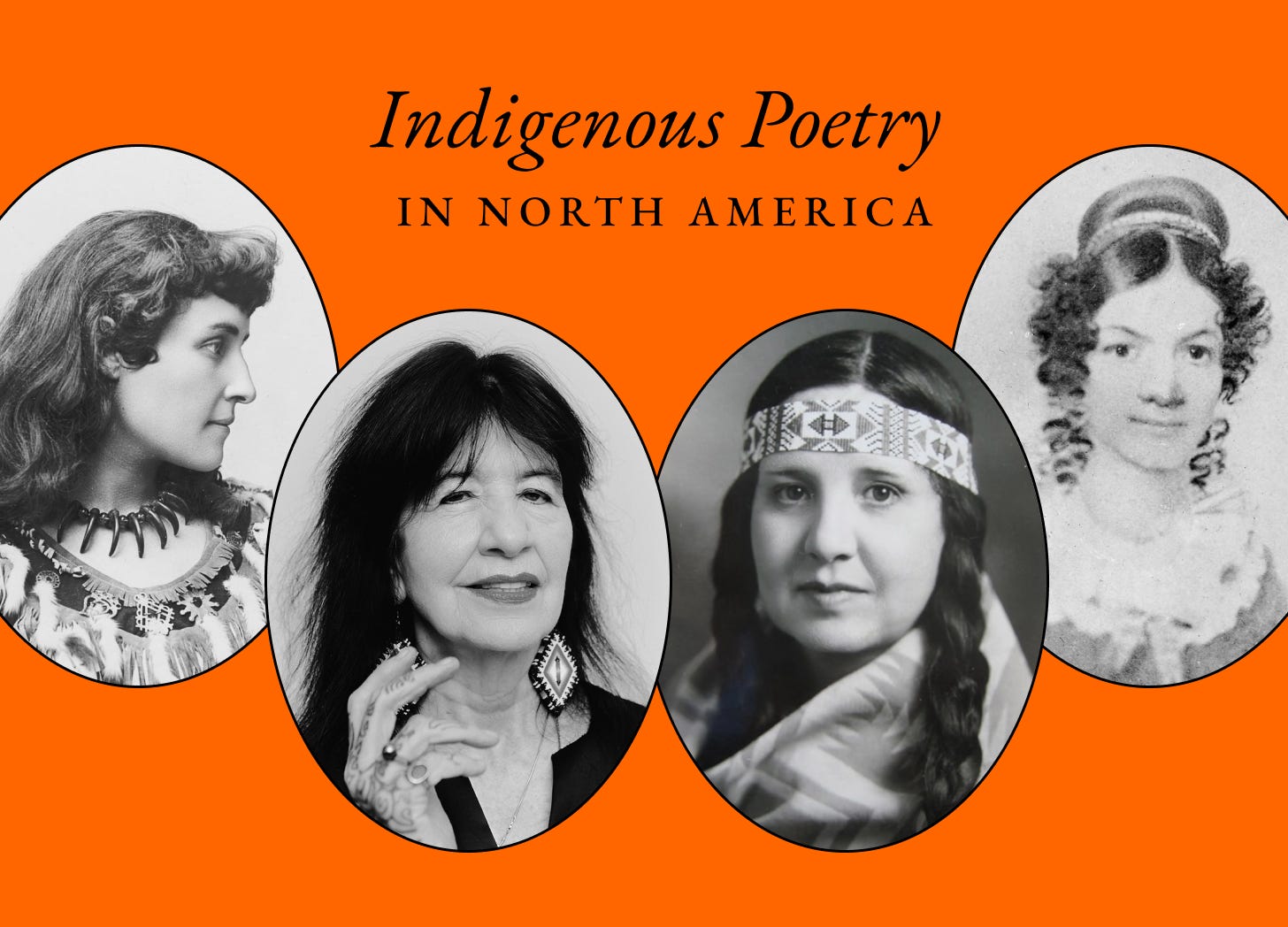
In 2019, then-Librarian of Congress Carla Hayden named Joy Harjo (b. 1951) the 23rd Poet Laureate Consultant in Poetry to the Library of Congress. With this appointment, Harjo became the first Native American person to hold the title. For her signature project as poet laureate, she created Living Nations, Living Words: an interactive map, online audio collection, and companion anthology exploring poetry by forty-seven contemporary Native poets. The work invites readers to connect words to physical space and environments, and to start to understand the roots, depth and diversity of work by contemporary Native Nations poets writing in the United States today.
“Each of the 47 Native Nations poets featured in “Living Nations, Living Words” selected an original poem on the theme of place and displacement, and with four touchpoints in mind: visibility, persistence, resistance, and acknowledgment.” —Joy Harjo, Introduction, Living Nations, Living Words
In the recordings that comprise the audio portion of Living Nations, Living Words, each participating poet provides some context for their selection. A sampling:
“I am allowing the desert to become a place of desire because I know the ways that we think about the desert, and I know the ways that my country has thought about Indigenous peoples.” —Natalie Diaz on “Postcolonial Love Poem”
“So, this poem was written as a help—as a helper for myself. I offer it here for anyone who needs…[something] that will…get you to your real, true task in life, which is to be more aware. To be in touch with the great movements of the universe. To be in touch with the sacred. With the profound. With the idiotic. With the sensual.” —Louise Erdrich on “Advice to Myself”
“In the popular imagination, Native peoples appear primarily after the so-called discovery of this continent. In this poem, I wanted to suggest the reality that precedes invasion and colonization: the autonomy of Indigenous tribes, their place-making, embedded relationships, their lifeways.” —Kimberley Blaeser on “Poem on Disappearance”
Living Nations, Living Words inspired another digital humanities project, this one focused on poets of the past: Mapping Indigenous Poetry of North America, 1830-1924 by Hannah Provost. Provost has placed poems on the digital map based on references to place in the actual poems and/or significant locations from the authors’ lives.1 She also created a visualization that organizes the works by theme. “Nature, land ownership, and…environmental justice, are the most prevalent themes in the poetry collected here,” Provost observes in the introduction. All of the poems in the project are in the public domain in the United States.
In When the Light of the World Was Subdued, Our Songs Came Through, a 2020 anthology edited by Harjo (with Leanne Howe and Jennifer Elise Foerster and contributing editors), poets from both mapping projects appear together. The volume collects work that spans three centuries—and that reflects many more centuries of culture rooted in the lands of North America. For this month’s Bulletin, we dig into words, images and voices that we are grateful to have access to, thanks to the hard work of many stewards.
We spotlight two poets that appear in both Mapping Indigenous Poetry of North America, 1830-1924 and in the Joy Harjo-edited Norton collection, as well as the drawings of one avant-garde visual artist whose work is finally starting to be exhibited and appreciated.
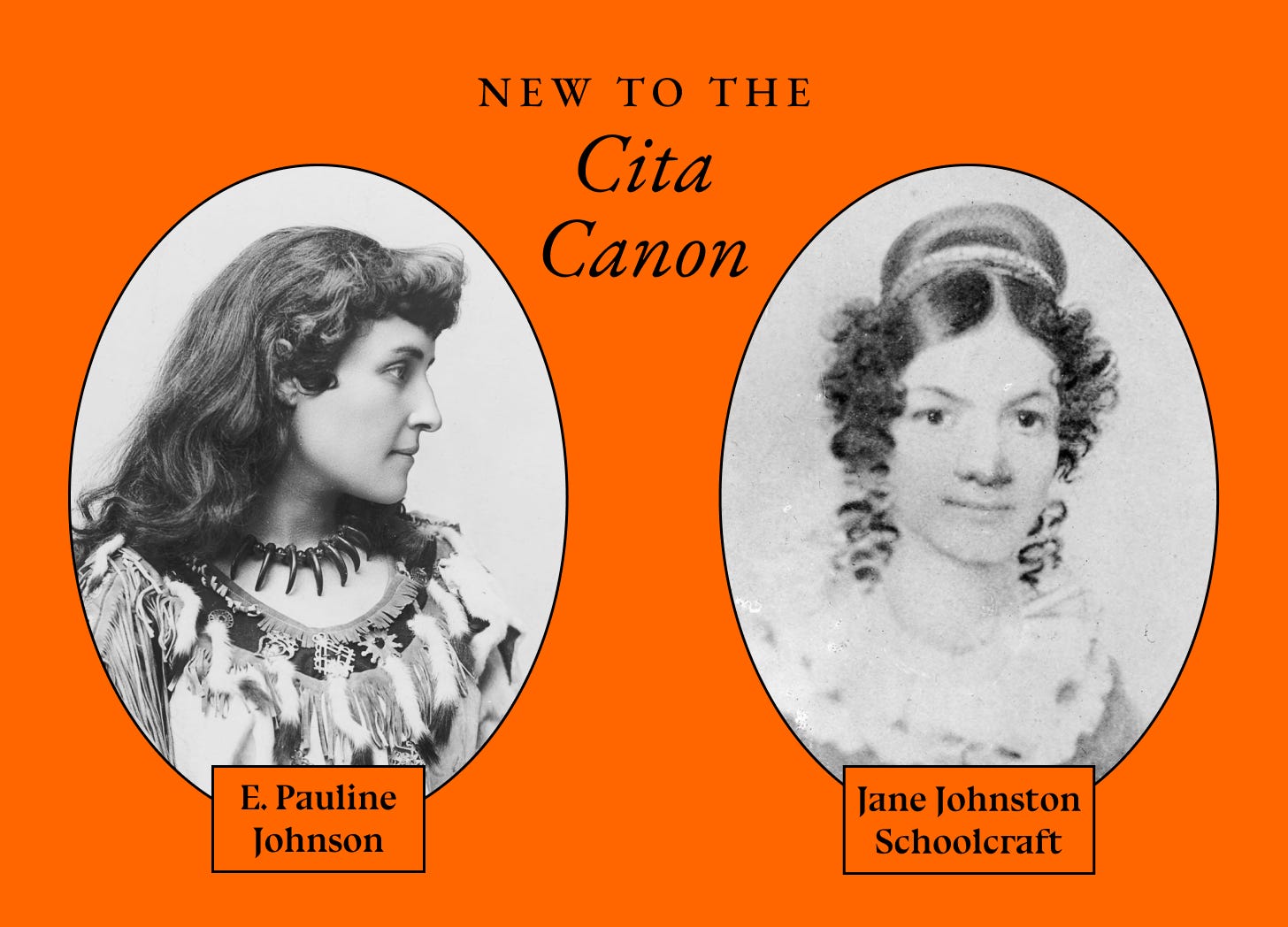
The daughter of a hereditary Mohawk chief and an English immigrant, E. Pauline Johnson (Tekahionwake, 1861-1913) grew up in a well-connected middle class family. Her grandfather, John Smoke Johnson (Sakayengwaraton), taught her and her siblings about their heritage through traditional oral storytelling in the Mohawk language; Pauline would later emulate his style in her own public performances. She began publishing poetry in Canadian and US journals in her early twenties, and in 1892 she made waves with “A Strong Race Opinion: On the Indian Girl in Modern Fiction,” a sharp critique of how Native women had been portrayed in Canadian literature.
Johnson toured the world giving performances of her work, often switching between costumes that approximated Native dress and fashionable Euro-style gowns. She used both her English name and the Mohawk “Tekahionwake,” the birth name of her great-grandfather that translates to “double-life.” Her poetry collections, starting with The White Wampum (1895), were critically and commercially successful. Breast cancer forced her retirement from public life, and her later collections of prose and poetry were facilitated by friends to raise money for her care. Her public funeral was reportedly the largest in Vancouver’s history.
“Pauline Johnson’s physical body died in 1913, but her spirit still communicates to us who are Native women writers. She walked the writing path clearing the brush for us to follow. And the road gets wider and clearer each time a Native woman picks up her pen and puts her mark on paper.”
-Beth Brant, “The Good Red Road: Journeys of Homecoming in Native Womens’s Writing,” American Indian Culture and Research Journal, 1997 (CC BY-NC)
In a 1997 essay, Mohawk writer and poet Beth Brant asserts that narratives around Johnson’s historic popularity bely the radical nature of her work and ideas. “She has been ignored and dismissed by present-day critics and feminists,” Brant writes, “but this is just another chapter in the long novel of dismissal of Native women’s writing.” Today, her books Flint and Feather (1912) and Legends of Vancouver (1911) are still in print. The latter text was updated and republished in 2023 under the name Legends of the Capilano after editor Alix Shield found a note in Johnson’s archives reflected her wish that the collection be named after and reflect her collaboration with Chief Joe Capilano (Sahp-luk) and Mary Capilano (Lixwelut). [“E. Pauline Johnson” by Alix Shield for The People and the Text; “Celebrating the Legacy of E. Pauline Johnson — Tekahionwake” by Lisa Wilson Palmour for UBC Library.]
Text within this block will maintain its original spacing when published
Idles the night wind through the dreaming firs,
That waking murmur low,
As some lost melody returning stirs
The love of long ago;
And through the far, cool distance, zephyr fanned,
The moon is sinking into shadow-land.
The troubled night-bird, calling plaintively,
Wanders on restless wing;
The cedars, chanting vespers to the sea,
Await its answering,
That comes in wash of waves along the strand,
The while the moon slips into shadow-land.
O! soft responsive voices of the night
I join your minstrelsy,
And call across the fading silver light
As something calls to me;
I may not all your meaning understand,
But I have touched your soul in shadow-land.
—from Flint and Feather (1912).
Jane Johnston Schoolcraft (Bamewawagezhikaquay, 1800-1842) is considered the first or one of the first Native American literary writers in English. Like Pauline Johnson, she grew up in a prominent family shaped by both European and Native heritage. She was born in what is now known as Michigan; her mother was the daughter of an Ojibwe leader. Jane spoke both Ojibwe and English in her daily life, and, though she wrote mainly in English, she also wrote poems in Ojibwe and translated Ojibwe songs into English.
Together with her husband, Henry Rowe Schoolcraft, Jane created the handwritten, personally distributed magazine Literary Voyager, or Muzzeniegun/Muzzinyegun (Ojibwe for “book”, 1826–7). It was the first magazine in Michigan and the first periodical to focus on Native culture. Many of Jane’s poems and stories were first published in the magazine under the pseudonyms “Leelinau” and “Rosa.” Though the collaborations with Jane and her family that made Literary Voyager possible are obliquely referenced in the issues, it is only recently that the full scope of Jane’s input has started to be recognized.2 Eventually, Henry’s published work—built on unattributed contributions and twisted or transformed to suit his own tastes and biases—became the source material for Henry Wadsworth Longfellow’s immensely popular The Song of Hiawatha (1855).
As years went on, Henry’s work as a U.S. Indian Agent and his reach as an early cultural anthropologist meant that he was often away. Meanwhile Jane was isolated, in poor health, and grieving the loss of two children and her separation from her two surviving children (who were sent to assimilationist boarding schools against her wishes). She died at just age forty-two.
Library of Congress curator Barbara Blair refers to Schoolcraft one of the earliest American nature writers, seeing her poetry as foundational for Emily Dickinson and Mary Oliver. In addition to celebrating nature, female friendship, and the history and legends of her Ojibwe heritage, she also wrote about loneliness, grief, and alienation. Her full body of work reflects her position as a woman living across cultures, and one determined to preserve her individuality as well as the rich culture and language of her ancestors. In 2008, the publication of Robert Dale Parker’s The Sound the Stars Make Rushing Through the Sky: The Writings of Jane Johnston Schoolcraft marked the first time Schoolcraft’s work was formally collected. [“‘She Could Look Into the Heavens’: Ojibwe Poet Jane Johnston Schoolcraft” by Barbara Blair for LOC Blogs; “The Complex Worlds of Jane Johnston Schoolcraft” by Margaret Noori for Michigan Quarterly Review.]
Text within this block will maintain its original spacing when published
Come, sisters come! the shower’s past,
The garden walks are drying fast,
The Sun’s bright beams are seen again,
And nought within, can now detain.
The rain drops tremble on the leaves,
Or drip expiring, from the eaves;
But soon the cool and balmy air,
Shall dry the gems that sparkle there,
With whisp’ring breath shake ev’ry spray,
And scatter every cloud away.
Thus sisters! shall the breeze of hope,
Through sorrow’s clouds a vista ope;
Thus, shall affliction’s surly blast,
By faith’s bright calm be still’d at last;
Thus, pain and care,—the tear and sigh,
Be chased from every dewy eye;
And life’s mix’d scene itself, but cease,
To show us realms of light and peace.
—from The Literary Voyager (1826).
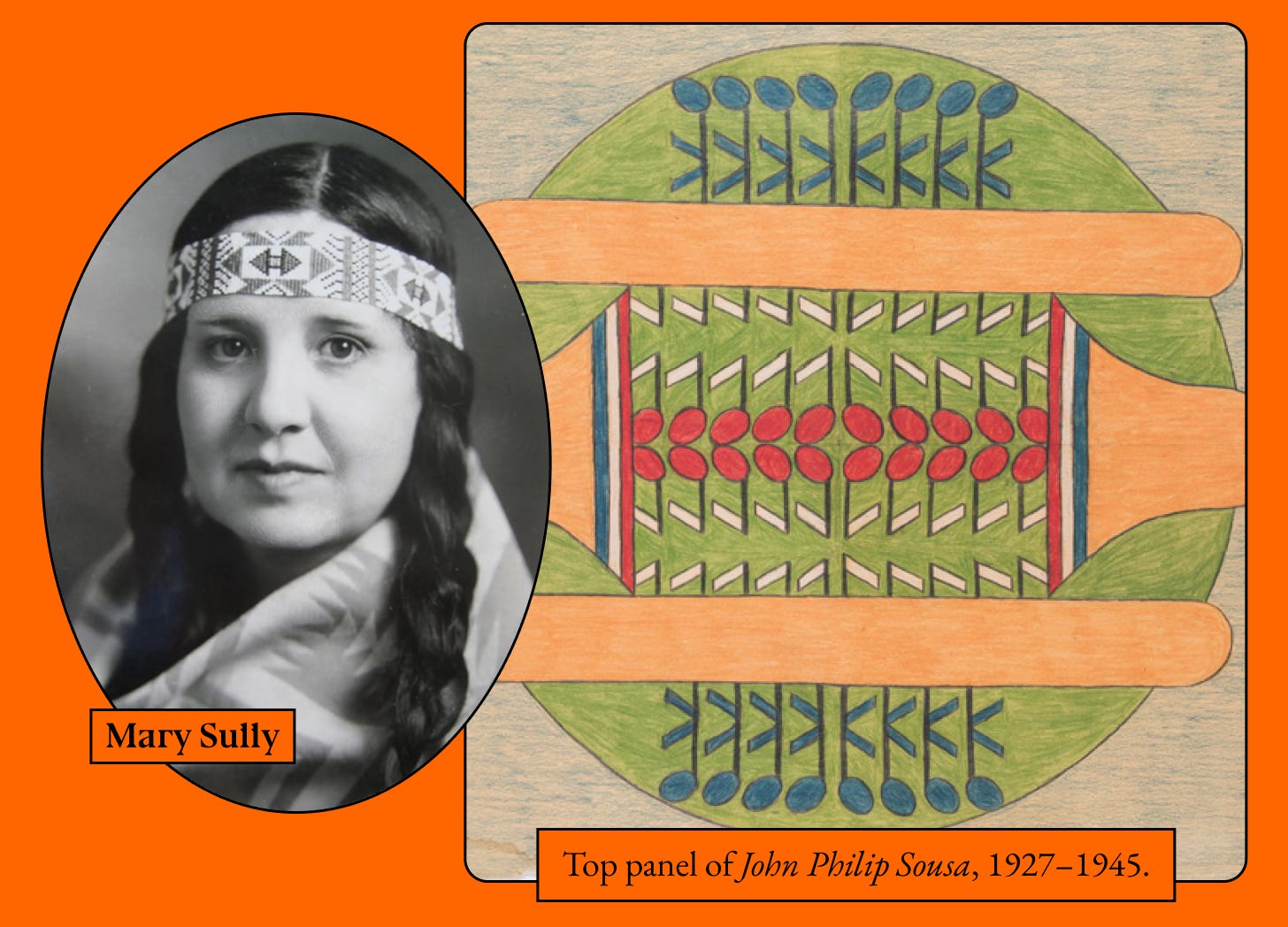
Last November, we included a brief mention of Mary Sully (Susan Mabel Deloria, 1896-1963)—and a then-ongoing exhibit of her work at The Met—in the Cita Canon Spotlight entry about her sister, Ella Cara Deloria. Now it’s time we celebrate Mary herself, who created distinctive modernist drawings that blended American Indian imagery, geometric patterns, and popular culture.
Susan Mabel Deloria was born on the Standing Rock Reservation; her parents were Yankton Sioux leader and Episcopal priest Tipi Sapa (Philip J. Deloria) and Mary Sully (Akicita Win). Her maternal grandfather was a military man who oversaw massacres of Indigenous people and her great-grandfather was a famous portrait artist who made the portrait of Andrew Jackson that still adorns the twenty-dollar bill. Susan and Ella grew up among the Hunkpapa and Sihasapa Lakota people, aware of their well-known non-Native family members but embedded in and committed to preserving their Sioux heritage.
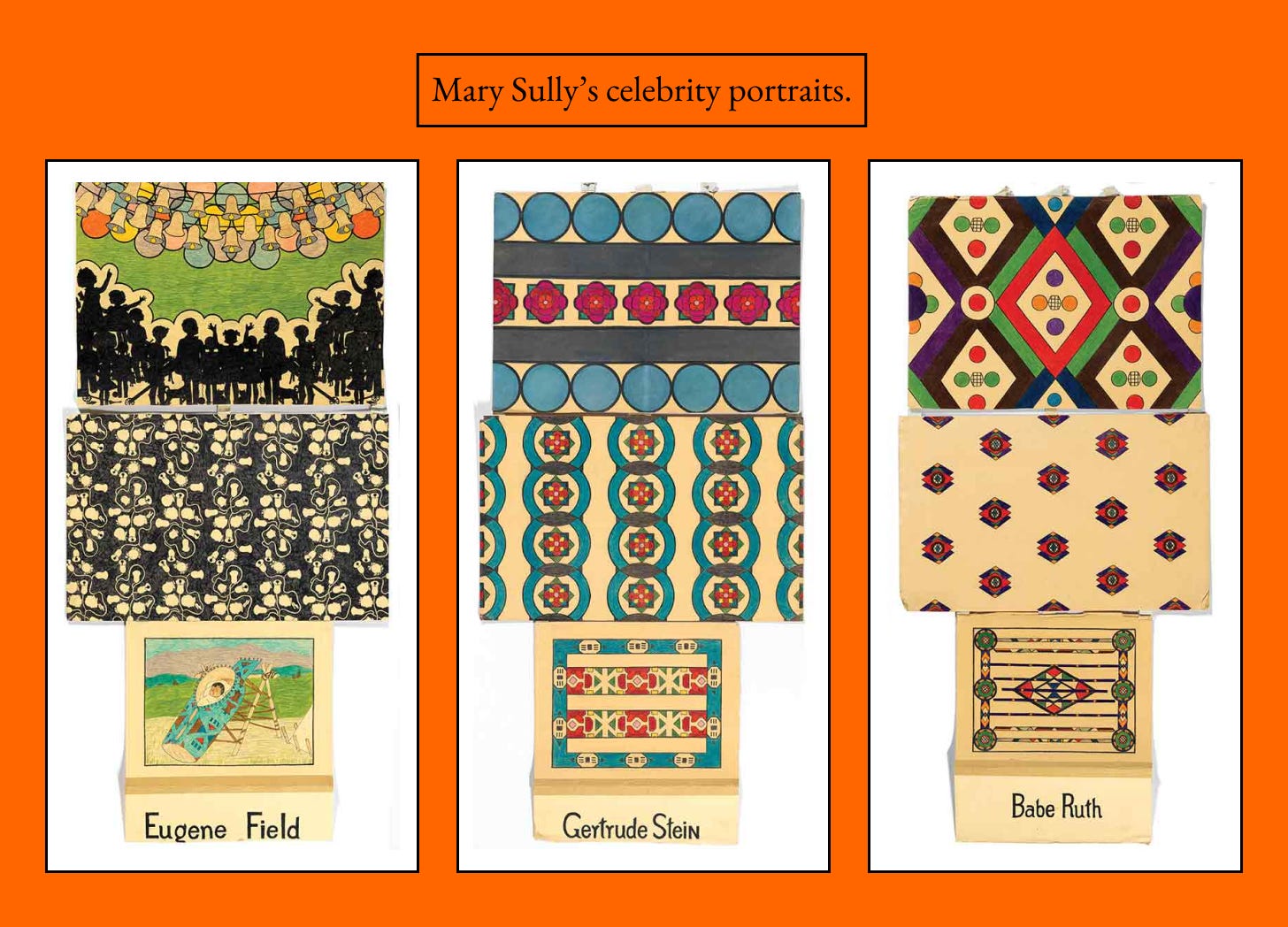
In the 1920s, Susan adopted her mother’s name. She lived with her sister, moving from place to place and supporting Ella’s fieldwork. Though she spent some time studying art in college, she was self-taught, inventing her own way of depicting the world. Her “personality prints” were intricate puzzles that analyzed the cultural images of celebrities like Shirley Temple, Fred Astaire, Babe Ruth, and Gertrude Stein. Three Stages of Indian History: Pre-Columbian Freedom, Reservation Fetters, the Bewildering Present directly engages with the past, present and future of Native peoples.
“For Mary Sully, creating her own version of modernism enabled her to gather up the past while limning an Indian future, and that future, as she was able to envision it in this work at least, was female.” —Elizabeth Pochoda, “The Unexpected Art of Mary Sully,” 2020
In 2019, Sully’s great nephew, Philip J. Deloria3, published Becoming Mary Sully: Toward an American Indian Abstract—a project born from the literal dusting off of family ephemera that sparked a long-deserved reemergence. The first-ever solo exhibition of her work, Mary Sully: Native Modern moved from the Metropolitan Museum of Art to the Minneapolis Institute of Art earlier this year before closing in September. Today, you can still view her work in gallery 746 at The Met (she’s now in the permanent collection). [“The Unexpected Art of Mary Sully” by Elizabeth Pochoda for The Magazine ANTIQUES; “An Indigenous Modernist Artist Finally Gets Her Due” by Julie Schneider for Hyperallergic; The Mary Sully Foundation]
Did you read (and love) a book by a woman this year? Share it with us! Send us a book title/author and one sentence about why you recommend it to Cita readers. We’ll share it in the December issue of the Cita Press Bulletin and on our Instagram.
Erin Marie Lynch, who wrote the foreword for Cita’s Planted in a Strange Earth: Selected Writings by Zitkála-Šá, is cofounder of the recently announced Indigenous Writers Workshop at the Center for California Literature in Los Angeles (launching 2026). Indigenous writers in the LA area can send a DM to [at]california.literature on Instagram with name, tribal affiliation, and email address for details.
Earlier this week, The Feminist Institute launched 30 Days of Feminist History. They’ll be digging into their archives here on Substack and elsewhere, and giving readers a peek into what goes into preserving feminist legacies.
Lost Ladies of Lit profiled the Sitting Room Library, our A Luminous Halo publication partner, in a recent episode of the podcast—featuring audio snippets of a literary dinner party Cita editorial director Jessi Haley was lucky to attend.
Shop for the book lovers in your life at shop.citapress.org! Cover posters, books, & more. Last day for 2025 shipping is December 8.
It’s been a busy fall for Cita, complete with events in Detroit, Philadelphia, and across the Bay Area. We’re grateful for these opportunities to connect with people. By subscribing to this newsletter, you give us a chance to reach you directly, and with more words (and nuance) than other platforms allow. All of this is rare gift in an algorithmically-driven internet landscape. So THANK YOU!
The map may not currently working for some users due to a Scalar publishing platform outage from earlier this year that is still being worked through.
A sample nod to Jane’s contributions: “In the foregoing story, we recognize the pen of a female correspondent, to whom we have before been indebted.”
Comments
Nothing yet. Say the first thing.
Sign in to join the conversation.