

But before you do, consider subscribing. We drop one weekly digest every Friday.
The 2026 southwest monsoon arrived late over much of the country, triggering concerns about delayed kharif sowing. Then, in a matter of weeks, several states swung to the opposite extreme, with intense downpours causing floods, landslides and urban flooding. Yet, some regions continue to face prolonged dry spells. This map from the mausam vibhaag – the Indian Meteorological Department – shows the situation as of 2 PM, today.
Now, a wet July cannot fully compensate for a dry June. Farmers who delayed sowing because of a weak monsoon onset have a shorter growing window. Heavy bursts of rain also tend to run off quickly instead of soaking into the soil or replenishing reservoirs and groundwater. In other words, more rain does not always mean more water. The Central Water Commission provides IRL updates on reservoirs across the country.
Climate scientists and journalists have long warned that global warming would make the monsoon more erratic, with longer dry spells punctuated by more intense rainfall events. But instead of saying, “We told you so”, we’ll tell you just how this matters to you, and what you can do about it.
Why this matters to you: The monsoon affects far more than agriculture. It influences food prices (likely inflation), hydropower generation (more blackouts and brownouts), drinking water supplies (a big worry for cities like Bengaluru), insurance claims (particularly for farm insurers) and disaster preparedness (the less said the better).
What you can do: Start at home. Harvest rainwater if you can, reduce dependence on groundwater and use water more efficiently during dry spells (find relevant solution providers in our Green Pages). Stay informed by tracking IMD forecasts and reservoir levels rather than viral social media posts. Finally, ask your elected representatives about year-round water security: Are lakes and wetlands being restored? Is stormwater being captured instead of channelled away? Are cities investing in groundwater recharge, flood-resilient drainage and local climate adaptation plans?

The massive trade fair for the textile industry attracts companies from around the world. This year, recycling, circularity, traceability, chemical residues and similar concerns featured prominently in the agenda.
Given Europe’s Digital Product Passport, stricter due diligence laws, growing demand for recycled fibres and increasing scrutiny of water use, chemicals and emissions, sustainability is becoming a licence to export. Manufacturers are finding that global buyers increasingly want proof, not just promises, about where products come from, how they were made and what happens to them at the end of their lives.
While India is still working on its own textiles EPR (extended producer responsibility) mandate, the message is clear: global competitiveness increasingly depends on environmental performance.
One innovation we're particularly excited about is sustainable dyes. Conventional textile dyeing is among the world's biggest sources of industrial water pollution. But researchers and startups are developing dyes made from agricultural waste, microbes and algae that could dramatically reduce the industry's environmental footprint. Read our story on why these innovations matter.
Why this matters to you: Whether you work in textiles or, as we presume, wear clothes, you have a chance to make sustainable choices. For consumers, remember that the most sustainable garment is often the one you already own, followed by one that is made to last, repaired and eventually recycled. If you're a student or professional, build skills in circular design, lifecycle assessment, sustainability reporting, supply-chain traceability, materials science, chemical engineering, wastewater treatment and environmental data.

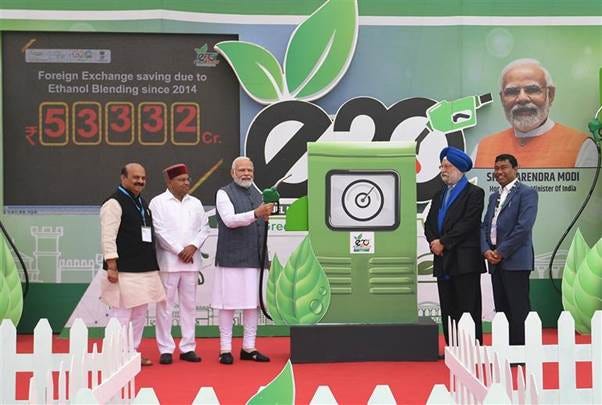
If you own a car in India, you’re already aware of the controversy around the mandatory, sped-up rollout of E20 fuel (petrol blended with 20% ethanol). The government has admitted E20 may cause a drop in vehicle mileage, and the controversy deepened when the Attorney General described E20 as an “experiment” during a Supreme Court hearing. The government rushed to defuse the ensuing controversy, but failed to explain why consumers had to pay the same price for a fuel that may deliver fewer kilometres per litre.
The silver lining is that the conversation has become more sophisticated. Instead of celebrating a blending target achieved ahead of schedule, policymakers, scientists and consumers are beginning to ask harder questions. Is sugarcane ethanol worth its water footprint? Should more ethanol come from crop residues and other waste rather than food crops? How should India balance energy security, farmer incomes, consumer interests and environmental sustainability? Those are exactly the questions that should shape the next phase of India’s biofuels policy.
Why this matters to you: E20 is a reminder that there are rarely silver bullets in climate policy. Whether or not you drive, the E20 debate raises fundamental questions about how India should evaluate climate policies. Should success be measured by ambitious targets or by outcomes such as lower emissions, better air quality, water security and consumer welfare? The answers will shape not just biofuels, but future decisions on EVs, green hydrogen, carbon markets and other climate technologies. The more evidence-led these debates become, the better the chances of avoiding costly mistakes and building a transition that works for both people and the planet.

India’s first hydrogen-powered train made its much celebrated first run in Haryana between Jind and Sonipat today. But is it a better alternative than electricity? Time to pause and consider: as far as trains and buses are concerned, hydrogen is significantly less energy efficient than direct electrification because energy is lost during production, compression, transport and conversion. And, Indian trains already run on electricity.
Here's our fact-check on the subject (our story also unpacks the differences between green, grey, and blue hydrogen that has many of us confused).
The conclusion: Hydrogen has an important role in sectors that are difficult to electrify, such as steel, fertilisers and shipping. But for trains and buses, direct electrification is usually cleaner, more energy efficient and more cost-effective. So, is hydrogen solving a real problem here, or just creating interesting photo ops?

Every electronic device contains a printed circuit board, yet few ponder about the material that lies beneath its copper circuitry. An IIT Madras spinout and winner of the Big Pi Award at SusCrunch 2025, Bisket Labs has been studying how agricultural waste could replace the fossil-derived substrate at its heart. The founders are developing a PCB substrate made largely from biomass that can work in existing manufacturing lines while replacing petroleum-derived resin with material derived from crop residues.
Co-founder Rohith Sharma frames the business as one of industrial resilience. “Countries know they must develop sustainable supply chains, and better still, indigenous production technologies and capacities,” he says.
That’s three transitions with one chip: Reducing agricultural waste, making electronics less dependent on fossil-derived materials, and helping countries build more resilient domestic electronics supply chains. Read it here.
Industrial policy and energy policy are becoming inseparable. And solar policy must also sync with industrial policy. What does this mean? Reuters reported that Pakistan imported around 16.6 GW of Chinese solar modules in 2024 which contributed to more than 25% of electricity generation in the first quarter of 2025. This is a powerful example of how quickly solar can scale when module prices fall and consumers seek relief from high electricity costs.
However, if a country replaces dependence on imported fossil fuels with dependence on imported equipment, has it achieved true energy security?
India has dramatically expanded its own module manufacturing but this is just one layer of the value chain. Long-term resilience will be reflected by building domestic capabilities across cells, wafers, power electronics, batteries, recycling, storage software and advanced grid technologies. And thus, industry and solar policies must align if we want to achieve true energy sovereignty. Read it here.

Gang, before you tune out, this is Radio 99 chiming in to say goodbye with a bonus. You are listening to Lazy Tunes with G, it is 4 PM on a Friday and we are softly grooving to Berty Ashley’s classic evergreen hit Let’s Str-eight-en it Out!
Did you know that the musician is also a scientist and sought-after quizmaster? This man with many questionable identities has proven true what they always say, “talent doesn’t come in teabags and skills are not just sugar, honey.” Who are they? Who knows? But Berty hits the spot when it comes to matters of science, riddling the mind, and songs that brew comfort in the heart. This is the reason why we have a poster for each avatar of his.
In reality, none of this is true. OK, perhaps some of it is. But the way more real, really glaring reality is that half that the week is over and the weekend’s here! *in helium voice*
We can hear you screaming and it is shrill. Play Climate Action Live’s 8th drawdown quiz and in that same top-of-the-shelf voice, comment your scores below! Also, for those of you who thought this was becoming too science-y, Berty listened and has thrown in a few pop themed questions.
See you next week!
Madhur Singh & Gulal Salil
Team Climate Action Live
No posts
Comments
Nothing yet. Say the first thing.
Sign in to join the conversation.