
As a writer, I don’t know whether I’ve been dissed more often for writing fantasy, or for writing for young adults. It could be worse, I suppose—I could be writing romantic fantasy for young adults. Well, now that you mention it….
Now I’m writing adult Appalachian witch fantasy. Knives out.
The fact is, no matter what you’re writing, there’s always someone waiting in the wings to suggest that it isn’t quite legit. Important. Worthwhile. To ask, “When are you going to write a real book?” e.g. “something I might want to read.” Whatever that means to them.
A few years ago, I was in Park City, Utah for a writing retreat. In one of the downtown stores, the clerk asked what brought us to town.
“We’re here for a writing retreat,” my friend Martha said.
“Oh,” said the clerk, her interest piqued, “what do you write?”
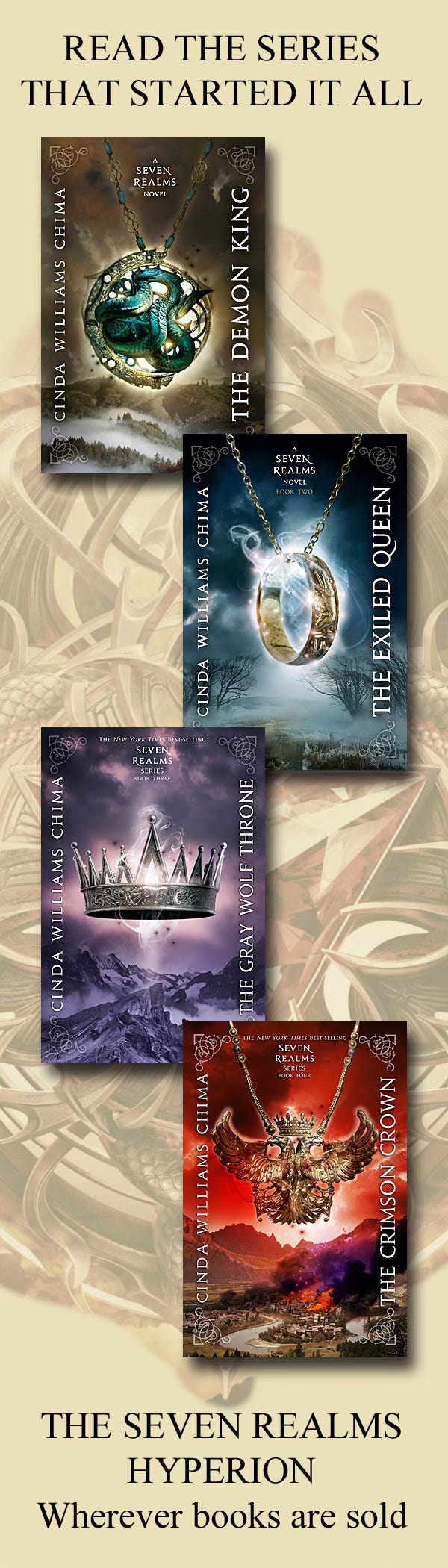
I often answer that question by handing over a promotional bookmark as a kind of shorthand. When the clerk got a look at the cover art, she literally recoiled.
“Oh!” She shuddered. “I don’t read fantasy,” she said, in a tone of disgust I might use for, say, bestiality westerns. (Am I allowed to diss bestiality westerns?)
“Well,” I said, “maybe you just haven’t found the right book.”
The clerk made a face. “Oh, no. They made us read fantasy when I was working on my MFA.” She produced a dog-eared paperback from behind the counter. “I read this—literary fiction.”
Well, all right—I read literary fiction, too. I belong to two book clubs, for crying out loud, and we read a variety of things. But I also know people who would call literary fiction “pretty words going nowhere.” Or “writers showing off their MFA’s.” That’s their bias.
When writers join book clubs, we find out pretty quickly that people disagree about books. That means that not everybody is going to like your book. You’re going to have to learn to live with that, if you want to put your work out there.
So I wasn’t going to get into it with the MFA graduate in the gallery. But my friend Martha pointed at me, leaned in and said, “New York Times Best-Selling Author.”
The look on that clerk’s face was priceless. At that point, I got down on my knees and asked Martha to marry me.
Well, all right, that part isn’t true.
My point is, why do we do that? Why do we confuse matters of taste with the quality or legitimacy of other people’s writing? This especially applies to “genre fiction,” like science fiction, fantasy, and romance (now more often called ‘women’s fiction.’)
Note: I might be inclined to refer to all fiction as “women’s fiction,” given that women read fiction at a much higher rate than men. In 2022, 46.9 percent of women had read a novel or short story in the past year, compared to 27.7% of men. But I digress.
Why do we pluck the graphic novel out of our son’s hands and hand him a book no consenting adult would read without a gun to his head?
“Here, Geoffrey—this book is called The Jungle. It’s about Polish immigrants contending with dangerous and unsanitary meat-packing practices in the early 1900’s. You’ll love it.”
Way to kill the joy of reading. The key to that joy is freedom of choice—and honoring the choices that readers make. This is especially important at a time when reading for pleasure is on a steep decline. Looking at the data, if I were younger, I might be training for a different career.
The difference between reading a book and watching a screen is the participation of the reader. I’ve often said that readers and writers are partners in story. It is that process that builds empathy and understanding, that enables us to see the world through the eyes of others. It happens whether you’re reading fantasy, thrillers, category romances, or speculative fiction.
Readers want to pick the writers they partner with, the stories they journey through.
Don’t get me wrong—I think it’s important that at times we read outside of our comfort zone. That we have a shared literary heritage. That’s one of the reasons that I belong to book clubs. It is a mission of discovery, forcing me to exercise flaccid reading muscles.
Neither am I saying that all books are equal when it comes to quality—but we have to look closely at the standards we’re using. I recently read a legal thriller—not my usual genre. I found myself distracted by some of the mechanics of the writing—character description and development, verbs of attribution, etc. (Writing really messes with you as a reader.) Yet, I raced headlong through that book, unable to put it down. The propulsiveness of the plot, and the relentless suspense outweighed my nit-picking. That book did its job, in other words.
My son, who was a voracious reader, used to complain about the books he had to read for school—books he wouldn’t have chosen on his own. He got little sympathy from me. “That’s why you go to school,” I said, “to broaden your horizons.” But I am still a staunch defender of freedom of choice in summer reading.
My son read some of the same books I read in high school, because, apparently, no important books have been written in the past fifty years. But many language arts teachers have found ways to incorporate contemporary books and allow freedom of choice in their classrooms. I will follow up on that in a future post.
No posts
Comments
Nothing yet. Say the first thing.
Sign in to join the conversation.