
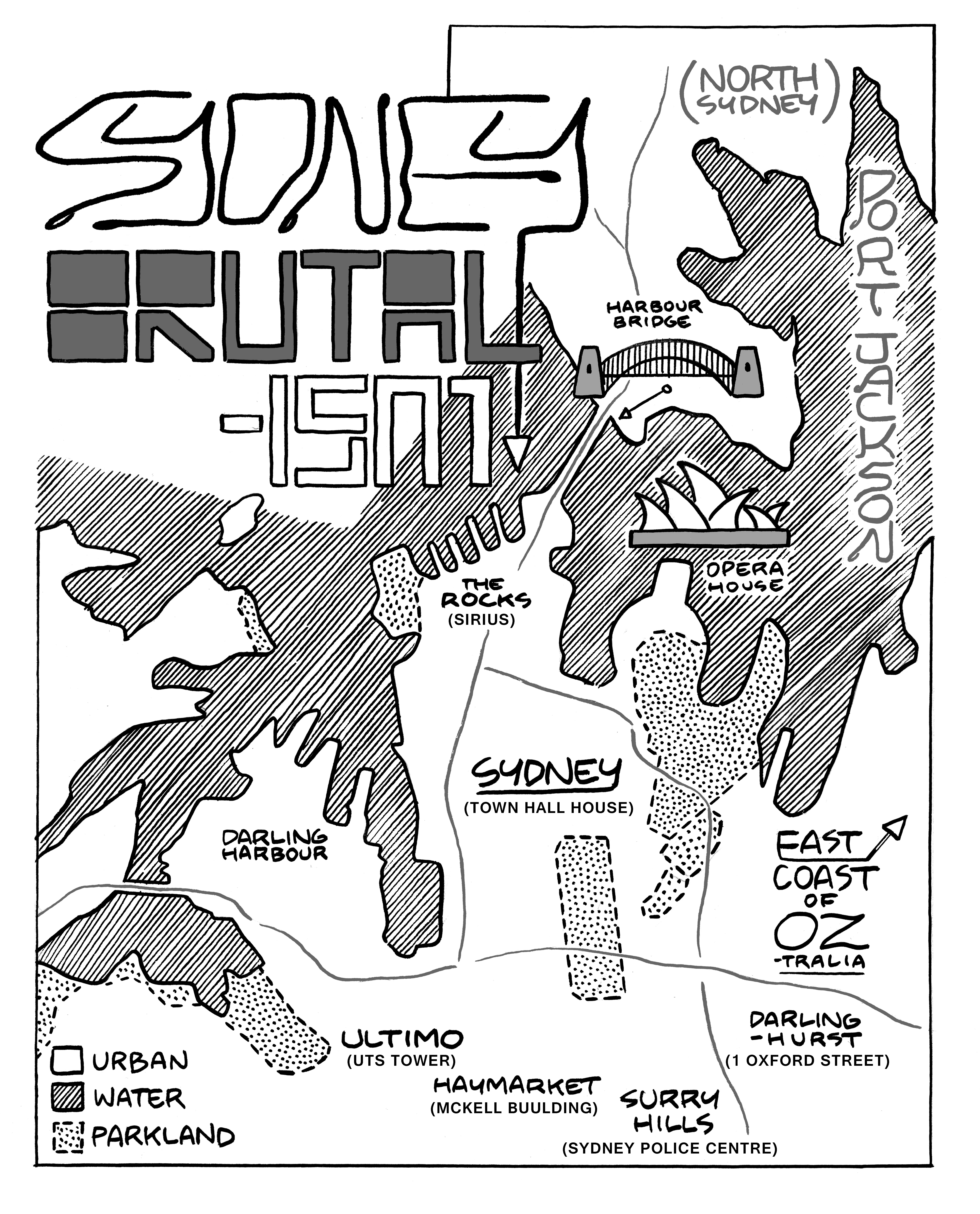
Guest contributor Dan Heyer gives a boots-on-the ground tour of Sydney Brutalism. In addition to being our main Australian field agent, Dan is the author of NUTT (currently out of print), and the editor of Brazilian Wax, an anthology of contemporary underground comix from Brazil (available from Church Ghost).
All illustrations and photos by the author unless otherwise stated.
Enter Brutalism. If there’s a feature of any given city, which speaks to its most often ignored side, it’s the Brutalist architecture; in that sense, Sydney’s Brutalism—what remains of it—does some pretty heavy lifting.
A product both of architectural trends and Sydney’s unprecedented developmental dynamism between the 1960s and 1980s, a good many projects pursued by the steadfastly progressive NSW Government of the day gave Brutalist design—and with it modernity—to some of the country’s oldest streets: namely, the Inner Sydney Suburbs of Ultimo, Haymarket, Darlinghurst, The Rocks, and Surry Hills. Every kind of state building or “civic castle” now typically associated with the style—police stations, courthouses, universities, museums, hospitals, post offices—not to mention banks, apartment complexes, and office towers, called upon Brutalism throughout its heyday to mark many of Sydney’s big moments.
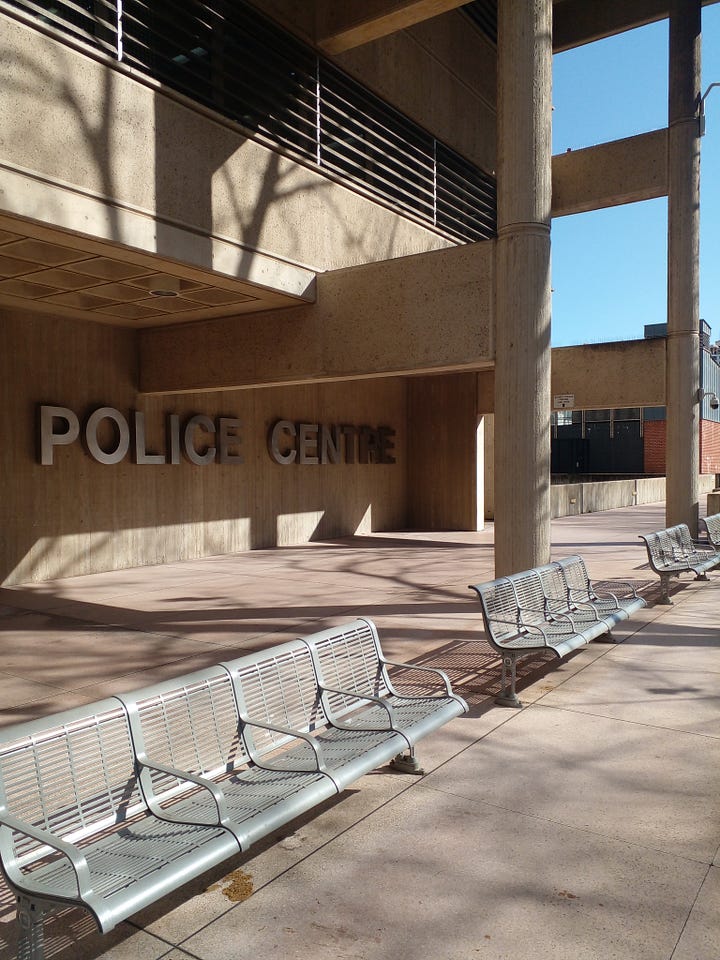
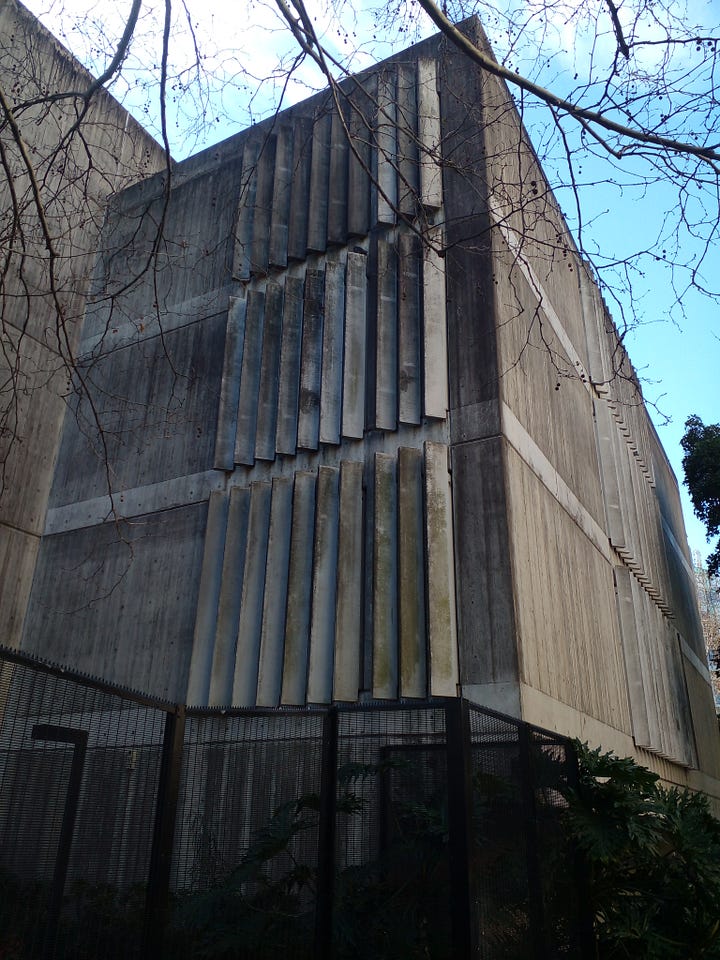
Sydney Police Centre (1986)
Sixty odd years later, amidst approximately 26 square kilometers of Victorian rail stations, Gothic Revival churches, Art Deco and International Style hotels, and Modern and Hypermodern monstrosities ranging from bland to garish, Sydney’s Brutalist monoliths stand as stark counterweights to both the pre and inter-war era Old and the nonsensical New filling the CBD. Architecturally speaking—for better or worse— there’s something for absolutely everybody here.
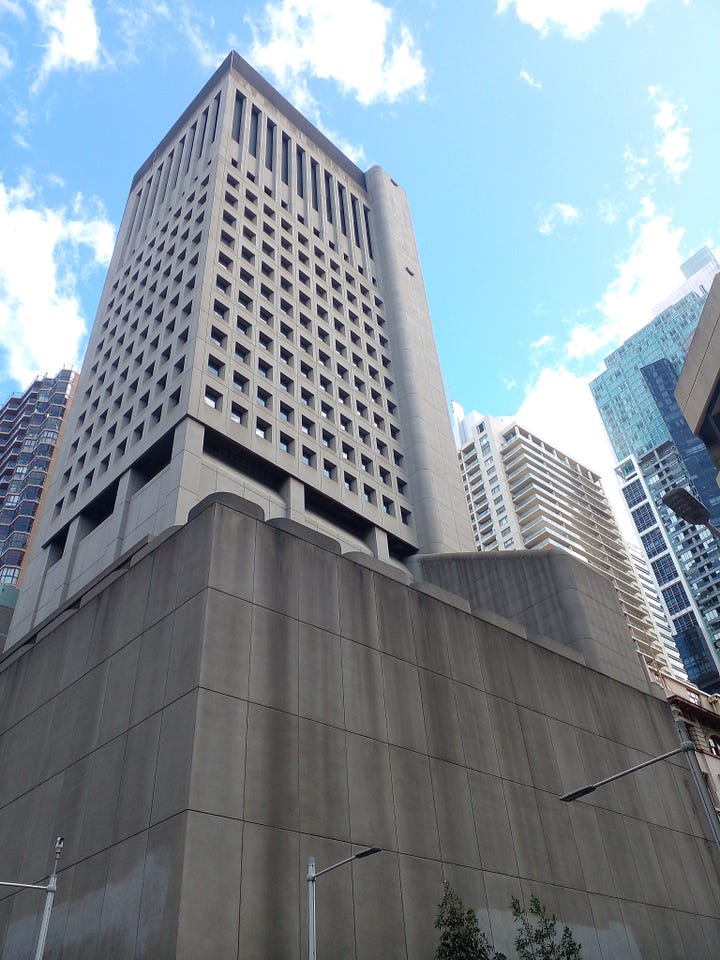
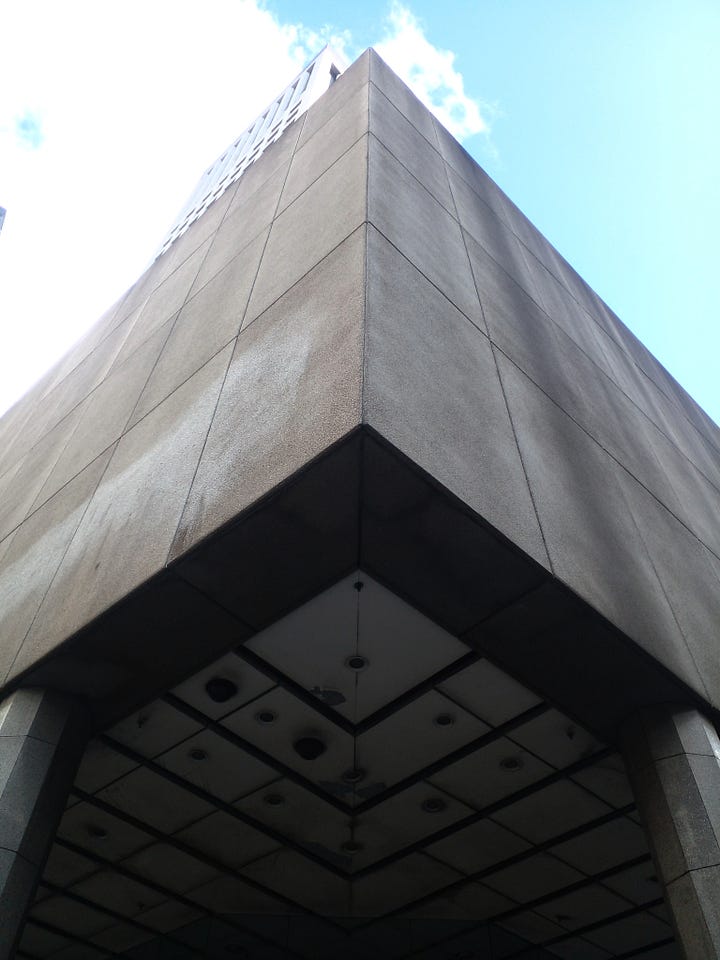
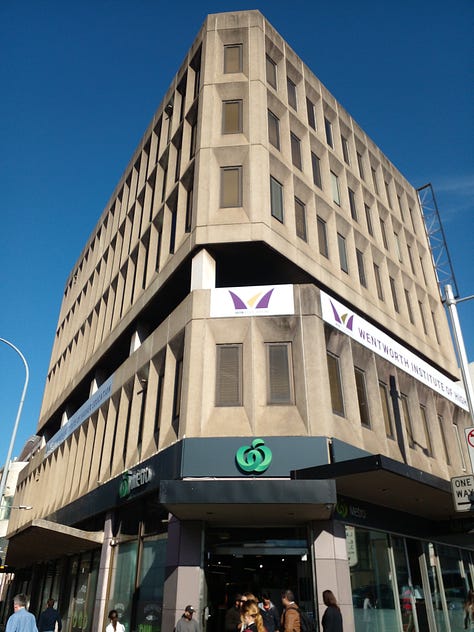
Polding Centre (1977, vacant, awaiting demolition)
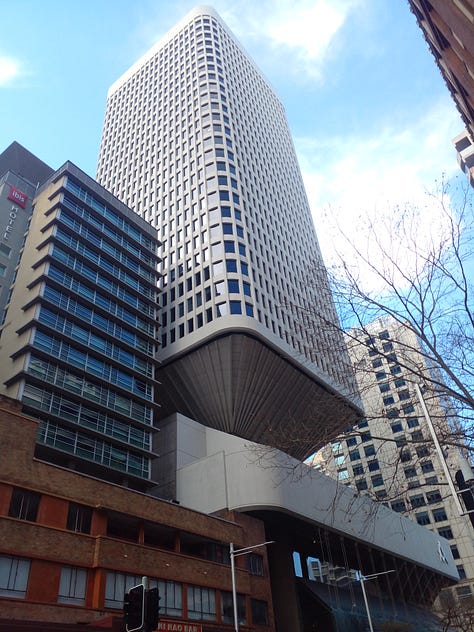
Even Sydney’s most overbearing Brutalism feels timelessly purposeful, as it orients the seer in an otherwise disorienting sprawl—Australia’s “accidental city” as it’s dubbed after its famously chaotic planning (or lack thereof). Striking and memorable from a distance (as well as up close), variously celebrated and despised edifices like UTS Tower, the guillotine-esque Suncorp Place, and The Four Seasons Hotel stand as sturdy signposts identifying jumbled inner-city suburbs.
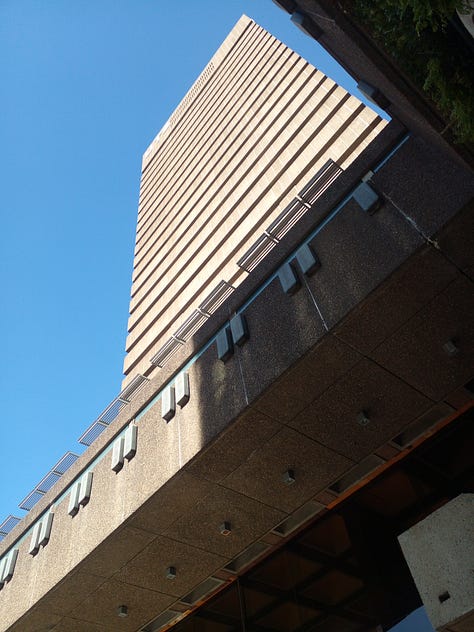
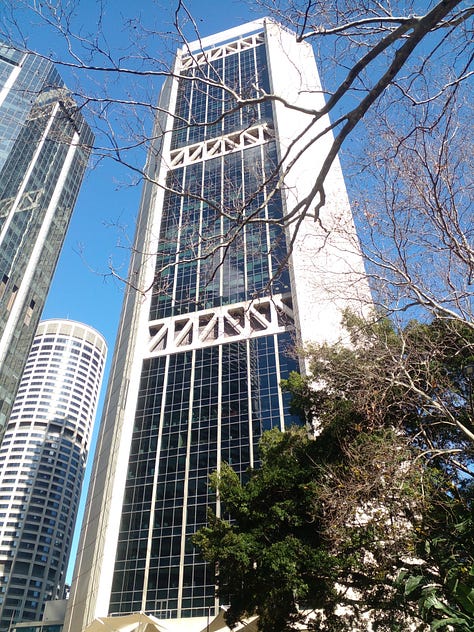
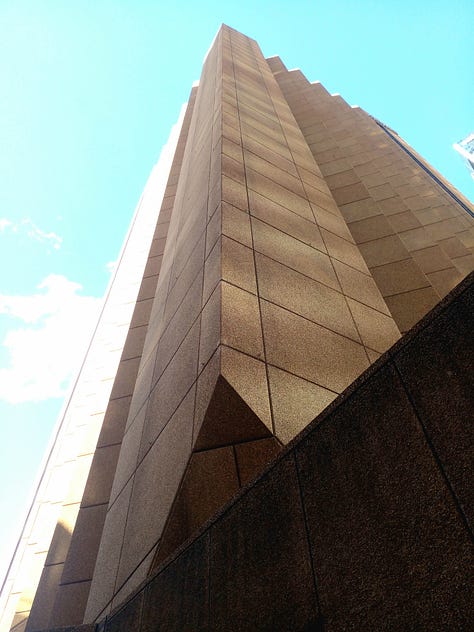
L to R: UTS Tower (1975), Suncorp Place (1982), The Four Seasons (1982)
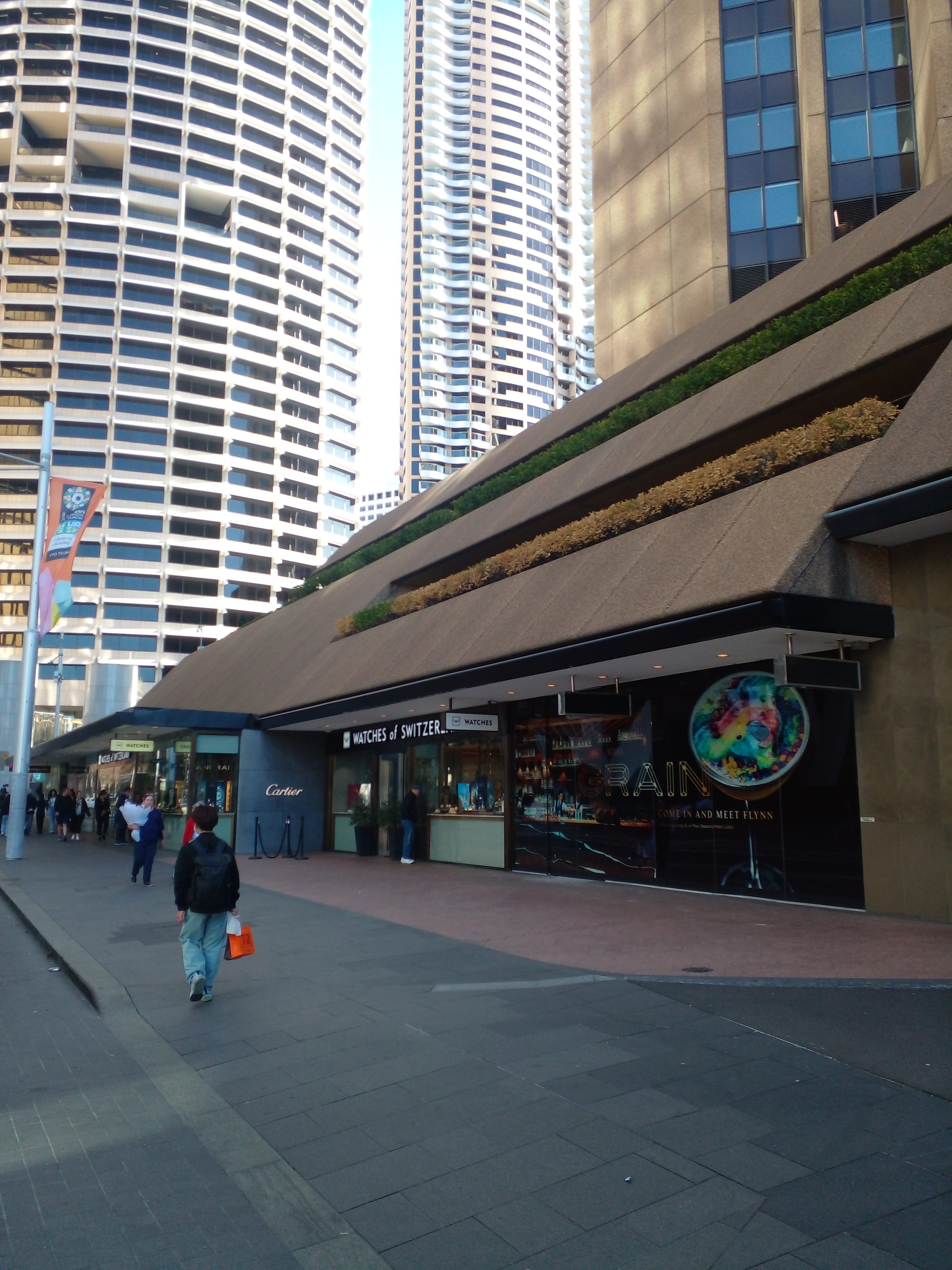
Four Seasons (entrance)
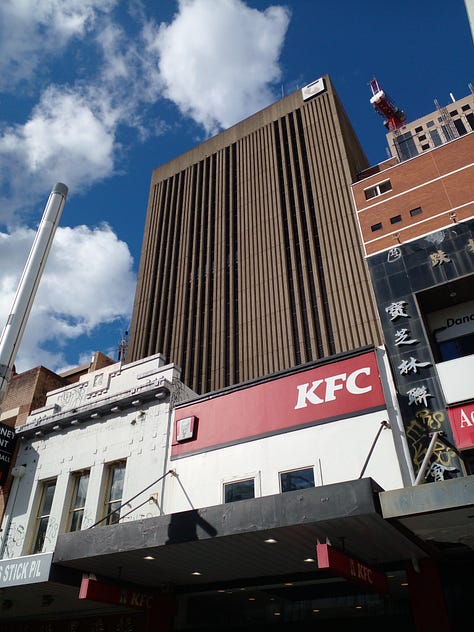
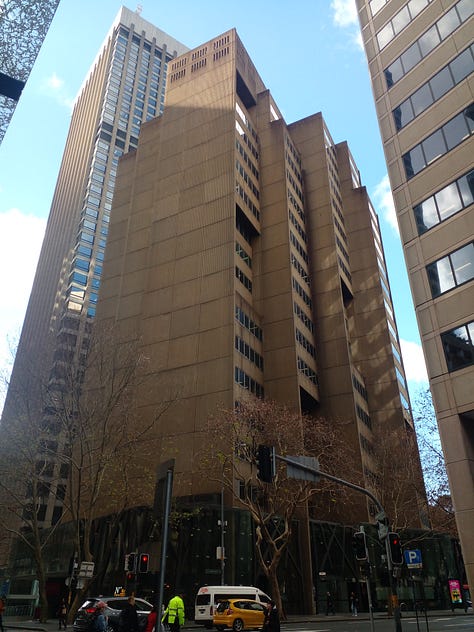
In yet denser pockets, The McKell Building, Telstra Haymarket Exchange, and other midtown monoliths thanklessly punctuate clusters of nondescript, cookie-cutter office blocks. On the other hand, with their pronounced geometries and respective overhangs-from-hell, 25 Martin Place, Town Hall House and the staggering Masonic Centre each bluntly DEMAND their audience’s focus. Whatever else they’re guilty of, these blatantly menacing structures at least deserve credit for providing a distinct emotional dimension where their immediate contexts—financial districts and retail hotspots—severely lack one.
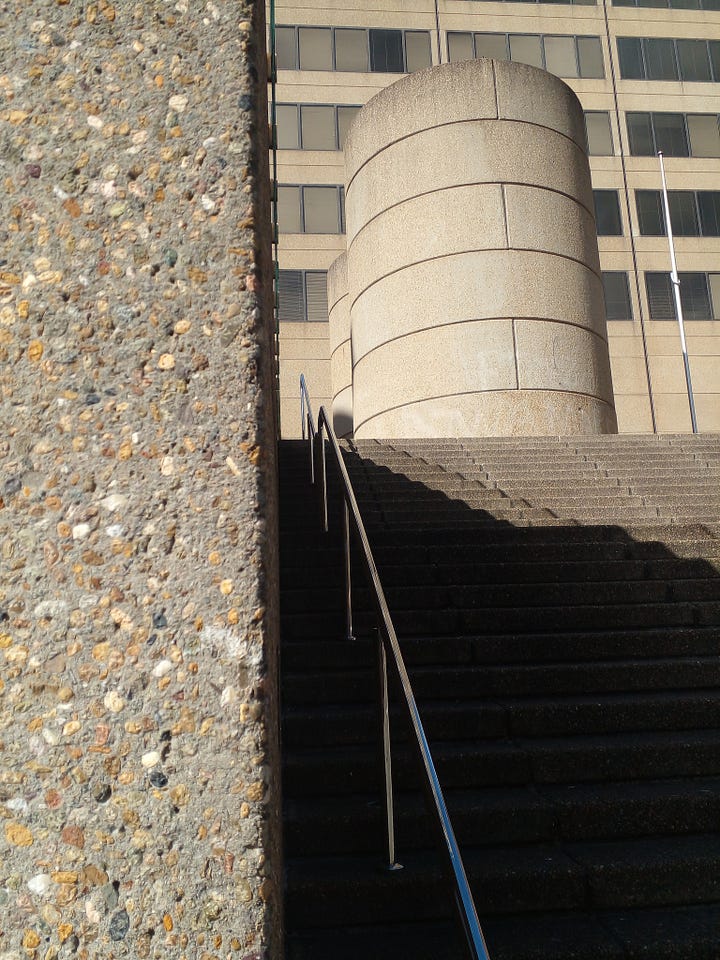
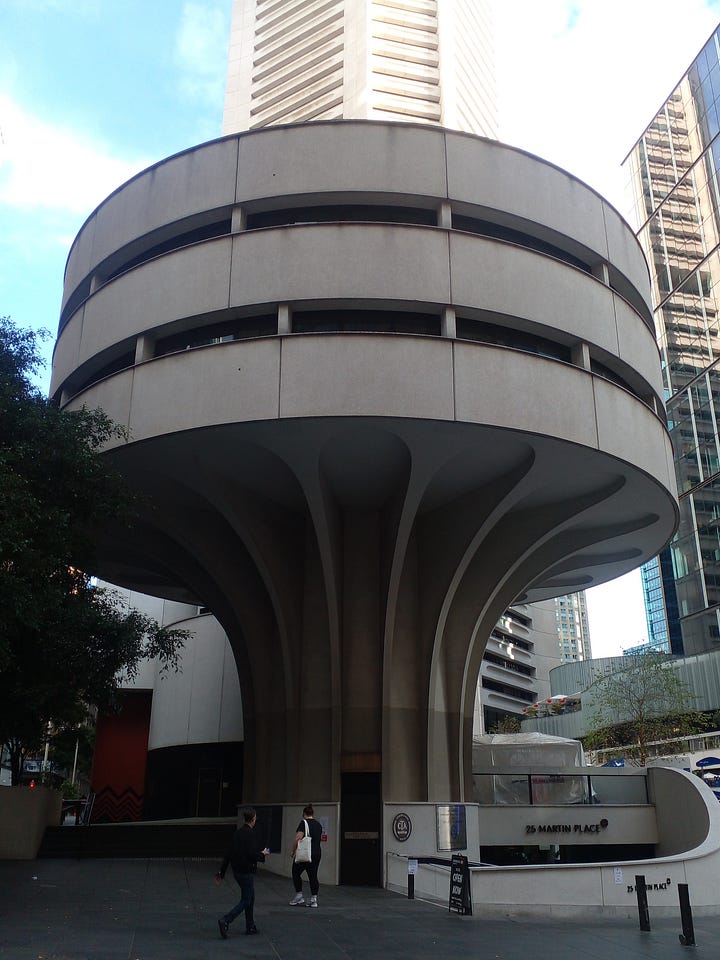
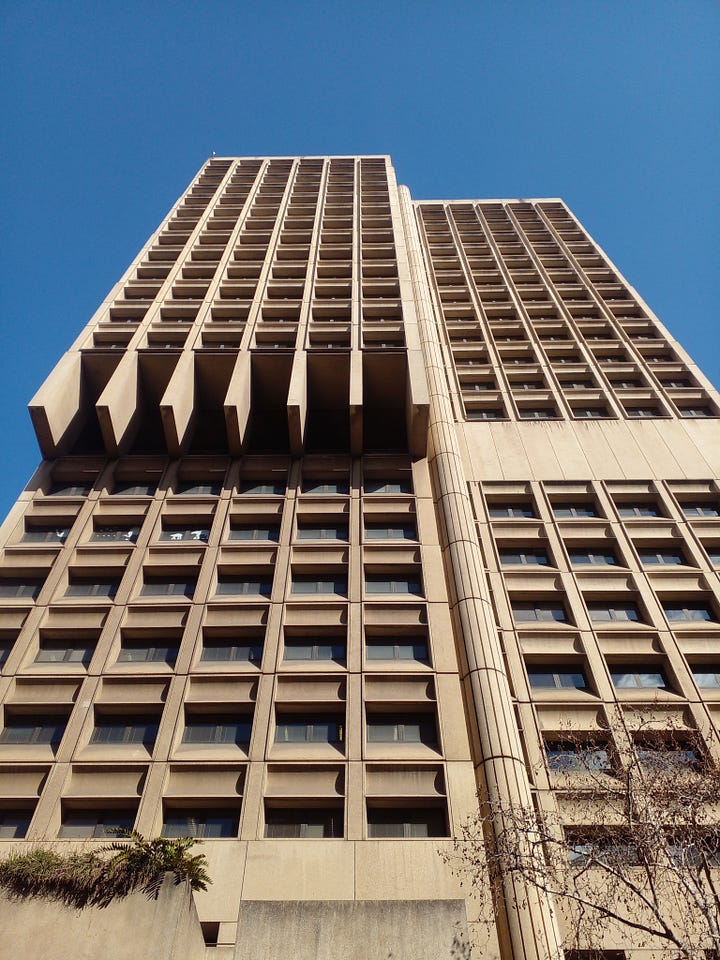
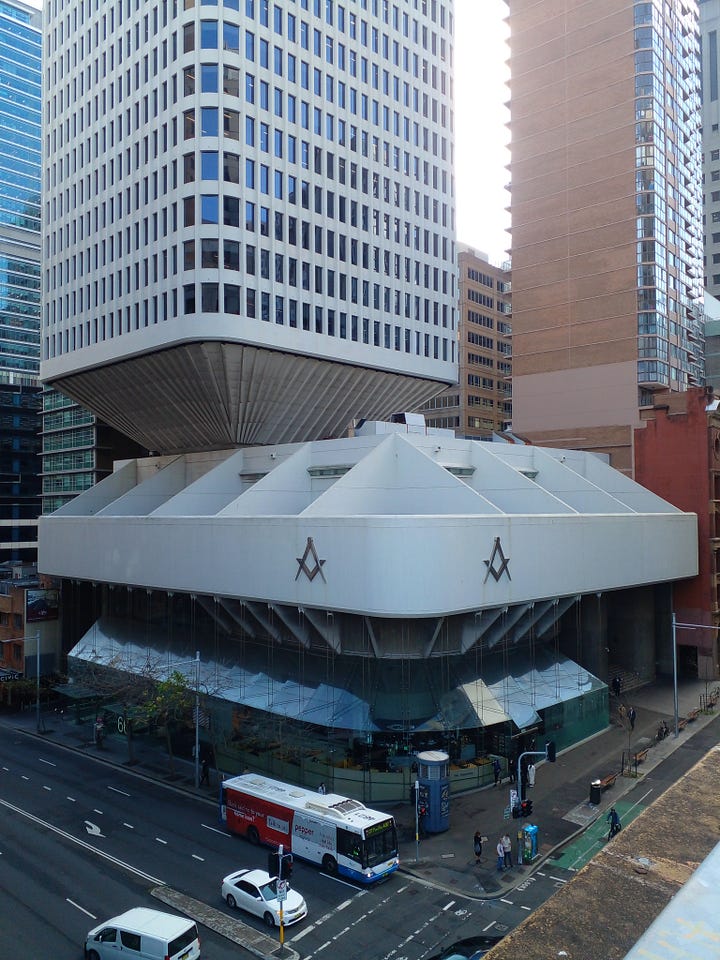
L to R, top: McKell Building (1979), 25 Martin Place (date unknown)
L to R, bottom: Town Hall House (date unknown), Masonic Centre (podium 1978, tower 2005)
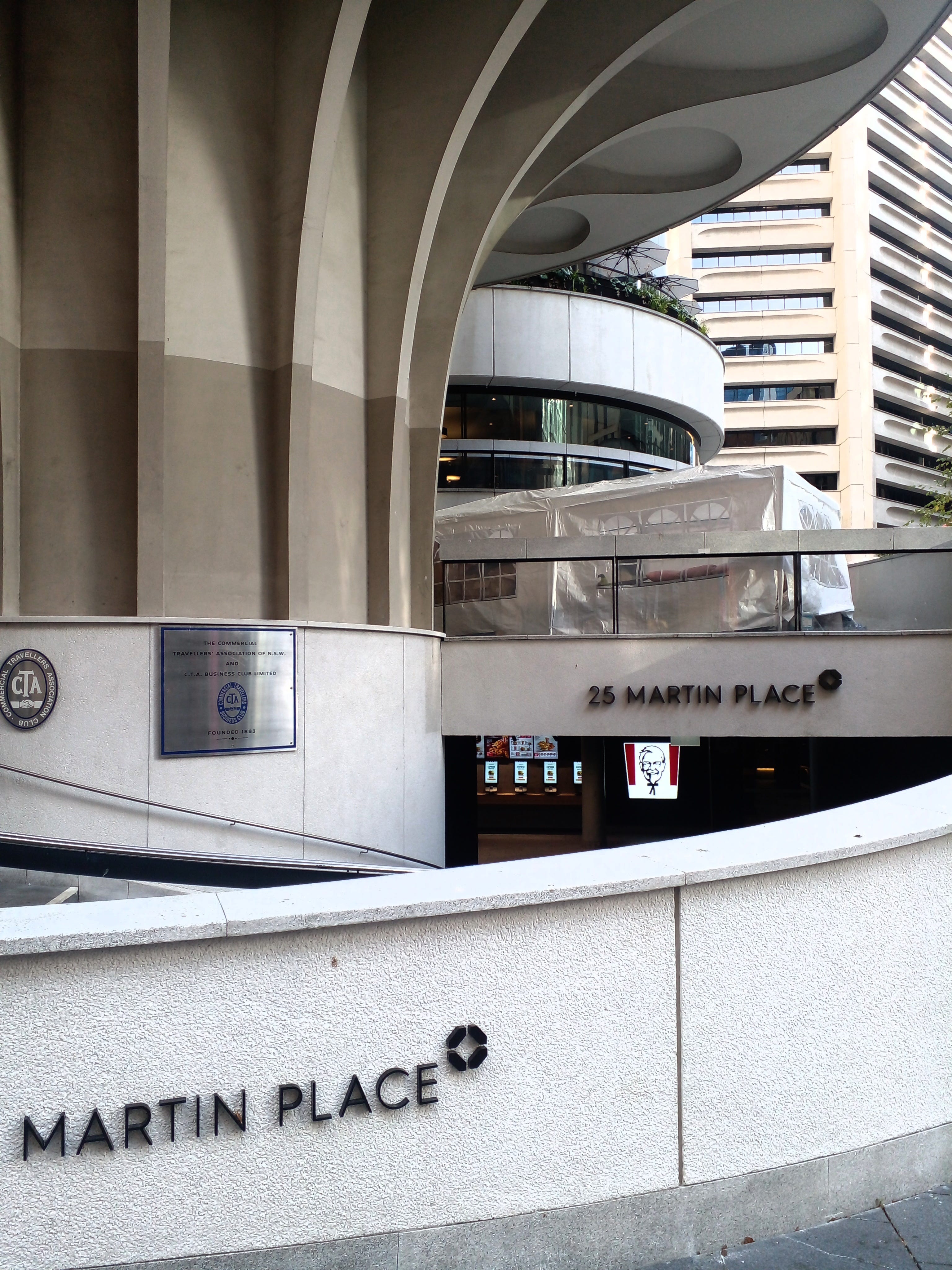
25 Martin Place, overhang
Of course, as they do above, Sydney’s downtown Brutes lend heavy vibes below, with many designs extending outward into public spaces to serve as the gritty connective tissue beneath Sydneysiders’ feet.
Exhibit A: Sydney Square, an early, ambitious application of Brutalism’s community-fortifying potential, which transformed a whole block of flimsy Federation (brick) buildings into a central communal area joining Sydney’s Town Hall, the city’s council offices (Town Hall House), St. Andrews Cathedral, and St. Andrews College. Opened in 1976, the space remains one of Sydney’s most heavily trodden today. A vaster area of precast exposed aggregate paving, you will not see.
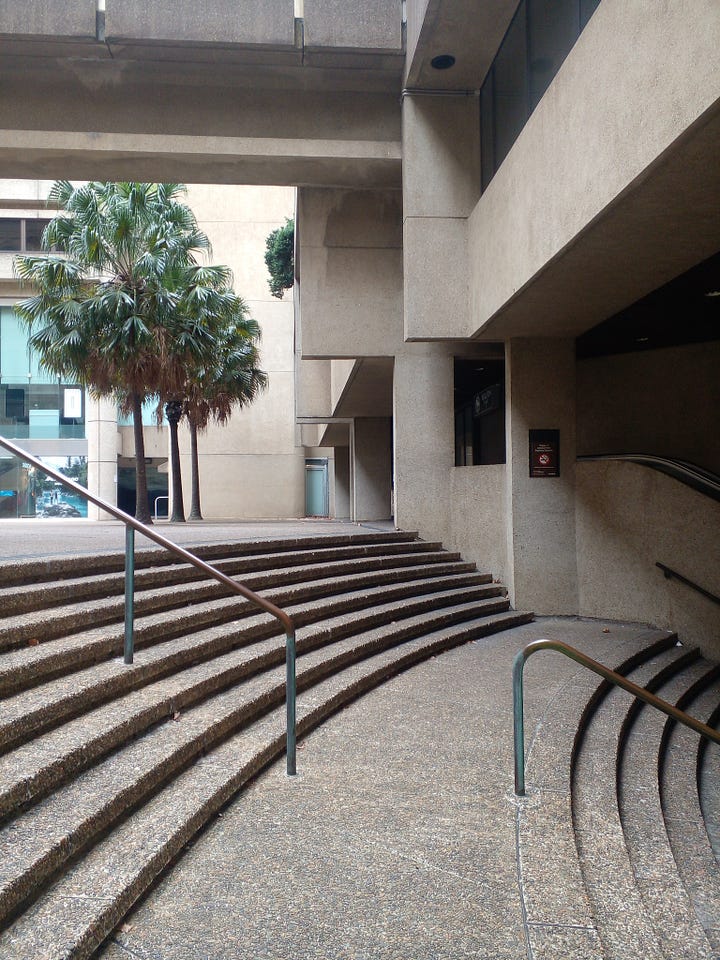
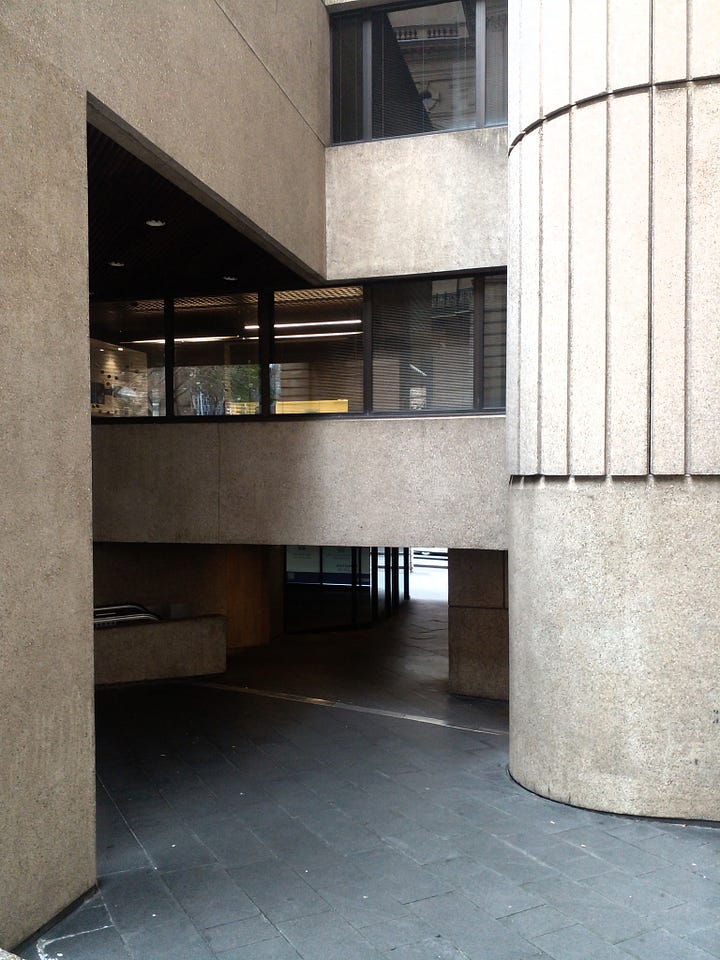
Sydney Square (1976)
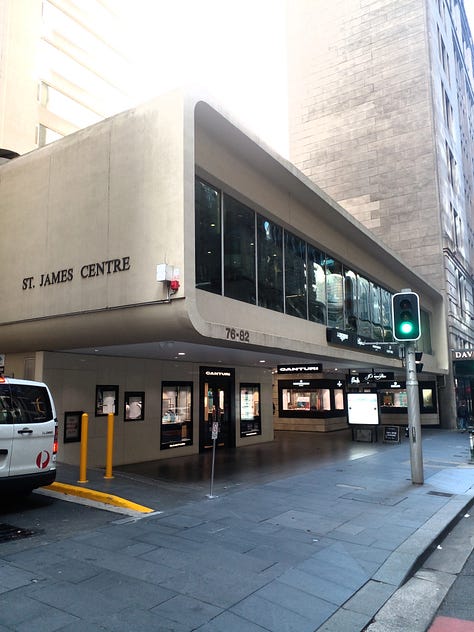
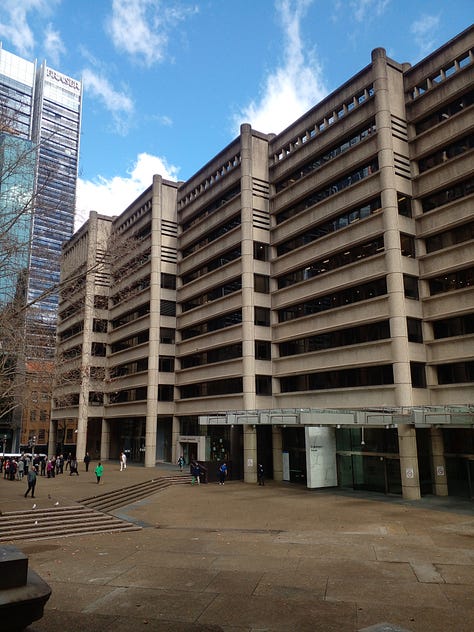
Elsewhere, premises as commonplace as arcades and parking garages contribute with their ground-level features, managing with grayscale béton-brut and hammered ribbed finishes what commercial signage, busy window displays, and myriad sources of CMYK and RGB-derived noise do not: TEXTURE. If there’s an analogy more apt to today’s thesis—that exposed materials lead the resistance against flashy-yet-flat imagery in a contest to define a city—I’ll eat pebblecrete.
Maybe predictably, this all matters little to the decision makers. In forging their own era of dynamism, contemporary governments, eager to relinquish public assets and approve massive corporate projects, have deemed a number of these properties undesirable. Dominic Perrottet, Premier of NSW until 2023, wrote in The Sydney Morning Herald in 2020, "...from Sirius to the UTS Tower, brutalism's time is done.” Indeed, that mantra echoes his party’s vision; the iconic Sirius building, a landmark public housing block built in 1979 in the (now) affluent harborside suburb of The Rocks, is currently “under refurbishment" (conversion into luxury apartments), having been sold by the Liberal Party of Australia’s administration to private developers. Even less fortunately, multiple other such Brutalist sites, including Waterloo’s Northcott Towers public housing estate (the aforementioned “Suicide Towers”), await the wrecking-ball.
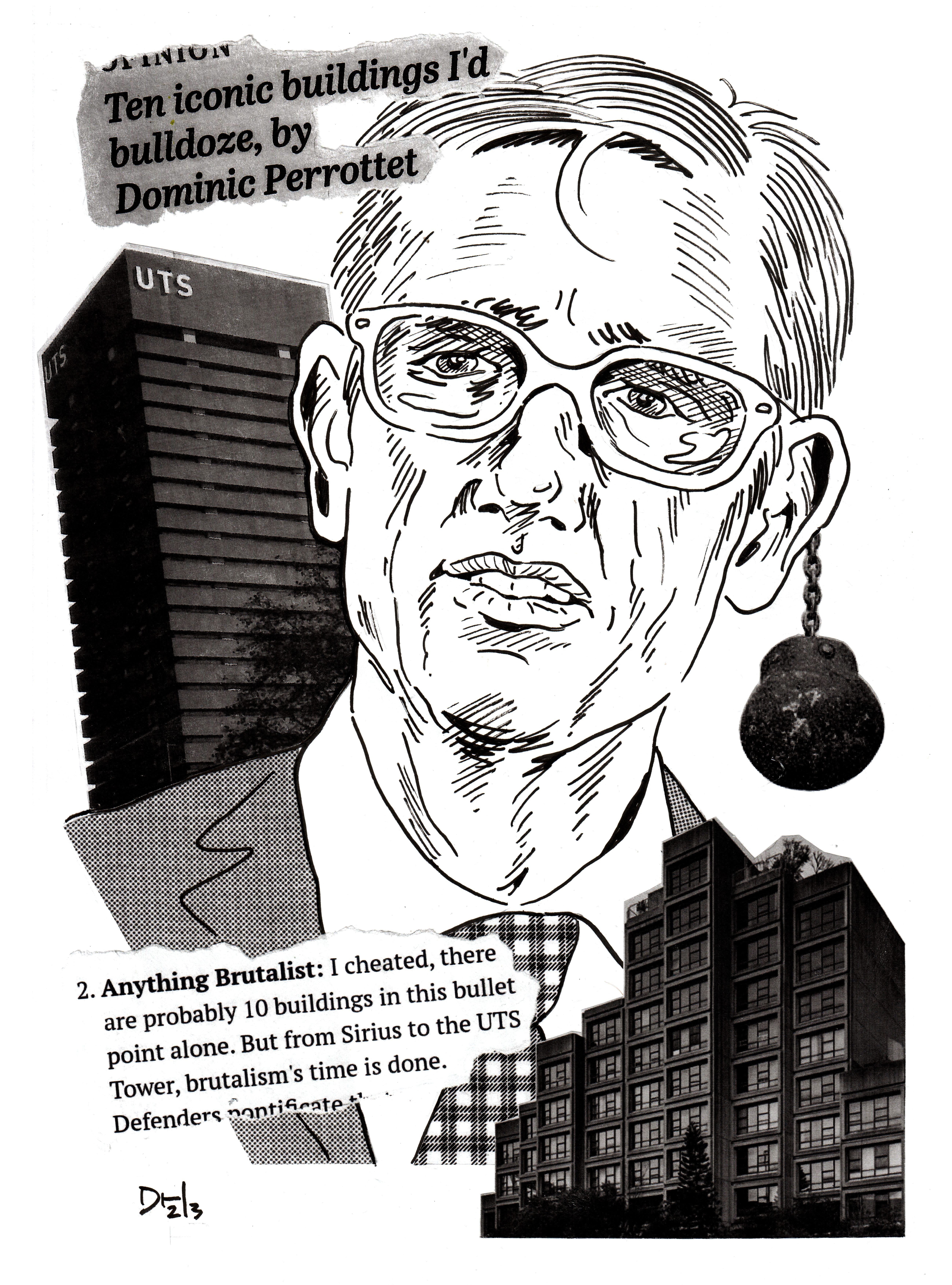
Far from reflecting community sentiment toward these landmarks, though, the rush to convert buildings that many agree should be heritage listed into “urban infill” has been met with impassioned protest. Thanks to advocacy from architect Glenn Harper and the campaign group “Save Our Sirius Foundation,” the value of these sites as records of Sydney’s evolution is being appreciated proactively, with the latter having already successfully aided in preventing Sirius’s razing. The push to preserve is real.
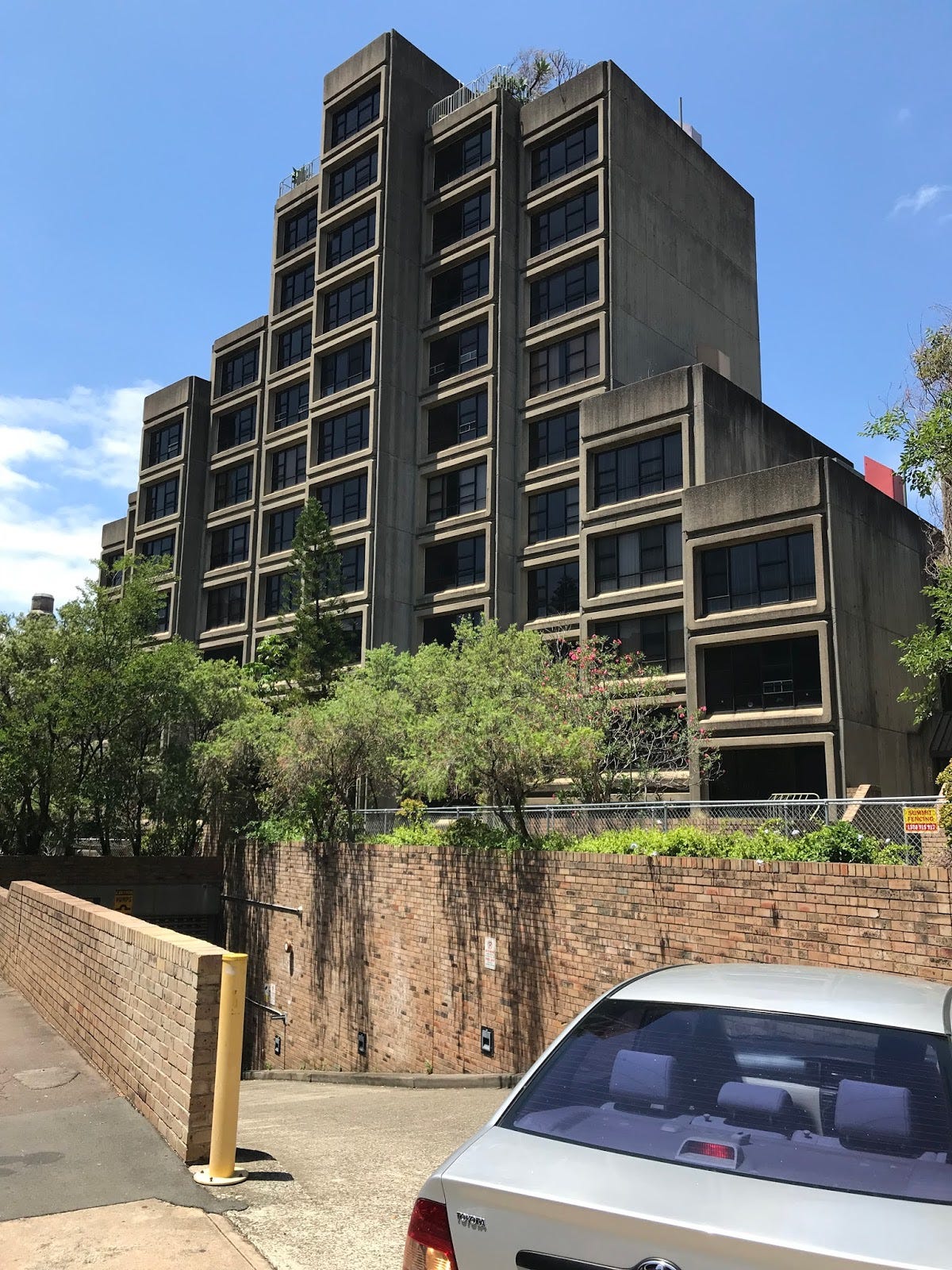
Sirius Building, pre-renovation (photo by Matthew Da Silva)
And so it goes: as vulgar excess in the form of a new 75-story, five-star casino dubiously claims state-owned parkland within eyeshot of Sirius—the most prominent argument for the public’s right to a share of “desirable” land in the city’s history—a sense that Sydney’s Brutalism has something to say on behalf of Sydney is unmistakable… That such expressions could be absent from the changing terrain makes these totems of civic progress seem, while rigid and fixed, strangely and profoundly precious.
In so many ways, for this local’s money, Sydney’s Brutalism is a showcase of the controversial style at its most integral. Here, the ethos goes further than simply providing notable standalone instances; rather, through an entire exemplary array that proves Brutalism’s resistance to any single straightforward definition, this architecture solidifies in its setting that same essence of indefinability— an essence without which Sydney ain’t Sydney.
For the time being, like it or not, Sydney is Brutalist to the bone.
Dan Heyer
Comments
Nothing yet. Say the first thing.
Sign in to join the conversation.