

This editorial represents a fuller exploration of a seminar I presented as an ENGAGE Seminar at the Vertical Three Conference in 2019.
My first encounter with apologetics dates to the early 2000s.
I learned about Lee Strobel’s book, namely, The Case for Christ (1998). I heard about Christians debating, especially William Lane Craig and the now disgraced Ravi Zacharias. And my Youth Pastor and two other thoughtful Sunday School teachers often provoked me to think deeply about Scripture.
Fast forward about 10 years. My Master of Divinity emphasis was in apologetics. I then began seeing interest in the subject grow in my denomination, especially in the subsequent six or seven years.
As with any widely discussed issue, errors creep in and sometimes become lies. An error doesn’t have to be malicious or intentional in order to become a harmful lie. In fact, I increasingly tend to think that the worst lies are those we deny on paper but propagate in practice.
Make no mistake: if a Christian, church, or denomination gets serious about anything important, Satan will pervert it, confuse it, and derail it. That can happen with apologetics, too. Before I mention such lies, let’s think a little more foundationally.
What is apologetics? Definitions abound, but I’ll offer a few interconnected ones:
First, apologetics is a reasoned account of why we follow Christ and believe the claims of Christianity. I personally see this as the most accessible way to explain it to believers.
Second, it's any number of reasoned responses intended to defend an aspect of Christian truth. The utility of this approach is that it encompasses a diverse range of specific arguments about various topics, such as the historicity of the resurrection, the problem of evil, or other distinct issues whether they be textual, theological, philosophical, historical, etc. I also tend to refer to this as “lowercase-a apologetics.” In reality, it’s something we do rather often if we discuss our faith in public.
Finally, it's a hopeful, respectful, loving appeal to and defense of the reasons we trust Jesus. Call this one “uppercase-A apologetics.” It’s the closest way we can connect the discipline or field of apologetics to Scriptural texts which directly ground this practice, whether we’re talking about 1 Peter 3:15, 2 Corinthians 10:5-6, or related texts.
So, what are some lies that undermine our apologetic efforts?
Lie #1: Apologetics is primarily about what you know.
Yes, this is a lie. Even if it happens to be the case that the “smart folks” whom you know are especially interested in what one calls apologetics, apologetics is as much about who we are (character and testimony) as what we know (information and arguments).
The touchstone passage that justifies this is 1 Peter 3:14-17:
“But even if you should suffer for righteousness’ sake, you will be blessed. Have no fear of them, nor be troubled, but in your hearts honor Christ the Lord as holy, always being prepared to make a defense to anyone who asks you for a reason for the hope that is in you; yet do it with gentleness and respect, having a good conscience, so that, when you are slandered, those who revile your good behavior in Christ may be put to shame. For it is better to suffer for doing good, if that should be God’s will, than for doing evil.”
Notice the attention in this passage to how we give an answer to those who ask and how we live. It’s most certainly the part emphasized over intellectual ability or rhetorical technique. The form our defense takes isn’t unrelated, but issues of personal character are, at the very least, just as important.
In some ways this should encourage the apologist. We cannot control the outcome of our evangelism or apologetics, but we can control how we share the message and how we live it out before people. So, if we minimize character, we do at our peril.
In fact, Christian love is our best tool to reach a lost world.
According to Titus 2:1, 10, there is a form of life that best fits or suits the gospel and shows forth its attractiveness.
The New Testament, especially John and 1 John, shows that love identifies, attracts, and alienates. Specifically, Christian love alienates some, attracts others, but always identifies us as Christians:
“The light has come into the world, and people loved darkness rather than the light because their deeds were evil.” (Jn. 3:19)
“If you were of the world, the world would love you as its own. However, because you are not of the world, but I have chosen you out of it, the world hates you.” (15:19);
“A new commandment I give to you, that you love one another: just as I have loved you, you also are to love one another. By this all people will know that you are my disciples, if you have love for one another.” (Jn. 13:34-35)
“May they all be one, as you, Father, are in me and I am in you. May they also be in us, so that the world may believe you sent me. I have given them the glory you have given me, so that they may be one as we are one. I am in them and you are in me, so that they may be made completely one, that the world may know you have sent me and have loved them as you have loved me.” (Jn. 17:20-23)
These passages have not only been very meaningful to me, but they were crucial to the perspective of one of our most influential evangelical evangelists of the last century, Francis Schaeffer.
In The Mark of the True Christian, Schaeffer says Jesus is praying for the unity that should be evident among true believers (17:21). But what produces unity? Love! Love is the mark Jesus gave Christians to wear before the world (13:34-35). Only by this mark will the world know that we are Christians.
But Schaeffer says that what Jesus said in John 17:21 challenges us. In John 13, if an individual Christian doesn’t love other true Christians, the world has a right to judge that he isn’t a Christian.
But in 17:21, Jesus is saying something more profound: we can’t expect the world to believe that the Father sent the Son, that Jesus’ claims are true, that Christianity is true, unless the world sees real unity among Christians.
Have you ever tried witnessing and all the person can ask is why are there “all these denominations”? Or they bring up all the hypocrites in the church? It’s frustrating, understandable, but also illogical.
It’s frustrating because usually the conversation is moving out of the arena of reasons, arguments, and explanations into the arena of behavior, conduct, and integrity.
It’s understandable because division and/or hypocrisy are morally unattractive.
But it’s also illogical. What does the hypocritical deacon at the Baptist church on the corner have to do with the proposition, “God exists”? Logically, nothing. Practically, everything.
The logical consistency of Christianity isn’t tied to the consistency of our practice, but the persuasiveness of Christianity is tied to the authenticity of our practice. The absence of love, and the unity it produces, destroys apologetic efforts.
If love is in fact the final apologetic, as Schaeffer said, then it must be displayed among Christians and toward skeptics. Ultimately what is most convincing to people is the life our message creates.
Lie #2: Apologetics is an individual activity.
In reality, apologetics is as much about the body as it is the individual.
Returning to First Peter, this short epistle is written to a community, not a person. (“Y’all be ready to give a reason/answer/defense”!)
Think of all those William Lane Craig and Ravi Zacharias YouTube debates I mentioned above. What Sunday School class or small group was praying for them? Who were they accountable to if they erred? What church were they helping equip? No believer is an island, regardless of vocation/ministry. (Perhaps one of the most plausible reasons for Zacharias's fall is because his apologetic ministry was too isolated and private.)
When we reason, argue, reason or debate, we do so as members of a community bearing witness to a message, a Savior, and a Lord. If we succeed, it will be due in no small part to others’ help. We’ll certainly need their help to disciple the new convert whom we reach.
The church and ecclesiology aren’t mere footnotes in this subject, though some give that impression. As we saw above, character and testimony are central to the apologetic enterprise. People are increasingly calling this emphasis “ecclesial apologetics”, but it’s nothing new. As Stanley Hauerwas wrote nearly 50 years ago, the church should be seen as a “community of character.”
So make no mistake: your approach to apologetics reveals your view of the church.
As soon as someone overcomes skepticism, Satan will raise new doubts. New believers will be especially vulnerable. Churches must stand ready to be bulwarks of truth and love. If we ever needed strong churches, it’s now.
Lie #3: Apologetics is exclusively about evidence.
Evidence is merely one dimension of apologetics. It’s an important one, but not the only one. However, let’s ponder “evidence” for a moment.
How or when do you deploy evidences? What do the partially excavated ruins of a biblical city mean? What’s a reasonable amount of weight to assign to that evidence? And what precisely does it prove? How do we get from, “This is the city mentioned in 2 Samuel” to “Repent and believe”?
Apologetics tears down intellectual strongholds, but many times those have more to do with assumptions people have than just more information. Because of this, evidence alone can’t always get the job done.
Consider a classic objection to Christianity: “How could a loving God send people to hell?”
Such a person is starting with all kinds of assumptions about what love is or isn’t, what justice is or isn’t, etc. This is why, as Cornelius Van Til put it, apologetics is a theological discipline as much as a practical one. It deals with the entire lexicon of Christian truth, not just one narrowly-defined question.
Additionally, biblical truth unmasks faulty human assumptions. So as important and useful as evidences are (and they come in many forms!), we need to surround evidences with good theological and spiritually sensitive reasoning.
If I had an hour-long talk to teach about apologetics, I wouldn’t begin with giving lots of evidences. I’d begin by summarizing basic Christian doctrine, then giving a crash course on critical thinking and argumentation. If you don’t know your faith, or what a good or bad argument is, evidences won’t go very far.
Lie #4: Apologetics proves the faith.
Apologetics shows the faith first by way of life, and second with a sound, reasoned account.
This one can be a little tricky to explain because it seems like a repeat of Lie #1. It’s related, but different.
Try to think in terms of how people know what they know (epistemology) and how people tend to come to conversion (evangelism). How and when are people actually nudged into the Kingdom? Ponder that for a moment.
C. Stephen Evans was quite helpful to me years ago when he spoke of seeing apologetic arguments or evidences (the Classical Proofs to be more exact) more as “pointers,” not proof. This is helpful because it suddenly demystifies apologetic arguments. They aren’t wands we wave past people’s faces, leading immediately to a Damascus Road experience.
I contend that we should expect for reasons or evidences to work more after the fact (a posteriori) than before the fact (a priori). They often do more to affirm the rationality of a Christian’s belief than serve as irrefutable proof for unbelievers who then breathlessly ask, “What must I do to be saved?”
To put it another way, the reasons and arguments associated with apologetics often do as much (if not more) to strengthen the faith and understanding of those who are already believers instead of those who don’t yet believe.
Of course, unbelievers do deserve reasons—and sometimes God uses them! Yet let me offer a caution here. What seems to “work” to us may not be working, and what seems to not work may in fact be working. Give it time!
Greg Bahnsen wrote an important article many years ago about the inevitability of self-deception in apologetics. In that article he underscores the fact that we cannot assume that we are dealing with epistemically neutral people. No, everyone is deceived in some way. Sin has touched not only our choices or desires, but also our intellect. This doesn’t mean common grace isn’t at work. It doesn’t mean the faculty of reason isn’t operative. But we do need to acknowledge its tendencies and limits.
I well recall meeting regularly with Trent years ago. He had many questions about and objections to the Faith. He seemed especially troubled by the miracles in the Old Testament, as well as how commonly made scientific claims could be reconciled with the Bible. It seemed like my well-formed responses to his questions often weren’t breaking through his skeptical mind. Thankfully, he kept attending church services, reading, and meeting with me.
Eventually Trent was received into the church as a believer. I don’t remember one single conversation where he said, “You know, the impressive record of Christian scientists really was the turning point. I assumed that becoming a Christian must not be intellectual suicide after all!”
Had Trent thought or said that, it could have certainly represented a stepping stone in his change of heart. But I tend to think that the Scriptures, the Holy Spirit, and experiencing love from our church did as much to open him up to the possibility that he was wrong as did any of my individual arguments.
He did need reasons, explanations, and arguments, but he needed to exercise faith in response. (He did seem moved by one argument, which involved me asking how he could believe in the resurrection but struggle with miracles that happened to have occurred earlier in biblical history!)
Strong arguments will never be irresistible because the depraved mind instinctively resists truth. The evidence does not demand our verdict (though a fair-minded person will tend to feel an obligation to offer a response to our arguments).
Remember: most people don’t come to faith after a debate or argument. So, we need to have realistic expectations about apologetic efforts.
Lie #5: Apologetics and evangelism are the same.
Actually, apologetics is what is sometimes needed when evangelism faces obstacles and roadblocks.
Jesus did not say, “For whoever shall be convinced of the name of the Lord shall be saved.” Nor did he say, “That whosoever assented to Him shall not perish.” He said whoever shall “call upon” and “believe.”
Responding to the call of the Gospel certainly requires knowledge, but it is more than knowledge. You cannot call upon who you do not know, but you don’t have to call upon/surrender to who you know.
Martin Luther’s formulation of true faith is helpful. Saving faith involves knowledge (notitia), assent (assensus), and trust (fiducia).
To put it very crudely, an apologist seeks to hear something like, “Well I guess you’re not crazy or irrational after all. Tell me more.” An evangelist seeks to hear, “Lord, please forgive me, and receive me.” Both ultimately care about repentance and faith, but apologetics is sometimes what’s needed when evangelism isn’t yet effective.
Conclusion
Intellectually minded people will always gravitate toward approaches that focus on ideas and arguments. But remember, people in rebellion against God manifest their rebellion in the intellect, too. Therefore, we need a whole-Bible approach to this important practice.
Remember the fullness of Biblical teaching. Remember what sin does to people’s thinking. Remember the limits of information and facts. And rely on the Lord as you evangelize, and as you prepare to do apologetics.

In Newsletter 226 I revisited some of my previous reflections on the so-called “pastor shortage problem.” My key contention was that much of this problem is connected to issues of attrition—and not mainly retirements and/or deaths.
This raises another important question: what can we do to help stem the tide of pastors leaving vocational ministry?
Let me offer five suggestions:
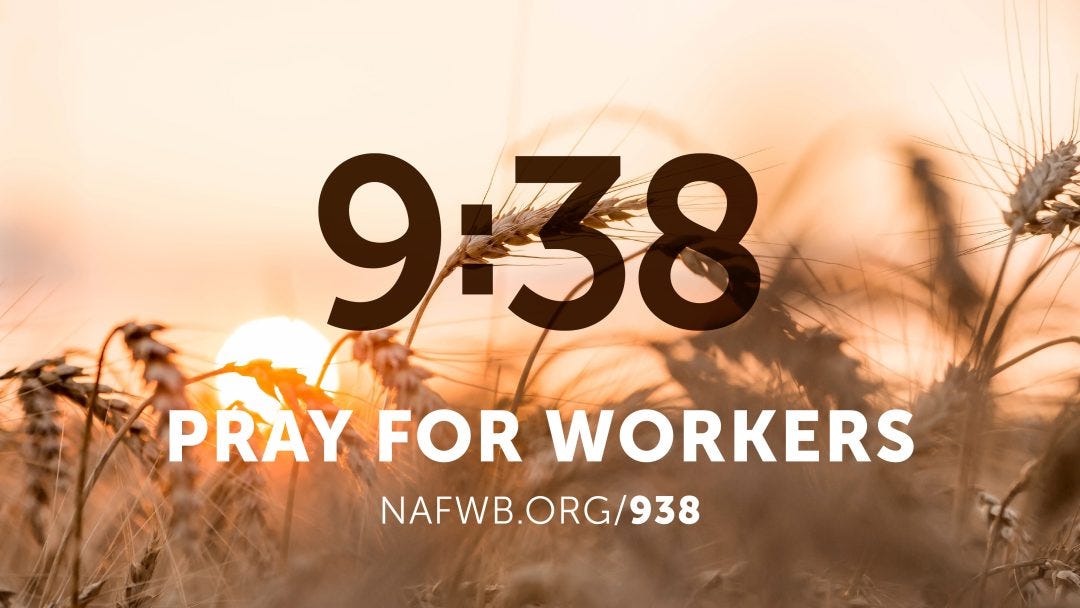
1-Pray daily for workers. I’m very pleased with the new 9:38 Initiative sponsored by the NAFWB Executive Office. This new prayer initiative is, as far as I know, the brainchild of an Indiana pastor who thought that Matthew 9:38 provided the impetus for such a practical effort. It’s a call to pray each day at either 9:38 a.m. or 9:38 p.m. for more workers—especially pastors, missionaries, deacons, and teachers.
2-Give to programs designed to support struggling pastors, such as the Refresh Counseling Program.

3-Familiarize yourself with Clergy Renewal Programs, such as the one funded by the Lilly Endowment. Consider whether this is something you’d want to nudge your church leaders to consider supporting for your pastor.
4-Appreciate, encourage, and support the pastor(s) you already have. Besides the commands in Scripture to love and encourage ALL Christians, we have special admonitions to pray for, support, and submit to those who labor in the Word (Gal. 6:6; 1 Thess. 5:12-13; 1 Tim. 5:17-18; Heb. 13:17).
5-Pray for and nurture the spiritual growth of men of all ages, especially those who demonstrate teaching and leadership potential, and a concern for the well-being of others. These are the pool of prospective pastors/elders within your own church! Stop waiting for someone from some far-off place to show up to shepherd you. Your next shepherd could be walking among you now.
Let me say on the record that my church does all five of these, though I think we (including me!) could do much better on #5. (This commendation says more about them than me.)

Mike Sacasas delivers again! In his latest post—”You’re A.I. is Not a Tool”—he takes to task this predominant talking point about not only A.I., but nearly all modern technologies. I confess that I’m not immune to the problem of citing people who articulate things I myself have said elsewhere (here and here), but truly, Sacasas says it much better:
While there appears to have been a shift in the last 15 years or so in popular assumptions about the purported neutrality of technology toward at least the suspicion that our devices, etc. are not, in fact, merely neutral instruments at our command but rather frustrate, resist, or otherwise evade uncomplicated mastery by their users, such that their users might properly be said to be used in turn by their devices, it is nonetheless true that the myth of technological neutrality remains broadly entrenched.
I confess that I am astounded by how blithely some insist that it is all as simple as learning to use AI well, as if we had not just undergone a nearly 20-year, society-wide experiment showing that a so-called “tool,” say a smartphone or a social media platform, will (mal)form even the most vigilant and virtuous user into its own image and shape. This is the blindness at the heart of modern technological hubris. It is the firm but misguided conviction that our “tools” exist entirely outside of us and thus, if taken up with requisite skill, can be “safely” deployed.
But AI is not a tool in this sense, it is an environment which envelops the user and works on us from the inside out while we naively think that we remain unchanged by our use so long as we are using it carefully and intentionally. The care and intentionality is [sic] beside the point, and our confidence in such vigilance probably works against us in the long run.
You must read the whole piece.

Attention is a finite resource—pointing my intellect in one direction entails that I cannot point it in another. Reality is too vast and complex to be received all at once by the intellect of a creature. And here it is crucial to note the goodness of attention. All human persons desire to receive attention, at least from one person or another. Children want their parents to watch them play. Athletes want an audience. Millions of men and women go to great lengths to achieve online “views.” The desire for attention should come as no surprise. Our attention, where our intellect is “pointed,” is normally the result of our deliberate choice and is therefore, in some sense, an act of love.
The pessimist complains about the wind; the optimist expects it to change; the realist adjusts the sails.
The Bible instructs us that aging is a gift to steward. When we read that “gray hair is a crown of glory” we are tempted to laugh (Prov. 16:31). But many never live to gain that crown. Those of us who do gain it receive a form of riches–more time for intergenerational relationships, more time for faithful service to God and others. Yes, old age does erode our health, typically requiring doctor appointments, medications, and care. But even in receiving that care, we are met with God’s sustaining presence (Isa. 46:4). As he graciously does with all consequences of the fall, God works aging for our good. Our aging faces and bodies teach us of a sustaining God.

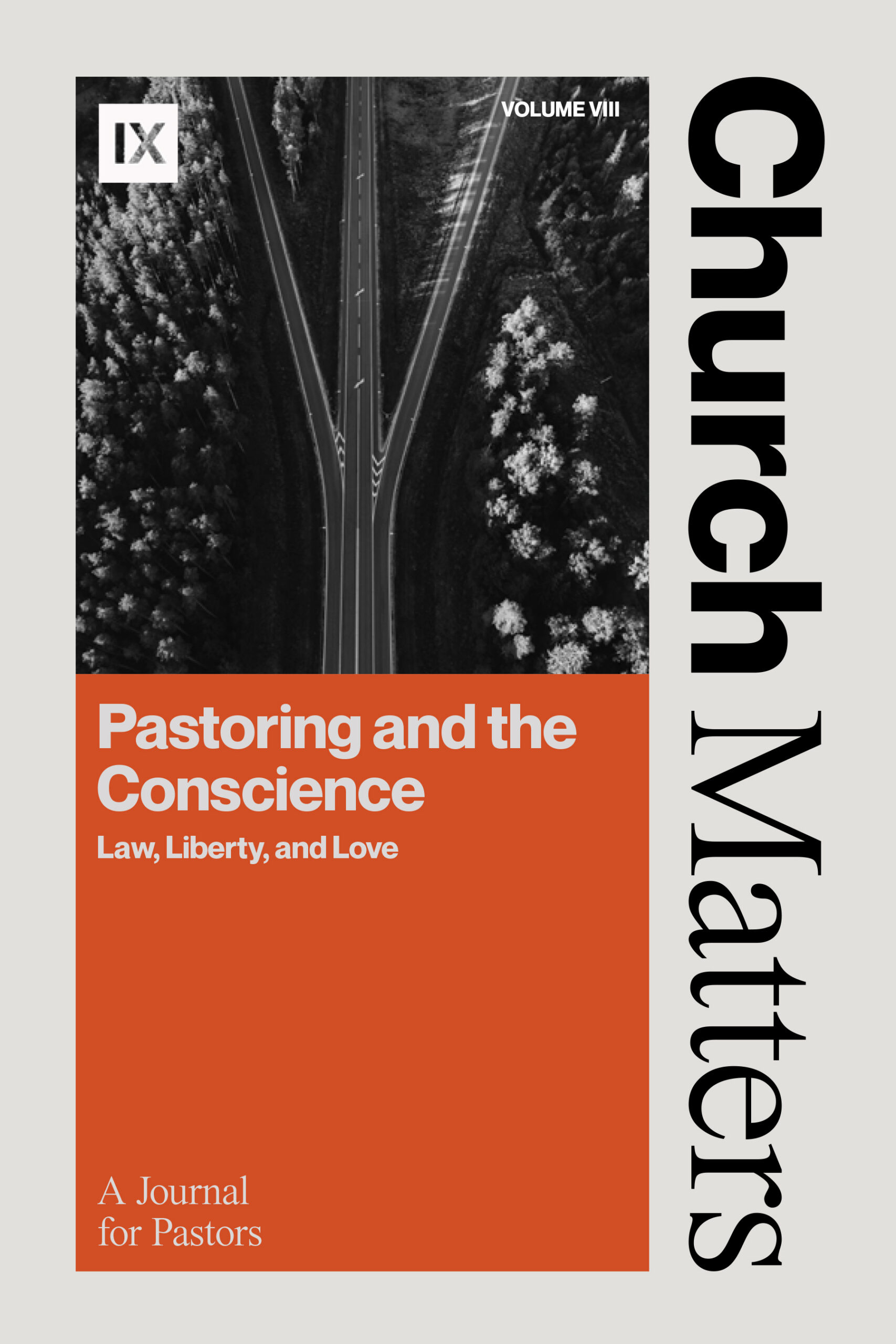
9Marks, Church Matters Volume VIII: Pastoring and the Conscience
Luke Burgis, The One and the Ninety-Nine: Forging Identity in the Age of Social Contagion

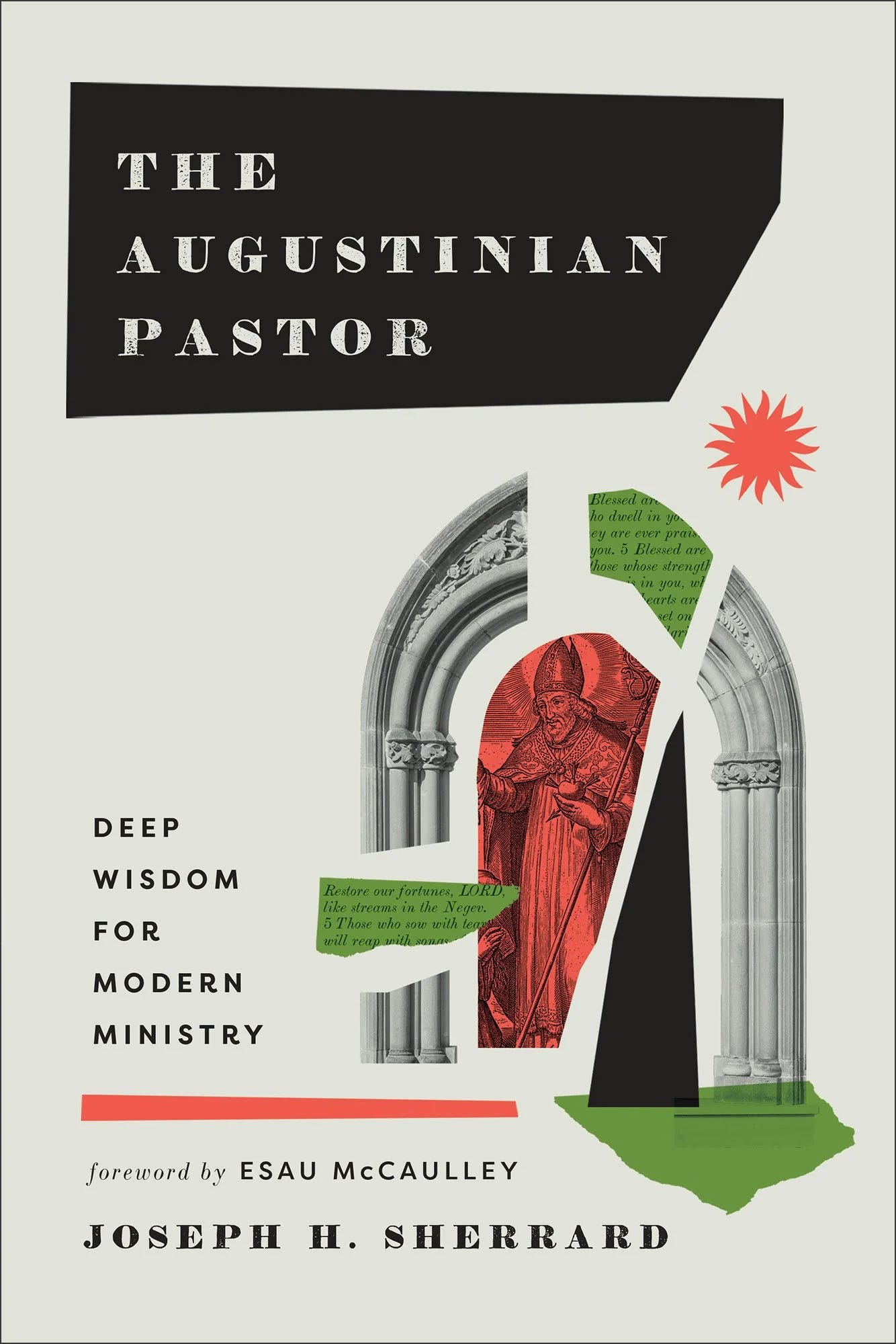
Joseph H. Sherrard, The Augustinian Pastor: Deep Wisdom for Modern Ministry
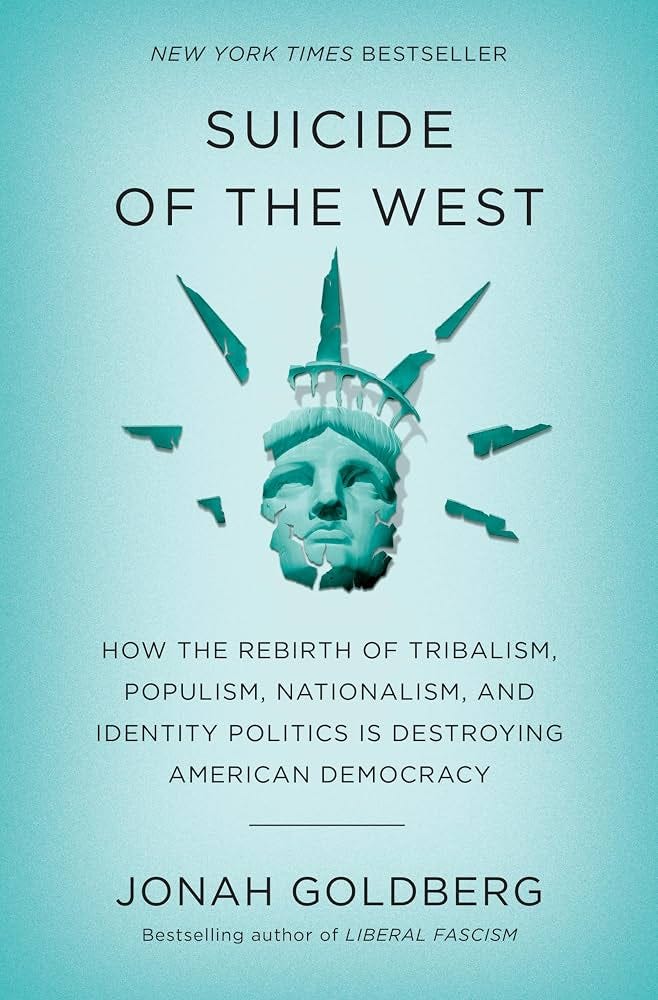
Jonah Goldberg, Suicide of the West: How the Rebirth of Tribalism, Nationalism, and Socialism Is Destroying American Democracy

While I greatly appreciate the small but loyal readership here at Churchatopia, here’s the evidence that I couldn’t survive off my writing skills:

Check out those royalties from my 2016 book…!
That said, Biblical Beliefs (2013) has had a bit of a renaissance in the last six or eight months selling a few dozen copies.
If you enjoy Churchatopia, would you take time to share a link to this Substack site and/or some Churchatopia content that you have benefited from?
No posts
Comments
Nothing yet. Say the first thing.
Sign in to join the conversation.