

This weekend thousands of Free Will Baptists will converge on Columbus, Ohio for the annual session of the National Association. It will be the 30th time I’ve attended a Convention, though my experiences have been diverse through the years.
I’ve been a competitor, judge, delegate, presenter/panelist, coach, committee member, and more. But one of my favorite roles has been as a member of the Commission for Theological Integrity. For years the Commission has held an seminar on Monday afternoon on a subject of great significance for Christian faith and practice.
This year’s seminar is entitled, “Creeds, Confessions, and the Church: A Free Will Baptist Perspective.” The presenters are Derek Cominskie, Kevin Hester, Jesse Owens, and Matt Pinson. The session will be held from 1:30-3:00pm on Monday in GCCC A124/125. I hope to see many of you there!
As I reflected recently on this topic, I recalled the odd and difficult year of 2020. Leaders of all kinds of institutions were trying to figure out how to be faithful in an environment of uncertainty and controversy.
When it came to the Convention, our denominational leaders opted for a special meeting of a subset of our delegates (the General Board) to conduct Convention business. Seminars were prerecorded and made available via YouTube, including the Theological Commission’s annual seminar.
That seminar topic paralleled this year’s topic. It was called, “Doctrine, Confessionalism, and Denominational Identity.” I was honored to be one of the presenters. While the video/audio quality of the video—which is still available on YouTube—was rather sketchy, I still think the substance of the presentations was among the best material the Commission has produced in last ten years or so.
In the interest of promoting the broader theme (and by extension, this year’s seminar) I have chosen to repost the transcript of my original remarks. My presentation was entitled, “Bridging the Divide: The Relationship Between Doctrine and Practice.”
The Problem
There is a problem often found in modern Christian thought. This dichotomy goes something like this: doctrine is very important to believe and teach. But then there is practice, which varies place to place. So, get your beliefs lined up with the Bible, and be sure to teach those in the church, but then your ministry practice can be determined by practical concerns, cultural context, perceived effectiveness, and other factors.
Most people probably wouldn’t put it quite that starkly. We know doctrine and practice do relate on some level.
For example, the Bible says we ought to pray. That’s a practice. We also believe the Bible teaches us truths about prayer and what to pray for, so we see a doctrine and a practice going hand in hand. But we generally think how you lead a church or practice ministry is driven more by context and practical concerns: “How big of a church are we? Are we rural or suburban? What financial resources do we have?” or “What stylistic preferences do people seem to respond to in our community?”
The Core Argument
I want to suggest that while context and prudential judgments about how best to minister are definitely important considerations, by itself, this perspective betrays something fundamental to Scripture. That is, the Bible holds doctrine and practice together in such a way that they cannot and should not be separated. They are symbiotic. That is to say, they’re mutually reinforcing and mutually dependent.
The Biblical Case
To establish this case let’s focus on an important phrase in the Pastoral Epistles: “sound doctrine” (ὑγιαινούσῃ διδασκαλίᾳ).[1] Occurring four times in Greek (between 3-5 in most English versions), this phrase is usually interpreted as “true doctrine,” or “correct doctrine.” It seems like a synonym to other Pauline expressions of truth, such as “the good deposit” (2 Tim. 1:14) or the “the pattern of sound words” (2 Tim. 1:13).
But had Paul simply wanted to talk about truthful doctrine, he could have used clearer Greek words. The word “sound” here doesn’t typically mean “true or accurate.” Rather, it means, “healthy, or well.”
It’s curious that Paul uses a term that doesn’t specifically refer to a doctrine’s truthfulness, though he no doubt assumes that in the idea. Instead, he uses a word to describe doctrine that refers to the teaching’s effect, application, or fruit.
But just take the apostle Paul’s word for it. Let’s consider two of the four instances where “sound doctrine” occurs (1 Tim. 1:10; 2 Tim. 4:3; Titus 1:9; 2:1), namely 1 Timothy 1:9-10:
“…understanding this, that the law is not laid down for the just but for the lawless and disobedient, for the ungodly and sinners, for the unholy and profane, for those who strike their fathers and mothers, for murderers, the sexually immoral, men who practice homosexuality, enslavers, liars, perjurers, and whatever else is contrary to sound doctrine…”
In this chapter Paul addresses false teaching, namely, an incorrect view of the relationship between God’s law and the gospel. He then gives a list of sinful activities or behaviors that are contrary to the moral law of God. Notice that as he concludes his list, he doesn’t say, “and whatever other sinful behaviors like these you can think of.” He says, “whatever else is contrary to sound doctrine.” Paul doesn’t say, “Don’t teach a wrong view of the Trinity, or the atonement.” He says, “The law of God condemns these sins and others that are also contrary to sound doctrine.” Paul sees a life that flows from Christian truth. Moreover, the word “sound” conveys that true doctrine isn’t merely correct; it’s healthy. It’s wholesome.
The word “godliness” has the same basic idea.[2] As Phillip Towner explains, godliness “defines Christian existence as the interplay of the knowledge of God and of the truth (cf. 4:3) and the observable outworking of that knowledge in appropriate ways.”[3] The challenge, of course, is determining what’s appropriate!
Consider another example of this relationship as seen in Titus 1:9-2:1:
“He must hold firm to the trustworthy word as taught, so that he may be able to give instruction in sound doctrine and also to rebuke those who contradict it. For there are many who are insubordinate, empty talkers and deceivers, especially those of the circumcision party. They must be silenced, since they are upsetting whole families by teaching for shameful gain what they ought not to teach. One of the Cretans, a prophet of their own, said, ‘Cretans are always liars, evil beasts, lazy gluttons.’ This testimony is true. Therefore rebuke them sharply, that they may be sound in the faith, not devoting themselves to Jewish myths and the commands of people who turn away from the truth.
To the pure, all things are pure, but to the defiled and unbelieving, nothing is pure; but both their minds and their consciences are defiled. They profess to know God, but they deny him by their works. They are detestable, disobedient, unfit for any good work. But as for you, teach what accords with sound doctrine.”
Paul gives Titus qualities that should be seen in elders—both present and potential ones. Verse 9 says, “they must hold firm to the trustworthy word as taught, so that he may be able to give instruction in sound doctrine and also to rebuke those who contradict it.” Biblical elders teach what is true and show the connections between true doctrine and the lifestyle that follows it.
Paul then mentions the problems at Crete. It isn’t just that the content of Cretan teachers’ words is incorrect or false (It is! They’re called ‘liars’!). But they’re also called “evil, lazy, and impure.” These normally describe behavior as much as ideas. This is why good elders must hold doctrine and practice together.
This interpretation is reinforced by 2:1: “Teach what accords with sound doctrine.” Paul then gives a list of virtues to be modeled in the context of intergenerational relationships. To put it simply, doctrine forms disciples. To use Dr. Kevin Hester’s language, “theology grounds Christian living.” Pay attention to the unique phrase in 2:1: “What accords with sound doctrine.” To see the nuance here, consider a few other English versions: “But speak thou the things which become sound doctrine” (KJV); “You, however, must teach what is appropriate to sound doctrine.” (NIV); “But as for you, speak the things which are fitting for sound doctrine” (NASB). Note the stress of seeing the link between doctrine and practice.
From these passages, I make three claims:
(1) Doctrine grounds and shapes practice; (2) Pastors cannot faithfully teach doctrine without addressing practice. Beliefs and behavior are equally important for our discipleship; and (3) The Bible doesn’t just prescribe doctrines to be believed, but it encourages practices that flow out of and fit that doctrine.
Concluding Thoughts
Recall B.B. Warfield’s image. He says the study of doctrine (theology) and spirituality goes hand in hand. They’re like the right and left leg of a person. You’re going to be limited without both. To use another metaphor, doctrine and practice are like two wings on the plane. Which would you prefer to fly without?
Moving closer to Scripture, think of doctrine as the root or stalk of a plant, and practice as the leaves and flowers. The absence of fruit would tell you the tree was unhealthy or dead. This is why doctrine must not merely be correct; it must be sound. To be sound, it must be true. But “sound doctrine” calls attention to the practical results of such teaching being received, believed, and worked out in thoughtful life and ministry.
Let’s conclude with two final observations:
1-The debate in modern ecclesiology isn’t ideology or pragmatism. It’s not between theologians and practitioners. Everyone has beliefs, and everyone is practicing the faith in a certain way. The way all of us handle doctrine opens us up to certain practices and closes us off to others. Our beliefs about God, the world, and people are revealed in and assumed by our practices. (In my view, practical-minded people are often not self-consciously theological enough, and theological-minded people aren’t self-consciously practical enough.) But doctrine and practice will hang together, though they’ll do so inconsistently if we don’t think biblically.
2-There isn’t always one faithful way to practice and embody every doctrine we believe. Aside from specific commandments, we need wisdom, love, the guidance of the Holy Spirit, church history, and more to guide our reflection. We need to make use of every biblical-based resource to practice the faith wisely.
So, whether we’re talking about preaching (as a practice of the church, or in terms of its content) or justification by faith (as a belief to be held, or how believing it humbles us before God), separating doctrine from practice isn’t just unwise. It’s impossible.
[1] The verbal form of this word is: ὑγιαίνω {hoog-ee-ah’-no}.
[2] Stanley W. Outlaw, “1 Timothy,” in The Randall House Bible Commentary: 1 Thessalonians through Philemon, Edited by Robert E. Picirilli (Nashville: Randall House, 1990), 240. Godliness pertains to a “style of life which in both doctrine and practice brings one to a closer fellowship with God.” 1 Timothy 3:14-16 is another interesting example of how godliness (the lived expression of the faith) is linked to confession (the stated beliefs of God’s people). Paul refers to behavior in the household of God, but this paves the way for him to speak of belief in verse 16.
[3] Phillip H. Towner, The New International Commentary on the New Testament: The Letters to Timothy and Titus (Grand Rapids: Eerdmans, 2006), 305.

Last week I wrote about the intersection of heavenly and earthy citizenship, especially in the context of liturgy and worship.
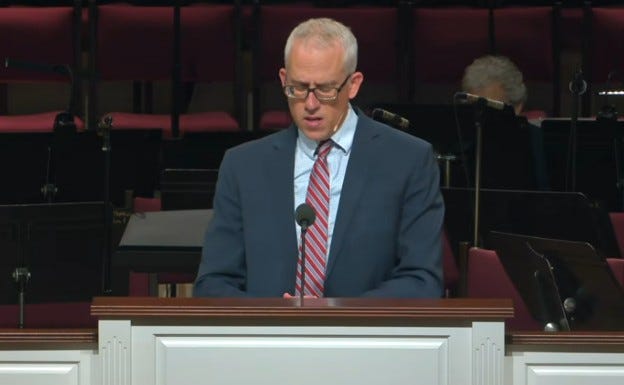
I also ran across another robust example of this from Kevin DeYoung. It is a lengthy prayer he prayed in a worship service on June 28 at his North Carolina Presbyterian church. You can watch or read it in its entirety—“Giving Thanks for America.” I’ve also included an excerpt below:
Our loving heavenly Father,
We praise you for all the blessings we have in Christ, for redemption, for forgiveness, for righteousness, for wisdom, for the assured hope of eternal life. You have seated us in the heavenly places in Christ Jesus. You have given us an inheritance that cannot fail, cannot be taken away. You have already enrolled us as citizens in the New Jerusalem. Here we have no lasting city, but you have promised to us a better city and an abiding one. May we ever be mindful of our truest and most important citizenship.

One of the more interesting and sometimes challenging aspects of New Testament interpretation is encountering extrabiblical sources which the NT authors deploy in their writings. Perhaps one of the most cryptic and peculiar examples is Jude’s usage of 1 Enoch.
“It was also about these that Enoch, the seventh from Adam, prophesied, saying, ‘Behold, the Lord comes with ten thousands of his holy ones, to execute judgment on all and to convict all the ungodly of all their deeds of ungodliness that they have committed in such an ungodly way, and of all the harsh things that ungodly sinners have spoken against him’.”
In “What is 1 Enoch and Why Does Jude Quote It?” Matthew Harmon provides a concise, helpful treatment of the matter.
Biblical authors were real people writing in real historical contexts, surrounded by a rich world of Jewish thought, tradition, and literature. Jude’s use of 1 Enoch to make a true point doesn’t threaten the Bible’s authority any more than Paul quoting a Greek poet threatens it. All truth is God’s truth.
I suppose for some of us ministering in contexts where the canon is in dispute from our Catholic neighbors, it’s especially relevant for us to know how to deal with these “other texts”!

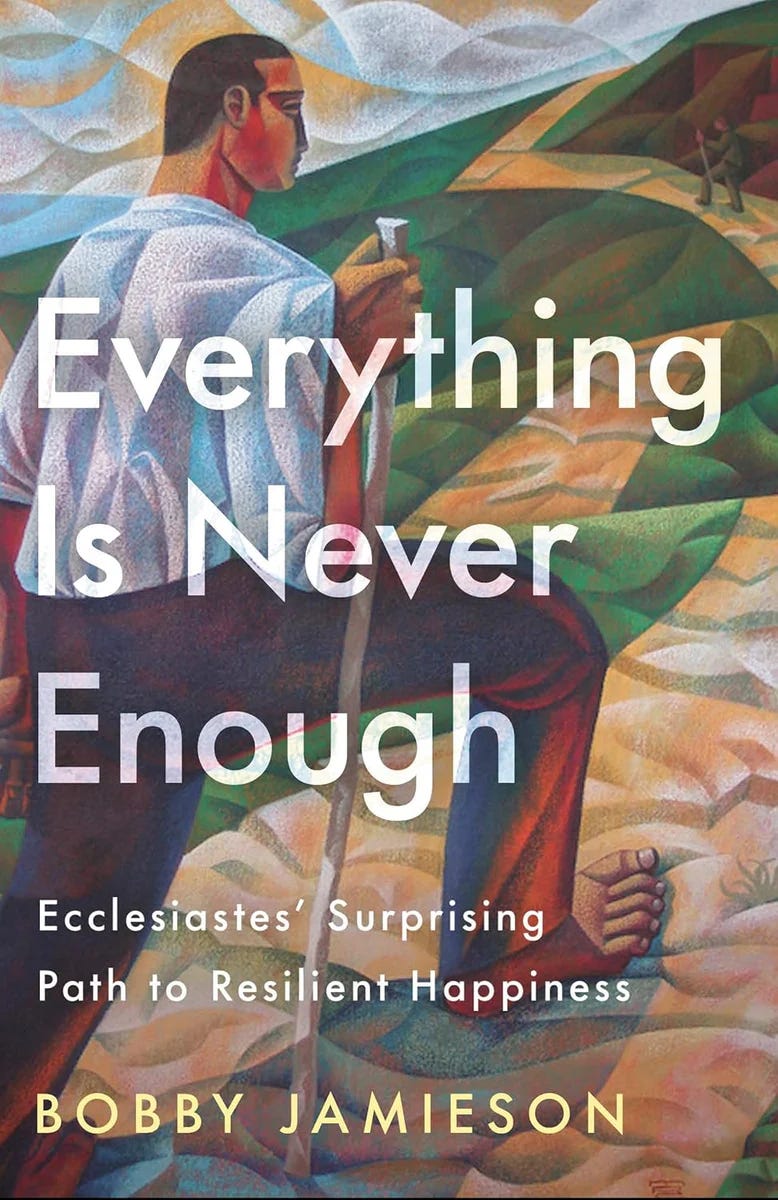
Control itself is like a drug: It at once enhances your self-perception and diminishes your abilities. Give up control, and your eyes and head start to clear. Weight lifts off. You find more in yourself and your life to laugh at. You learn not on what you can’t do but on what you can. Letting go of control is like taking a deep gulp of air after you’ve held your breath too long. Happiness comes not from controlling your life but from realizing that everything you care about most is entangled with forces beyond your control.
Never select an interim from outside the church’s denomination or faith community. Even if the potential interim is a friend of a church member (or related to one, which is worse), do not violate this rule. Because churches often violate the first rule of allowing interims to become their long-term pastor, this third rule (if ignored) places them in double jeopardy.
Ron Hunter, Jr., David Gibbs III
Revitalizing a 205-year-old institution is no less a work than planting one. In our cultural moment, it may even be more defiant. We live in an age that has turned against its institutions. As Yuval Levin argues in A Time to Build, we’ve stopped asking institutions to form us and started using them as stages on which to perform. Institutional life is a specific casualty of expressive individualism. The local church, that ancient and stubborn institution, isn’t exempt. To recommit to an old congregation, to build well in an era devoted to tearing down, is to resist the spirit of the age at its root.
Bobby Jamieson, Everything is Never Enough: Ecclesiastes’ Surprising Path to Resilient Happiness
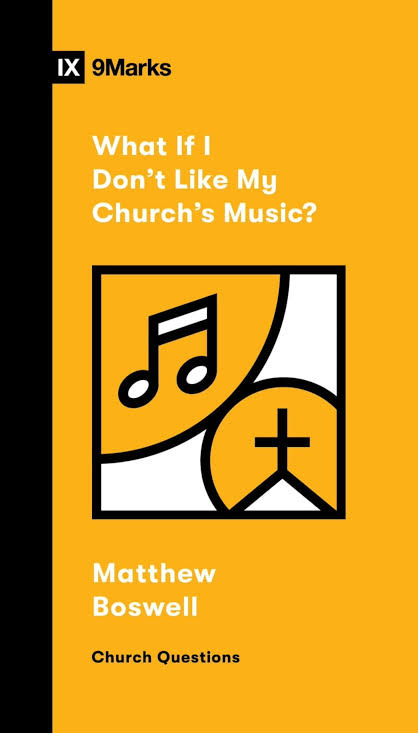
Matt Boswell, What if I Don’t Like My Church’s Music?
Beth McCord, Enneagram Type 1: The Moral Perfectionist
Julian Sancton, Neptune’s Fortune: The Billion-Dollar Shipwreck and Ghosts of the Spanish Empire


My family and I (along with a few thousand others) will be making our way to Columbus, Ohio this week for the annual Free Will Baptist National Convention. It’s going to be a full week!
I look forward to seeing some of you there. Be sure to say “hello.”

If you enjoy Churchatopia, would you take time to share a link to this Substack site and/or some Churchatopia that you benefited from?
No posts
Comments
Nothing yet. Say the first thing.
Sign in to join the conversation.