
When we think about the power of information in the modern era, it’s easy to go right to Orwell’s Nineteen Eighty-Four as Winston says “Who controls the past controls the future. Who controls the present controls the past.” The line has been a reminder to historians and journalists every since that information is power. It even made it into Rage Against The Machine’s 1999 hit anti-establishment anthem “Testify.”
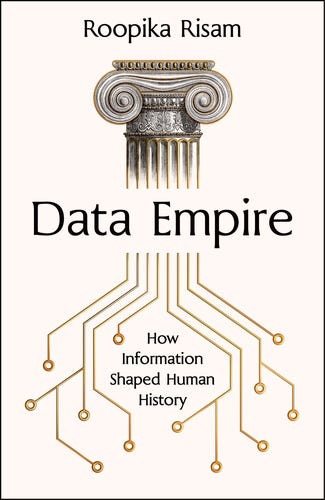
Roopika Risam’s Data Empire: The Power of Information to Organize, Control, and Dominate offers up an instructive if not intimidating history of data. Taking its history basically back to the origin of communication, Risam shows us that information has been organized and used for good and ill since time immemorial. That people use data against one another is no surprise, but the deep history of how we’ve used data is much grander than many realize.

The use of data goes at least back to the ancient Inca empire where the use of a quipu - a series of cords that “layered tribute, time, and terrain into intricate webs of information” - was of primary communicative importance. Ancient trade routes required research and data to operate effectively.
As Risam writes, “governing emerging civilizations required managing information as much as ruling over people.” Of course, those who controlled the information controleld the past, present, and future. Influential leader’s names would disappear from available information when rivals took over. Such stories remind us that the current battle of what history can and can’t be taught is not a modern development.
When Sargon conquered Sumer, certain stories disappeared. This is not unlike how Texas is looking to ban the teaching of Plato as a means to erase the influence of one of the world’s most beloved and studied thinkers.
“Mesopotamian tables tracked everything: barley in shekels, oxen by sex and age, carts by axle count. And, sometimes, people.”
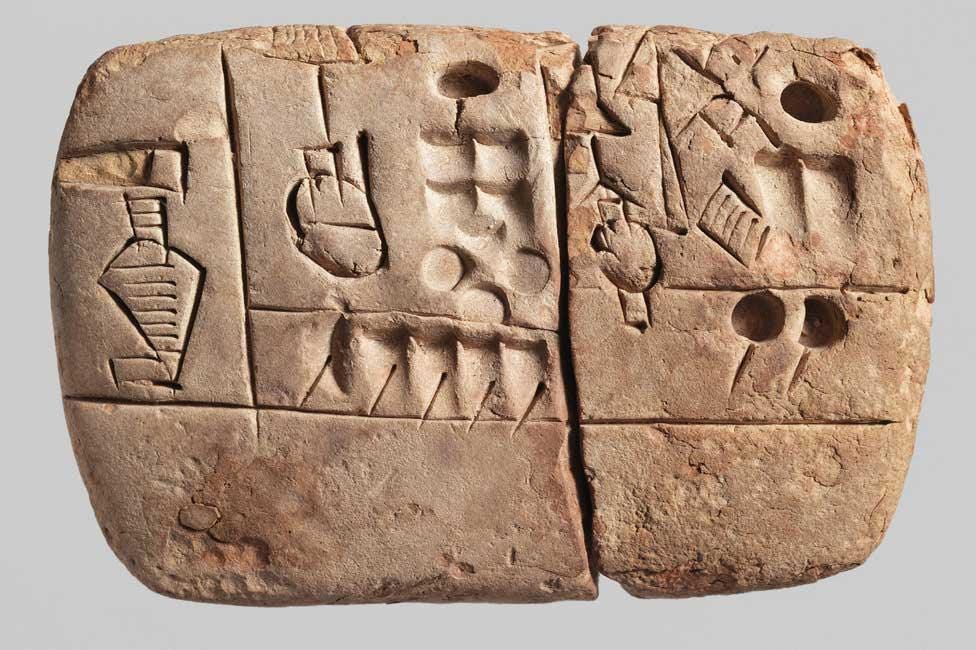
Data, in fact, is the foundation of knowledge. It is how we know what we know, track years, pin stories to specific time periods, understand history, and transfer that knowledge from generation to generation.
When that data is lost, such as following the palace of Mycenae in 1180 BCE, culture shifted to an oral tradition such as the one that produced Homer’s The Illiad and The Odyssey. Such long narratives made “culture retrievable.” Without reliable written records, “these oral systems sustained identity, values, and history during centuries without local writing systems.”
Data eventually became more “tested and synchronized” which could “turn insight into action.” From there, “institutions assumed the right to interpret data” and therefore control the meaning making process. A less learned by Roman emperor Constantine who played a role in steering acceptable versions of Christianity.
“Constantine had witnessed how competing interpretations of religious texts threatened an empire,” writes Risam, “dividing dioceses and in turn undermining imperial command.”
Data gave us history that is measurable, leading to a “governing force.” Fast forwarding to the last three hundred years, Risam explores how data continues to be a force for powerbrokers up to our present moment. From racist data science used by proslavery groups, census research that took many years to complete, and even the ten-digit Dewey Decimal system.
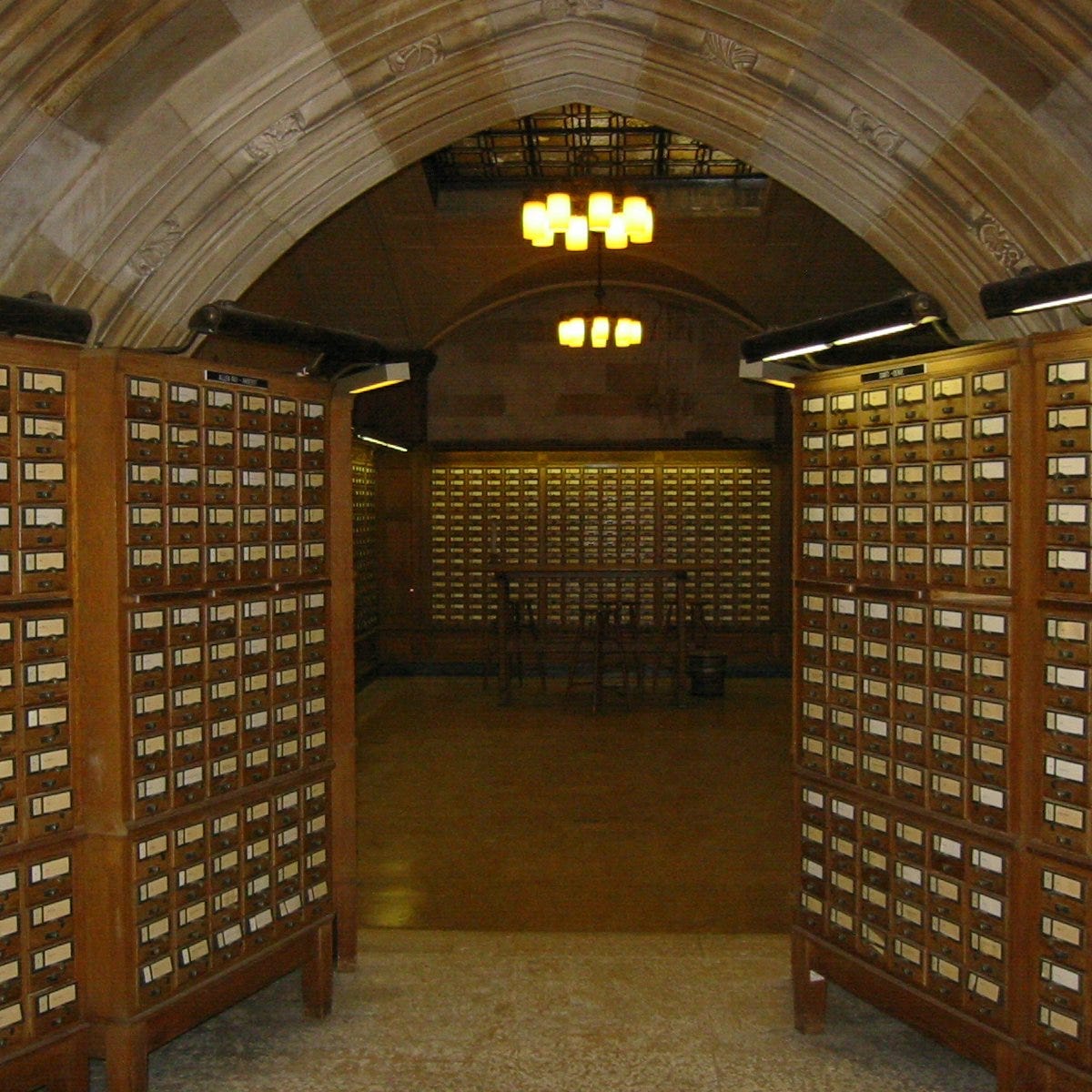
The problem, of course is that such cataloguing gave ways to nefarious forms of hierarchy. “To be counted was now to be categorized. To be categorized was to be calculated, and then constrained,” writes Risam, “To be left out was to be erased.” What becomes part of the cultural canon is determined by data. Eugenicists from the Nazis to disgraced aviator Charles Lindbergh utilized skewed data to “prove” aryan superiority. IBM tabulators worked to sort out the “sickness” in Europe to be eradicated.
Risam also reminds us of Willy Heidinger, head of an IBM subsidiary in Germany, who branded Hitler a “capital P physician” that would “take corrective procedures to to correct the sick circumstances.” The sickness, of course, was the Jews. IBM chairman Thomas Watson approved all Nazi contracts for custom punch cards and tabulation machines that kept track of the “progress” of mass murder. Hitler, of course, was no more of a physicin than Robert Kennedy Jr. Yet, both of them operate with unearned expertise regularly swallowed up by gullible followers.
Fast forwarding again (me, not Risam, as doesn’t miss a historical period in this book), to our current era of Big Data, which continues offering an intimidating amount of hurdles. While Data Empire serves up an impressive, sweeping history of the world through the lens of information and power, Risam concludes this insightful book with essential criticism of our algorithmically-driven present.
“When fed into large-scale machine-learning platforms, this data creates a new way of knowing the world…by algorithmic intuition that generates judgements without understanding, context, and accountability - or empathy.”
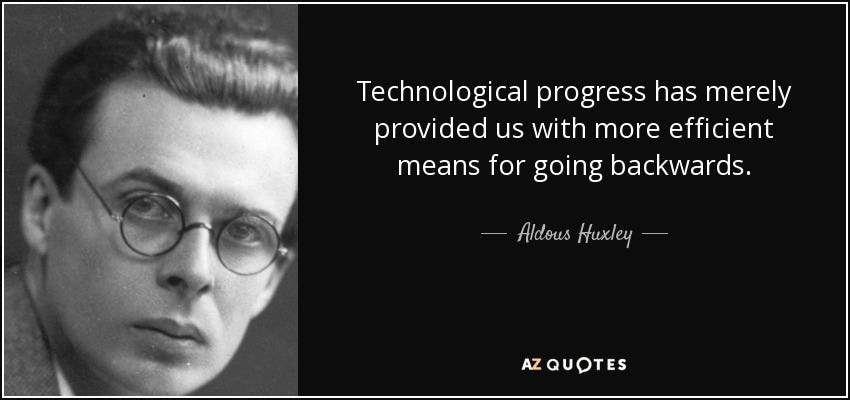
The algorithms now dominate Facebook and Twitter, as well as other platforms, spreading misinformation and creating more duped radicals every day. Critical thinking skills are being offloaded to AI programs and a future where people no longer think for themselves is not relegated to an Aldous Huxley or George Orwell Novel.
It’s here.
“The future didn’t happen by accident,” writes Risam, “it was built over a century of fracture and repair.” Climate disasters, economic crashes, political unrest all lead to more centralized control. As Risam argues, “each crisis left scars but led to the creation of rules that tied data to public oversight.” Calling attention to the continued ripples of self-made problems with increasingly draconian control is apt for the moment.
Risam’s grasp of the world history and her command of its scope is nothing short of incredible. There is so much to take in here that Data Empire will be worth revisiting as those of us with less global history knowledge can easily use this book as guide for our own explorations of the distant (and not-so-distant) technologically-saturated past.
No posts
Comments
Nothing yet. Say the first thing.
Sign in to join the conversation.