
Planemaker Larry Williams once told me the thing he disliked most about teaching woodworking classes.
“Every damn class has to start with a sharpening lesson,” he said.
That was about 25 years ago. The craft doesn’t have that problem anymore. But now we have a different one.
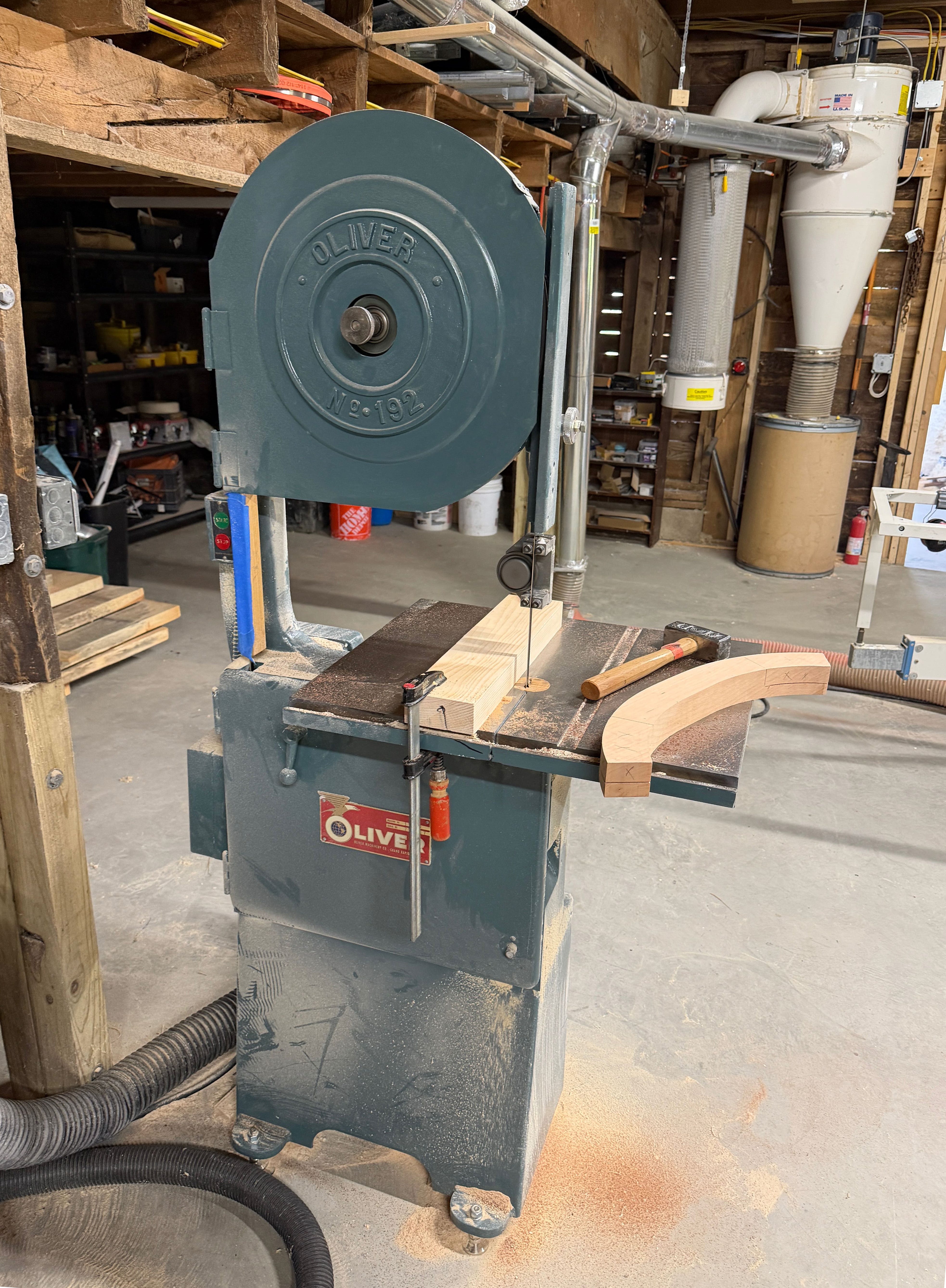
“How many of you have used a band saw?” I ask.
Almost no one raises a hand.
This substack entry isn’t for people who want to make everything by hand. Or for people who want to do woodworking for fun, relaxation or “hand stuff” with their cousins. Instead, this column is for people who think: “One day, I want to build furniture in exchange for money.”
Here’s the gist: I recommend you first spend about 500 hours on each of the four basic machines: the band saw, table saw, jointer and planer. These machines (plus the HVLP gun) allow you to compete in the marketplace and (also important) will allow your body to work in the craft for many, many more years.
I’m not trying to take hand tools away from you. Just the opposite. Embrace planes, spokeshaves, scrapers, hatchets, drawknives, froes – anything with a blade. Those tools are what will separate you from the router table + ROS = cutting board crowd.
But machine work is something you need to get good at because it will save you decades of grunt work, repetitive stress injuries and tendonitis.
Most students who attend my classes are adept with hand tools. And “big yay” for all of us because of that fact. Decades of work by many of us in the craft have made handwork something that is mainstream. We have hand tool books, magazines and instruction. It’s all easy to find and pretty damn good, too.
So these days when I talk to people who want to go pro they ask me for lessons in stock preparation on the machinery. When I gladly give it to them, they go home and promptly forget a lot of what they learned. Just like with hand work, you have to practice machine work. A good table saw operator can dance with the machine safely and swiftly. They can calculate when it’s best to move the fence to make efficient work of the pile of parts before them. They know exactly how fast to push the work so it is clean and unburned.
This isn’t difficult stuff to learn. But it takes time on the machines.
Plus, and I hate to say this, you need to learn machine maintenance and safety. It’s a drag. I have an unusually dominant Maintenance Department Gene, so I actually adore keeping our machines in good shape and clean. But most people don’t.
Comments
Nothing yet. Say the first thing.
Sign in to join the conversation.