
Welcome to the latest part in the Learn to Look at Art series.
This time, we’re exploring one of the most popular topics in the history of art: the representation of landscapes in art.
If you’re just joining us, the full series is available in the Learn to Look at Art page.
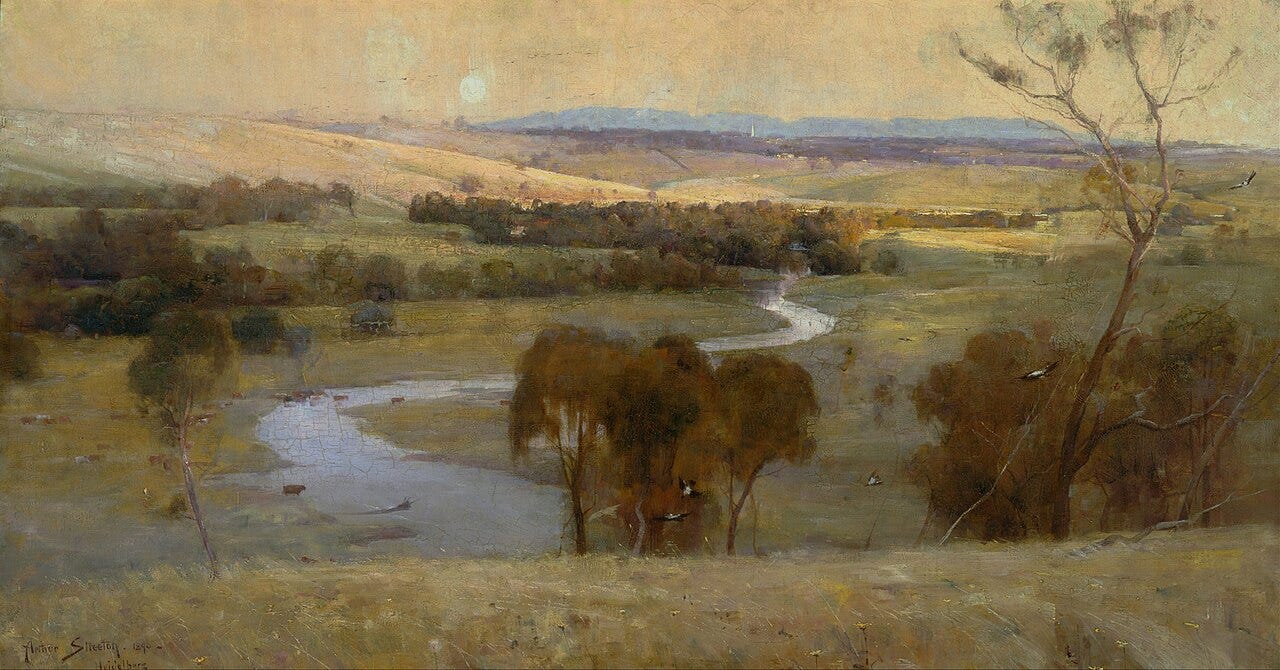
Rivers, trees, valleys, coastlines, deserts, canyons, gardens, parks, mountains, harbours, pathways, ports, bridges. All of these things make up the landscape around us, yet it is surprising to learn that in the Western tradition, landscape painting wasn’t recognised as an independent genre until the 16th century, and even then only as lowly subject matter.
Or perhaps this isn’t too surprising. For many people of the past, the terrains of forests, peaks and sea were hostile and unpredictable places. Fields signified toil and labour, and the coast brought the constant threat of storms and pirates.
Perhaps it is little wonder then that it was only when more people began to congregate in towns and cities — and the landscape became a subject of memory and nostalgia — that natural landscapes started to be appreciated as a possible subject of beauty.
The very first landscape images can be seen in ancient Roman frescoes and mosaics, but after that, landscape art disappeared altogether and only reemerged as a background setting. This is important to remember: that modern landscape paintings are rooted in human stories and can often be understood as either complementing or contrasting with the affairs of people.
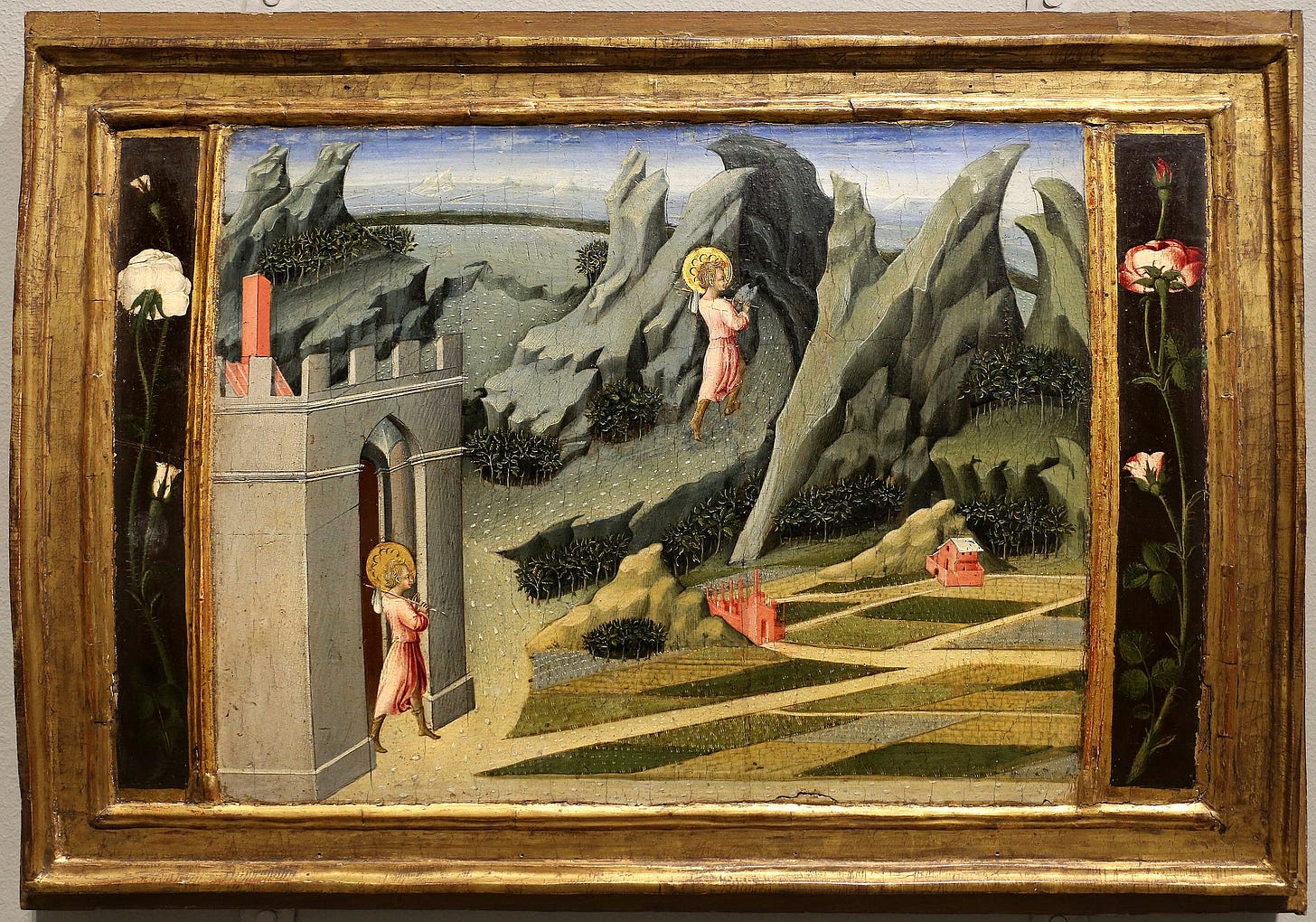
Consider a painting made in the 15th century by the Italian artist Giovanni di Paolo (1403-1482), showing a scene from the life of Saint John the Baptist, who leaves the city to take up a simple and austere life in the desert of Judea. The fields and mountains make up a large proportion of the painting, but they are not the main event.
To our modern eyes there is something puzzling about the image, most obviously in the disproportionate size between the figures and the setting. How do we explain it?
Comments
Nothing yet. Say the first thing.
Sign in to join the conversation.