
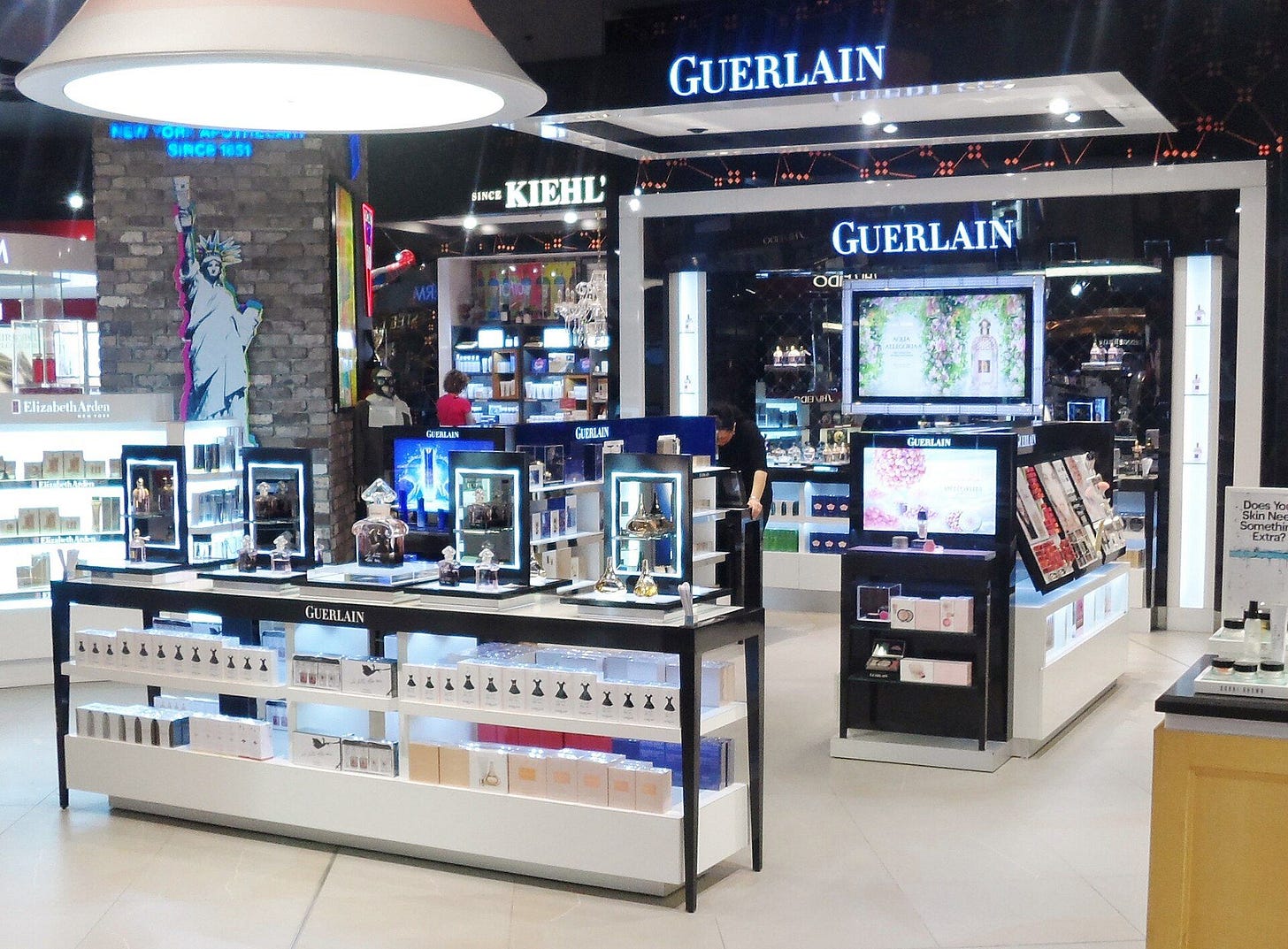
The fragrance counter: where the category prices its story. Sydney Airport duty free. Photo: Pear285 (CC0), via Wikimedia CommonsOn a polished glass counter, under cool, precise lights, sits a bottle of perfume. Its glass is thick, faceted. It feels heavy. The cap clicks shut, exact. It's supposed to give you a fleeting feeling. But the thing feels incredibly solid. They present it with care: a branded box, maybe velvet, a card listing its notes and history. This show makes you expect something valuable. It tells you it matters, without words.
But this fancy bottle holds a liquid. The stuff inside? The glass, the oils, the labor? They cost peanuts compared to what you pay. Think about the parts: the fragrance oils, the alcohol, the glass, the sprayer, the box. Their cost stays low. The price, though, climbs much higher. Many times the actual cost of materials. This gap makes you wonder about today's luxury market. It's a big question.
This huge imbalance shows the thing for what it is: a **Hollowed Object**. Sure, it needs a body and stuff inside to work. But that's not why people pay. The object becomes a placeholder. It carries brand stories, dreams of a better life, the buzz of a limited release. You don't buy chemicals or glass. You buy ideas. Other things. They strip away its real economic worth. Then they fill it with meaning they made up.
## The Immaterial Premium
Look at gold. You buy a gram, for an investment or a ring. Its price tracks what the world values the metal itself. Gold's worth comes from its rarity. Its weight is real. It doesn't fall apart. You can check it. You swap money for a unique material. Gold's price shows its stuff. Perfume's price, many times its parts, shows something else entirely. It shows nothing you can touch.
This extra price isn't an accident. People make it happen. They pour in conceptual and symbolic work. This hides the actual **Labor Density** that makes the liquid. Profit doesn't come from mixing oils or shaping glass. It comes from inventing the smell. Designing the bottle. Writing the ads. Making the brand feel special. These steps build a **Zero-Sum Aura**. They take money from you. Not for what the product is. But for the dreams it sells. For the social points it promises.
So, a perfume's price covers many things. None of them you can hold. It pays for ads that connect smell to your hopes. For stars to say they love it, giving it sparkle. For stores to make buying it feel like an event. For the made-up stories about the makers and the ingredients. The bottle isn't just a container for scent. It points to a whole system. It's a sign of cultural power and money.
## A New Contract with Materiality
Buy that fragrance, and the deal changes. You don't get a working product. You enter a **Custodial Contract**. You get to claim something untouchable. You don't own the liquid. You rent the right to look a certain way. To act out an identity. To show you belong to some exclusive group. It's temporary. The bottle itself? Just a token. Your ticket into this non-physical world. It's a prop for your personal show. Not the point of the purchase.
This whole process shows a core truth about Post-Luxury Conceptual Functional Art (PLCFA). An object's physical self and its market price keep drifting apart. Luxury perfume, priced so high, proves this perfectly. It's a prime example. It shows how the market can cut a thing loose from its materials and the work that built it. Instead, they sell the idea. They sell the symbols that cling to its shape. This isn't just branding. It reshapes how things get value. How they keep their economic and cultural power. The bottle lasts. But its value? Just a fleeting idea. A cluster of meanings. Not something built into the thing itself.
⌂
Comments
Nothing yet. Say the first thing.
Sign in to join the conversation.