
In a bathroom, the vanity is one of the hardest-working elements in the room, but it should never feel purely functional. As interior designers, it’s an opportunity for us to establish the architecture, mood, and personality of the space. Across these CAI projects, each vanity was designed in response to the room itself; its proportions, natural light, surrounding finishes, and the way the homeowners use it every day. Some are quiet and tailored, while others are expressive and unexpected, but each becomes an integral part of the overall design.
Furniture-Inspired Vanities
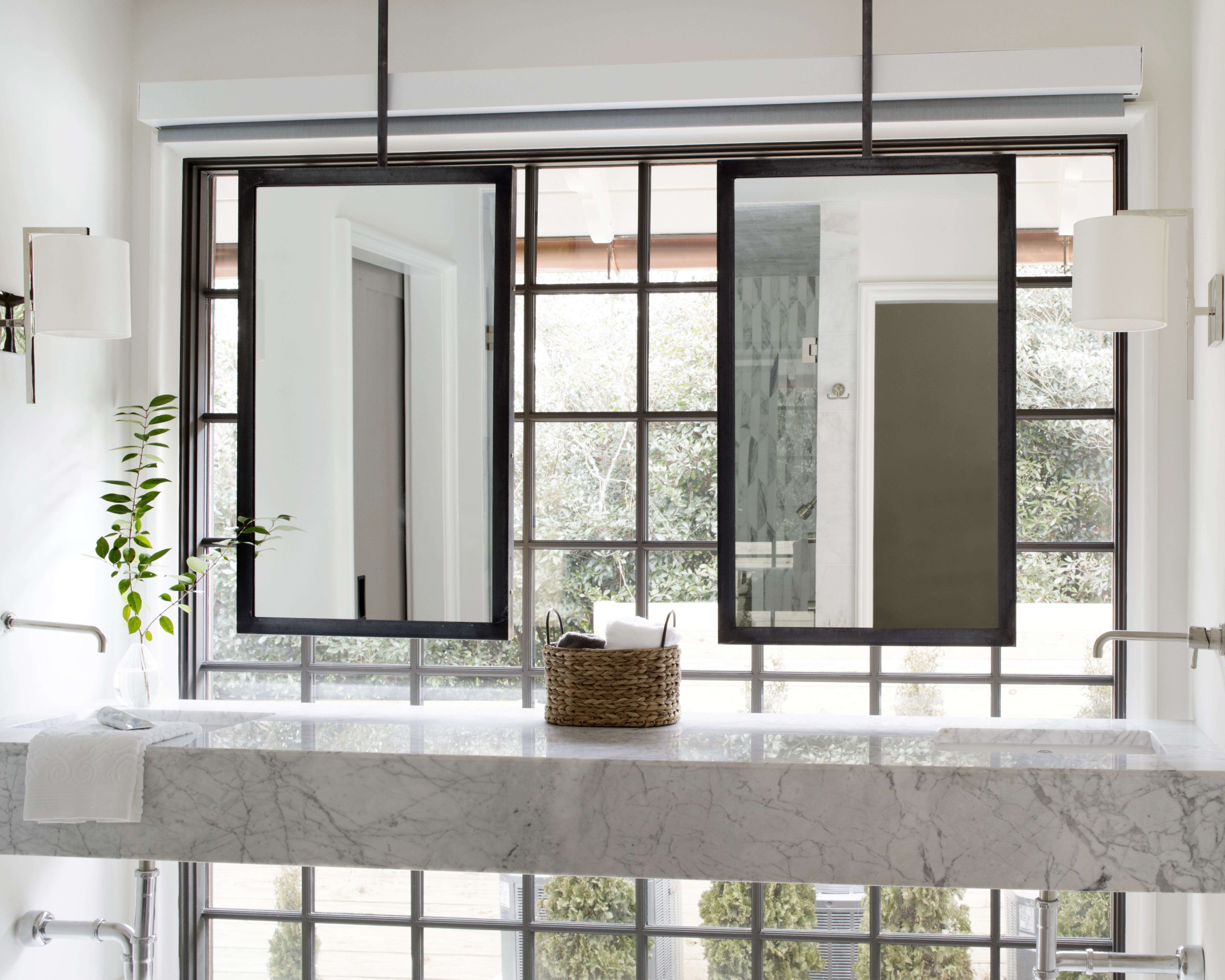
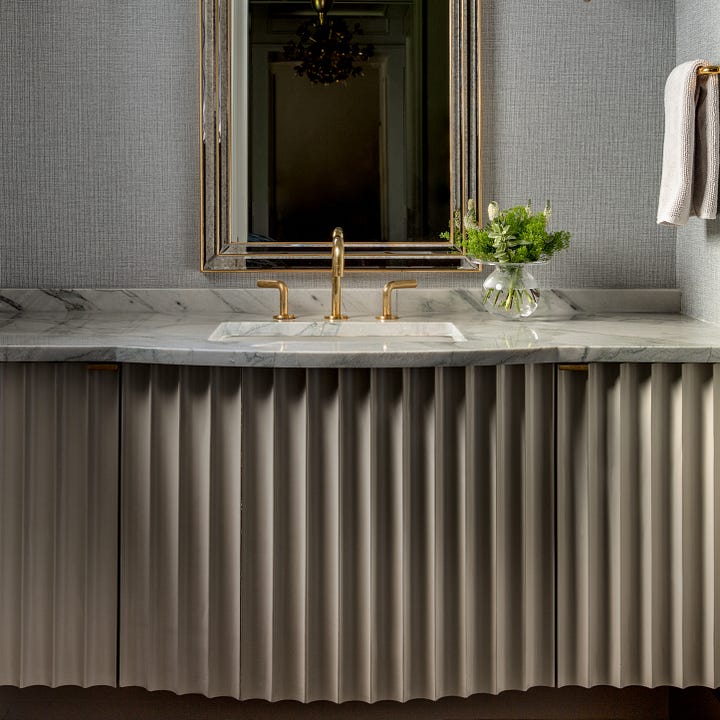
We often approach a vanity as a piece of furniture rather than standard bathroom cabinetry. Warm wood tones, fluted fronts, inset drawers, curved details, open shelving, and thoughtfully selected hardware bring depth and craftsmanship to a practical element.
A natural wood vanity can introduce warmth against painted paneling, cool stone, or dramatic wallcovering, while a painted vanity can blend into the architecture and allow the mirror, stone, or surrounding finishes to take focus. In smaller powder rooms, furniture-style vanities also create a lighter, more collected feeling by allowing more of the wall and floor to remain visible.
Tailored and Architectural
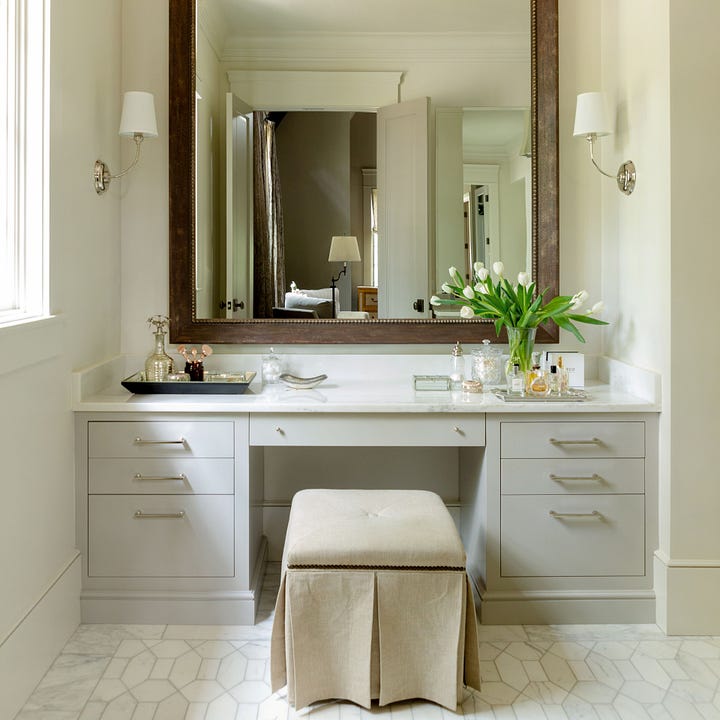
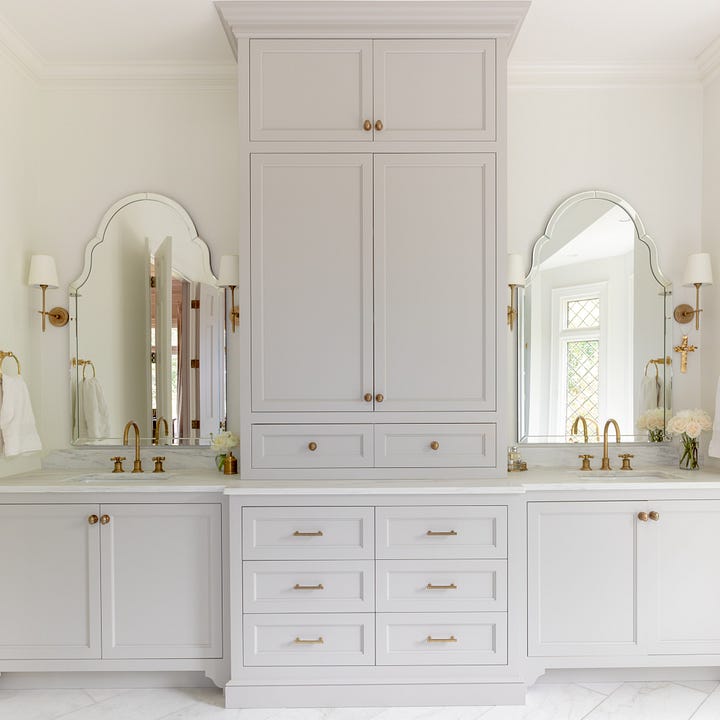
In larger bathrooms, the vanity often becomes part of the room’s architecture. Long runs of cabinetry, balanced proportions, integrated storage, and carefully placed mirrors create a sense of symmetry and permanence.
These vanities are often quieter in their detailing, relying on refined millwork, soft neutral finishes, and beautiful stone to create interest. Every element is considered together, from the height and scale of the cabinetry to the placement of sconces, mirrors, outlets, and plumbing, so the finished space feels composed and effortless.
Expressive Powder Rooms
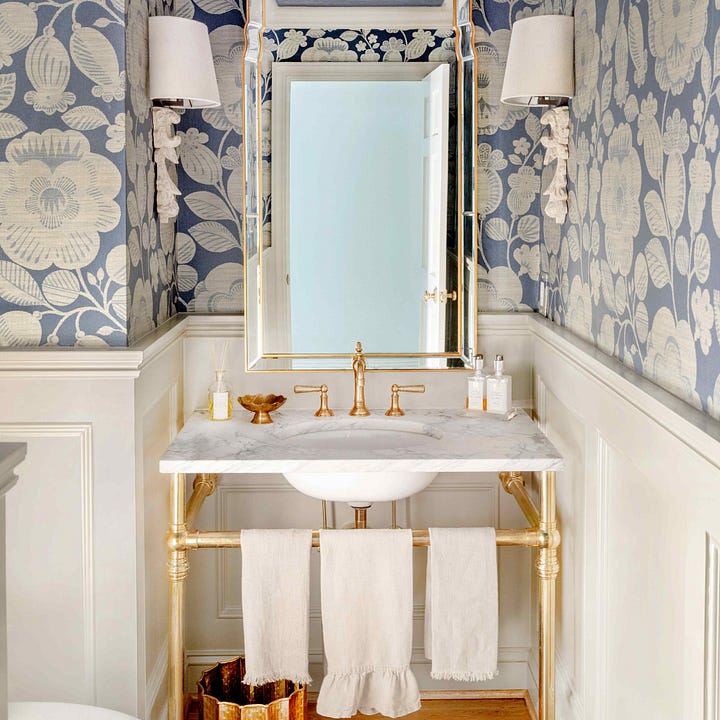
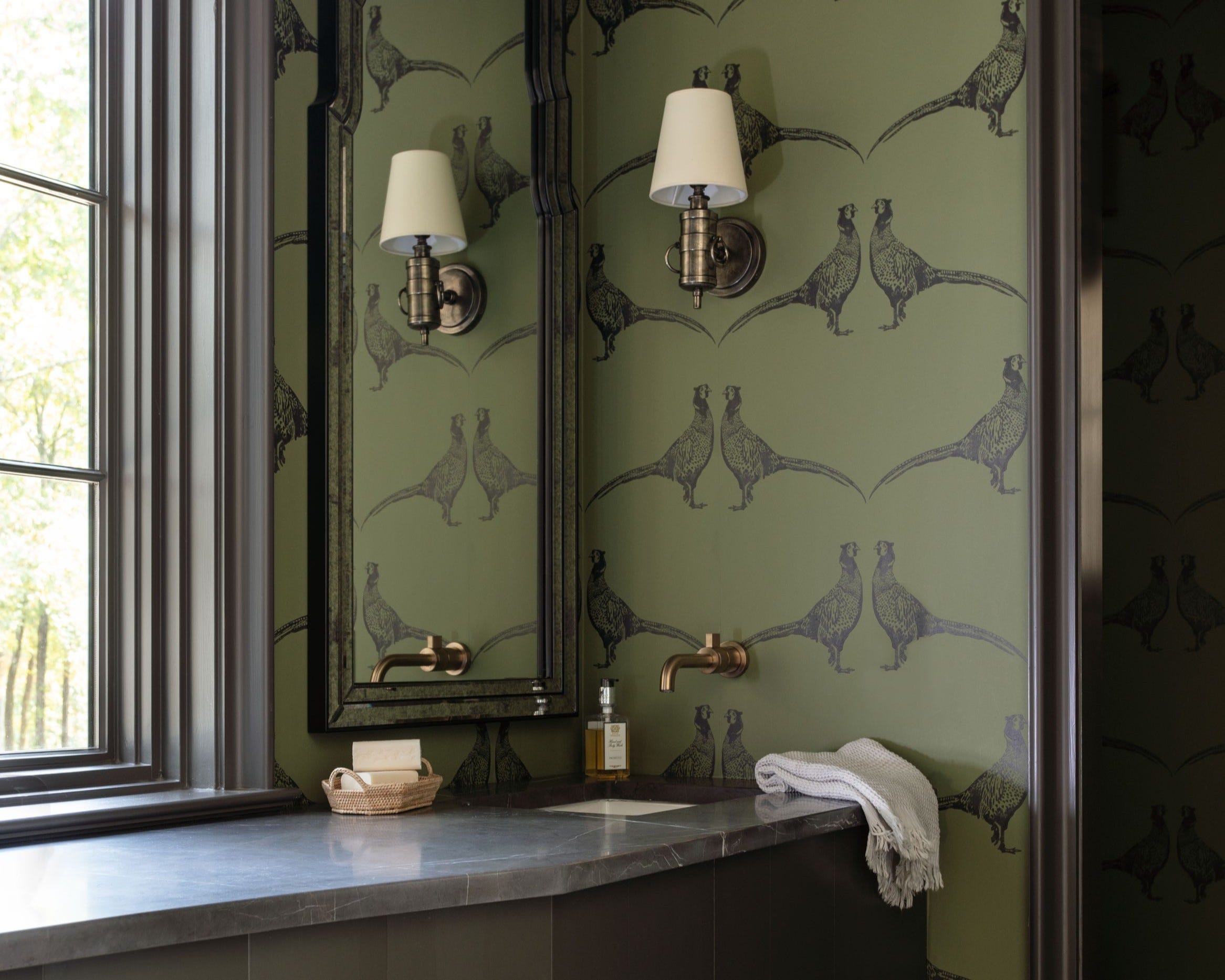
Powder rooms give us the freedom to be more adventurous. Because these spaces are experienced in shorter moments, they are ideal for bold wallcoverings, sculptural mirrors, rich colors, unusual materials, and distinctive sink forms.
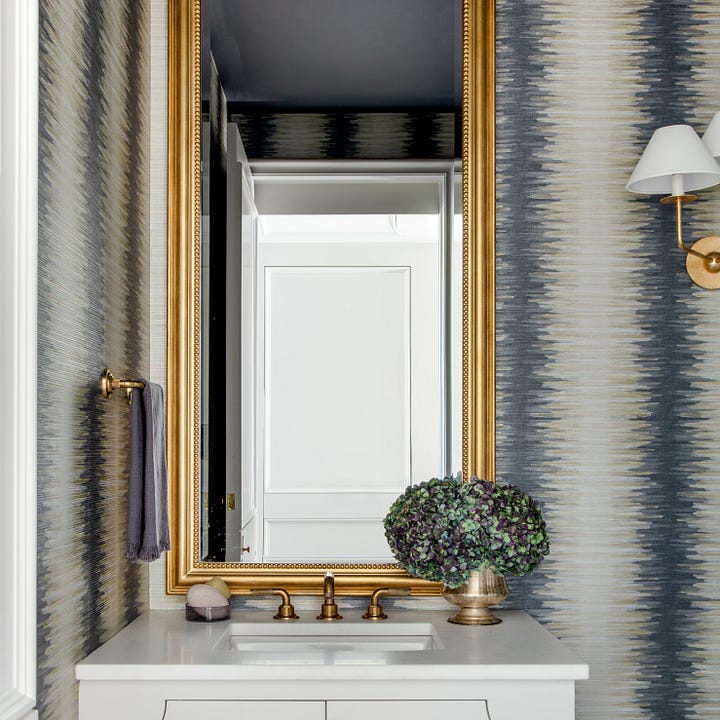
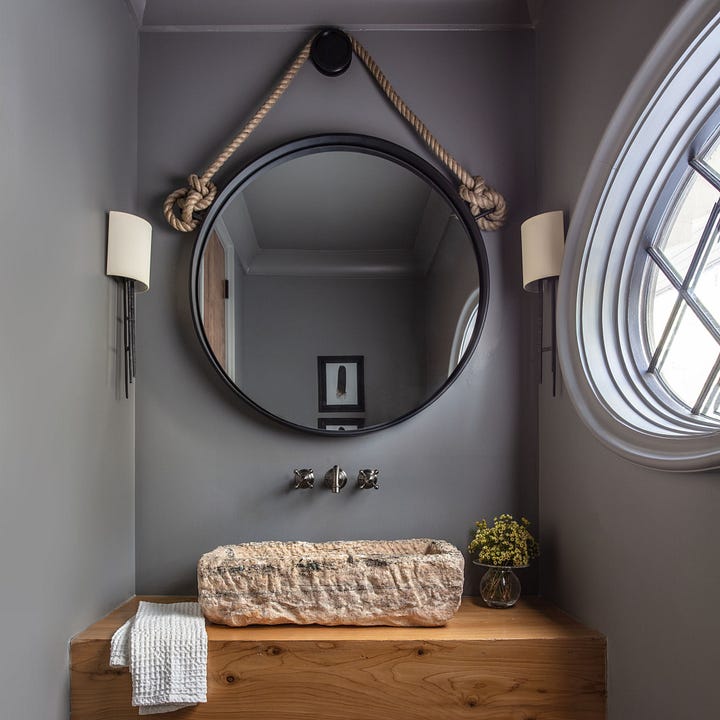
In these rooms, the vanity is rarely designed in isolation. It becomes part of a complete composition that includes lighting, hardware, stone, plumbing fixtures, and the surrounding wall treatment. Whether the result is dramatic, playful, or quietly layered, the vanity helps transform a small room into one of the most memorable spaces in the home.
—The CAI Team
No posts
Comments
Nothing yet. Say the first thing.
Sign in to join the conversation.