
In my last newsletter, I told you about some upcoming online basketry classes, which will be offered through Plants and Colour (UK)
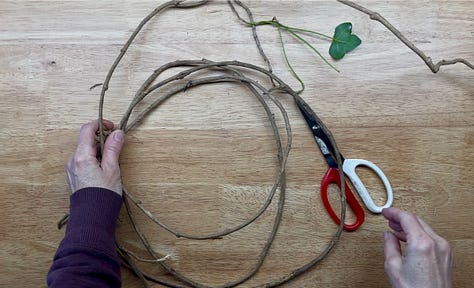

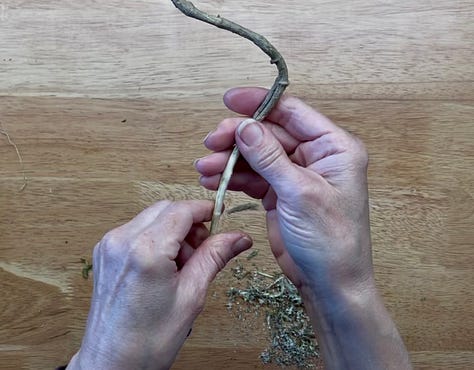
First up is a LIVE class on September 2, 2025, on how I harvest and process English Ivy for use in basketry. This will be a deep dive into the way I’ve worked with Ivy over the years, often splitting and peeling it into a material suitable for fine art sculpture. Using ivy in its unprocessed state will yield a piece with a rustic look, while taking time to peel and process will give you a cleaner, and I think more modern looking material.
This session will be for those of you who love going down the rabbit hole of connecting to your art materials—by processing your own! And since it’s live, I am able to answer any questions that pop up immediately.
I’m also including a brief introduction on how I dye Ivy different colours using natural dye methods, or low water use options.
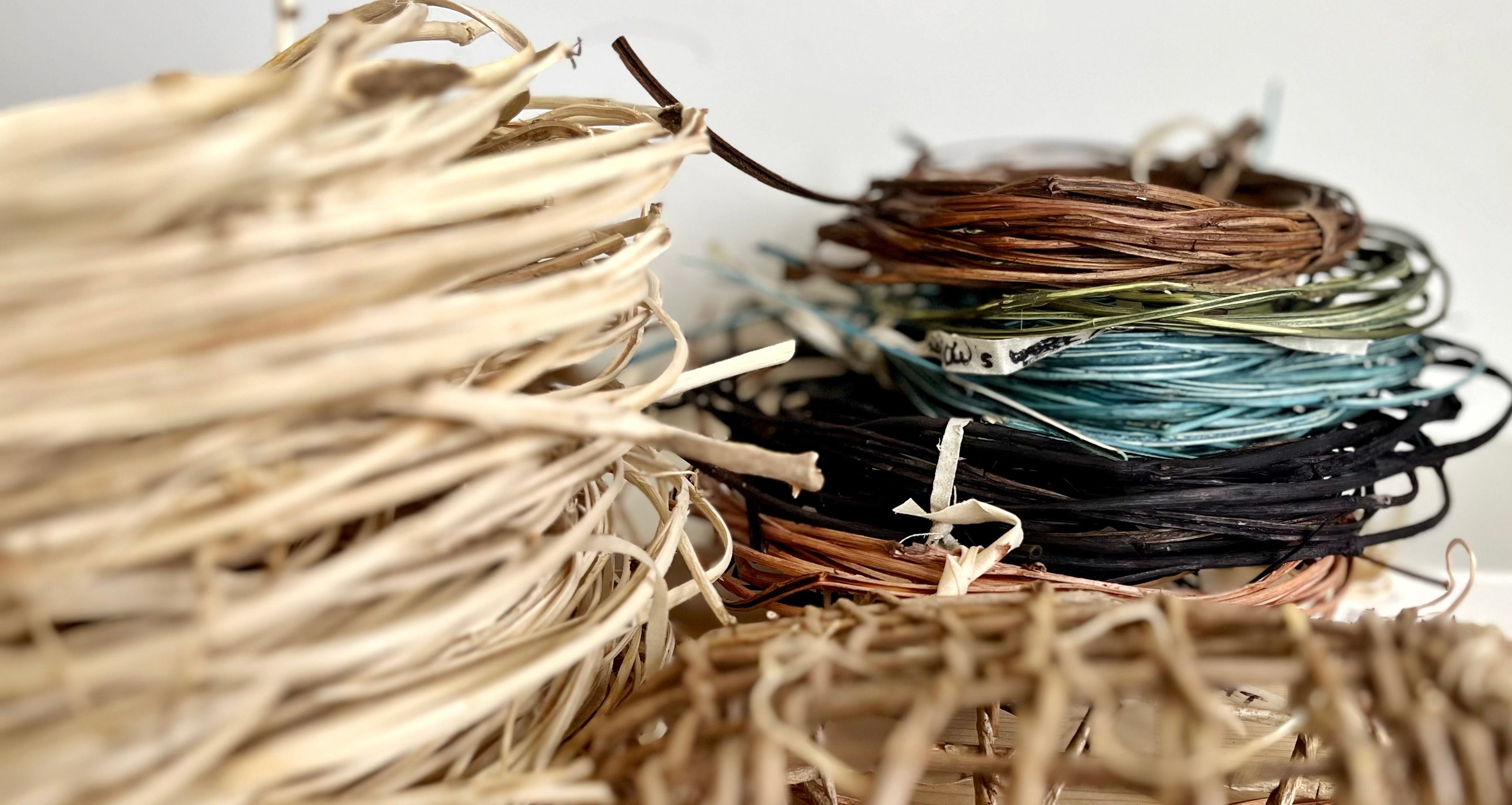
There won’t be any specific weaving project taught in this live session, it’s up to you to decide how to use your newfound Ivy skills. But, if you are interested in learning a simple open weave basket, there will be a another class released around the same time.
The second opportunity will be a pre-recorded class, also to be released around the beginning of September. In addition to the videos, this class will include a live Q&A session in November, 2025. The format allows time for you to try out the lessons on your own, then I’ll be available to answer questions in the follow-up session.
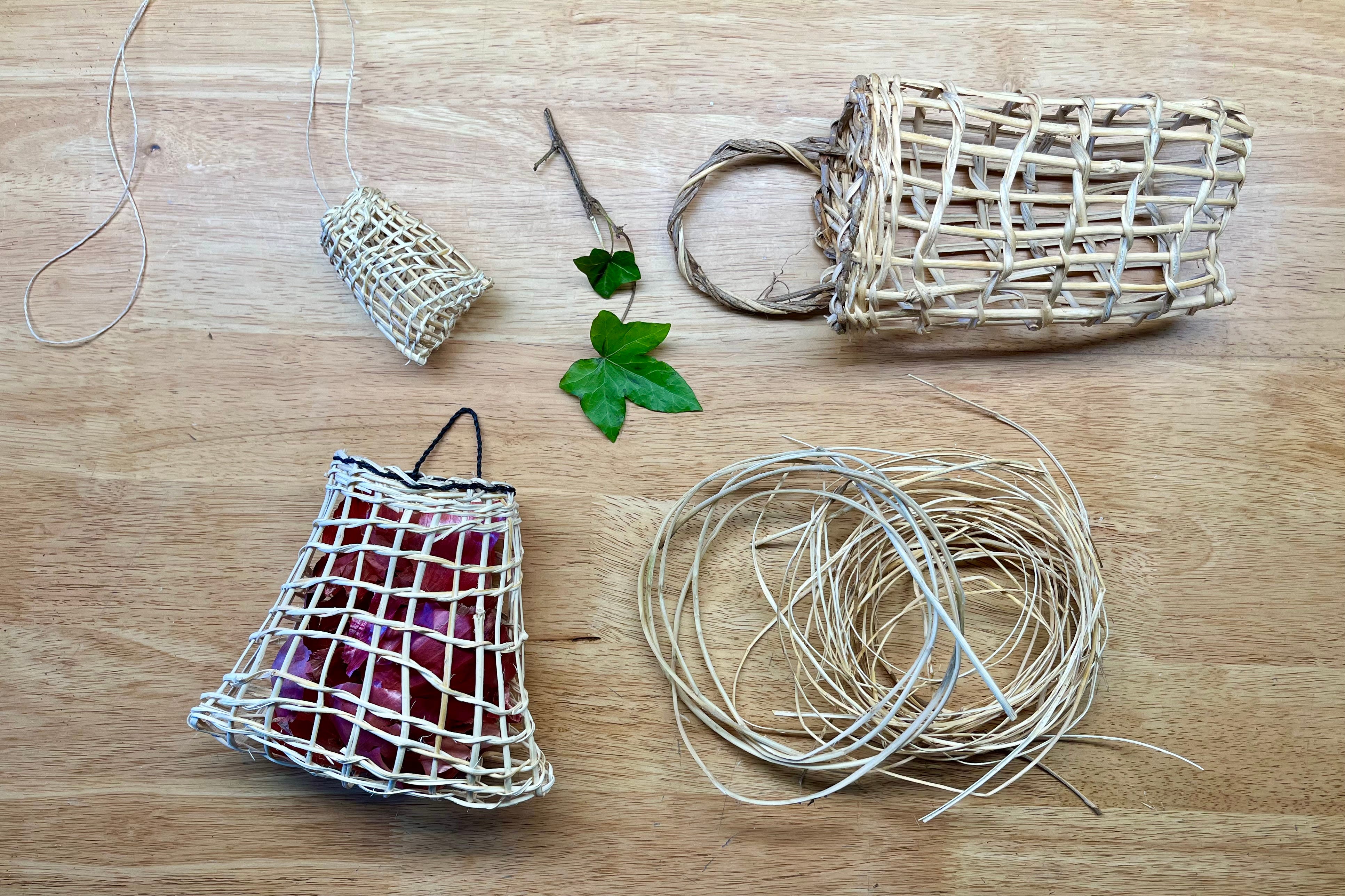
In this class, I’ll teach a simple, open weave basket you can hang on a wall. You can either use your stash of Ivy vines, or I will give details on how to purchase a commercially available alternative to Ivy. I’ll also talk a bit about what other wild vines you can use if you don’t have access to Ivy.
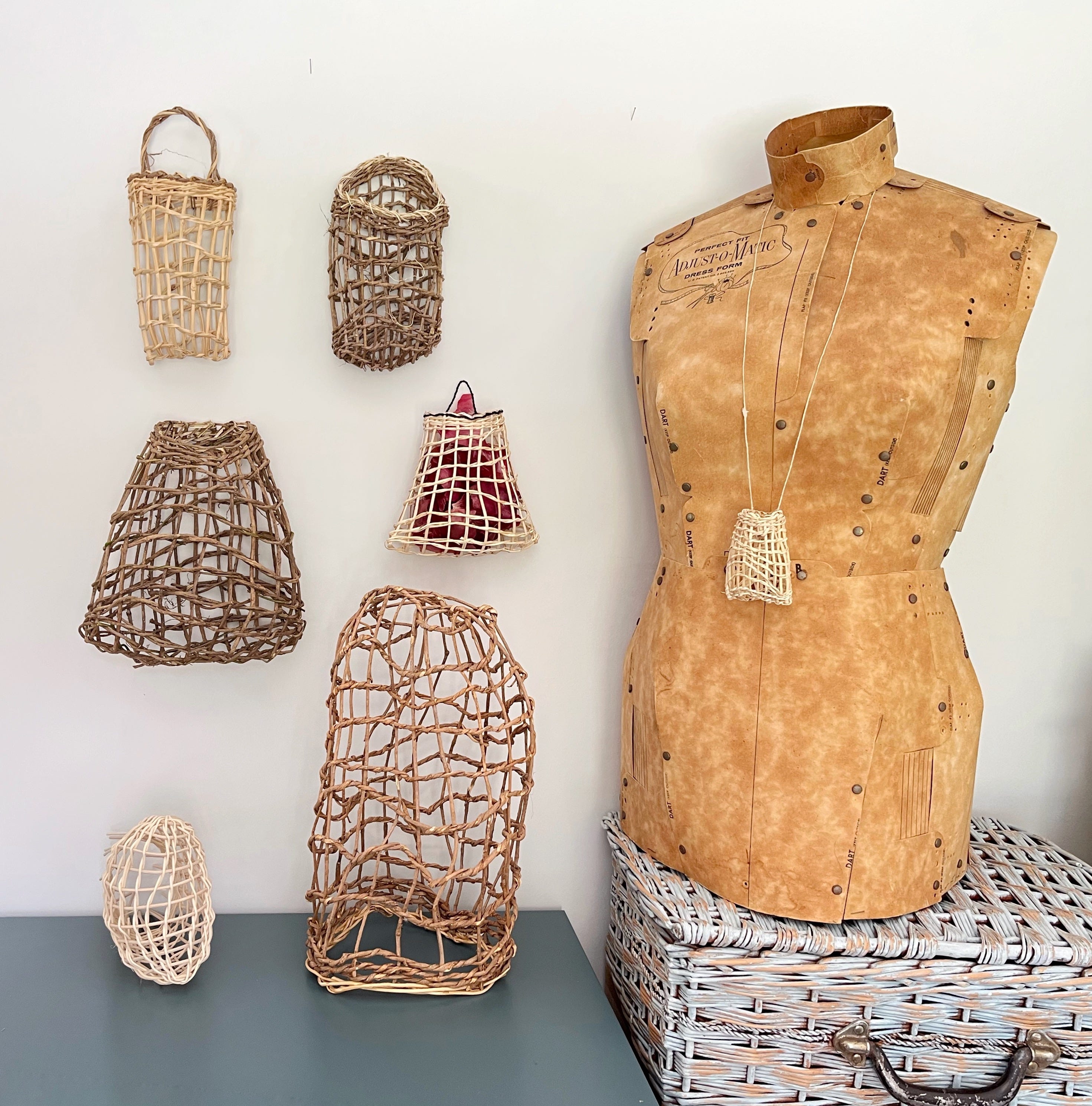
This woven basket was originally shown in the book “Basketry: Projects from Baskets the Grass Slippers” by Hisako Sekijima (1986). If you are not familiar with her work, take a look here. I reached out to Hisako directly and was thrilled when she replied, giving me permission to teach this method from her book! She added:
“I hope you and your students would enjoy making a piece like the sample, as well as learn how to discover a kind of experimental/challenging spirit in you”
I’m taking her prompt as my guiding light for this course, and will be experimenting with different variations of the sample shown in her book, as you can see from the photo above. From the practical—it’s good for holding light-weight items like garlic bulbs—to the purely decorative, this method is simple yet highly adaptable.
I’m dreaming of making several pieces in capsule shapes to hang on a feature wall—as home decor. Whether or not I get that done before the live session in November remains to be seen, but if I do, I’ll certainly add that in as bonus content.
If you have any questions about either session, please don’t hesitate to ask. You can leave a comment here, or shoot me an email.
No posts
Comments
Nothing yet. Say the first thing.
Sign in to join the conversation.