
For the fifth Women in Horror 2026 Women in Horror interview, Tiffany Morris:
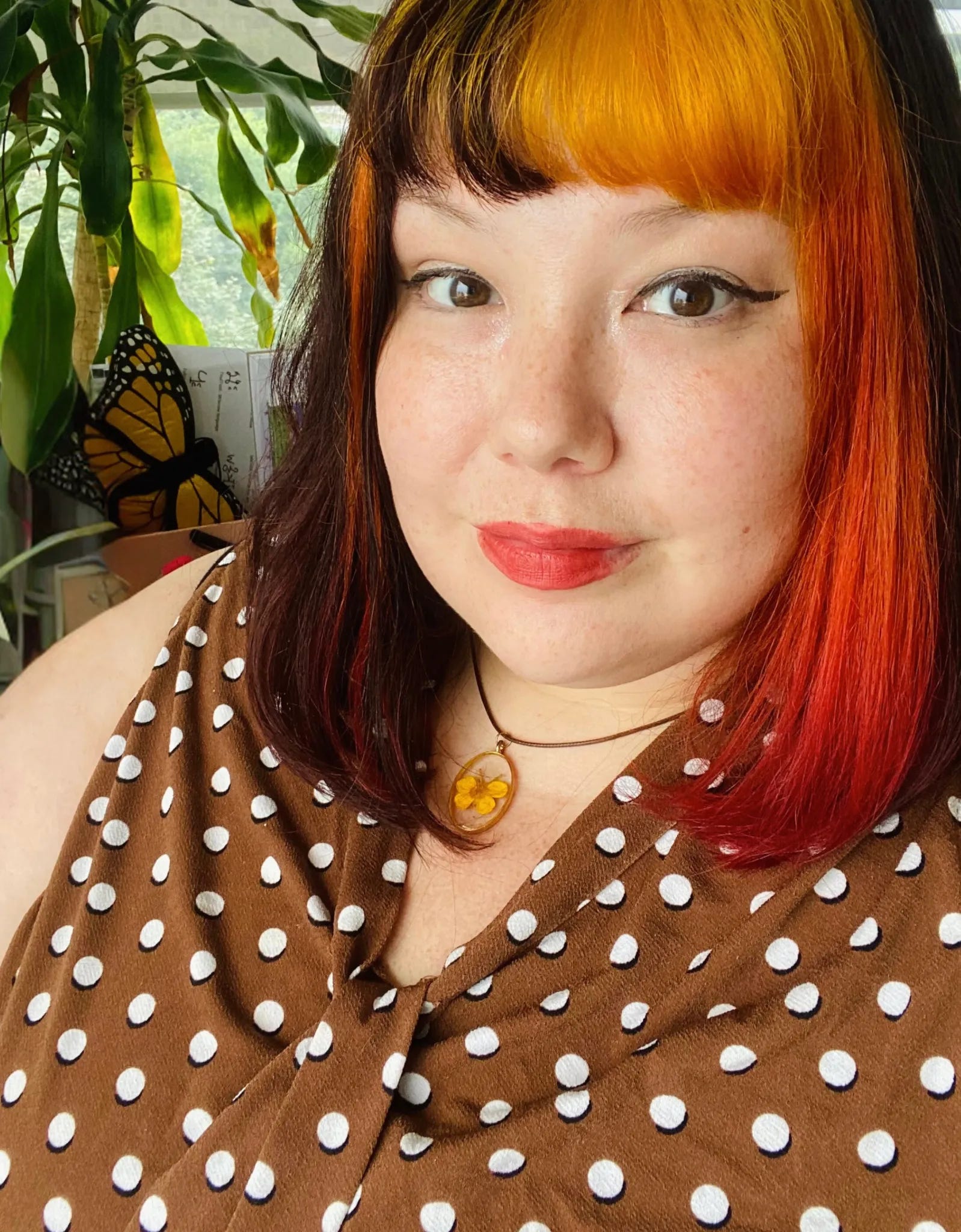
Tiffany Morris is an L’nu’skw (Mi’kmaw) writer from Nova Scotia. She is the author of the Indie Ink Award-winning ecohorror novella Green Fuse Burning, which was also a finalist for the Shirley Jackson, Ignyte, and Indigenous Voices Awards. She also wrote the Elgin Award-winning horror poetry collection Elegies of Rotting Stars. Her work has appeared in the anthology Never Whistle At Night, as well as in Nightmare Magazine, Uncanny Magazine, and Apex Magazine, among others.
Thank you for being interviewed, Tiffany! I was fortunate enough to read an advance copy of your novella Carnalis from Nictitating Books (coming March 23) and then I immediately read 2023’s Green Fuse Burning from Stelliform Press. I really enjoyed both of them!
Thank you so much, Christi! I’m so honoured to speak with you and that you’ve engaged with my work.
Carnalis deals with some intense subject matter in what I would consider a “quiet” or understated way. I am curious what gave you the idea for this book and how you went about writing it.
I was finished with Green Fuse Burning and feeling a little lost after having written something that was somewhat autobiographical. I knew that I wanted to depart from that closeness in my next project, but was feeling directionless. I was looking at the violence in society, witnessing genocide on my social media feed, mired in this sense of helplessness and anger and creative blockage. I think the catalyst to actually write the story came when I was discussing the film Love Lies Bleeding and the Hannibal tv series with my publisher, Sean Malia Thompson. I was inspired by the lesbians-on-the-run, loving-a-cannibal elements of those respective stories, but also knew that I wanted to explore how cannibalism works as a metaphor for capitalism, colonialism, and the horrors enacted on bodies from those systems.
Wealthy party girl Lauren hungers for human flesh. Her girlfriend Alex, a recently injured dancer, is trapped in Lauren's toxic and deadly spiral. The looming threat of capture may prove to be less dangerous than Lauren herself and the lengths she will go to satiate her needs. Will Alex be next on the menu?
Both Carnalis and Green Fuse Burning have some erotic moments between long-term partners, which I thought was refreshing. I guess I am more used to seeing such scenes happen between people who are new to each other. Both books also feature fraught, ambivalent sorts of relationships. I wonder how you approach these relationships and the love scenes.
Thank you! I guess that being an unusual thing hadn’t occurred to me - I shied away from writing erotic scenes in the earliest parts of my career, but think there is a lot of room, in horror especially, to use eroticism to explore how people are embodied, distract themselves with their bodies, and share parts of themselves with others. Long-term relationships also have some rich ground with which to work, because of changing relationships to bodies with time, work, changes in wellness, changes in mindset. It’s a good indicator of a dynamic shift between characters.
It’s also interesting, to me, to write dysfunctional couples because I think that a lot of the messaging we receive in media does not approach romantic love all that realistically or healthily, so it’s helpful to point to something dysfunctional and let it be dysfunctional instead of dressing it up as something else. Plus it adds to the instability that a character feels - something foundational is wrong, there is an unsteadiness built into their daily life. That said, it might be a fun challenge for me to depict a happy, functional couple for once!
“Morris quietly dazzles and disquiets in this weird horror novella … Poetic and grotesque imagery drives the novella’s horror, with fluid narration fostering a sense of disconnect and dread … This is a subtle and refreshing twist on the cabin in the woods trope.” — Publishers Weekly starred review
“A verdant alienation seeps through every page as Morris reimagines the possibilities of decay, a desperate isolation scouring the mind to reveal a torrid, seething strangeness beneath, the inevitable reckoning gathering its strength below the calm surface of the pond.” — Andrew F. Sullivan, author of The Marigold and The Handyman Method
“Lush and innovative. You can tell from the start that you’re in for something different. Green Fuse Burning digs its fingers through fertile layers of ecology, grief, and twin apocalypses to explore transformative death with a beauty both isolating and unsettling.” — Hailey Piper, Bram Stoker Award-winning author of Queen of Teeth
I really enjoyed the prose in both books, which seemed to vary from a relatively straightforward style in some places to a more lyrical, vivid use of language, often in the more emotional parts of the books. What thoughts do you have on prose, and who are some of your influences in that area?
Thank you so much! I am so inspired by the weirdness of Leonora Carrington and the social horror of Shirley Jackson’s writing, so both are major influences for me in terms of what I write and how it is conveyed. As someone who writes both poetry and fiction, I think a lot of the modes of poetry are my first instinct in writing: image and how things are working on a sentence-by-sentence basis. Pacing and rhythm can be interesting challenges, because in poetry there is more constraint, a tighter space to make these things work, and enjambment goes a long way in creating or disrupting how the story of the poem is told. In fiction and prose, the space is much more expansive, so there have to be plot mechanics that create those same impacts. It’s a fun strategy, especially when writing horror, where I get to play with dread and surprise to fill those same functions.
As a painter I notice in both books, but particularly in Green Fuse Burning, art language being used to great effect. I think when a writer uses a paint term, such as Mars Black or Alizarin Crimson, it conveys not only the pigment color but also other qualities that these paints have, such as opacity or translucence, shine or dullness, intensity, etc. Are you a painter? How do you see the connection between your writing and visual art?
I love art, and sometimes paint and do mixed-media collage, but it’s mostly for fun. At one point in my early twenties, I was determined to study art history and become a curator, but a series of events in my life took me off that path. I still occasionally write art reviews for Visual Arts News magazine, have exhibited my work in group shows, and love visiting galleries and museums, so visual art is still a huge part of my life. I’ve written short stories entirely inspired by visual art, and Green Fuse Burning was inspired by a number of artists whose work I love, including Isaac Levitan, Kim Dorland, and Rita Letendre.
I notice that you have an MA in literature–as do I–rather than a creative writing MFA. How do you think this area of study affected your fiction writing?
When I did my BA in English, I thought carefully about whether I wanted to pursue creative writing with it as a double major or honours, but ultimately decided against it - I figured it would be more helpful for me to understand how literature operated from a critical perspective than to split my focus onto craft. I still took a few creative writing workshop classes, and benefitted greatly from them, but I think the literary studies approach had a beneficial result for me because it helped me understand the critical strategies I wanted to use when writing.
In doing my MA, I was really thinking through the idea of apocalypse, and the unique ideas that a decolonial approach and Indigenous epistemologies bring to the collapse of one state and the beginning of another. I think that because of the challenging times we live in, these themes have continued to show up in all of my creative work that I’ve done subsequent to writing my thesis, and probably will continue to show up until conditions improve, if ever.
Where can readers find more of your work?
I’ve done a poor job of keeping up my website, but I’m at tiffanymorris.ca! I have a few stories in the new ecohorror split with Eric Raglin and Corey Farrenkopf called The Writhing Verdant End, and my other novella is Green Fuse Burning from Stelliform Press, my poetry collection is Elegies of Rotting Stars from Nictitating Books. I’m also in anthologies that include Never Whistle At Night, The Off-Season: An Anthology of Coastal New Weird, and Grimm Retold, among others.
From Nictitating Books comes the haunted world of Elgin, Aurora, and Rhysling-nominated poet Tiffany Morris. Witches, demons, and grief stalk a blasted wasteland. Pessimism and hope glimmer in odd constellations. Featuring poems that previously appeared in Nightmare Magazine, Vastarien Literary Journal, and Augur Magazine, Elegies of Rotting Stars is a harrowing journey through the horrors of apocalypse, climate change, and colonialism.
What’s next for you?
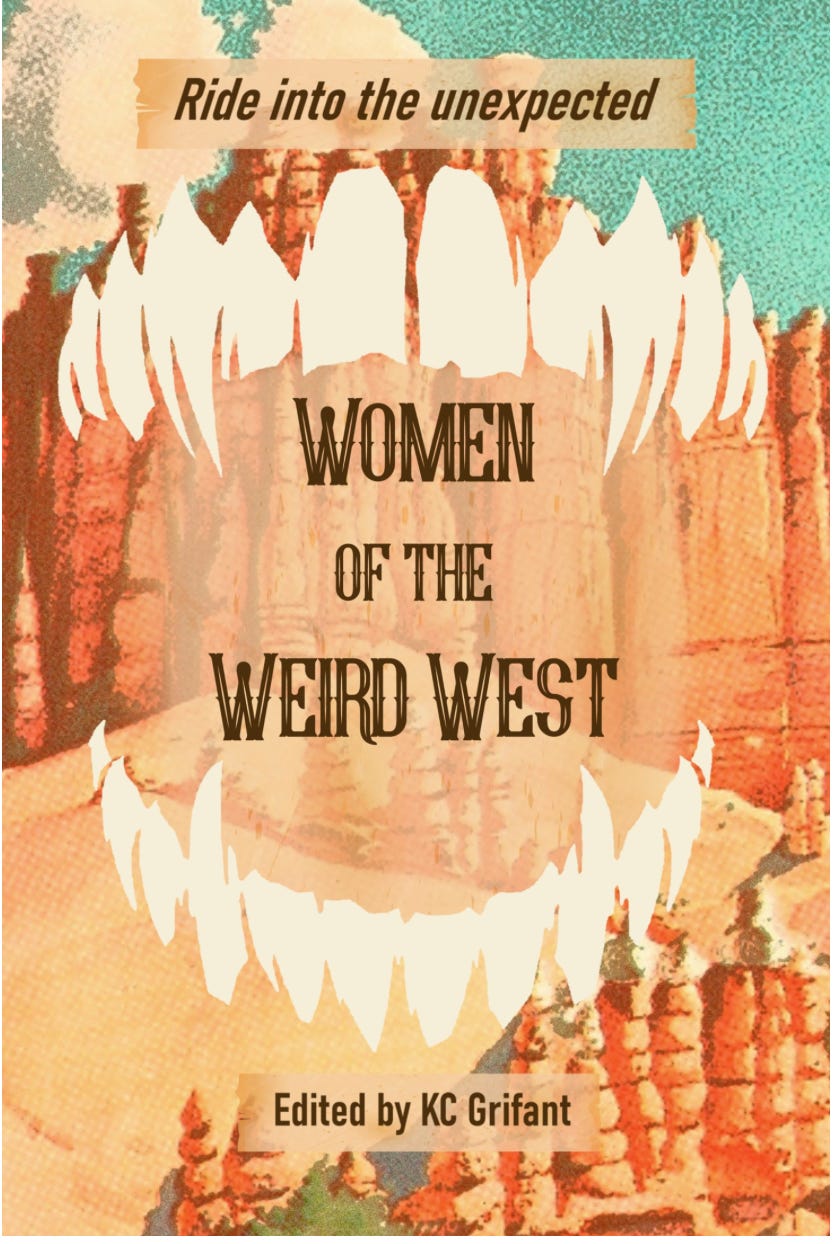
I am so excited to have a poetry book coming out with Augur Press in the next year, and am thrilled to have stories out in some really cool anthologies in the near future, including Women of the Weird West, edited by KC Grifant.
Would you like to recommend some Indigenous writers that people ought to be reading?
I’d love to shout out to some of my fellow L’nu writers: Danica Roache, shalan joudry, and Raymond Sewell! In terms of horror, you can’t go wrong with anyone in the Never Whistle At Night anthologies - I was so honoured to be in the first one, and I’m so excited for the next one to come out.
Who are some other contemporary women in horror you think more people ought to be reading?
Christi Nogle, obviously :) Also Paula D. Ashe, Emma E Murray, Mae Murray, Elliott Gish, Brittni Brinn, Gretchen Felker-Martin, Linda D. Addison, Sara Tantlinger, Stephanie Wytovich, O F Cieri, and if you want a little more weird than horror, Ivy Grimes is one of my favorite writers, period.
Thanks so much for being interviewed, Tiffany!
Wela’lin Christi and wela’lioq to your readers!
Thank YOU so much for reading the Women in Horror series here. There are four other 2026 interviews and six 2025 interviews to read if you’ve missed any!
No posts
Comments
Nothing yet. Say the first thing.
Sign in to join the conversation.