
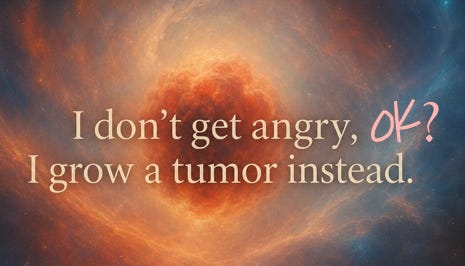
-Manhattan. Directed by Woody Allen, United Artists, 1979
What is your relationship with your own needs? Do you feel you have needs? Or do you fully identify with all your needs? Are you worried about being labeled as needy, and feel internal guilt, shame or fear of being too much?
Are your needs being met and by whom? Do you have the capacity to name them and own them without the emotional grippiness of righteousness or indignation? Can you express your needs with love and compassion from your heart without the projection of your childhood wounds? Or, conversely is the chronic suppression of your needs also suppressing your emotions and in turn violating internal boundaries? Can you actually honor your own needs?
Needs are a fascinating place to explore within yourself. Are you emotionally reactive or emotionally void? What are the emotional layers beneath your needs? Or the emotional layers that keep you from verbalizing them, or even recognizing them altogether? I’m referring to needs that go beyond survival. Assuming the roof over your head and the food you provide.

This connection to needs came up recently with two different clients. Each had a similar but different relationship with their needs. One felt she truly didn’t have any unmet needs, she wasn’t “needy”. The other had no identity attached to the concept as well. It wasn’t on her radar as something to be met or honored within herself.
But something interesting emerged during their work with me. As we liberated various emotional layers within, the concept of their inherent needs began to emerge.
The one client who didn’t feel she had any unmet needs, realized that she spent a considerable amount of energy meeting the needs of others. In fact, her most satisfying way of meeting needs was meeting the needs of others. In this recognition was a deeper layer of knowing that arose within her. By creating an identity fulfilled by meeting everyone else’s needs, she was bypassing and denying her own. And in bypassing her needs, she was also suppressing her own emotions and thus had difficulty in exerting personal boundaries.
The other client who had no connection with the concept of internal needs, felt she satisfied all her needs currently. Had a good job, good partner, all her needs were cared for. However, beneath the surface of her identity of not needing anything, another layer of her truth was beginning to emerge.
Having created a beautiful identity she was very attached to, that of living inside her mind, from her head, she was actually suppressing and bypassing her own needs. In fact, as we worked through her emotional layers, it became clear to her that the bypass began in childhood. By not having her needs met as a child, she retreated to her mind. And in so doing, she learned to abandon her needs in the exact same way her needs were abandoned as a child. And in so doing, also became very sensitive to others, either keeping a distance from overly emotional people, or being personally emotionally triggered by them.
By only reacting to what was mirrored to them by others, both clients realized they didn’t have a true ownership of their own needs. One wanting to caretake others to the exclusion of herself and one avoiding to the exclusion of herself. The part of themselves that has needs. The part that can voice emotion and create boundaries. And in not recognizing or owning this aspect of themselves, by suppressing their needs, this actually began to function in their shadows.
How is this relevant in the work I do with people on their healing path? Gabor Mate has explored this concept in depth. By recognizing in his work with others, how in suppression of needs and emotion, people pleasing or lacking internal boundaries, the suppression of healthy and fully necessary anger and other emotion leads to illness.
“In over two decades of family medicine, including seven years of palliative care work, I was struck by how consistently the lives of people with chronic illness are characterized by emotional shut down: the paralysis of “negative” emotions–in particular, the feeling and expression of anger. This pattern held true in a wide range of diseases from cancer, rheumatoid arthritis and multiple sclerosis to inflammatory bowel disorder, chronic fatigue syndrome and amyotrophic lateral sclerosis (ALS)....People seemed incapable of considering their own emotional needs and were driven by a compulsive sense of responsibility for the needs of others. They all had difficulty saying no.” - Gabor Mate, The Healing Force Within
This is an example of how unfelt and unseen emotions from our childhood transform into a story. This story in their case of either always caring for others to bypass caring for themselves, or their inability to name their own needs, or the story of need denial altogether began to be a primary way in which they abandoned themselves.
Often, in these common scenarios, they arise as a protective mechanism learned in childhood. At the root of this disconnection from needs is the emotion of fear. Fear of being too much. Fear of not having your needs met by your caregiver. Fear of being rejected. Fear of being judged. And so, in our childhood we learn to suppress this aspect of our beingness, and create a story that supports this disconnection.
And, a byproduct of that results in losing our voice, our power, our autonomy. Denying what our body and inner instinct wants us to know. Bypassing our inner self as unimportant, not worthy of being met. And then, in that process, we never say the things we wanted to say when we were young and learned to suppress our needs. That’s how we are conditioned to lose our voice.
Adding to all those intricate emotional and energetic dynamics that are elegantly intertwined like the mycelial network of our deepest self is the suppression of emotion. Our feeling of sadness at not being heard. Our feeling of outrage at the thing that wasn’t seen. Our feeling of betrayal, of being overlooked. Our feeling of fear not being met. Our feeling of shame for actually needing something. Our fear of rejection.

But slowly, over a lifetime of this suppression and denial, denying our bodies truth, our intuition, denying our voice, unmet needs leak out in other ways. The aches and pains, the diagnosis, the bodily symptoms we either rush to “fix” believing our body is failing us, the way symptoms slowly turn to self-hatred, or self-disgust. It shows in the way we relate to others who we judge for their endless neediness. The way we protect ourselves, the way we become overly attached and righteous about the needs we stand resolutely behind.
So, how do we come into right-relationship with our needs as it relates to this process of alignment and restoring our nervous system?
First, is the allowing. Within my container there is the safety to actually feel and give voice to all the suppressed emotional needs that live in our system, inhibiting the flow of life force. Actually liberating those held emotions into the world and reclaiming your voice. Being held in a safe place to give voice to those emotions and memories.
It is interesting to witness how taboo this actually feels. To name your needs. To give voice to childhood moments of abandonment. We are so conditioned to say we “forgive” our parents or caregivers. Intellectually, we know they did the best they could. We’re adults now, we went to therapy, we get it. We forgive them. But forgiveness in our culture is a mere bandaid placed over the pain. True forgiveness is being free and clear of all held emotions within our memory banks, that inhibited our inability to name our needs.
And, having a safe place to name this, liberate this, give voice to this. Without guilt or shame to speak out against our childhood indignities and traumas. To learn that both can be true. We can both have been hurt and feel that hurt, while also loving our caregivers.
And so, in the gentle, slow process of giving voice, owning and honoring these hidden parts of ourselves, we begin to have allowance for the needs of others. We begin to have a clear relationship with our own needs and be able to voice them with confidence, with love for ourselves. Because we learn to love ourselves so much, we won’t allow our needs to be disregarded by others, because we don’t disregard them ourselves.
When that begins to happen, freedom takes the place of all the held emotions within us. Trust in our truth, trust in what our body has been trying to tell us all along. We can begin to care for ourselves from a different place. From a place of self-respect. Not self abandonment or self-denial.
And this is healing. To liberate these old painful emotions held in our system. And in its place, self love begins to fill the void.
This is what happens when we begin to truly meet ourselves. Our depths. Our deepest selves. Then, your nervous system exhales. So grateful to not have to carry that anymore. It begins to breathe and respond to life in its own elegant and intelligent way, supporting us through life.
What is your relationship with needs having reflected on this transmission? How are unseen, unfelt needs and the emotional bonds that hold them tightly within your system affecting your health and quality of life? Is there a part of you aching to be seen and validated? Can you envision the felt sense of freedom that comes after this process? Can you feel the liberation that arises within by not carrying all that anymore? Can you feel how much more deeply you breathe?
Your nervous system already knows what it needs. Spots are limited and I’m selective about who I work with… not to be exclusive, but because this work asks a lot of both of us. If you’re ready for that, let’s talk. The link to connect with me and begin your journey is below.
With love,
Christine
Comments
Nothing yet. Say the first thing.
Sign in to join the conversation.