

I am frustrated by a results-driven obsession and by an all-too-familiar trend in celebrating historical figures who were “ahead of their time.” In this post, I want to defend processes and argue why it is better to be wrong for the right reasons than right for the wrong reasons.
We are ever more obsessed with results and quantification—the pursuit of likes, interactions, views, shares, and more. We should pay more attention to processes because, unlike single outcomes, they are more likely to produce better results over a series of events, even if they produce worse results in a few individual instances. Good processes, like good reasons, tend to be transparent and reproducible, reliant on the best available evidence, technology, and methodology.
We will all be wrong about something. I am not trying to be humble; I am expressing a commitment to process and epistemic principles. How we learn and think is more important than what we know and think.
Discipline histories tend to be annoyingly progressive and rightly criticised by historians. These stories often leave out much, ignore the context in which changes occurred, and present a linear series of events leading to the present.
Historians are often critical of other academic fields and their histories. These criticisms, I think, are mostly well-founded as disciplines tend to portray their past as a series of progressive steps, each building on the previous one to reach the present. When we take a serious look at the past, this is rarely the case. Often, there are setbacks, heterogeneous views, and a series of academic camps. If one opens a biology textbook, for example, one can read about the steps towards cell theory or the discovery of DNA. You will not read about all the missteps and disagreements. You may read about so-called crucial experiments that allegedly definitely answered questions. Science, like life, is a lot messier. These narratives create a false impression of how these disciplines produce knowledge. An impression that suggests a consistent method is used responsibly.
One remarkable thing we learn from the history of science is that, on occasion, those who explored the mysteries of the world appear to be right for the wrong reasons.
John Waller, a historian of science, wrote Einstein’s Luck, a book in which he provides examples of scientists fudging their data and engaging in other kinds of malpractice, yet still being right, *Right, of course, from our current understanding of the world. I think science is the best tool to figure out how the world works, and some theories, ideas, and experiments are better than others. However, science is still made by humans, and we are limited in our ability to know.1
The scientist who discovered the electron’s charge through an oil-drop experiment appears to have deliberately excluded some data from his publications.
Historians have shown that Robert Andrews Millikan, Nobel Prize Laureate 1923, ran more trials than his publications suggested. He appears to have systematically ignored data which did not support his preferred result. He labelled some of these as “very low–won’t use.” One of his competitors, Felix Ehrenhaft, claimed a lower value, in part because he was working more transparently. In this case, it seems that Millikan’s theoretical commitments to a certain value helped him arrive at the right answer, even if his process was dishonest. This is malpractice regardless of whether he had some defensible reasons to discard those data points. What adds to our worry is that had he been more transparent, then Millikan would have arrived at the wrong result!
The point is not that better processes guarantee success in every single instance, but that they are more likely to produce better answers across a series of instances. We must accept that in some instances it will lead us astray.
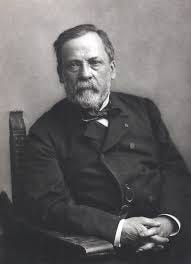
The origins of germ theory can also be said to be tainted. Louis Pasteur, who is famous for pasteurisation, a fundamental principle of food safety, seems to have misbehaved as well.
In 1971, his laboratory notebooks were made public for the first time. These notebooks revealed that his famous vaccine demonstration of 1881 (at Pouilly-le-Fort) used a different vaccine than the one he publicly claimed. Pasteur challenged his critics and proposed an experiment to settle their dispute.
In this experiment, they would inject live anthrax into twenty-five vaccinated sheep and twenty-five unvaccinated sheep. The unvaccinated ones died, whereas all the other ones survived. Pasteur had publicly said that he developed the vaccine using his oxygen-attenuation method, but his notebooks reveal that he employed a chemical method developed by a rival. Pasteur also suppressed negative results, plagiarised a rival’s methods, and misrepresented his work. Despite these ethical breaches and intellectual dishonesty, he concluded that vaccinations work. A conclusion supported by modern science.
In another stunning yet controversial case, Albert Einstein’s theory of relativity was dramatically confirmed by an experiment that measured the deflection of starlight around the Sun. While historians disagree on this one, some have argued that Arthur Eddington’s 1919 solar expedition is another example of scientific malpractice. Eddington is said to have used two sites to collect three sets of photographic plates. One set was unusable due to the weather. The other two contradicted each other. Eddington is said to have discarded the plates that supported Newtonian physics and to have published the ones that supported Einstein’s relativity.

These are three examples where scientists obtained the correct results through misbehaviour. In these cases, these individuals got the right answer despite not following the best processes. This does happen. There are thousands of cases in which such behaviour produces wrong, and on occasion harmful, answers.
One of the most renowned physicists of all time got the age of the Earth terribly wrong.
Between 1862 and 1897, Lord Kelvin used heat-flow calculations to estimate how much time it would take for the Earth to cool to its observed thermal gradient. He assumed the Earth began molten. His maths were clean. His work was rigorous and drew on the best available thermodynamic theory. Kelvin concluded the Earth was between 20 and 100 million years old.
Some geologists and evolutionists were concerned because this did not leave them enough time to account for the phenomena they were meant to explain within their theories. Charles Darwin was concerned about this issue and corresponded with several of his collaborators about it.
Kelvin was honest and used the best available science, and reached the wrong conclusions. You see, radiation had not yet been discovered. Thus, he could not have known that radioactive decay provides heat and thus undermines one of his core assumptions (a constant rate of cooling). Scientists now think that the Earth is 4.5 billion years old.
Can we really blame Kelvin? He was transparent and used the best tools available at the time. The very best people, doing the best they can with the best available methods, often still fail.
Imagine a coin toss competition among thousands of participants. In each round, an individual plays against another person – one predicts heads and the other predicts tails. The winner progresses to the next round. After 100 rounds, there will be a person who has correctly predicted a coin toss a hundred times! Did the winner see the future?

We should not find it surprising that some individual, let’s call him Steve, won such a competition. Steve successfully guessed the outcome of a hundred successive coin tosses.
We forget that the competition’s design means the winner will have made those successive successful guesses. Thus, the fact that Steve won tells us very little about him or his intellectual prowess. It does not tell us that Steve can see the future or predict the outcome of future coin tosses.
Individuals who can predict crises, the outcome of elections, or which stocks to buy are hailed as heroes or some kind of savants. However, we know that if stock Y, rather than stock X, had experienced tremendous gains, we would celebrate person A rather than person B. Sometimes one just gets lucky. Steve’s victory is unremarkable.
These brief discussions have shown that people, like those misbehaving naturalists/scientists, can be “right” for the wrong reasons. That others, like Kelvin, can be “wrong” for the right reasons. There are also cases where one can be wrong for the wrong reasons, and of course, you can be right for the right reasons.
Getting the process right seems important. I weary of using the method because it seems more prescribed than process, and historians have shown there is no such thing as a scientific method. I’m defending a commitment to an unstable, problematic process. The best we can, for as long as we can, is no guarantee, but it is preferable to the alternative.
We should extend such courtesy to our ancestors unless we have evidence to call their motives into question. I have elsewhere argued that well-intentioned, well-informed individuals advocated for procedures, like lobotomy, which ended up causing harm.
Several historians have demonstrated that Walter Freeman, the most ardent proponent of lobotomy in the USA, was well-respected (though contentious) in his field. Lobotomies were widely embraced and gained lots of popularity. As a result, thousands of people, including children, were lobotomised. Well-intentioned practitioners, working within the accepted standards of their field, can still cause tremendous harm.
Sometimes, all we can hope for is to make a decision based on the information we had at the time. The future is uncertain, and even when decisions have disastrous outcomes, we should consider whether they were made through the right processes. Such adverse consequences should not surprise us, but they should be taken as invitations for process refinement.
Science is not fallible. Humans do science and bring a lot of what they think into their work. This is inevitable. However, it does not mean science is as good as other knowledge systems.
No posts
Comments
Nothing yet. Say the first thing.
Sign in to join the conversation.