
In today's lesson, we will look at a people declared extinct while survivors were still alive and hiding in the canyons of Northern California. What happens when a reasonable conclusion based on real evidence hardens into an absolute verdict about reality? And what does Scripture say about the difference between what we can see and what we are sure we know?
Butchers at a slaughterhouse outside Oroville, California, found him crouching against a fence in the early morning hours of August 29, 1911. He was barefoot and emaciated, wearing a ragged canvas poncho, and his hair had been burned unusually short. He spoke no English, and no one there knew who he was, where he had come from, or even what language he spoke. The newspapers would call him “the last wild Indian.”
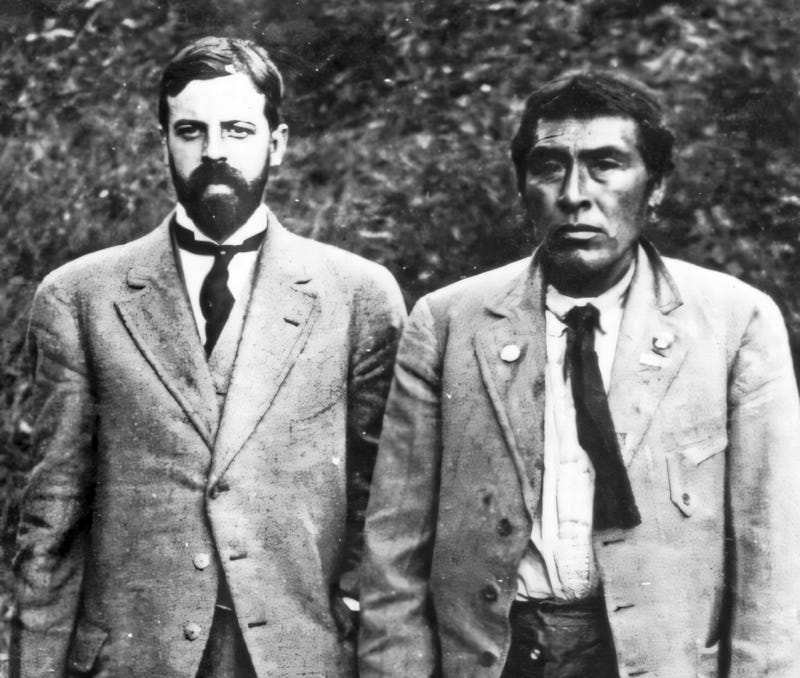
The Butte County sheriff locked the mysterious man in the county jail for safekeeping. Within days, word reached two anthropologists from the University of California, Alfred Kroeber and Thomas Waterman. The location gave them a clue. The university’s anthropology department had long been interested in the Yahi, a small Native group from the Deer Creek country believed to have nearly disappeared. Waterman traveled to Oroville to investigate.
There was no Yahi vocabulary for Waterman to take with him, but the Yahi were the southernmost group of the larger Yana people. So he brought lists of words from other Yana dialects and began trying them. At first, he got nowhere. Then he pointed to the pine frame of the jail cot and tried the Yana word for yellow pine. The man recognized it and repeated the word, correcting Waterman’s pronunciation. They finally had something they both understood.
More words followed, and Waterman realized what he had found. The mysterious man was indeed Yahi. Estimates of the Yana population before white settlement vary from roughly 1,500 to 3,000. The Yahi probably numbered only a few hundred.
The violence that nearly destroyed the Yahi began in the 1850s. White settlers, miners, and ranchers flooded Northern California after the discovery of gold at Sutter’s Mill in 1848. Their homeland, a stretch of volcanic canyons along Mill Creek and Deer Creek near Mount Lassen, offered some natural protection, but settler-organized killing parties targeted Yahi camps repeatedly through the 1860s and into the 1870s. Entire camps were destroyed in single raids, and survivors scattered into smaller groups. By the mid-1870s, most Californians believed the Yahi were extinct.
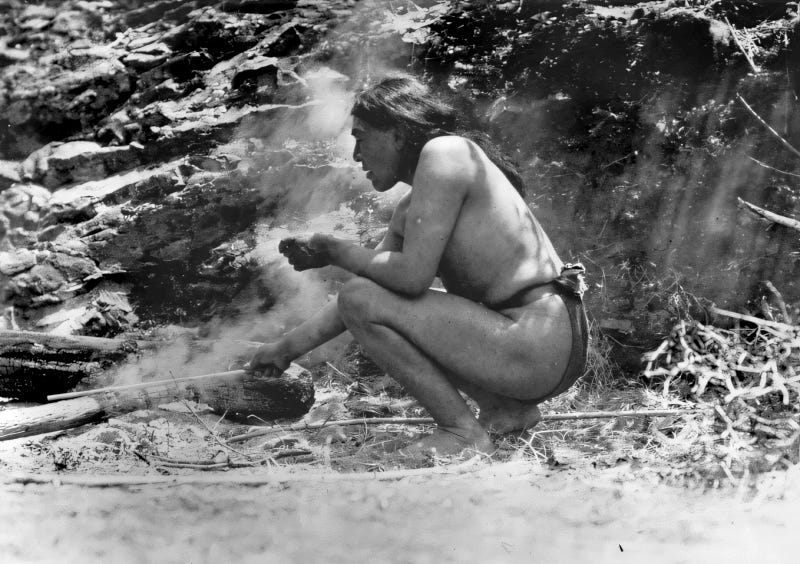
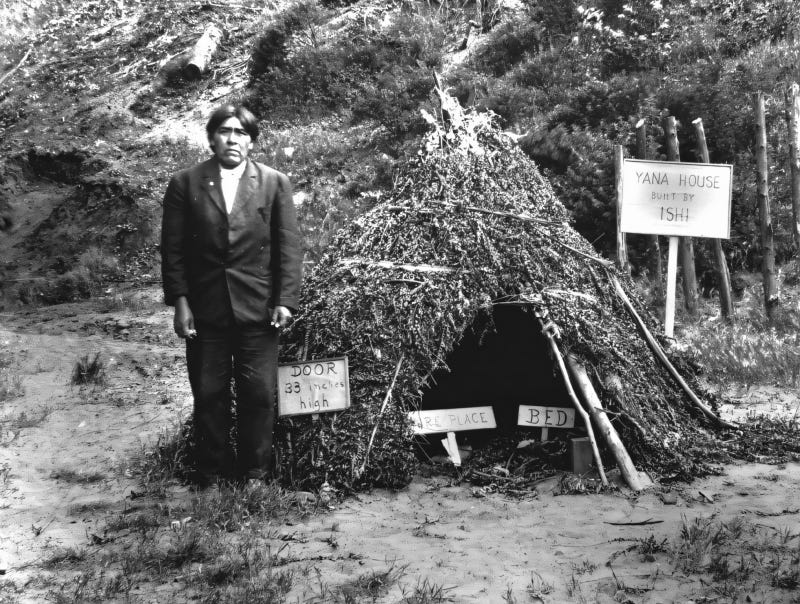
A handful had survived. By the 1870s, probably fewer than a dozen remained. They retreated deeper into the canyons and lived in concealment for more than 30 years. They built shelters hidden beneath rock and heavy brush, avoided leaving visible trails, and kept their fires small so the smoke would disappear into the surrounding vegetation. Nearby ranchers occasionally found unfamiliar tools or noticed missing food but rarely saw the people responsible.
By the early 1900s, this hidden remnant had dwindled to four. In November 1908, surveyors working along Deer Creek stumbled onto their camp. An elderly man and a middle-aged woman fled over a rocky ledge, while the surveyors found an elderly, partially paralyzed woman hidden beneath blankets. The fourth member of the group, the man now sitting in the Oroville jail, had been nearby but was not seen. The surveyors took bows, arrows, skin blankets, baskets, and other possessions. When they returned the next day, the old woman was gone.
The fourth survivor never saw the man and woman who fled the camp again, and the elderly woman, believed to have been his mother, is thought to have died not long afterward. Their exact fates are unknown. For nearly three more years, he remained hidden in the canyons, surviving alone where his people had once lived together. By August 1911, he was starving and close to physical collapse. He was approximately 50 years old when he finally walked out of the wilderness.
Waterman brought him to San Francisco, where he lived at the university’s Museum of Anthropology in Parnassus Heights. Kroeber gave him the name “Ishi,” the Yana word for “man.” His actual name was never recorded. Following custom, he would not speak his own name to strangers without being formally introduced by another member of his people, and no one remained who could make that introduction.
The change in Ishi’s life was extraordinary. Within days of being found starving outside Oroville, he had gone from decades of concealment in the Northern California wilderness to life in San Francisco, where newspapers made him a public curiosity and museum visitors came to see him. At the museum, he became both a research subject and, in practice, a member of the staff, working as a custodian and research assistant.
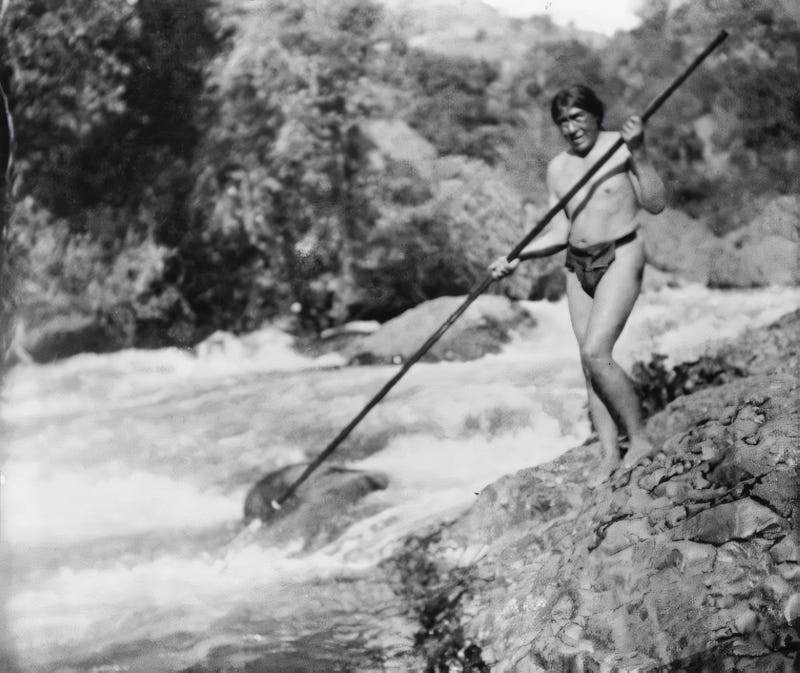
He demonstrated toolmaking, hunting techniques, and fire-starting, and the anthropologists were astonished by his precision in shaping stone and glass arrowheads. He recorded songs, stories, and vocabulary for the university’s growing archive of Yana linguistic material. His relationships with several staff members grew warmer over time. The physician Saxton Pope learned archery from him, and the two later hunted deer together during a 1914 expedition back to Deer Creek.
Ishi suffered recurrent respiratory illnesses after arriving in San Francisco, but early tests for tuberculosis were negative. Despite that, doctors diagnosed him with tuberculosis in early 1915. His condition worsened, and on March 25, 1916, less than five years after he walked out of the wilderness, he died at the University of California hospital from advanced pulmonary tuberculosis. He was roughly 54.
Kroeber, who was in New York at the time, wrote to colleagues insisting that Ishi’s body not be subjected to an autopsy. The cause of death was already known, and Kroeber wanted his friend’s remains left intact rather than subjected to further scientific study. His letter arrived too late. An autopsy was performed, and Ishi’s brain was removed and preserved. His body was cremated with one of his bows, arrows, acorn meal, shell money, tobacco, and other possessions. In 1917, his brain was sent to the Smithsonian Institution, where it remained for more than 80 years.
In 2000, after years of advocacy by Native American groups and Yana descendants, the Smithsonian repatriated Ishi’s brain under the National Museum of the American Indian Act. His brain was reunited with his cremated remains, and both were returned to the Redding Rancheria and Pit River Tribe. The tribes reinterred them at an undisclosed location in his homeland. Nearly 90 years after Ishi had walked out of those canyons alone, he was finally returned to them.
By 1911, the American frontier had been officially closed for two decades. The 1890 census declared that no continuous line of unsettled territory remained, and westward expansion had given way to consolidation. Federal Indian policy centered on forced assimilation. The Dawes Act of 1887 had broken up communal tribal lands into individual allotments, and government-run boarding schools worked to strip Native children of their languages and customs. In California, the destruction of Native peoples had been especially severe. The state legislature funded militia campaigns against Native groups in the 1850s and 1860s, and California’s Native population, estimated at roughly 150,000 before the Gold Rush, had fallen below 20,000 by 1900. The prevailing assumption across much of the country was that Native peoples and their cultures were disappearing.
That assumption shaped the era’s intellectual life. American anthropology was still a young discipline, and university departments were racing to document Native languages, tools, and customs before their sources disappeared, a practice later called “salvage ethnography.” Alfred Kroeber’s mentor, Franz Boas at Columbia, had helped establish modern cultural anthropology in the 1890s, and museums across the country were building ethnographic collections at an urgent pace. Public interest in Native peoples was widespread but filtered through spectacle and curiosity. World’s fairs and exhibitions routinely displayed living Native people alongside artifacts, and newspapers treated encounters with unfamiliar Native individuals as front-page sensations.
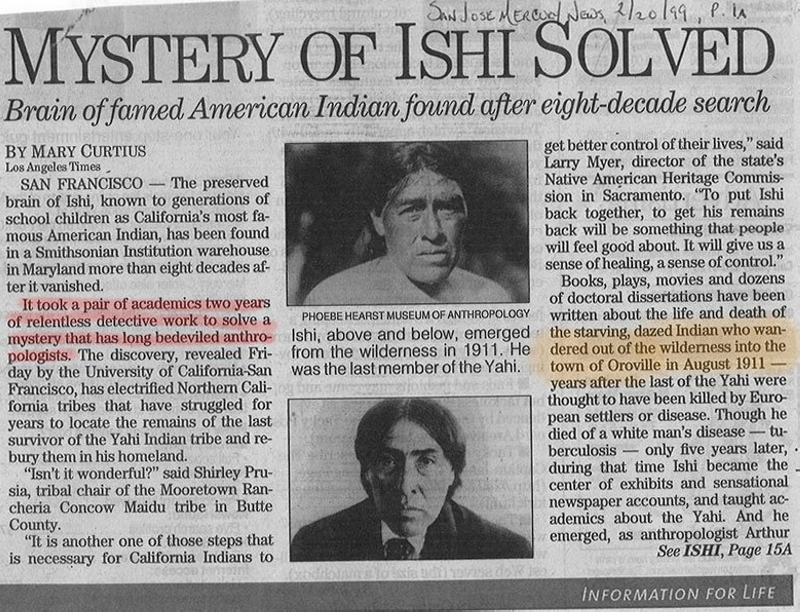
By the mid-1870s, most Californians were sure the Yahi were gone. Years of violence had reduced them to a handful, encounters had all but stopped, and no one could point to a surviving community anywhere in the canyons. Everything people could see seemed to point in the same direction. The conclusion looked settled. It was also wrong.
The few Yahi who remained had survived by becoming almost impossible to find. They hid their shelters, moved carefully through the canyons, and kept their fires low enough to escape notice. Survival depended on leaving as little evidence of themselves as possible. So the longer they succeeded at staying alive, the more convincing their disappearance became to everyone outside.
The people who concluded that the Yahi were gone weren’t lazy or careless. They were working with the evidence they had. What they couldn’t know was how much of the picture they were missing. A reasonable conclusion based on a partial view eventually became a conclusion about the whole reality.
“To answer before listening— that is folly and shame.” Proverbs 18:13, (NIV)
We usually read that proverb as advice about conversation, a warning against answering before the other person has finished speaking. But the same mistake can happen in other ways. We can reach a conclusion before the matter has fully come out, especially when everything we can see seems to support it.
We do that more often than we’d like to admit. We watch a marriage stay bitter and distant despite years of attempts to repair it, and eventually we decide nothing is going to change. Someone we care about shows no interest in God and brushes off every spiritual conversation, and we begin to think there is no point bringing it up anymore. We watch a person, a family, or even a church keep moving in the wrong direction, and after a while we stop thinking of that as what the evidence presently shows and start treating it as where the story is bound to end.
Often enough, we’re not misreading what is in front of us. The marriage really may be in serious trouble. The person may genuinely have no interest in God right now. The church may be moving in a bad direction. The problem comes when the sentence in our minds shifts, almost without our noticing, from this is what the evidence seems to show right now to this is simply how things are going to be. The first describes what we can see. The second claims to know something we don’t.
That change matters because our conclusions begin to shape what we do. We may stop praying with the same expectation. We may stop looking for an opening to have the conversation again. We may begin treating someone as though the person he is today is the person he will always be. A conclusion about what we can see becomes a conclusion about what is still possible.
“In a lawsuit the first to speak seems right, until someone comes forward and cross-examines.” Proverbs 18:17, (NIV)
That proverb adds something important. Sometimes the problem isn’t that the evidence in front of us is weak. It may fit together perfectly well. The first side in a case can sound completely convincing until something else comes to light. In the same way, the facts we have about a person or situation may support the conclusion we’ve reached. We still have to remember that there may be facts we don’t have.
That doesn’t mean something good is secretly happening beneath every discouraging situation. We can go too far in that direction too, convincing ourselves that because we can’t see everything, something hopeful must be happening underneath. The Yahi story gives us no reason to assume that. It simply reminds us that what we can’t see shouldn’t be used as proof that nothing else is there.
A person may begin to change before anyone around him can see it. Repentance may begin before there is much outward evidence of it. Someone who has brushed off every conversation about God may one day start asking questions he has never asked before. We don’t know that any of those things are happening in a particular situation. We only know that our inability to see them doesn’t prove they aren’t.
What we need, then, is some humility about how much we can actually know from what is in front of us. That doesn’t mean refusing to make judgments. Scripture gives us plenty of reasons to reach firm conclusions where God has spoken clearly. But when He hasn’t, and part of the situation is still hidden from us, we should be careful about claiming more than we know. God sees what we don’t, and remembering that should affect how quickly we decide that someone’s story has already been written.
The Yahi were declared extinct while their fires were still burning. People had good reasons for believing they were gone. They just couldn’t see everything. There are times when the same is true for us, and wisdom requires us to remember the difference between what we can see now and what we actually know about how the story will end.
This work is only made possible through generous reader support. If you’ve found this article educational or meaningful, or benefited from my work, I invite you to prayerfully consider making a contribution or upgrading your membership.
This week, identify one situation in your life where you have already reached a settled conclusion about a person, a relationship, or a circumstance you cannot fully see. Write down two things: what the evidence actually shows, and the conclusion you have drawn from it. Then ask yourself honestly whether your conclusion claims more than the evidence can support. If it does, do not reverse the conclusion. Simply hold it more carefully, and begin praying with the honest admission that God may see realities in that situation that remain invisible to you.
Closing Prayer
Heavenly Father, we praise You as the One who sees every reality beyond our sight and knows what we cannot know. Forgive us for the times we have allowed partial knowledge to become confident pronouncements, mistaking the limits of our perception for the limits of what is real. Teach us to hold our judgments with honesty and humility, to take evidence seriously without giving it an authority that belongs only to You. Grant us the patience to leave room in our conclusions for what we cannot yet see. Guard us from the quiet arrogance of certainty that has outrun our knowledge, and give us the wisdom to recognize the difference between what we observe and what we declare. In Jesus' name we pray. Amen.
Wisdom is not simply the ability to draw conclusions from evidence. It is the ability to know where the evidence ends and the conclusion begins. We live in a world that rewards certainty and treats hesitation as weakness, but Scripture consistently reminds us that human sight has limits and that God alone possesses the complete picture. Our confidence is rightly placed in Him, not in the completeness of our own perception. The most dangerous judgments we make may not be the ones we get wrong through carelessness. They may be the ones we get wrong through confidence, because the evidence we had seemed so clear that we stopped asking what remained beyond it. Faithful discernment holds conviction and humility together, not as competing impulses, but as two expressions of the same trust in a God who sees what we cannot.


If you’ve made it this far down the page can you do me a favor? Let me know what you thought about today’s newsletter. Leave a comment or like (❤️) this post. I would really appreciate it. If you’d like to support our work here you can make a one-time donation through Stripe right here.

Available for iOS and Android
Comments
Nothing yet. Say the first thing.
Sign in to join the conversation.