
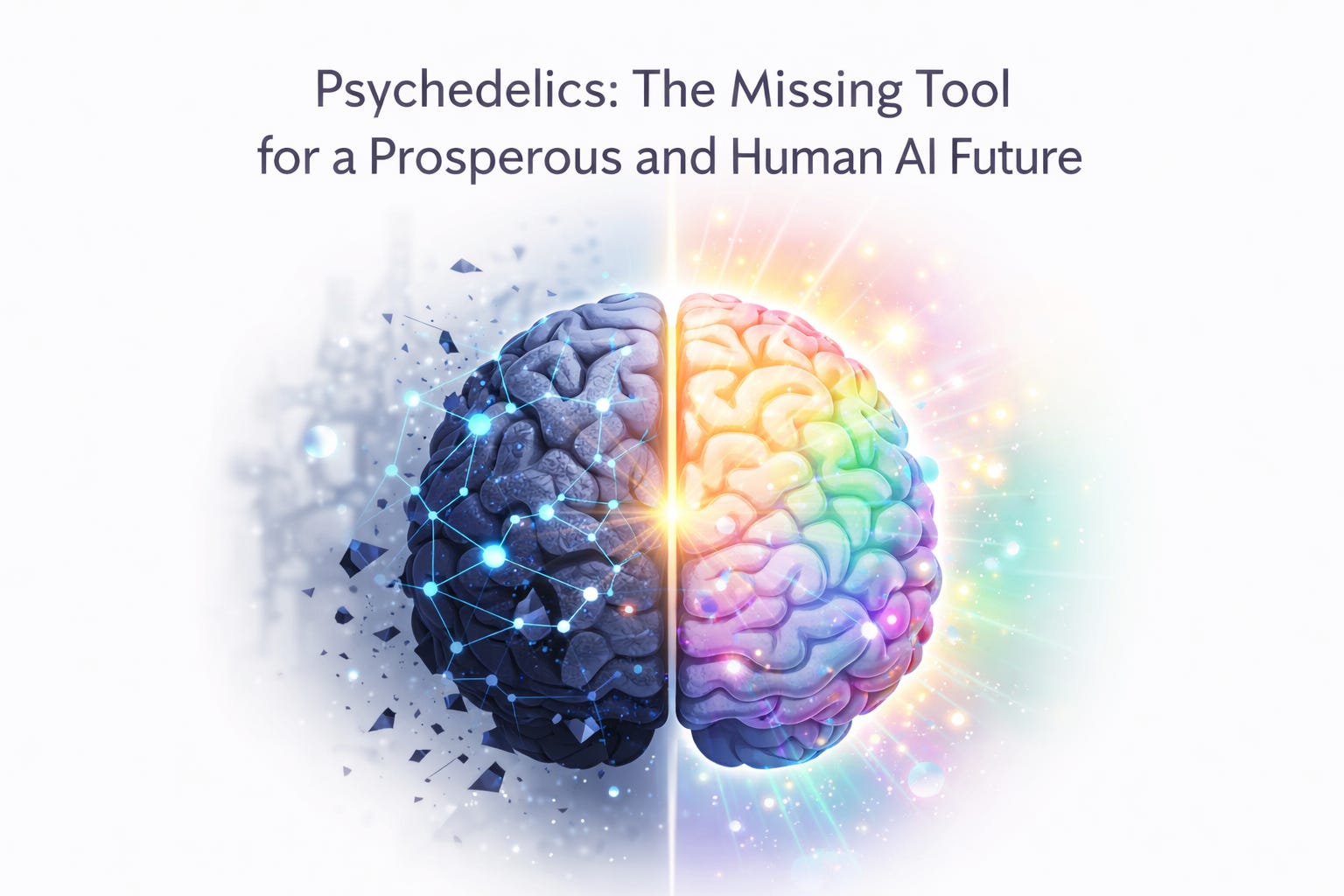
Much has been written lately about the structural risks of Artificial Intelligence (AI), Artificial General Intelligence (AGI), and especially A(G)I paired with robotics.
I am not an expert on A(G)I safety, and this blog post shall not focus on the downside.
In fact, it’s just my gut feeling – but again, I am not an expert – that we will likely get a positive outcome, and that a post-A(G)I world will be amazing.
The real, tangible, near-term problem I rather see is not the end state, but the transition, because we humans have a terrible track record of handling massive disruption and sudden change. But this time, we potentially have a new tool.
Back in Time: 1850 – 1914
Let’s look at the last period when we had unprecedented change and disruption. The years 1850 - 1914 eerily resemble our current moment. Three major technologies were emerging: the telephone, electricity, and the automobile. These were highly potent platform technologies, and their impact on everyday life was as profound then as AI, robotics, and other exponential technologies will be for us over the next 10–20 years.
The visionaries of that era shared the same optimism about the future as today’s do. Take the futurologist and author Jules Verne. Born in 1828, he had a remarkably accurate vision of technology more than a century ahead of his time. In his novels, he described rockets that would carry passengers to the Moon, complete with ocean splashdowns - ideas that seemed almost unpublishable to his contemporaries.
He was not alone. The 1889 Exposition Universelle in Paris expressed this exuberance perfectly: Thomas Edison demonstrated his phonograph, visitors marveled at new technologies, and one of the world’s first safety elevators carried passengers up the legs of the Eiffel Tower, then the tallest structure in the world.
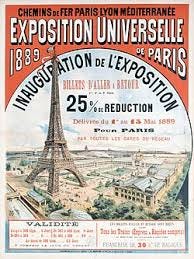
In short, there was a passionate embrace of technological innovation as the Western world shifted from an agrarian society to an industrial one. But, then as now, it was the elites who were the most vocal and optimistic - while the rest of society rather experienced another emotion: fear.
Fear is the Mind Killer
For the vast majority, the future painted by Verne and others was alien, bewildering - and terrifying. Farmers and workers believed this technological utopia had no place for them.
IMO, this disconnect - and the fear it generated – opened the door for demagoguery and, eventually, war. Frank Herbert captured it in his famous line from Dune: “Fear is the mind-killer.”
“I must not fear. Fear is the mind-killer.
Fear is the little-death that brings total obliteration.
I will face my fear. I will permit it to pass over me and through me. And when it has gone past I will turn the inner eye to see its path.
Where the fear has gone there will be nothing. Only I will remain”.
The Litany Against Fear; Frank Herbert, Dune
The fear of being irrelevant, being replaced by technology, and being left behind, in my opinion, gave rise to the most destructive ideologies the world had seen to date: national socialism and communism. Both offered simplistic, false answers: “It’s the foreigners.” Or “It’s the rich.” Or both.
Ultimately, these ideologies fueled two world wars. Only after those wars, with almost 100 million dead, did the world envisioned by the late-19th-century visionaries begin to materialize in the 1950s and 60s. And it did, in fact, improve life for almost everybody. Much of the earlier fear had been completely unfounded.
“We suffer more often in imagination than in reality.”
Seneca
Human Labor is No Longer Essential – and Not Necessarily Natural
Today, society is again in transition - this time from an industrial world to one driven by automation, data, and AI. Technology is advancing faster than ever, with both excitement and fear rising in parallel once more.
I expect well over 50% of today’s jobs to be replaced by AI and robotics over the next 10 years - and I do not believe an equal number of new jobs will emerge, if any. This sentence alone will create a lot of fear among many readers of this blog post.
But, as with the last great wave of innovation, I believe the end state still could be extraordinarily positive: productivity gains may allow governments and corporations to provide a universal basic income, giving people the same purchasing power as today - but without the need for traditional labor.
While this might sound radical, in fact, having no “job” is not “unnatural.” Before we started settling and developing agriculture around 12,000 to 10,000 years ago during the Neolithic Revolution, we lived as hunter-gatherers. Some anthropologists have argued that hunter-gatherers spent far less time in food production than modern workers spend in formal labor, potentially only a few hours per day. The rest of the time was spent sleeping, having sex, and sitting around the campfire telling stories. We are social animals who thrive in community and on shared experiences. Some anthropologists even suggest that religious tales of “paradise” may echo this distant memory of much more “human” pre-agrarian life, before we became enslaved to endless labor (Kudos to Yuval Harari for these thoughts in this paragraph).
The Real Problem: The Transition
I deeply believe the problem is not the end state, which, as said above, could be great for us humans, but the transition. Especially over the last hundred years, we have tied literally everything to having a job – the structure of our societies, of our economies, even our self-worth. Literally everything evolves around that paradigm. Taking this away overnight terrifies people. And where there is fear, there are often disastrous consequences.
The Writing is on the Wall – Mental Health Issues are on the Rise
This rising fear of a completely new paradigm, imho, explains why mental health issues - addiction, anxiety, depression, to name just a few - are skyrocketing. They are already today among the leading causes of disability worldwide and will only grow in numbers.
At the same time, the political landscape in the West - stable since World War II - is wobbling. People are again reaching for scapegoats, conspiracy theories, and false comforts. It is the same playbook we saw unfold from 1850 to 1914, just in different colors.
We Must Get It Right This Time
Getting this transition right in an extremely short period of time may be the most complex challenge humans have ever faced. But I am sure of one thing: this fear, which is building up again, cannot last forever without snapping - and in the age of nuclear weapons and other weapons of mass destruction, a societal “snap” could be even more devastating than the last two World Wars.
Hence, we urgently need answers to fundamental questions: How can we take everyone along on this crazy ride? How can we create purpose and meaning for billions of people whose jobs will vanish? How can we help humanity adapt to a world that is radically different from the one we grew up in? How can we reinvent ourselves, and what will it mean to be a human in the age of AI and Robotics?
We Need Medical Psychedelics
I believe this time, different from last time, we do have at least one tool to help us change, evolve and adapt: psychedelics.
Clinical studies increasingly show that psychedelics can reduce fear, heal trauma, and help people move forward with openness and resilience. The neuroplasticity they create, combined with the psychological experience, can help us stay flexible and adapt much more quickly to new paradigms.
The data sets my two psychedelic companies, AtaiBeckley and Compass Pathways, delivered over the last year for treatment-resistant depression (TRD) are striking.
I expect that a niche mental health condition – adjustment disorder – will soon be one of the most talked about. Adjustment disorder is the medical/diagnostic term for when someone develops anxiety, depression, or other distressing symptoms in response to a major life change or stressful event (e.g., moving, job loss, radical societal change). IMO, it will not take long, and almost everybody will suffer from adjustment disorder.
AtaiBeckley – The Clear Leader in this Nascent Field
AtaiBeckley, the psychedelic biotech company I founded and chair, is, in my view, the clear leader in the field of psychedelic medicine. The company runs development programs across all major psychedelic compounds that I believe are best suited for development as medical therapeutics. Its leadership position is reinforced by a strong and defensible IP portfolio, which should help secure this advantage for decades to come.
The view of most investors on AtaiBeckley seems largely anchored to the initial lead indication and drug AtaiBeckley is pursuing: treatment-resistant depression (TRD) for BPL-003 (5-MeO-DMT). In my opinion, they undervalue the broader product portfolio, including VLS-01 for TRD and EMP-01 for social anxiety disorder, but more importantly, I believe they materially underestimate the long-term total addressable market (TAM) for psychedelic medicines.
IMO, one structural factor could ultimately expand that TAM significantly: Many serious diseases are far easier to prevent than to treat after onset. While this may sound obvious, the traditional healthcare system has largely been built around treating illness rather than preventing it.
That paradigm is beginning to change. The rapid adoption of GLP-1 drugs demonstrates how quickly the market can shift toward preventive and even lifestyle-enhancing medicine.
I already wrote about this broader cultural and medical shift two years ago.
Within the next 5-10 years, and subject to the appropriate regulatory approvals, I could personally envision a world where an annual psychedelic session to prevent a severe form of adjustment disorder or any other mental health issue could be viewed as analogous to a cardiovascular checkup and taking statins or other preventive medications when needed.
Summary
In short, I believe that without psychedelics, an AI-driven future might fail - not because the technology won’t be extraordinarily positive. As noted, I am deeply optimistic that a post-AGI, robotics-enabled society can be profoundly beneficial to humanity.
But because of the risk that the transition goes terribly wrong. Without the psychological tools to adapt, we may struggle to navigate it successfully. Psychedelics - and, by extension, AtaiBeckley - could play a critical role in unlocking a future defined by abundance, resilience, and human flourishing.
Want to Learn More?
· Subscribe to this Substack
· Follow me on Twitter: https://x.com/C_Angermayer
· Subscribe for AtaiBeckley’s newsletter: LINK
· Check out AtaiBeckley’s Investor’s Day replay: LINK
Disclaimer
As the founder, Chairman, and largest shareholder of AtaiBeckley, I am naturally biased regarding its potential. I share my perspective in the spirit of transparency, which I believe benefits all shareholders. This content is not investment advice. Please conduct your own due diligence, consult with financial advisors, and review analyst reports, as well as AtaiBeckley’s website and SEC filings, to form your own view.
The views expressed in this blog post - particularly those relating to the future of AI, the associated societal challenges, and the broader market potential of psychedelics beyond the indications currently pursued by AtaiBeckley - are my personal opinions only. They do not necessarily reflect the views of AtaiBeckley, and I am not speaking in my capacity as Chairman of the company in this blog post
No posts
Comments
Nothing yet. Say the first thing.
Sign in to join the conversation.