
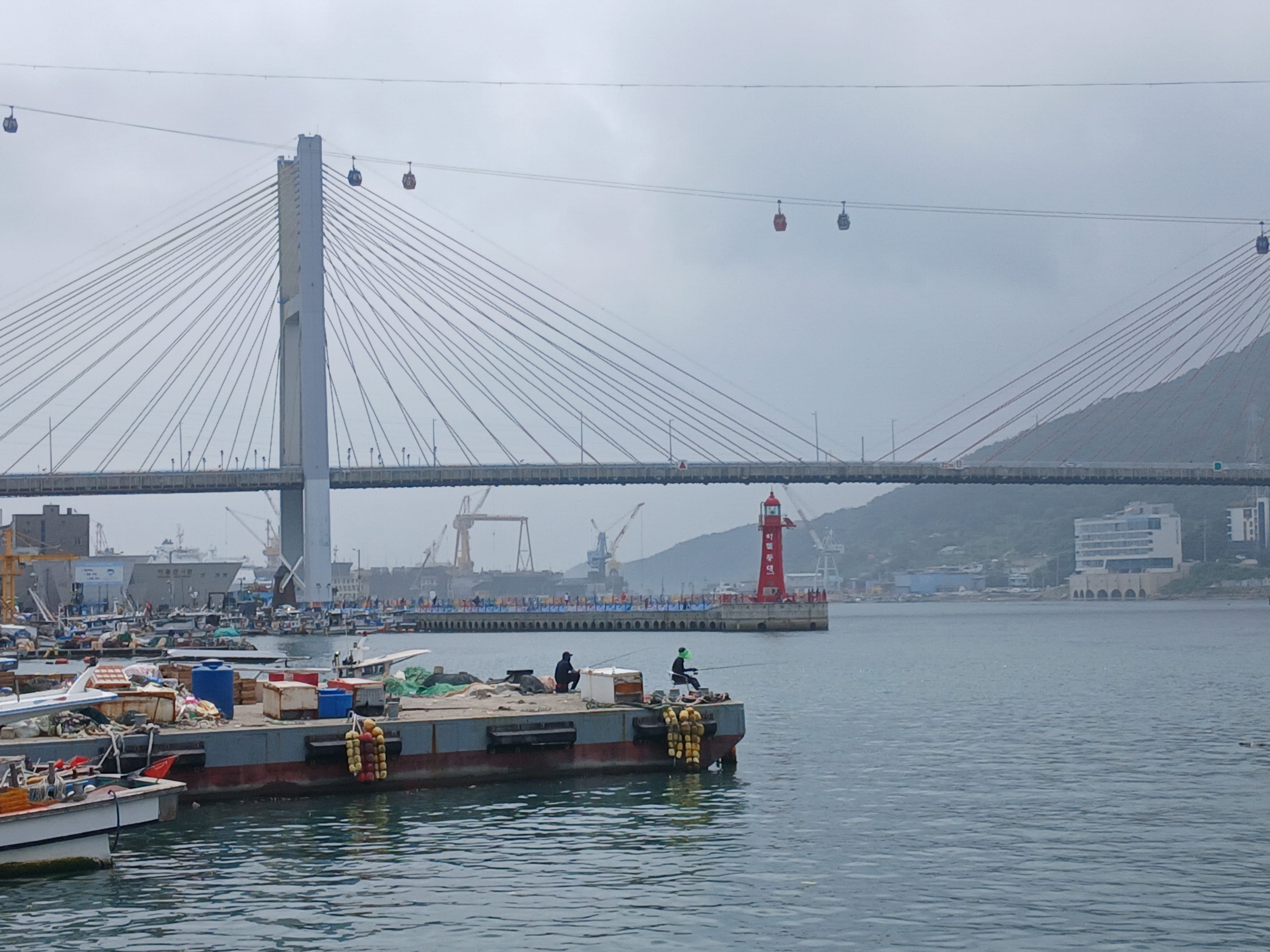
I have lived on this rocky peninsula for nearly 22 years now and it’s taken me this long to get to Yeosu, a compact, seaside city in South Jeolla Province that occupies a narrow peninsula of its own. I suppose it’s just far enough away from where I live to make coming here an actual thing, but two and half hours by bus is hardly an arduous journey, and once I stepped off and began the hike through the sticky July air from the station to my humble motel I was immediately glad I came. Like any place worth visiting, Yeosu has a vibe that hits you right away. You smell the harbor before you see it and all the little houses and aging apartment blocks built up and crammed together on the steep hillsides remind you that you are definitely in Asia, though they also bring to mind Latin America at times — like a Korean version of Chile’s Valparaiso. The harbor itself is penned in by the emerald rise of Dolsan Island, which is connected to the mainland by a pair of nice-looking suspension bridges that act as bookends to the whole scene. To top it off, a cable car line carries gondolas high over the water from Jasan Mountain to the island, with barges and ships regularly gliding through the inlet below, reminding you that — for all the tourism and festivities — Yeosu is still very much a working port. Which is perhaps why I immediately took the place. It is a destination for Korean travelers (though I have seen almost no Westerners during my three days here), especially since you can reach it directly via the KTX from Seoul, but the locals also go about the hard-nosed business of buying, selling, stacking, and arranging fish (and pretty much any other creature you can harvest from the deep). And like many places in South Jeolla Province — the traditionally forgotten southwest corner of the country — the people are honest and warm, and if they don’t smile with their mouths, they do so with their eyes, which is really what counts. People are nice here, though they also famously take no shit That said, Yeosu is no time capsule, despite being rich in
I have officially come to Yeosu to work. After all, I call travel writing my chief vocation these days, and I have been hired to write a full South Korea guidebook for Bradt, the British publisher that is putting out my recently-completed Mongolia book3. I actually have yet to sign the contract, but it’s in the pipeline, so I figured I would get a head start and go to a place I’ve never been to begin research for what is going to be a beast of a project.
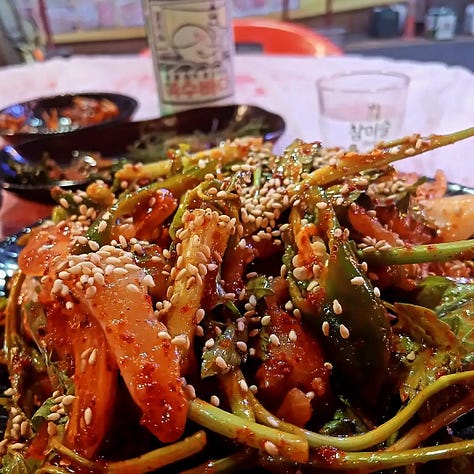
While I have managed a lot of research over the past few days (I can tell you the best places to get gaejang, agujjim, and seodae hoe muchim4), to say that I’m here for work is largely bullshit. The truth is that I had a bad case of cabin fever coupled with the circling-the-drain grief of losing my sister. And even though I get to finally call myself a professional travel writer, the actual travel part has been in short supply of late.
Okay, I did spend eight weeks diving into all four corners of Mongolia last summer, which is surely the most immersive travel experience of my life. And I snuck away to Tokyo5 for a few days in the late fall, but otherwise I’ve been chained to the computer since last September. Yes, I went to Mongolia, but then I had to write the damned book, all the while maintaining another gig cranking out several puff pieces a week an American media company. Add teaching and a full slate of boozy food tours, and my schedule left no room for travel, let alone the luxury of updating this here Substack. Yes, this is my first post since New Year’s Day, though I have inexplicably gained followers and subscribers during this fallow period. I actually love this venue and hoped to cultivate my writing here more effectively when I signed up, but as my buddy Sam always says, “Here’s the deal:” Even though I guess you could say I have “made it” as a travel writer, I’m working for other people, so much so that I have almost no time to write for myself. I am a hired gun, a mercenary scribbler open to the highest bidder.
I am not complaining. I am super lucky to do this thing, something I have been dreaming about since at least the winter of 20036, but somehow I thought it would be more about actual velocity than endlessly staring at at computer screen and meeting deadlines, so when I saw a window to spend a weekend in Yeosu, alone, going where I wanted to go, eating what I wanted to eat and fully embracing the freedom that is travel — even it was just to another town in the country I’ve called home for only two decades — I jumped at it. And here I am.
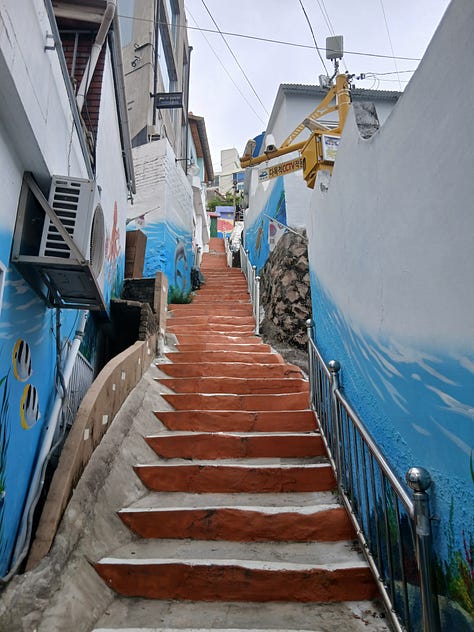
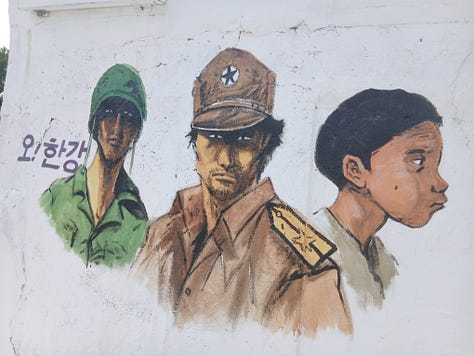
It is perhaps fitting that in my need for movement (after all, that is what travel is, essentially) I have been moving almost all the time here. And it’s hot, like Congo hot with insane humidity that does its best to crush the life out of you. Still, I’ve just embraced it and have done several laps around the place, cruising the harbor side, spelunking the side streets, climbing stairs, and sliding along the vivid alleys of the mural village set amidst the tiny, Greek-island-like houses on the hillside above the water.
I’ve done nothing but sweat, as if I needed to exorcise a demon on this trip, a demon of being home bound for too long, of frustration with my static existence — a hairball of sick sadness and anger that I just haven’t been able to shake. So I’ve just walked and walked and walked, taking it all on, trying to understand the town through its streets and manic fish markets and — at night — restaurants and pocha tents. Yeosu is above all a food town, and I’ve dove in, eating all manner of local seafood along with the sharp and fiery kimchi the region is so famous for, washed down with ice-cold beer and plenty of soju to send me in an inky black sleep at my musty old motel.
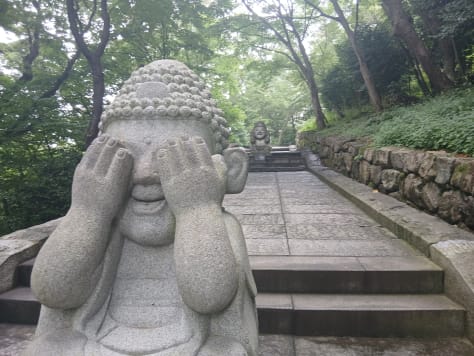
Yesterday I crossed one of the harbor bridges to the island, but the heat was too much. Sweat was pouring from my body in cascades, and the world started getting fuzzy, as if I would pass out. I ducked into a local grocery store just for the air conditioning, and after guzzling water, jumped on a local bus that took me to the end of Dolsan Island to the Hyangil-am Hermitage. This little complex sits perched on the side of a stone mountain that faces the wide expanse of the sea — a collection of tiny temples built in spots that feel hewn from the rock. It’s a proper redoubt, with narrow passages and protected recesses that form a natural castle, tucked away under the soothing protection of pine trees. For the first time in a while I felt at peace — albeit briefly — which made me think that maybe these Buddhists were onto something. I bought a bracelet at the little shop and walked off that mountain lighter than when I hiked up, though it just may have been the two pounds of sweat I secreted. Whatever the case, Hyangil-am is easily one of the most impressive and beautiful sites I’ve seen in this country and is worth the trip alone.
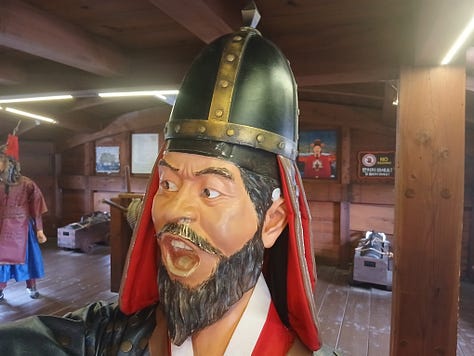
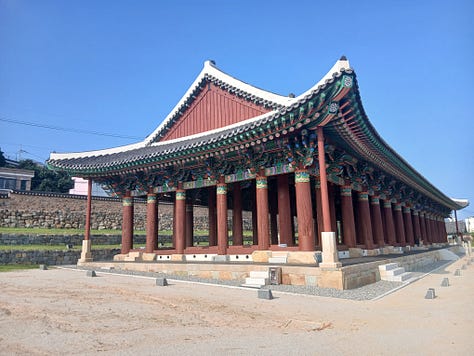
Like everywhere in Korea there is also history here, which chiefly involves the nation’s greatest hero, Admiral Yi Sun Shin7. This guy was like George Washington, Simon Bolivar, and Lord Nelson all wrapped up into one hard package, and Yeosu was his naval headquarters. A massive statue of the man looms over the main square on the waterfront, along with a replica of one of his armored turtle boats, which is free to board. Inside are the lifelike figures of the sailors who did the fighting and overlooking the harbor is also a massive pavilion/hall called Jinnamgwan, which stands on the site of the great admiral’s naval HQ. Translating to “suppressing the south” (in reference to those pesky Japanese), it is an impressive site. As I wandered the grounds I imagined Yi himself gazing out over those deep waters plotting just how he would punish the invaders.
Another interesting bit of history here in Yeosu regards Hendrick Hamel. Hamel was a Dutch sailor who — along with others in his crew — shipwrecked off of Jeju Island in 1653. He — along with other survivors from his crew — was held captive in what was then called Joseon for many years. He eventually was assigned to Yeosu, where, in 1666 — after purchasing a fishing boat from a local — he escaped to Japan with seven of his compatriots. Later he wrote and published Hamel’s Journal, which was the first Western account of Korea and is still an eye-opening read. He is honored in Yeosu with a statue, a lighthouse, and a whole museum documenting his exploits, which I perused yesterday as the only guest, welcome to feed my brain and cool my skin through the museum’s complementary air con. I needed to come to Yeosu and it has surely delivered the balm I have sought. It’s proven to me again that you don’t have to board an airplane to feed the need to travel. You don’t have to go to Mongolia or the Republic of Georgia or any other far-flung lands. If you’re feeling stir-crazy, look to the town next door, or a park, or a mountain — it can be reasonably close. Just When too much of the latter builds up the best thing to do is move. Just move. I think it may be working for me.
South Jeolla has traditionally been Korea’s most restive province. This comparatively poor region has long felt ignored by Seoul and the country at large. The people have consequently embraced an independent spirit that can erupt into insurrection, as seen in Gwangju in 1980, when — in response to heavy-handed suppression of local pro-democracy demonstrations — locals staged an uprising which was brutally put down by the military of dictator Chun Doo-hwan, with the tacit approval of the United States. The death toll is disputed this day, but could be as high at 2,000.
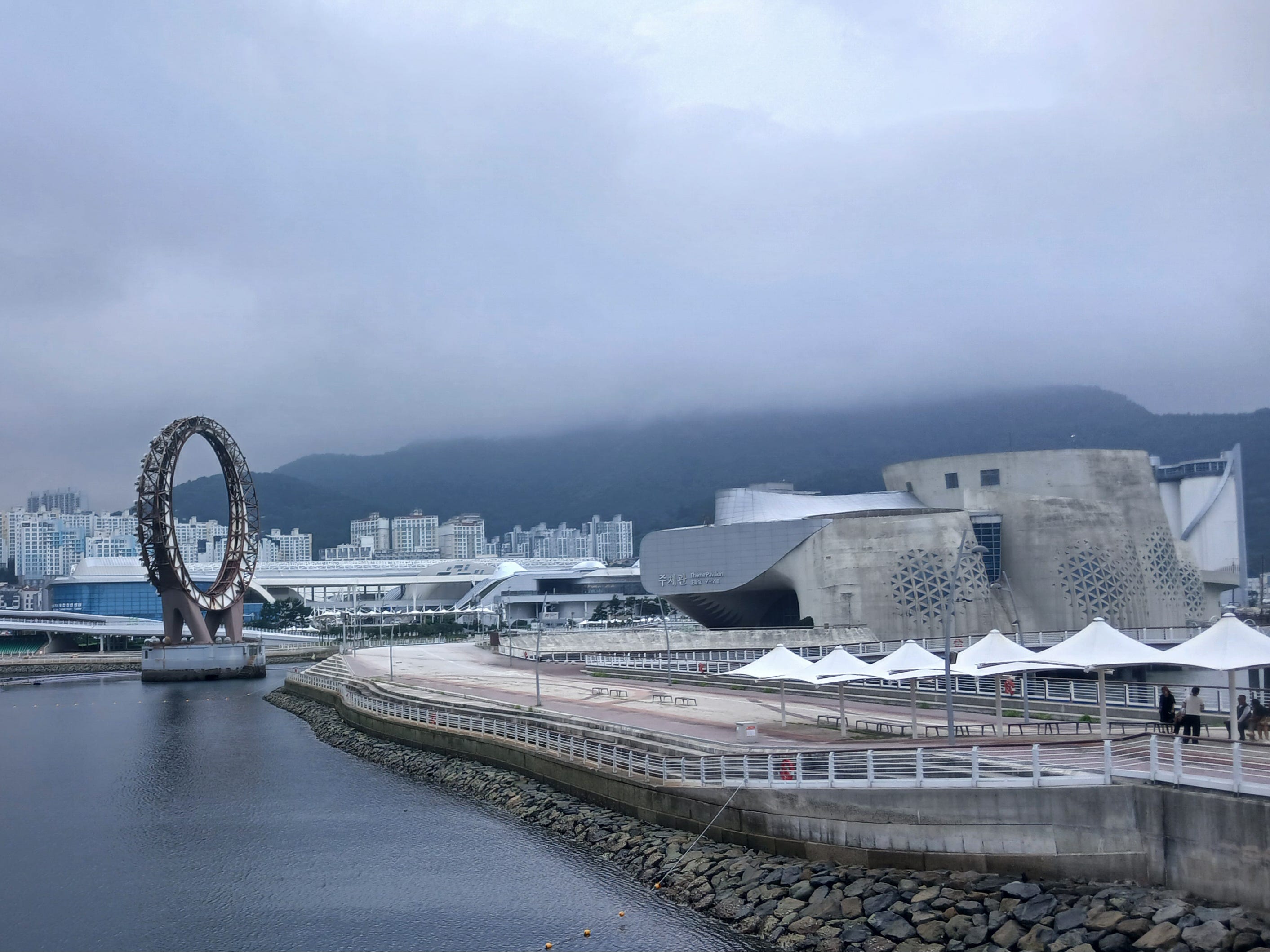
The Expo’s theme was “The Living Ocean and Coast." Yeosu hosts the World Island Expo later this year, which will hopefully utilize some of the old Expo site.
The book is still being edited, but Bradt Mongolia is slated to be published in March, 2027
Gaejang is marinated small crabs. You suck the meat from the body, making it a deliciously messy affair. Agujjim is monkfish cooked in a spicy sauce with a pile of bean sprouts (not my fave). Seodae hoe muchim (pronounced “hway”) is sole sashimi in a spicy/tangy salad. Amazing stuff, especially in the summer. These are all representative dishes of Yeosu, along with the extremely pungent gat kimchi, which is made from mustard leaves instead of cabbage.
A good friend of mine plays in some of Les Claypool’s bands and I caught them at the Blue Note Tokyo last time they came through and used it as an excuse to return to Japan’s great metropolis.
In the winter of 2003 I was holed up in a cold apartment in Chicago after an aborted attempt at playing in an industrial band (another story). Dreaming of escaping not just the Windy City (a temporary home) but America itself, I checked out as many travel books as I could from the library, and devoured them all. It was a kind of escapism, but also, as I drank those words and was transported across the globe, I thought: Why can’t I do this? Not just move through time and space, but actively write about it? Six months later I was in Korea.
From 1592-1598 Japan launched two devastating invasions of Korea, setting off a conflict usually referred to as the Imjin War. They practiced a scorched-earth policy as they slaughtered, burned, and raped their way up the peninsula, though Admiral Yi threw a spanner in the works by largely decimating the Japanese fleet in a series of naval engagements utilizing armored boats known as turtle ships. The much smaller Korean navy succeeded in cutting off Japan’s vital supply lines, which was a major factor in their eventual withdrawal from the peninsula. Yi Sun Shin died in battle towards the end of the war and is regarded by Koreans as the most badass motherfucker to ever walk the earth.
No posts
Comments
Nothing yet. Say the first thing.
Sign in to join the conversation.