
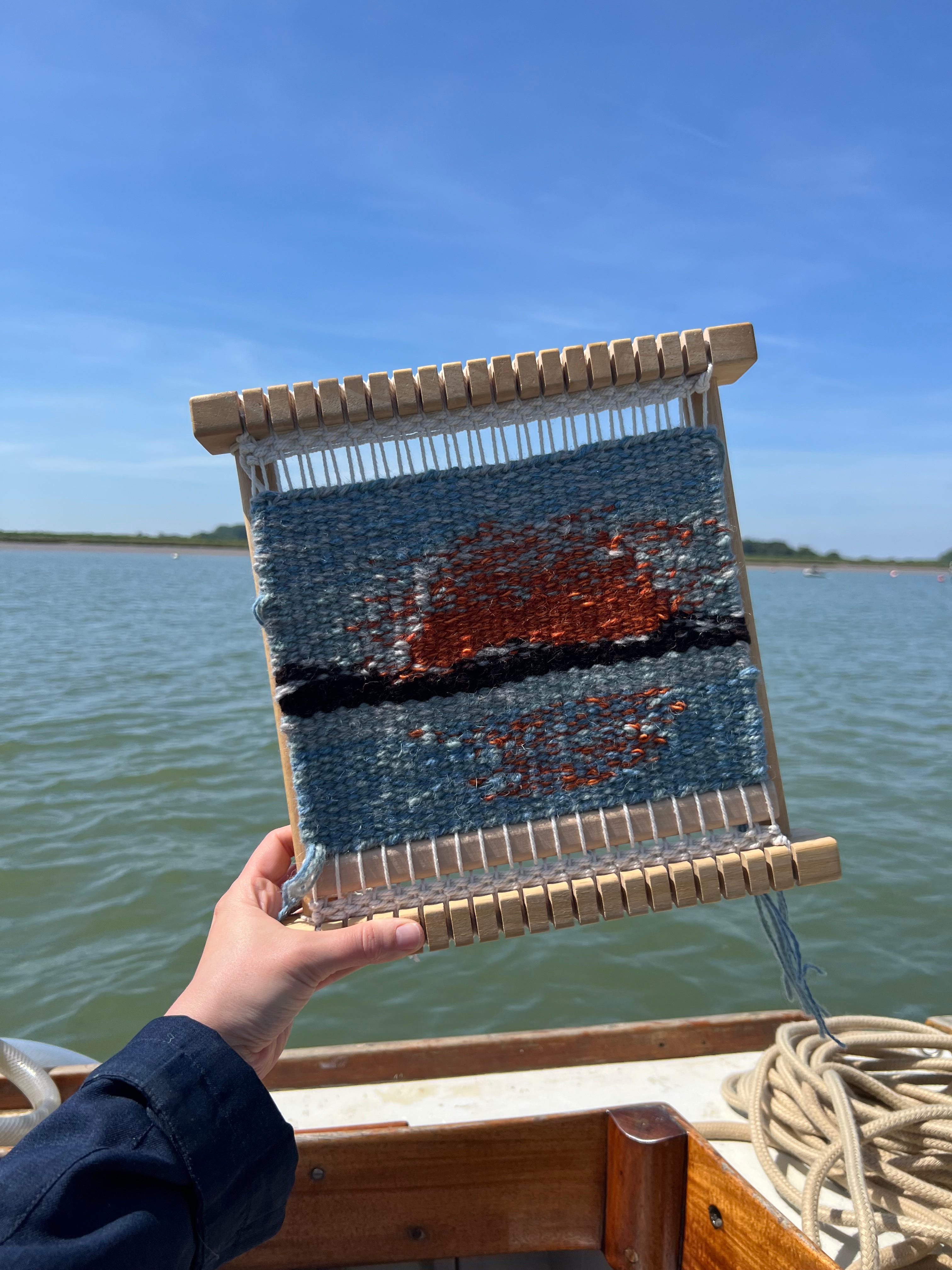
Tomorrow, my husband and I are going back to work.
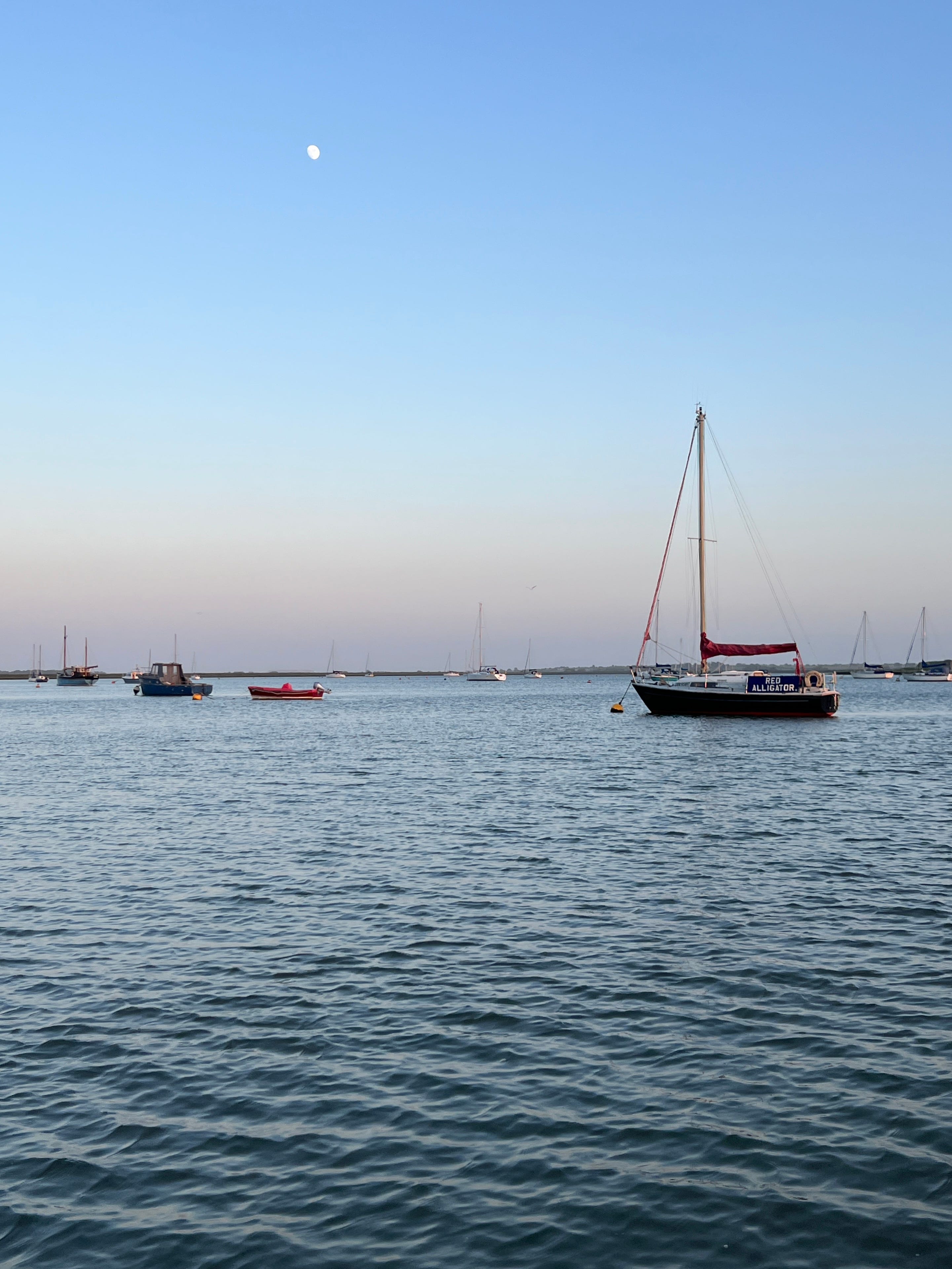
For the past three months we’ve been on sabbatical, taking time off to sail the 20ft wooden sailboat that we’ve been painstakingly restoring since 2022. We’ve had some absolutely beautiful weeks on the water. We’ve also been thwarted more times than I can count by the tides, the wind and successive extreme heatwaves.
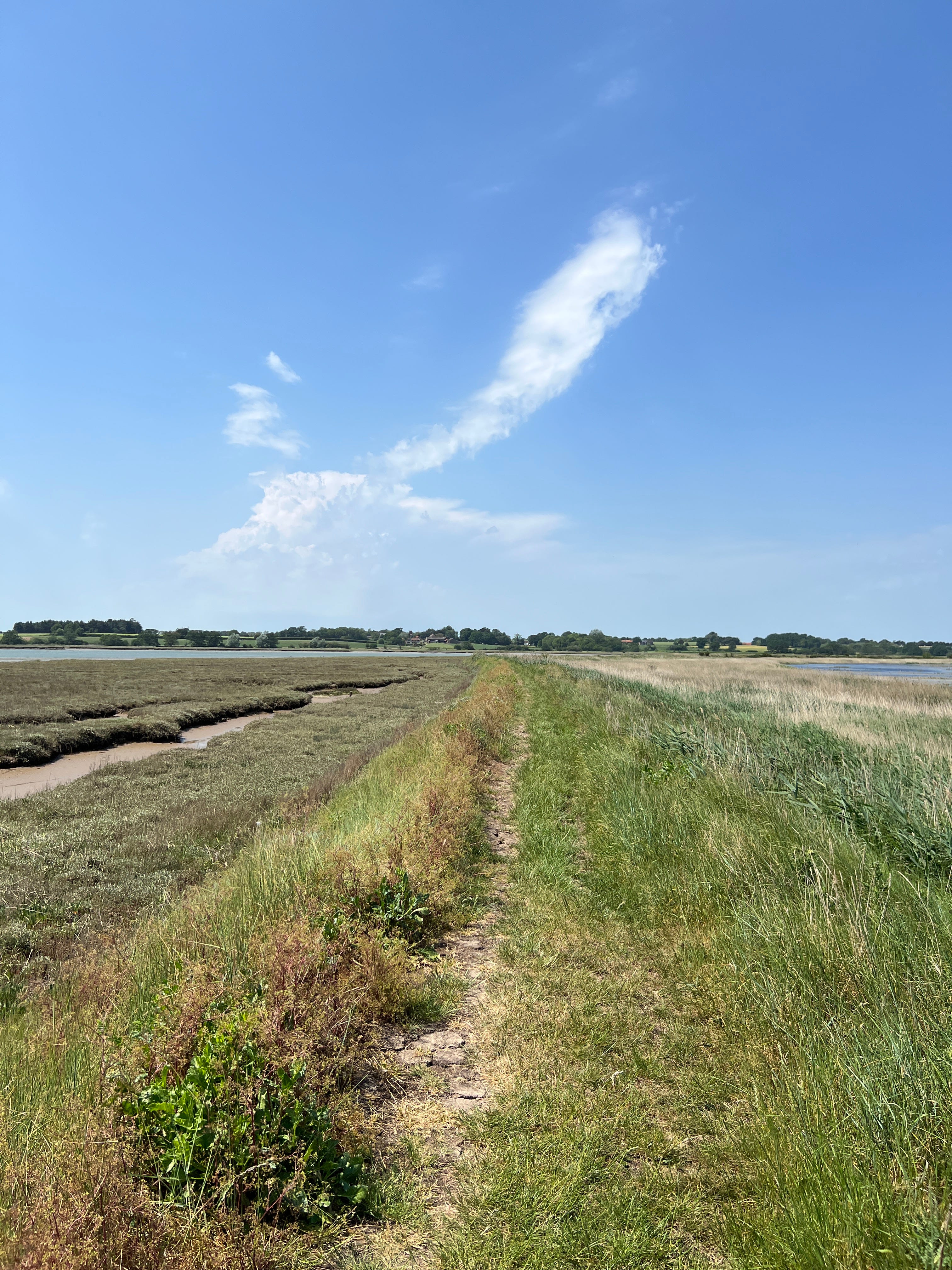
Still, we’ve managed to make the most of our time off the boat too. We’ve travelled round Europe with family, and explored multiple sections of the new King Charles Coast Path, which is slowly linking up all the rivers and estuaries in our area with the path that stretches around the whole coast of Britain.
And we’ve had plenty of time to reflect. A huge shared project that shaped our entire relationship has come to an end. What’s next? We’ve joked about restoring a Thames sailing barge, or a disused water mill. I’m sure the right project will come at the right time. Restoring this boat might have dominated our weekends and holidays for the last four years, but it’s also given us a community in a new town, and a whole host of new skills. Who knows what the next project will bring?
Alongside thinking a lot about our future, I’ve also had the time and space to reflect on my art practice. I expected that I would come out of the sabbatical feeling creatively inspired. What I didn’t expect is how much it would benefit me in other ways, and how much I would learn about myself. In some ways, I’ve gotten even more out of this sabbatical than my husband has, even though (whisper it) I wasn’t that keen on going on sabbatical in the first place.
Full Disclosure: I Didn’t Want This
When my husband first suggested taking three months off in order to sail our completed wooden boat, my first thought was “Absolutely not.” Why on earth would I want to take three months off from building my business and my art practice, or working in my weaving studio - my favourite place in the world?
At the same time, I could see his point. Sailing can be unpredictable, especially on a small boat with a tiny engine. Giving ourselves three months would mean that we’d be guaranteed some good sailing, even if the weather was terrible. And it would give us time to slowly get to know the boat and how she sailed, without trying to cram everything in to a few weeks.
So I agreed to it. I told myself I was doing this for my husband, who had project managed the entire restoration and put an enormous amount of work into it, on top of his extremely demanding job. And if I worked hard enough in the run up, my business (hopefully) wouldn’t collapse while I was gone. I went into the sabbatical expecting to have a nice time, but not expecting it to be transformational.
How wrong I was.
I Learnt To Do More With Less
While my husband (through careful wrangling and negotiating) was able to take three months fully off from work, I knew I would still have to do some work over the course of the sabbatical to keep my business going. However, I would be limited to a handful of hours a week, instead of my usual 9 till 5 (or, more accurately, 7 till 7).
This constraint turned out to be a godsend. It meant I had to think carefully about what task would have the most impact, and ruthlessly prioritise it. Sometimes that meant carving out time to write a Substack, sometimes it meant queuing up content for Instagram. But each time, I was only doing the thing that I knew would get results - not the things that would maybe work, or the things that I thought would look good, or the things that were nice to have. And guess what? May was probably the best sales month of my year so far.
It taught me that I’m almost definitely doing way too much in my normal working life. I’m letting my creative ideas run away with me, trying to do as much as possible instead of doing a few things really well. I now know that my business and my art practice are better served with focused, specific work, instead of spreading myself thin across too many things.
I Learnt What I Want To Prioritise
I started the sabbatical with expansive plans about what I’d do when I eventually got back to the studio. My ideas ranged from new weaving kits to made-to-order rugs. I felt like I should be trying everything, because what if there was a better option out there for my art practice?
But over these last few months, I had a chance to really think about each new idea. I ran the numbers, researched market demand and explored supply chains. And perhaps most importantly, I sat with how each idea made me feel. What felt like a natural next step for me, and what felt like too much? What did I want to lean into in my studio practice, and what did I want to remove? And most importantly, what was working for me right now that I could do more of, instead of pivoting to something totally new and untested?
Now, at the end of the sabbatical, I’ve stripped all my ideas back to just three things I want to focus on - this Substack, my online weaving teaching, and actually selling my woven work. For each one, I know why I’m focusing on it and exactly what I want to achieve. I’m returning to work with clarity, and clear goals. I no longer feel the same pressure to do everything.
I Learnt How Much Rest I Really Need
And it’s been a long time since I’ve had this much clarity about my work. Everything has felt so murky in these last few years, and I’ve struggled with brain fog, with lack of focus and decision fatigue.
I partly put it down to getting older. I’d heard that deaf people who cope well with their hearing loss in their twenties struggle in their thirties and forties, as they start to feel the strain of keeping up with the hearing world. This was partly what inspired us to move out of London, in the hope that a quieter environment might make things easier for me.
But the sabbatical was the first time that I really saw the impact of a prolonged period of quiet rest. There were long stretches where we were out on the river, in the silence of nature, or resting at home after a long week of sailing. Then there were long stretches of socialising and spending time with family and friends. Both were amazing - but I noticed that after I’d spent a long time in the quiet, I had much more capacity for my business.
In May, I had a lot more quiet downtime, and I was able to do those short bursts of focused work that I needed to keep things operational. But in June, we spent the majority of our time in Europe, travelling with family, and I noticed a shift. While I was able to follow conversations and keep up with everything, I was completely depleted afterwards. I really struggled to write or post, and this had a knock on effect on my business.
But as soon as we got back and had some extended time of rest, I felt my brain switching on again. I realised that the same part of my brain that I use for running my business - for planning and strategy, writing and editing, creating content and building a brand - is the same part that I use when I’m trying to process sound and follow a conversation with a cochlear implant.
Of course, I’ve always been aware of the limitations imposed by my hearing loss. It was part of the reason why I started my weaving practice in the first place - because I needed to make a living in a way without listening all day. And weaving is not draining in the same way. It uses a completely different part of my brain, and it means I can weave all day and still socialise afterwards.
But what I discovered on sabbatical is that the one thing I can’t do is socialise extensively and then the very next day switch into business planning mode. Weaving might not tax my brain, but running a business definitely does. And until now, I never made any allowances for that.
What I’ve learnt from this sabbatical is that in order to work effectively and prioritise well, I need to rest. I need to rest not only after periods of focused work, but I also need to rest after extensive socialising. What I want to avoid, more than anything else, is going back into the way I used to work - starting each week already tired from listening all weekend, trying to make decisions for my business without really having the bandwidth for it. But now that I’ve seen how my brain functions after I’ve actually switched off, I know I won’t be going back.
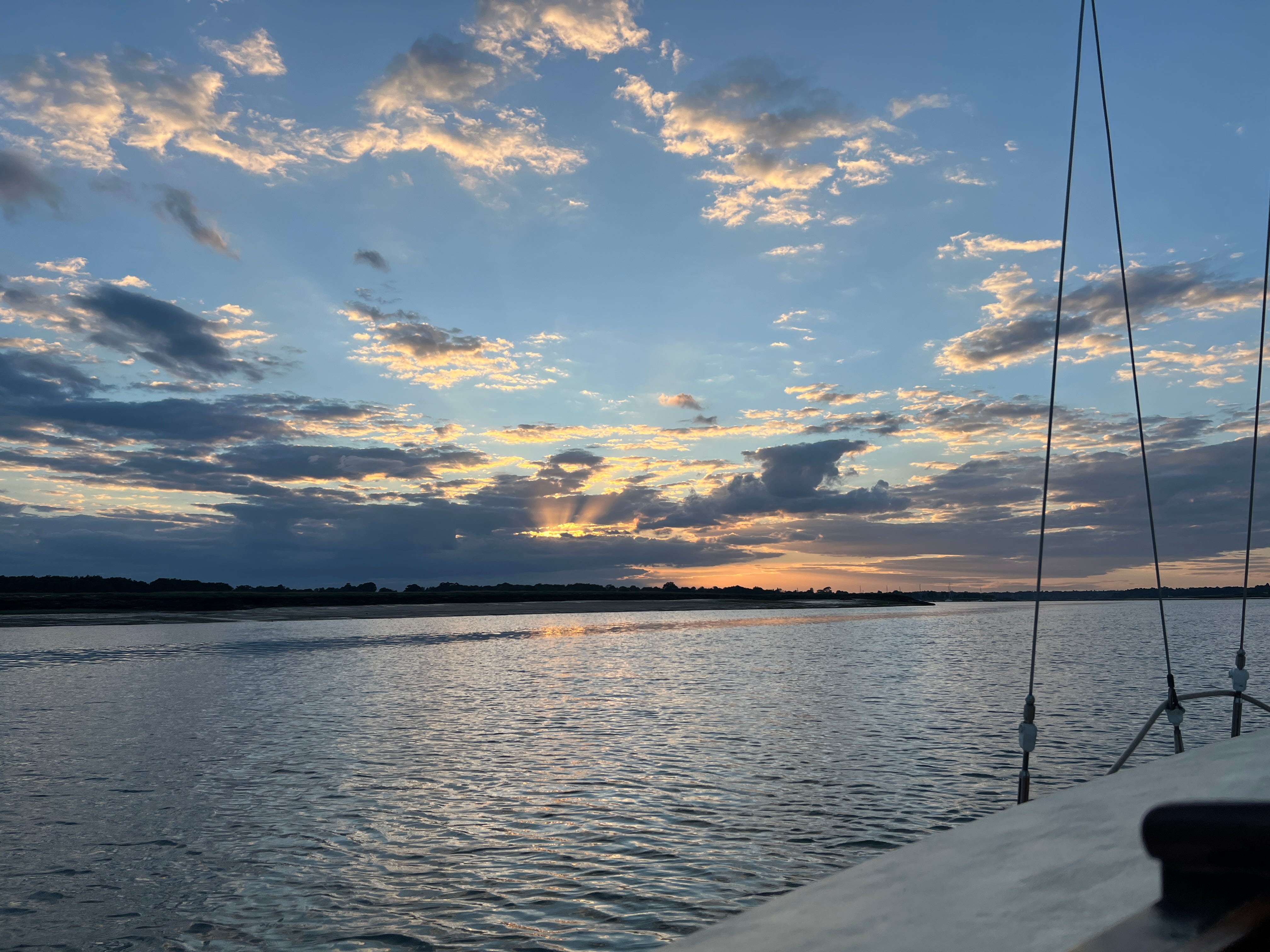
If I was to give some advice to my past self, worrying about taking a step back from my business for three months, I would tell her that perspective is everything. Even though my weaving studio is my favourite place, if I spend too much time in there, I will lose sight of the bigger picture and I will get bogged down and distracted. I’ll start trying to do more and more and more, instead of honing in on the tasks that matter most.
And the best part is, you don’t really need 3 months off or a newly-restored wooden boat to make this happen. Next time I start to feel like I can’t see the wood for the trees, I’ll get the train to the next section of the coast path, and follow it down to the sea.
No posts
Comments
Nothing yet. Say the first thing.
Sign in to join the conversation.