
Builder Day is Saturday, August 29, noon to 3pm PT at Foundations in Seattle, plus the stream. Sign up here and come make something if you live in Seattle. Free, presented by Every.io.
At five past midnight, while I was almost asleep in the next room, a box in my house decided it was time to update itself. Suddenly, half my network was gone. Not slow. Gone.
I spent hours doing what I have always done, which is restart things, reseat cables, and swap out hardware that turns out to have been fine the whole time. When I should have been sleeping. Then I went and read the logs, which in thirty years of being the guy friends and family call when the internet dies, I had never once done. Well, maybe just once.
The update landed at 12:05. The first failure showed up at 12:11, in a different box’s log, where it had been sitting in plain English for hours while I stood there blaming a cable.
Six minutes.
So, I turned to my favorite tool in the box… AI!
Two settings were switched on. Automatic updates, and a channel that hands you the earliest, least-tested version of everything. Either one alone is reasonable. Together they mean your house installs beta software at midnight on a schedule set by somebody you’ve never met. Mine had it on by default and I’d never once looked.
Turns out, many people were facing the exact same issue I had with this new firmware update. That was somewhat of a relief to see. I still went through great pains to try to fix my network first.
More is worse, and more is what they sell you. Turning my WiFi power up made things worse for some frequencies. Widening the channels made things worse. Every instinct I had, and every number printed on every box in the store, pointed the opposite direction from what my house needed. Before you spend money on a bigger unit, try turning something down.
The diagram in the app is not your house. My dashboard draws a tidy picture of which box connects to which and it does not match the wiring in my walls. When the pretty screen and the boring log disagree, believe the log: one is a record of what happened and the other is a guess with a nice interface bolted onto the front.
Then there was the machine I spent longest chasing, which turned out not to be a network problem at all. It kept bouncing between two of my networks, dropping over and over, and I went hunting for the setting on my network that would stop it. There isn’t one. This device was making the same bad decision on repeat because it remembered two networks and couldn’t choose between them, and the fix took four seconds on the laptop itself.
Check the device that’s complaining before you replace the thing it’s complaining about.
Consider keeping a backup you can actually read. The built-in one is a sealed file. It’ll put you back to some earlier state and it will never tell you what changed last Tuesday, which is the only thing I have ever wanted a backup for.
AI told me there was no way to roll the firmware back from the interface. Sounded right, I believed it, and then I poked around the panel myself and found a Revert button sitting there the whole time. One click. That was the same night it read six hours of logs and found a correlation I’d never have found alone. Both things happened. Neither cancels the other, and the version of this that works isn’t “it knows more than me,” it’s that between the two of us somebody keeps checking.
Everything you own might be writing down what it does. Almost none of us have ever read any of it, because it’s tedious and there was never anybody willing to sit and go through it with you at two in the morning. There is now.
Feed it to AI. Let AI do the work.
The big win? I repositioned one of my access points.
I had been bothered by another thing for a while - some of my devices just weren’t doing very well on the network. They’d drop / reconnect. Annoying, to say the least. I took the time to ask what else I could do.
Turns out, the position for one of my access points needed to be tweaked. As in, moved. Just a few feet away, honestly. That has seemingly improved my situation and something I didn’t realize could help (honestly, because I’m not a network admin nor a wireless expert).
Took guidance from AI to get things right, or at least square away what could be done.
Now, go be a harder customer.
I’m now making apps to help do this kind of checking, if you want somewhere to start this week:
Input Rate tells you what your touchscreen, stylus, trackpad or mouse is doing. It’s how years of me complaining about a refresh rates on screens turned into something I could act on and file bug reports for.
Browser Fingerprint Test turns 120+ tracking signals into plain English about what every site you visit already knows.
Both free, both in a tab, and neither one of them asks you for a single thing.
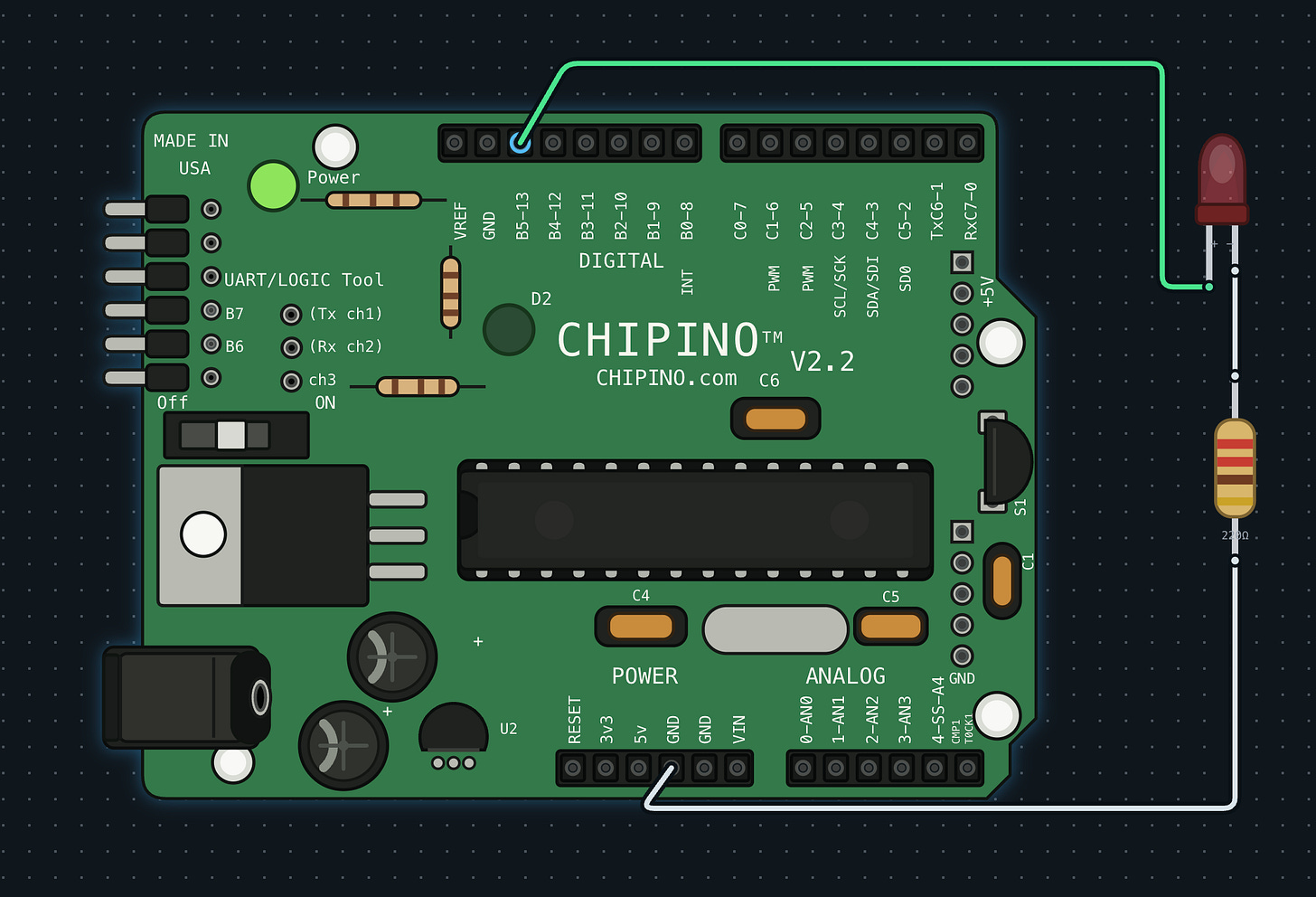
Thirty-nine of these shipped since I last wrote. If you only click one, make it the circuit simulator!
The ones I’d show you next
Rock Collector is 286 minerals, gems, fossils and meteorites you can pick up, turn over and tumble, each with real hardness and streak and luster. Virtual Bonsai grows you a tree across 11 species and lets you set every color in the scene before you save it as a wallpaper. Hot Coals is a bed of glowing charcoal with no flames at all, which sounds like nothing and is hard to stop watching. Campfire Simulator does have flames, plus wind and crickets and rain, and none of it is a recording, so it never loops back on itself the way every sleep video on YouTube does after twenty minutes.
Emoji Press is a rolling paper press that prints every one of the 3,884 emoji in Unicode 17.0 onto an endless strip. You can steer the press yourself or leave it wandering off on its own while you do something else.
Raccoon corner
Seattle’s short-spined raccoon went viral and I made three games about him, which I recognize is two games more than the situation called for. Jimothy Sighting is a climb-the-fence platformer, Jimothy Game sends him raiding trash cans across Ballard while dodging paparazzi, and Raccoon Run is a maze chase that is, for legal purposes, not PAC-MAN. He also roams your desktop in Jimothy Screensaver, alongside the pixel dog in Screen Schnauzer.
Games I got carried away with
UFO Game lets you tractor-beam cows and then flatten a voxel city. Castle Defense is a whole siege drawn in crayon. Monster Rally generates endless dirt tracks and you can hand anyone a circuit as a code. Space Coaster is anti-gravity racing with portals and hull damage. Spin Stack rotates the entire chamber a quarter turn after every single piece, which broke my brain for a while. Domino Rally topples real 3D physics and turns your photos into domino mosaics. Wander Valley paints a fresh anime valley, river and steam train included, every time you reload it. Hexcrawl Generator builds a fantasy map with a whole gazetteer and exports to your VTT.
For anyone who streams or makes things
Stream Overlays hit 90 widgets and 15 scene templates. Stinger Transitions makes the swipe between your scenes, with 77 animations and the exact cut frame marked. Foil Press turns your photo into a holographic card that catches the light when you tilt it. Collage Wall sorts hundreds of photos by color into one banner without cropping any of them. Clean Slate straightens and de-glares a photo of a whiteboard. Avatar Atlas renders your character across a hundred-plus avatar styles at once so you can pick. Comic Chatter draws what you type into comic panels with the original Comic Chat cast.
Music
Chiptune Jukebox composes albums while you listen to them. Chiptune Radio exports loops your game engine will read without complaining. Weather Music turns your city’s forecast into a song. Guitar Centered puts a real-looking acoustic in your browser with 80 songs loaded and a capo you can slide up the neck.
Useful
Circuit Simulator got a full write-up in the other newsletter this week. Beyond those: Since When counts what happens on the internet while your tab sits open. FrameSend moves a file to another device through QR codes with no network involved. Measure Twice tells you how many bags of gravel to buy. Mood Journal grows a flower for every entry. WordPress Checkup turns your Site Health report into an ordered to-do list, and Plugin Gap checks whether your plugin idea already exists before you waste a month. Filament Swatch prints you a swatch card with your brand and your temps on it.
Same as always: I describe what I want, Claude’s web interface builds it, I look at the result and say what’s wrong, and round we go until it’s right. I still can’t write code. This week’s ctrl+alt+create newsletter goes deep on the working method, using two of the apps above as case studies, one of which involved a chip toolchain for silicon that has never been in my house.
I run a pile of skill files that shape how Claude works with me, and almost none of them are mine. The full list is over in this week’s ctrl+alt+create newsletter. If you only grab two: humanizer by Siqi Chen, which is about what has to survive an editing pass, and i-have-adhd by Aymane Ghribi, for when you’re tired of scrolling past preamble to reach the fix.
The strange one is autonovel from Nous Research. It’s a novel-writing pipeline. I have never written a novel. Its anti-patterns file turned out to be the best thing I’ve read on how machine prose falls apart, and I’ve been raiding it for things that aren’t novels ever since.
Builder Day. Saturday, August 29, noon to 3pm PT at Foundations, 1605 Boylston Ave in Seattle, plus the stream. Free, pizza included, presented by Every.io.
Builder Day, again. Saturday, September 26, same room, same time, if the 29th doesn’t work for you.
Builder Night. New monthly mixer, third Monday of every month, Eastside. First one is Monday, September 21, 6 to 9pm at Formula Brewing in Issaquah. Show what you built, meet people, drink tokens provided.
Everything else is on luma.com/ctrlaltcreatelive, which is always current.
Somebody else’s, and worth your Thursday. Seattle AI on Tap: Gallery Walk, August 27, 7 to 9pm at Slip Gallery. Ten builders, ten stations, and you get to put your hands on everything. Craig Campbell is bringing Pastmaps, which he and his wife Savannah run out of Seattle: half a million historical maps georeferenced over the modern world, with a slider that fades your street back a century. Two people, paying customers, a million users.
Everything below happened away from the keyboard, or at least away from anything I was building.
A promotion cost me the service I was already paying for. I bought a Chromebook Plus at Best Buy on the 16th. The store signage sells the bundled Google perks as part of the value, so I went to redeem them through the official link, which handed me back to Google One, and somewhere in that handoff my account got downgraded. A week later I’m staring at a banner telling me Gmail stops working in 23 days and my family’s storage is caught up in it too. Seventeen messages with support since. They’ve asked me for the same five things three separate times, asked twice for a clearer photo of the sticker on the bottom of the laptop, and granted themselves two extensions. Still open. I keep thinking about how much of this is designed. The failure is an accident. Every hour of proof-gathering landing on me and none of it on them is a choice somebody made.
Setting up my girlfriend’s new iPhone reminded me that hardware is irrelevant and software is everything. Apple’s onboarding is the best in the business, and normal people sail through it. Then you get in and iOS is still choppy, still oddly nerfed, still doing things a certain way because it always has. Nobody buys a phone for the aluminum. Or should. Who the hell cares about great hardware if the software UX renders it as good as garbage?
I think I’m hitting the ceiling of what I can do in a browser tab, which means looking at desktop clients, which means handing software a lot more access to my machine than a web page ever gets. I don’t have a clean answer here. More capability, less containment, and nobody talks about that tradeoff much, considering how fast everyone is walking into it. Talking about AI tools, honestly. For as much as I used to be addicted to installing software, that was curtailed over a decade ago.
The AI Doc: Or How I Became an Apocaloptimist is worth two hours. Daniel Roher and Charlie Tyrell directed it, the Everything Everywhere All at Once and Navalny people produced it, and it is neither a sales pitch nor a doom reel. That balance is rarer than it should be on this subject. It’s out on every rental platform right now. Watch it, no matter which side of the AI fence you’re on.
And I’m still annoyed about Hank Green. Nobody caught him. He came out on his own and said how he’d used AI in his own work, and got taken apart for it anyway. The whole thing was tantamount to printing a retraction and then watching everybody get madder about the retraction than about whatever it was correcting. You can think AI has no business anywhere near creative work and still see what happened there. Everyone watching learned to keep their mouth shut. Great outcome.
Yours Digitally,
Comments
Nothing yet. Say the first thing.
Sign in to join the conversation.