
It’s been a mixed bag of a few weeks, let me tell you.
Among much else, my mental health was in the toilet for most of it: car issues had me dealing with a $5000 repair that stopped me from seeing the kids more, so I’m missing them like crazy. It has somehow hit different the past few weeks. And it was also Mental Health Awareness Week last week.
I’m aware.
Believe me, I’m aware.
Last Tuesday was our latest Toastmasters meeting too; I was initially going to miss the meeting but plans got cancelled and on Monday I signalled that I would be there. Toastmasters’ meetings are run by a group of club members who do a variety of different roles, and I was almost immediately assigned the roles of Timer and Invocator by the meeting chair/emcee.
I accepted both.
Timer is easy and I think it’s super fun: its exactly how it sounds - keep track of time to keep the meeting on schedule; measure how long different parts take, including the major speeches which have durations they need to hit; and provide a short report toward the end of the meeting. The report normally just has the timer share some of the key times, where there were hold-ups, and so on.
I’ve done the Timer role a bunch, and I try to take a more creative approach to the report. Just before the Super Rugby final, I compared the different durations to plays from the Chiefs that would help them win. Another time I created a list of songs based on length, from 30 seconds up to 12 minutes, then delivered each duration by naming the matching song. Last time I did the role, I played Jurassic Park on my phone (no sound) and compared what part of the movie we were up to when things happened; "“when suchandsuch did their speech, Ian Malcolm was delivering the ‘that is one big pile of shit’ line; when we came back from the break, the T-Rex was attacking the kids”, and so on.
This time around, I found a list of things that happen in a single second, then multiplied them by the duration of each speech, leading to pronouncements like “an E.Coli bacteria cell travelled 11.52 millimetres while she spoke for 6 minutes 24 seconds” and “2.2 million people initiated sexual encounters while he spoke for 3 minutes 11 seconds”. It was fun.

Invocator was a different kettle of fish.
Every Toastmasters meeting has a theme, which is set by the meeting chairperson, essentially the meeting MC; last week that theme was set as ‘Inspiring Excellence’. The invocator role is intended to set the tone for the meeting, with the intention of inspiring or motivating those in attendance.
But, honestly, I was not excited to do this role initially. I couldn’t see how I’d be able to speak about the subject of excellence, let alone inspiring excellence, while I was feeling at the lowest I had in quite a while.
What to do? The answer is a Google search for relevant quotes.
So, you may have heard this quote from Aristotle:
We are what we repeatedly do.
Excellence, then, is not an act, but a habit.
If it sounds familiar, you should know it isn’t actually from Aristotle. Rather, it’s a paraphrasing of Aristotle’s philosophical ideas that was written by Will Durant in his 1926 book The Story Of Philosophy.
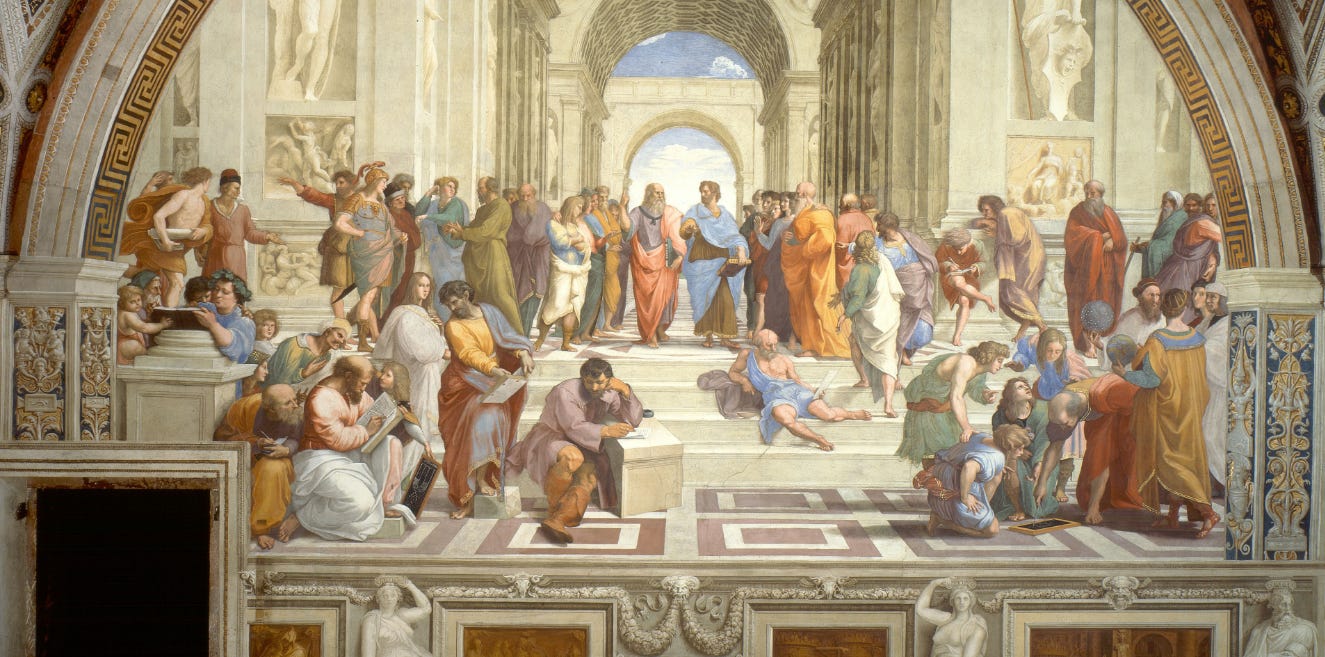
While it isn’t an Aristotelian quote, it does capture his essence, emphasising that excellence of character is shaped by consistency of behaviour, as opposed to being some quality you can attain. You don’t wake up one day and go ‘wait, what’s different, oh, I know, I’m excellent now!’
Excellence is a way of life. It’s something you either are or are not.
I don’t know that we necessarily appreciate the nuance there. What is being said is that you don’t need to work at being excellent; you either do what you’re doing with excellence, or you don’t. And I think part of the reason we get that wrong is because of Malcolm Gladwell’s 10,000 Hour Rule from his 2008 book Outliers:
‘The emerging picture from such studies is that ten thousand hours of practice is required to achieve the level of mastery associated with being a world-class expert—in anything,’ writes the neurologist Daniel Levitin
To become a chess grandmaster also seems to take about ten years … And what’s ten years? Well, it’s roughly how long it takes to put in ten thousand hours of hard practice. Ten thousand hours is the magic number of greatness.
The confusion there is due to the word expert or expertise, which I suspect is commonly mistaken as a stand-in for excellence. But Aristotle (and Durant, but in his own words) would tell us that - while we are what we repeatedly do and if you repeatedly do practice, you can master something - in actual fact, excellence is how we approach those ten thousand hours of practice. Excellence is in the journey, not the destination. It’s the friends we made along the way.
How to inspire excellence, though. Here’s another Aristotle quote:
As it is not one swallow or a fine day that makes a spring, so it is not one day or a short time that makes a man blessed and happy.
Aristotle did say this one, or the classical Greek version of it, at least. But I prefer the wise words of two of our brightest modern philosophers: Bill S Preston Esquire and Ted Theodore Logan, who famously said:
Be excellent to each other.
Be an example of what you want to see in the world – that is the best way to inspire others. Be excellent every day, in everything you do.
Be excellent to each other.

Mā te wā e te whanau,
Chris xo
No posts
Comments
Nothing yet. Say the first thing.
Sign in to join the conversation.