
At 11:40am on a Tuesday, I closed the laptop with everything that mattered already finished. I had earned the afternoon. It was time to unplug.
The first thing I felt was guilt.
So I opened the laptop again. I found an email that could wait and answered it slowly, to make it last. I reorganised a folder nobody would ever open. I manufactured two more hours of motion to quiet a feeling I did not yet have words for.
You have done a version of this. You finish the real work and then go looking for more. The silence does something to you, and a task is the quickest way to make it stop.
That reflex is the most honest thing about you. Your calendar is a confession of what you cannot yet sit beside.
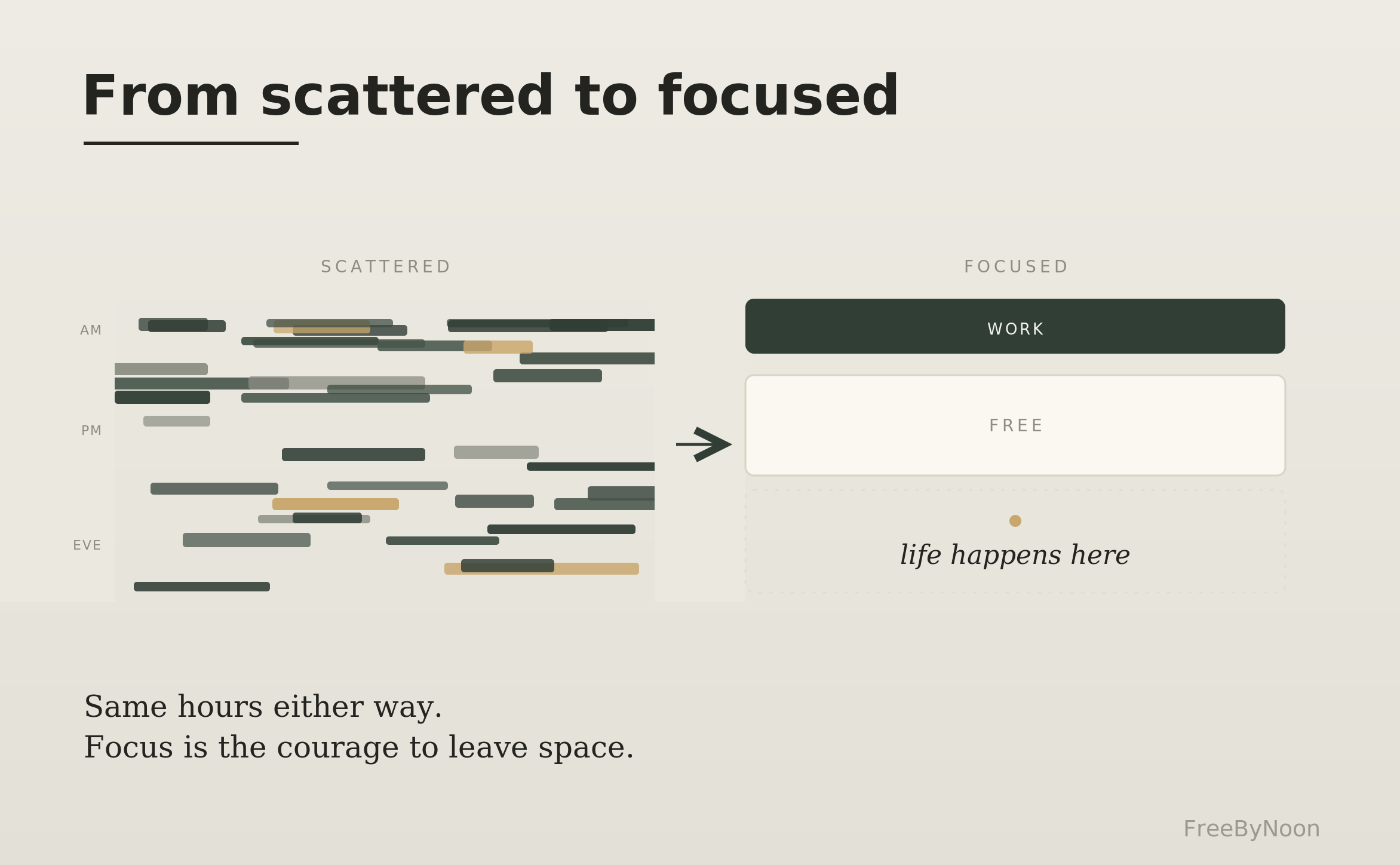
We treat a full diary as proof of a serious life. Slammed becomes a brag. Back to back becomes a badge.
Look closer at who clings hardest to it. The ones who grip it tightest have usually already won enough to slow down, and still cannot make themselves do it.
The work is real. The volume is a choice. Underneath that choice sits a quiet narrative most of us never say out loud: if my worth is my output, then an empty hour is a small death.
Productivity culture sold us that narrative and called it ambition. Keep the diary full and you never have to ask whether the thing you built is the point, or the place you go to avoid the question.
I know how this sounds. It comes from years of living inside it.
For six years I drank to take the edge off the noise. The years after taught me the noise was never the problem. The drink was just the volume knob.
Motion works the same way. A packed day is a substance. It changes how you feel, and it asks for a slightly bigger dose each time.
So when you finally get free by noon and the afternoon opens up empty in front of you, the discomfort that shows up means you are doing it right. It is everything the busyness was holding down, finally coming up for air. The relationship you have been too occupied to feel. The version of you that learned, somewhere young, that being useful was the price of being loved.
The first taste of that discomfort sends most of us running. We mistake it for failure and pack the day back out by lunchtime. A full schedule at least is quiet.
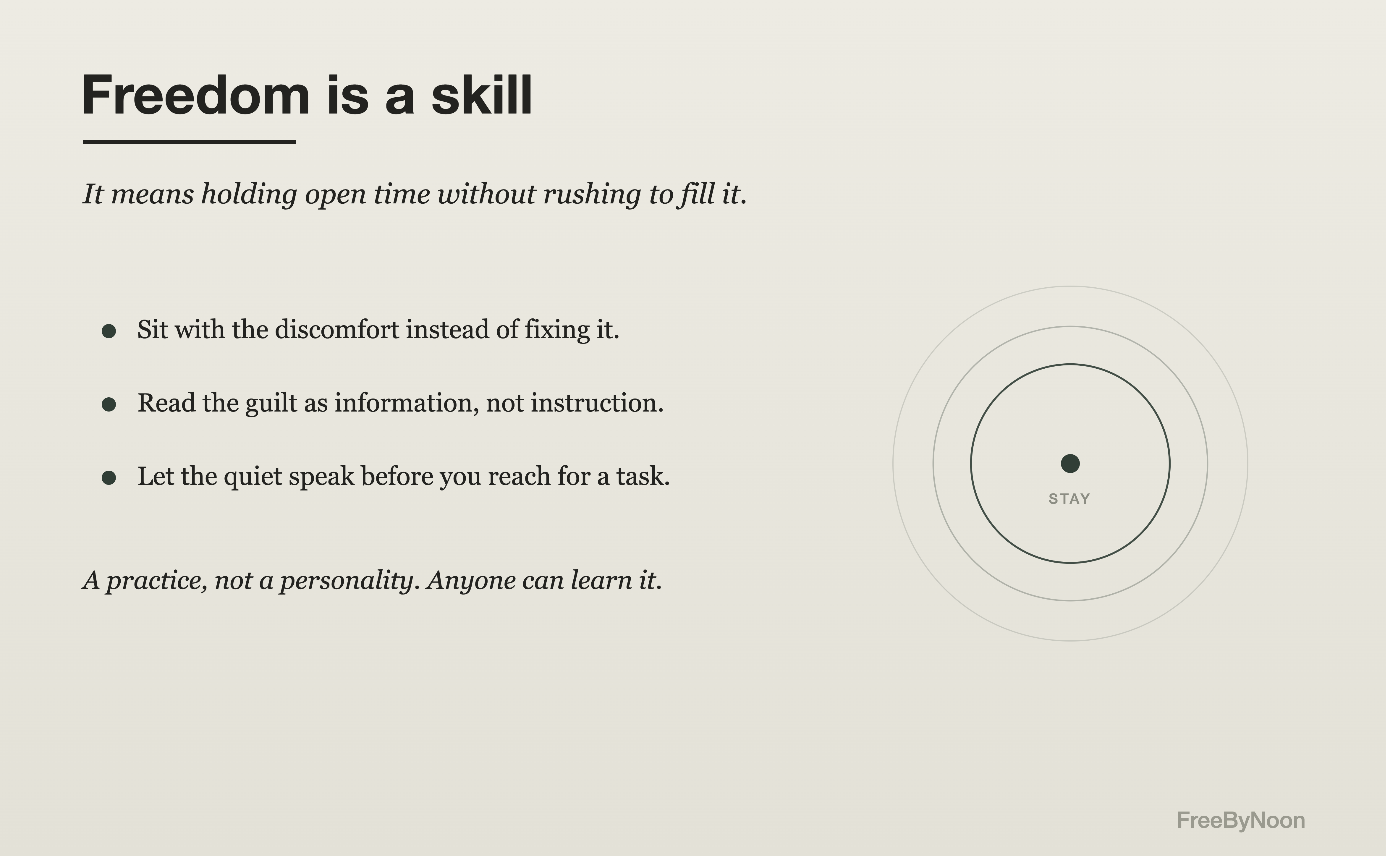
We assume free time will feel good, then squander it the moment it arrives, because holding open space is a skill and you were trained for the opposite your whole life.
Retire an individual who lived for their work and watch how fast they fade. Hand a founder a free afternoon and watch how fast they fill it. We call the empty hour the reward at the end of the discipline. It is the discipline itself.
Free by Noon is a practice of staying in the room with myself when there is nothing left to do, and not flinching. The time it saves is the least interesting part.
I run my days through four moves. The loop closes because the last move feeds the first one tomorrow.
Name. Each morning, name the two or three things that genuinely move your life and your business. Not the urgent. The ones that still matter when you zoom out to the year.
Narrow. Cut the rest, or defend why it survives. Most of what fills a diary is there by habit. Subtraction is the whole game.
Nail. Do the named work first, early, fully present. No meetings before it. No inbox before it. You are buying back the afternoon with a sharper morning.
Notice. When noon comes and the work is done, stay. Do not rescue yourself with a task. Notice what surfaces and sit with it long enough to hear what it is telling you. That signal is what you Name tomorrow.
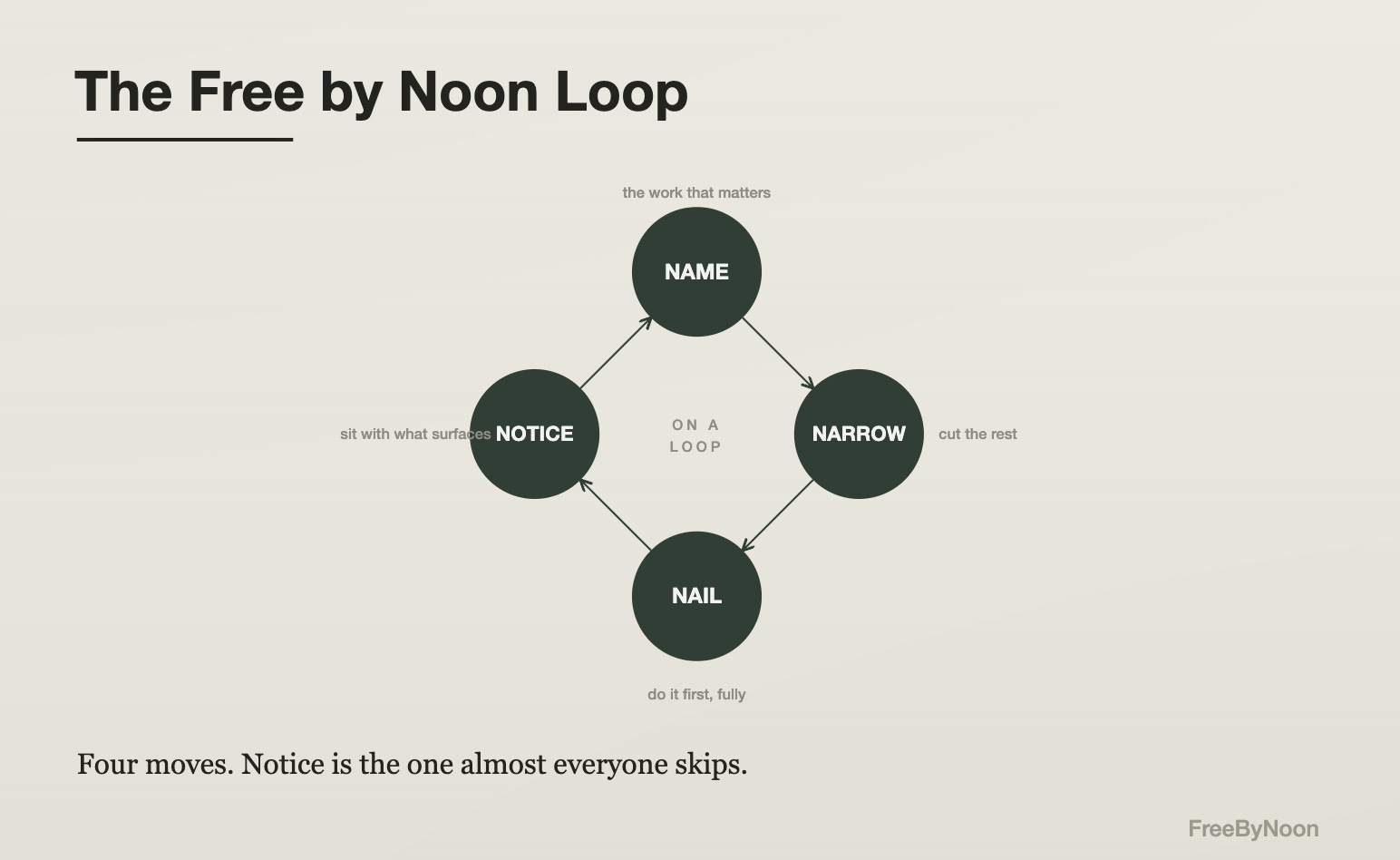
The first three moves get you free by noon. The fourth is the one that matters, and the easiest one to skip.
The point was never the empty afternoon.
It was who you become when you stop running long enough to find out.
When I stopped filling the hours, the business did not shrink. It got better, because I got quieter, and the ideas that change things only arrive in the space you refuse to book. My sons got a Dad who was there and not just home. The afternoon stopped feeling like exposure and started feeling like mine.
This loop hands you back the hours you were hiding in.
Tomorrow, when you finish early and feel that pull to find one more thing, notice it. Then reply and tell me the task you reach for first. Naming the reflex is how you start to loosen its grip.
- Chris
PS. The first empty afternoon is the hardest one you will sit through. It is also the most important. Stay in it. Everything you have been too busy to feel is just trying to be heard.
PPS. If you run a business that eats 40, 50 or even 60 hours a week and you are starting to suspect the busyness is costing you the very thing you built it for, that is what FreeByNoon exists to fix. Identity first, systems second. Both important. The first cohort launches soon. Reply here and I’ll add you to the waitlist.
Comments
Nothing yet. Say the first thing.
Sign in to join the conversation.