
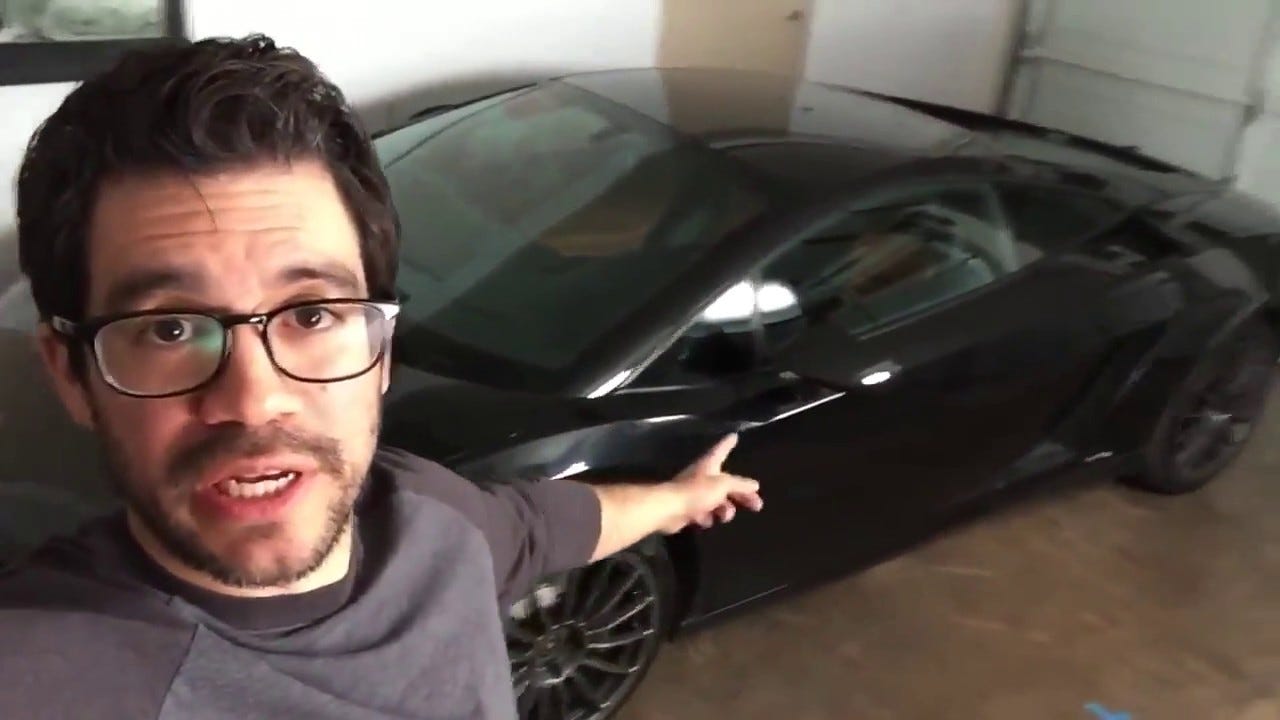
Ask most people what success looks like and they’ll point at a garage. A car that costs more than a house. A boat that sits in the water eleven months of the year. The stuff we’re told to want.
But I don’t think that’s it. Not really.
Success is being able to stop. It’s getting the call that a friend is having a hard week and knowing you can show up without checking your bank account or your calendar first. It’s being present for the people you love at a moment’s notice, and still trusting that whatever comes up at work, you’ll handle it. Sometimes work does come up. But you can almost always handle it.
That’s the version worth chasing. Not the yacht. The capacity.
And here’s what I keep running into when I think about how people actually get there: the ones who arrive rarely got there by protecting everything they had. They got there by pouring themselves into people and projects, often before it made any sense to.
When I look back at what got me the furthest, it isn’t the times I played it safe. It’s the times I poured my heart into something or someone with no guarantee it would come back around. And then, sometimes years later, it paid off in ways I didn’t feel like I’d earned.
That feeling matters. Not feeling worthy of what came back is exactly what makes some people turn around and do the loving thing again. It’s not a debt being repaid. It’s a person realizing they’re capable of more than they thought, and wanting to spend it.
You see it clearest in religious communities. Tithing, community support, showing up to help someone move or rebuild or grieve. People giving time and money they could have kept, over and over, and somehow not ending up empty. I’ve watched it long enough to stop calling it a coincidence.
The people who love intensely are rarely without.
One of my sisters-in-law told me once that every time she gives generously, she gets back ten times what she gave.
It stuck with me because I knew she was right. I’ve seen her life. But I want to be careful here, because there’s a version of that sentence that’s not going to land in the way I want it to, and a version that’s true, and they sound almost identical.
The version I’d be hesitant to align myself is like an emotionless vending machine. Get rich quick scheme. Put love in, get ten back. Give as a strategy. Tithe as an investment with a guaranteed return. The moment giving becomes a transaction you’re owed on, it stops being love. It’s just a trade with extra steps, and it doesn’t work anyway, because everyone can feel when they’re being given to and billed at the same time.
That’s not what she meant. She wasn’t running the numbers. She was describing what generosity does to a person and to the world around them. When you give like that, consistently, you become someone the good things can actually find. Doors open because people trust you. Help arrives because you’ve been the kind of person who helps. You notice more, you’re offered more, you’re surrounded by people who show up the way you’ve shown up for them.
The return is real. It just isn’t a receipt. It’s who you become and who gathers around you.
If the return is that reliable, why are any of us hesitant to give more, or love more?
I used to think it was doubt. That people held back because they weren’t sure it would pay off. But I don’t think that’s it. Most of us have seen the payoff. We’ve watched the generous people in our lives and quietly noticed they’re doing fine.
The real reason is simpler and harder. Giving requires believing there’s enough. Enough money, enough time, enough love, enough of you. And most of us are running on the opposite setting by default. Scarcity. Hoarding against a famine that, for the vast majority of us, is never actually coming.
That’s what the abundance mindset really is. It isn’t optimism, and it isn’t pretending everything is fine. It’s a refusal to live braced for a shortage that isn’t on its way. It’s deciding you have enough to spare, and acting like it, before the spreadsheet gives you permission.
Here’s the part I keep circling, and I’ve decided not to resolve it, because the loop is the whole point.
Does success create the room to be generous? Or does generosity create the success?
I think it does. Both. At the same time. It’s not a sequence where you earn first and give later, and it’s not a rule that you give first and get repaid. It’s a circle with no starting line. Loving intensely changes how you show up, what you pay attention to, and how people show up for you. That compounds into what we call success. And success widens the capacity to love. Same circle, going around.
Which means you can step into it anywhere. You don’t have to wait until you can afford to be generous. The generosity is part of how you become someone who can afford it.
So maybe the goal isn’t to get rich enough to finally be kind. Maybe it’s to build a life so full that the only thing left to do with it is love people. Where being generous stops feeling like a sacrifice and starts feeling like the obvious move. The only move that makes sense.
I think that’s what my sister-in-law figured out. Not a formula. A way of living where giving is just what you do, and the ten times over is simply what a life looks like when it’s built that way.
The garage stays empty of the flashy stuff. The life doesn’t.
No posts
Comments
Nothing yet. Say the first thing.
Sign in to join the conversation.