
Boozhoo, indinawemaaganidog! Aaniin! That is to say hello, all of my relatives! Welcome to another edition of An Irritable Métis. Today I am writing from a place of gratitude; from a place of love for the world we are all so fortunate to share. The August Singularity is in full force here in the OMD and we’ve had cooler temperatures and rain the last 36 hours 60 hours1 or so and it has been life affirming. If this morning’s porch sit is to be believed, even the birds are reveling in this brief respite from weeks of heat and wildfire smoke. I’m sure we will find ourselves under the influence of all that again soon enough, but for now – a break. I am grateful to look to my left out my window and see puddles of water in the street and droplets hanging off the leaves of the cherry tree. What a gift, both the water to the thirsty earth but also the vision to my thirsty eyes of that water glittering among the branches. I’m not good to anyone else – like those people whose suffering continues unabated, for example – if I don’t take the time to stop and recognize my good fortune. That failure to do so can be easy to blunder into as I muddle along simmering in my own petty melodramas. That is when I start to slide into useless despair.
I also want to thank the handful of folks who donated to the Spokane efforts as described in my previous post. We raised a few hundred dollars and books will be shipping this week. Miigwech for your thoughtful generosity. Every little bit helps.
Similarly, I remain magnificently grateful for your time and attention and support. This newsletter, for the foreseeable future anyway, has returned to being my primary means of keeping things afloat, and your paid subscriptions – welcome and deeply appreciated but certainly not necessary for your participation here – are key to that. If you think this space is worthy of $5/month, or $50/year, please consider upgrading by hitting the button below:
Would you like to support my work but don’t want to subsidize the villains who run Substack? You may always do so via Buy Me a Coffee HERE. I am eternally grateful.
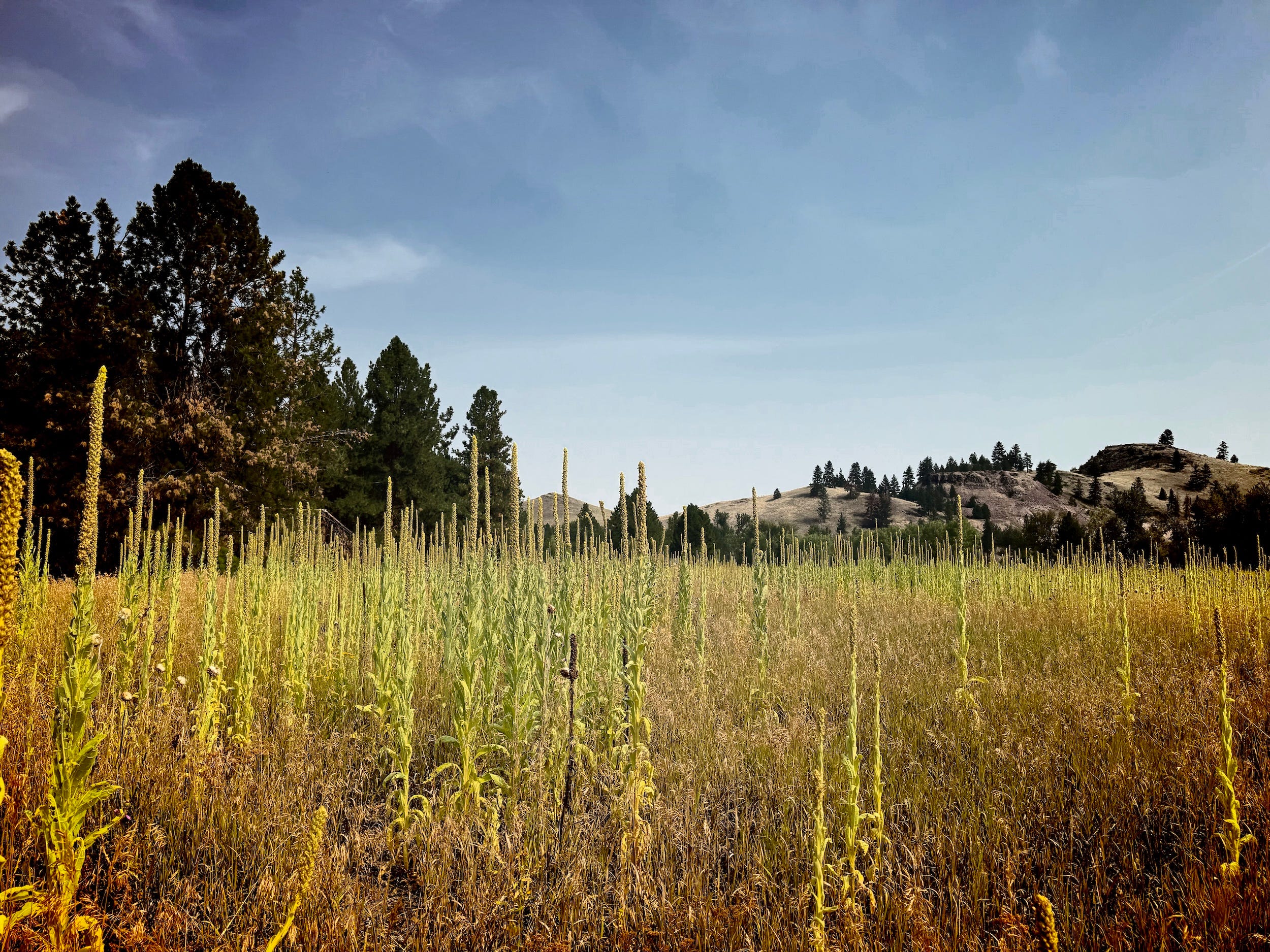
When I arrived in Ohio for my exile there beginning in 2002, it was February. The weather wasn’t bad considering the month, but it didn’t remain that way. I was in deep despair for having to make the move in the first place, the degree of which I wouldn’t recognize for some years after, and as the winter dragged on it was more and more difficult to cope with the almost transcontinental change of scenery. Every aspect of the landscape was foreign to me, as was the human culture and the work I was doing. It’s surprising I lasted at all because I don’t think I was doing much to pull my weight either for those first few months. It was ultimately a gig I would hold for more than a dozen years and would take nearly that long in its aftermath to rid my nervous system of, if I even have.
Over the first weeks-into-months I began to accept my situation and find better ways to exist. I had located a city park not far from where I lived that encompassed about 400 acres. There were towering trees and grass and a creek running through that fed a small lake. I would go there often as I could because it was the wildest area I was able to reach on a daily basis. I don’t recall if I was there every single day (in fact I’m certain I wasn’t) but I was there often. During the remaining cold days of that winter I remember long walks in snow and ice and drizzle gloomily listening to the music of Swedish doom metal legends, Candlemass. If I was going to feel dreary, then by the gods I was going to embrace it fully!
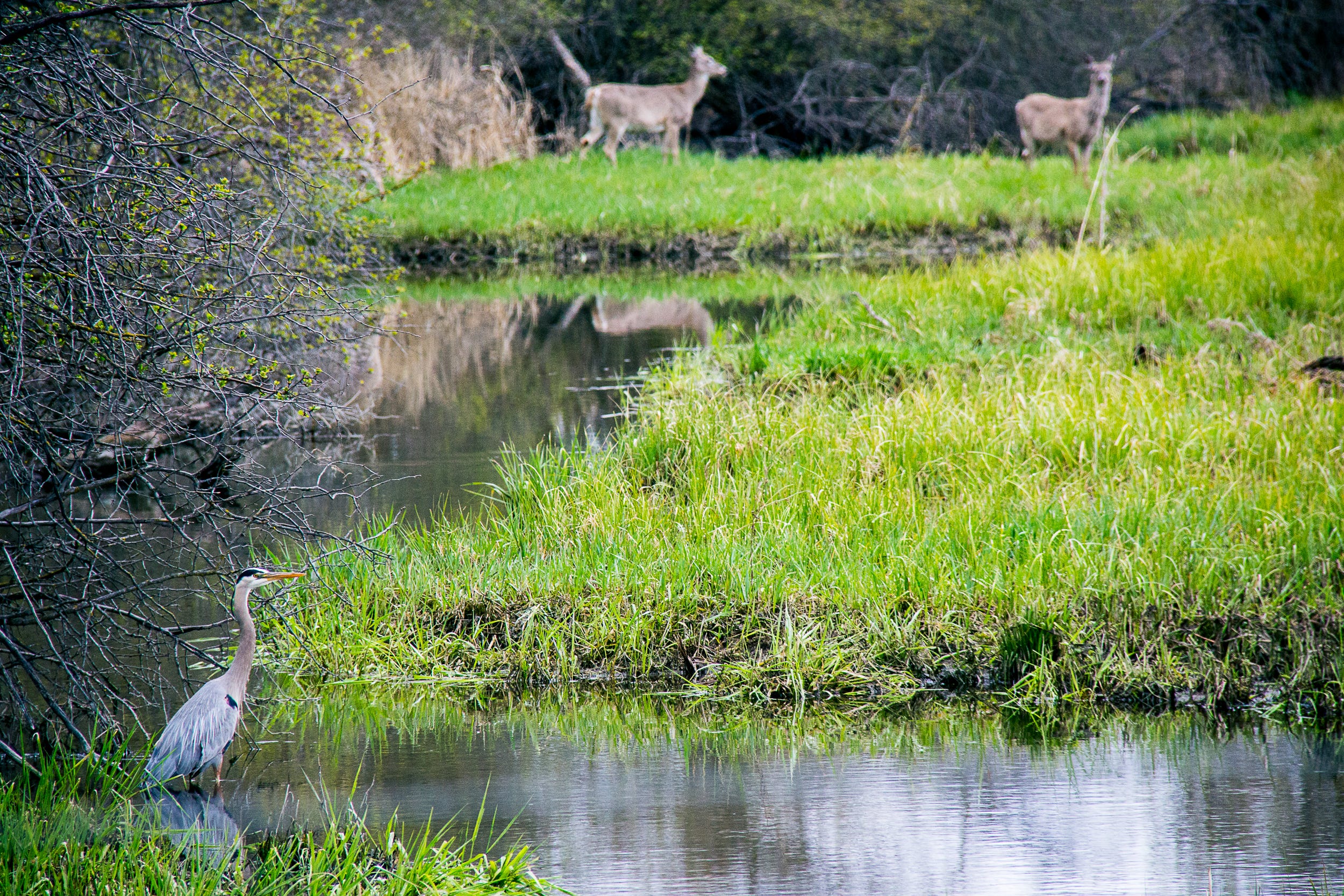
As the weather sweetened the ball fields and playgrounds of the park swelled noisily every afternoon with people, so I would often visit in the early hours. There was a rough path that bordered the creek and then followed the curving shore of the lake. I remember a particular morning, the light golden and bright in my face, when I came around the corner and out of the trees to face the calm waters. For probably thirty yards in front of me there was a heron stalking the shallows of the lakeshore, one poised maybe every fifteen-to-twenty feet or so. On cue it seemed, at least as I remember it, they raised up and angled their stately heads my way. I was astounded and struck motionless. Not wanting to bother them I retreated, moved deeply by the encounter.
That park was the scene of another encounter, one of the most memorable of my life. This particular time it was summer and growing dark after a long, steamy day. I was hustling back to the parking lot, walking atop a hill that sloped down into an open area surrounded by wide trees that were little more than dark silhouettes against a fading sky. I saw a spark in the air and paused. There was another. Soon the entire meadow was lit up with tiny little dancing motes of light like I had never seen before or since. Fireflies, of course, something we don’t have in Montana. Even thinking about it these twenty-odd years later I’m still rendered a little verklempt.
I like to think I’ve seen cool stuff. The sun setting into the western ocean. A herd of elk crossing the mountain road in front of me on a drizzly evening, close enough I could smell the musk of their rain-soaked bodies. A river in Washington so packed with red salmon that I swear I could have, as the old saw goes, walked across it on their backs. Countless thousands of snow geese rising as one living organism into a brittle sky from the surface of a freezing lake and fanning off noisily in every direction. Just recently, and not for the first time, the steady groans and growls of a valley full of buffalo. None of these eclipse the magical encounter with those lightning bugs. Sitting here, I realize how much I desire to see them again before I cross over. It is a longing I imagine the entire world full of older-than-human relatives must have felt for our arrival, our very creation, before they’d ever met us in the first place.
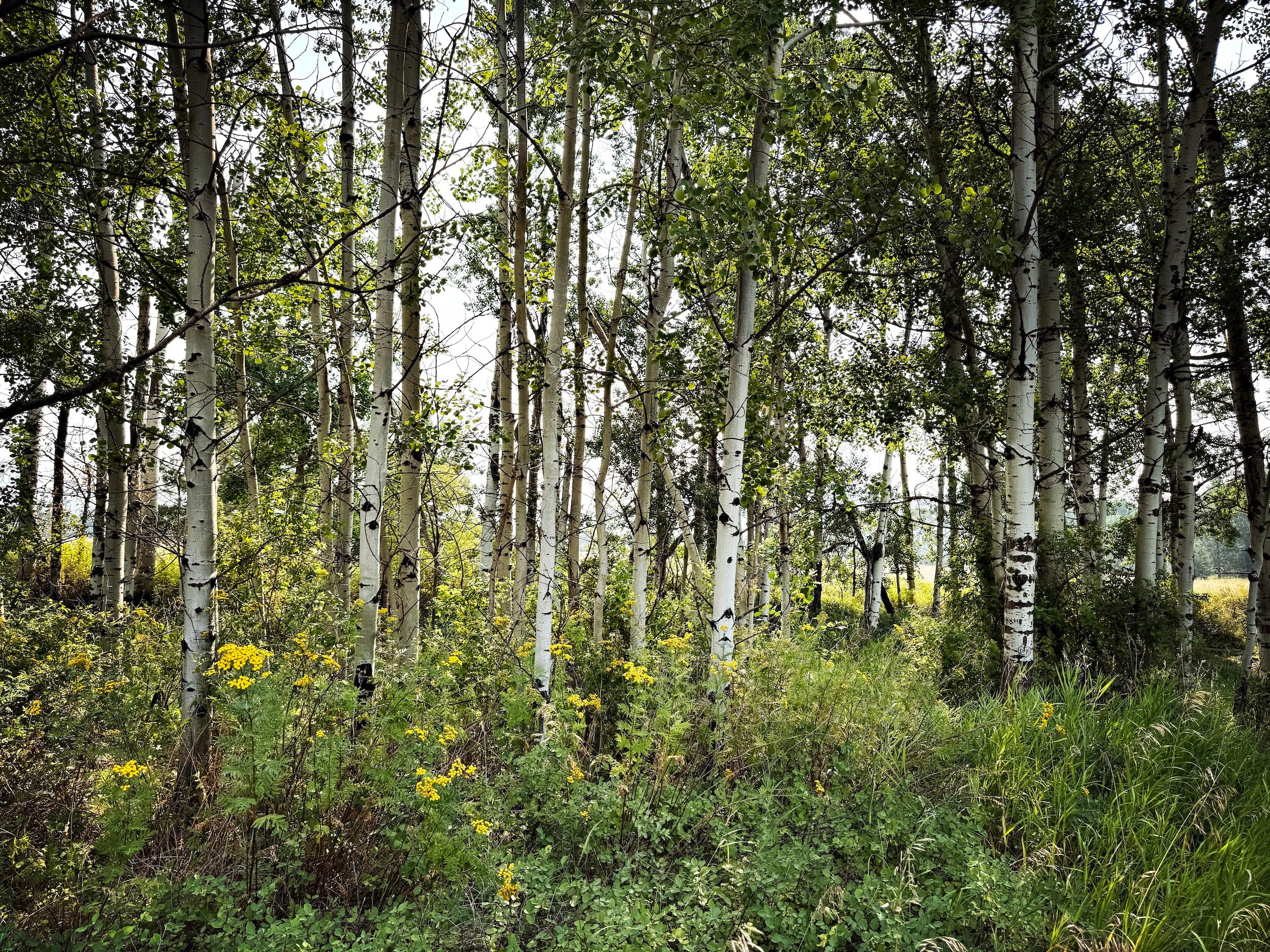
I was thinking of these experiences at that park in Ohio a couple days ago. Thinking deeply about my personal connection2 to the older-than-human world and how long I’ve felt it, whether I could identify it as such or not. I’d huffed a couple miles up a favorite trail on the edge of Missoula. I was sitting on a log that extends out into a cold and vigorous creek. The log has been stretched out there for some time so there is much vegetation growing up and out of its various cracks and crevices and I have been in that very spot many times over the last two decades. The light was beautiful, almost autumnal, the first day out from under the pall of smoke we’ve been enduring. In many ways it also felt like my first day out from under the pall I’d been living under emotionally after the high octane run up and through IPFEST, immediately followed by the sojourn to Yellowstone and finally home, all without any downtime really beyond hours behind the wheel of my car. I’d been rattling along, hardly holding it together, and then there I was, surrounded by so much abundant, joyful life. I was a dying battery finally plugged into some juice.
Creekside, the water was cascading around moss-covered rocks from which sprouted deep green plants with yellow flowers.3 Conifers rose from behind the banks of heavy willows. Waterbugs skipped across the surface of pools created by eddies in the stream and butterflies seemed to be everywhere. At one point three beauties were taking their rest on my body; two on my arm, one on my thigh. Even the big flies who chose to take a turn at resting on me didn’t bite or annoy. We were together, sharing that glorious afternoon moment. I was almost dizzy in the abundance of all this life and I felt like I was having nothing short of a deeply spiritual experience. I don’t have any other word for it. The lines were blurring between every bit of life out there, including those that encompass my idea of what makes me me and everyone else everyone else. I loved it and I didn’t want to leave. Everything that is me could have gone entirely cosmic just then and drifted off to be whatever else and I don’t think I’d have even noticed.
I’m sharing this poem from the pages of The Dharma of Poetry by John Brehm. Brehm is one of my favorites; his latest, Just This: New and Selected Poems, is essential. Anyway, this old poem reflects much of what I’ve been yammering about here, and I thought you might like to read it. I’ll add Brehm’s commentary from the book after.
Text within this block will maintain its original spacing when published
The Joy of Fishes
by Chuang Tzu
Chuang Tzu and Hui Tzu
Were crossing Hao river
By the dam.
Chuang said:
"See how free
The fishes leap and dart:
That is their happiness."
Hui replied:
"Since you are not a fish
How do you know
What makes fishes happy?"
Chuang said:
"Since you are not I
How can you possibly know
That I do not know
What makes fishes happy?"
Hui argued:
"If I, not being you,
Cannot know what you know
It follows that you
Not being a fish
Cannot know what they know."
Chuang said:
"Wait a minute!
Let us get back
To the original question.
What you asked me was
'How do you know
What makes fishes happy?"
From the terms of your question
You evidently know I know
What makes fishes happy.
"I know the joy of fishes
In the river
Through my own joy, as I go walking
Along the same river"
	– translated from the Chinese by Thomas Merton
Brehm identifies the characters and explains their opposing positions as follows:
Hui Tzu, Chuang Tzu’s friend and philosophical foil in “The Joy of Fishes,” was a follower of Mohism, a school of thought that prized rationalism and utilitarianism and derided the spontaneous intuitive wisdom of mystics like Lao Tzu and Chuang Tzu. Mohist thought depends on careful definition of terms, the upholding of rigid categories, and strict adherence to logical argumentation. Here, Hui Tzu takes the position that one cannot know what the fishes are feeling simply because there is no logical, empirical basis for that knowing.
Brehm elaborates:
Taken to its extreme, such a view [Hui Tzu’s] implies that we are separate from all other creatures, that we can know only what we have directly experienced ourselves, that there is no empathic resonance between the human and nonhuman worlds.
And finally, this:
But while Chuang wins the argument in the poem, the worldview represented by Hui – the rationalist, materialist, utilitarian worldview – has clearly dominated modern Western culture, and with disastrous results. The horrors we have visited upon the earth and the creatures of the earth result, directly and indirectly, from our illusory sense of separation from the whole, our disconnection and imagined superiority to all other life forms.
And so this poem, written more than two thousand years ago [my emphasis!], speaks with extraordinary urgency to our own moment of ecological crisis. Or perhaps it would be more true to say our moment of empathic crisis, a crisis that asks us to choose: Do we feel with all other life forms on the planet, or deny our emotional connection and treat them as commodities or “natural resources” to be exploited or “preserved”? If we feel with, if we recognize and cultivate our empathic resonance with life in all its manifestations, then on some fundamental level the crisis can at least be understood within the proper ethical/spiritual framework, and we can begin to heal the self-inflicted wound of separation we are suffering from so acutely right now.
What Chuang Tzu’s poem shows us is the struggle to remain in close relationship to the entire world has been going on for millennia. Are we the ones who are finally going to set things straight concerning our human relationship to the world? I hope so. The only thing I’m certain of is we can’t rely on the next generation to do it for us, since we are all part of generations that earlier ones hoped would be the ones to get it together and we sure as hell haven’t. We all have to pitch in, and we need to start now. Individual efforts matter.
I’d sure love to hear some brief stories of sublime encounters some of you have had. Put them in the comments so we can all be so moved.
Updated from when I started writing this edition to when I finally got back to it!
I almost said “our connection” here. I believe we do all have this connection, but who am I to speak for anyone but myself?
No posts
Comments
Nothing yet. Say the first thing.
Sign in to join the conversation.