
Note: I’m on a family vacation this week and taking some much-needed time away from screens! But since my subscriber list has grown recently, I figured it might be a good time to share a few of my favorite posts over the next few weeks! I hope you enjoy them. And if you’re just venturing over for the first time, please consider subscribing!
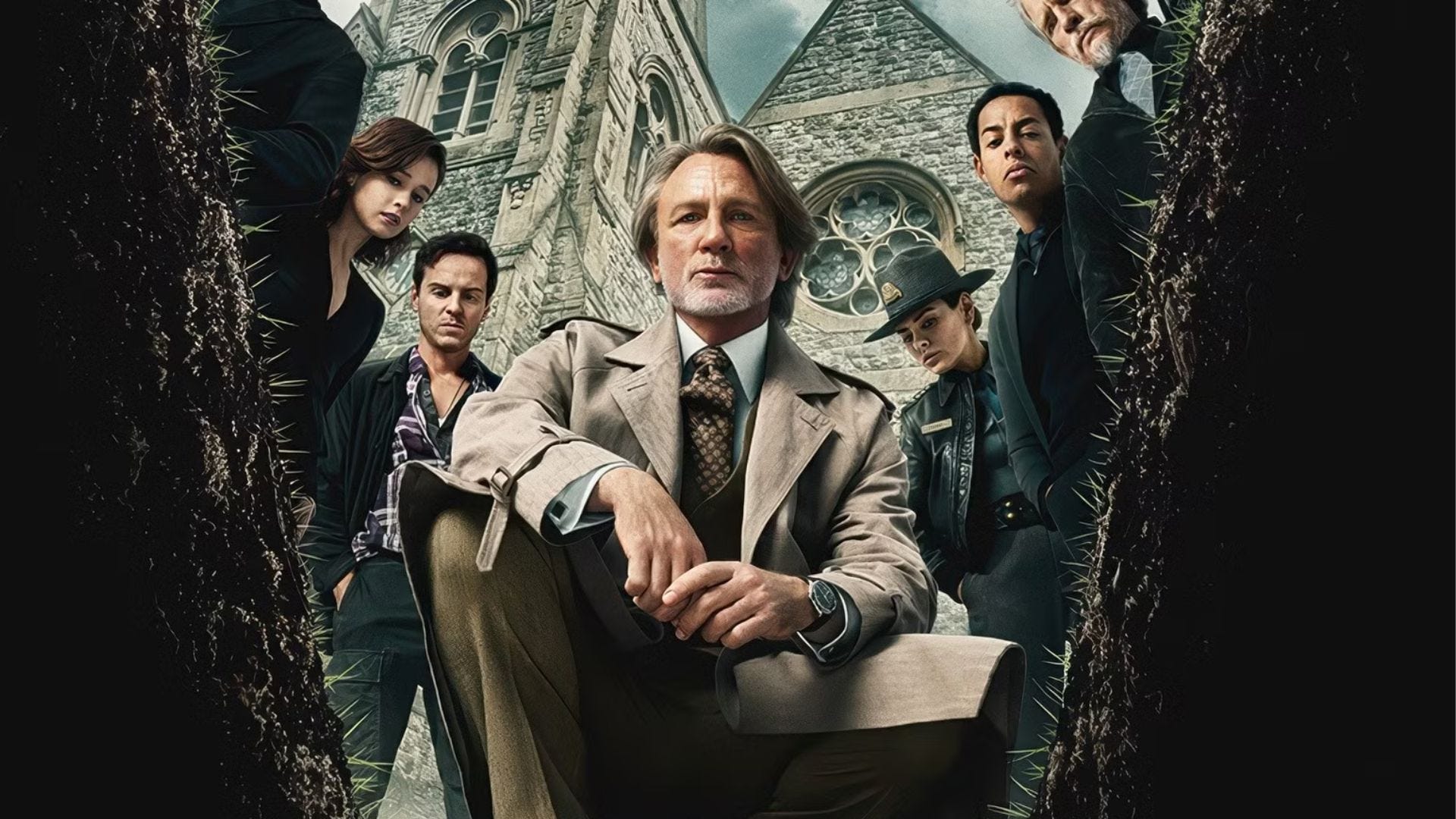
In Wake Up Dead Man: A Knives Out Mystery’s time-jumping narrative, we briefly glimpse Daniel Craig’s master detective Benoit Blanc in the first scene, but he actually doesn’t join the story until well after 30 minutes into the film. True to form, he makes quite an entrance.
Josh O’ Connor’s Father Jud Duplenticy sits in the pews of his empty church, wondering how to move forward after the murder of the parish’s monsignor – a murder in which he is the prime suspect. As he contemplates his next steps, the door opens and Craig’s Southern-fried detective enters. The two make small talk, and then the topic turns to Blanc’s thoughts on faith, which Craig unpacks in a blistering monologue that sums up nearly every criticism people have of the modern church:
“Well, the architecture, that interests me. I feel the grandeur, the mystery, the intended emotional effect. … And it’s like someone has shown a story to me that I do not believe. That is built upon the empty promise of a child’s fairy tale, filled with malevolence and misogyny and homophobia. And it’s justified untold acts of violence and cruelty while all the while, and still, hiding its own shameful acts. So like an ornery mule kicking back, I want to pick it apart and pop its perfidious bubble of belief and get to a truth I can swallow without choking.”
We shouldn’t be surprised that this is Blanc’s position. He’s already stated that he “kneels at the altar of the rational,” which we’ve seen in both Knives Out and Glass Onion. And the second movie in Rian Johnson’s trilogy revealed that Blanc is a gay man, so he likely has personal bones to pick with a faith that too often has its own knives out for the LGBT community. But in Craig’s monologue, the anger slowly rises, a show of vulnerability and rage that we haven’t seen in a character who is often the voice of reason or comic relief.
Father Jud doesn’t get defensive or whip out a Bible or apologetics book. He engages Blanc on his terms:
“You’re right. It’s storytelling. This church isn’t medieval. We’re in the middle of New York. It has more in common with Disneyland than Notre Dame. And the rites, the rituals, the costumes...all of it. You’re right. It’s storytelling. I guess the question is - do these stories convince us of a lie, or do they resonate with something deep inside us that is profoundly true, that we can’t express any other way, except storytelling?”
It’s one of my favorite scenes in a movie full of them – Wake Up Dead Man placed very high on my list of favorite films of 2025. It’s so well-written and acted that I’ll even forgive Johnson’s slightly over-the-top use of sunlight filtering through a window to underline his points. A lesser movie would use this scene to set up a battle in which the sincere priest wins over the skeptical detective or the man of reason knocks the man of faith off his podium.
Instead, it sets up a battle that I assume Rian Johnson has waged in his own life, given the openness with which he’s talked of his past as a youth group kid and his eventual walking away from organized religion: is faith a thing of beauty or a force for harm? Can it be both?
Even though there are many things that the third, and best, Knives Out movie does so well – it’s funny, it’s tremendously well written and acted, and it has a hell of a mystery to unravel – the thing that has stuck to my ribs is the way it constantly examines and turns over the same things I’ve had to confront in my own life: that the church can be a place of great harm and wickedness, while still a place that holds deep meaning, power and beauty.
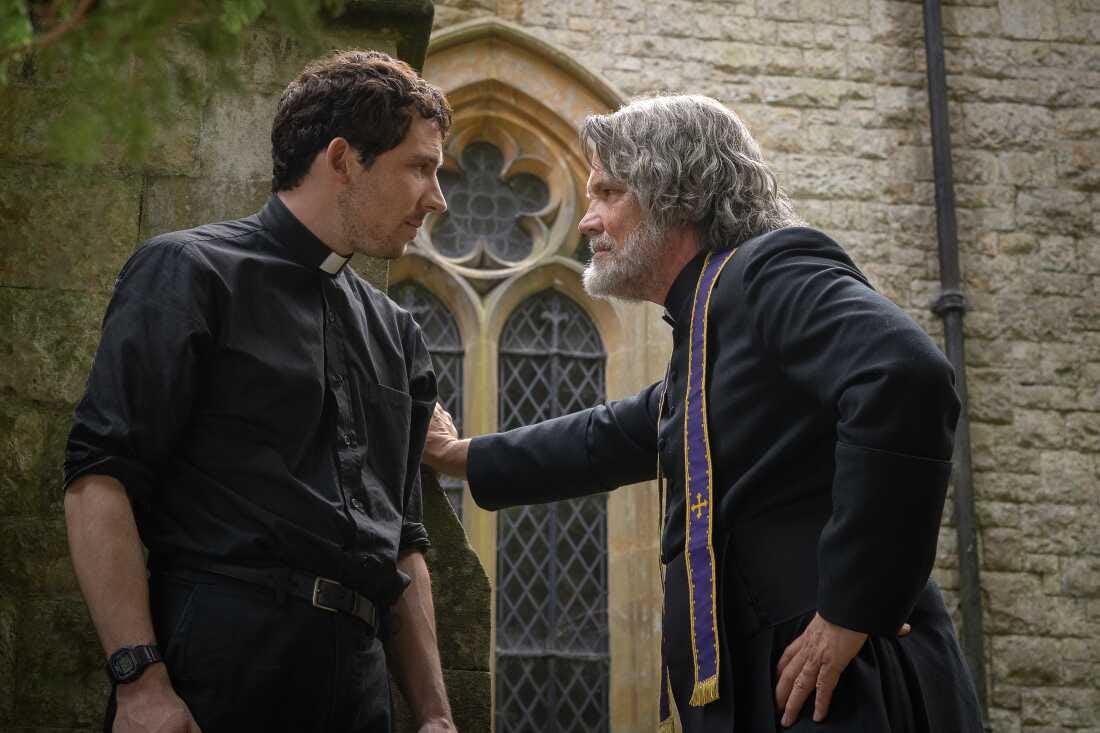
Father Jud has been transferred to the small parish of Our Lady of Perpetual Fortitude after punching a deacon, but he hasn’t found his new home any less combative. The congregation is under the thumb of the bullying Monsignor Wicks (Josh Brolin), and they’re so in awe of him and afraid of interlopers that they’ve given Jud the coldest of welcomes. Wicks doesn’t help things; he’s a blowhard who takes pleasure in provoking and tormenting the young priest, and seems to encourage the congregation’s war against the newcomer.
Johnson is well aware that the church – particularly in modern America – is full of prickly people, to be kind, and he populates the congregation with a collection of individuals that showcases every annoyance I have about the body of Christ. There’s Glenn Close’s legalistic woman, who is obsessed with making sure every detail is nice, tidy and done to perfection. There’s the doctor going through a divorce who’s using religion to get back what he’s lost and hiding his alcoholism, as well as the woman willing to pay money to gain healing (and a church leader perfectly happy to take her money). There’s a conspiracy-obsessed writer who idolizes Monsignor Wicks, and – perhaps the most entertainingly awful of all – an influencer hoping Wicks will help bolster his platform and prospects. After, all, he says, everything else has failed:
“I tried everything. Believe me, I hammered the race thing. I hammered the gender thing, the trans thing, the border thing, the homeless thing, the war thing, the election thing, the abortion thing, the climate thing. Thing about induction stoves, Israel, library books, vaccines, pronouns, AK47s, socialism, BLM, CRT, the CDC, DEI, 5G, everything. All of it I did. Nobody, just nothing.
People are just numb these days. I don’t know why.”
But worse of all is Wicks, who singles out and berates congregants in his sermons1. He loves to push Father Jud’s buttons; during their weekly confessions, he takes glee in confessing his masturbatory habits, even though Jud points out that he’s aware based on previous conversations that Wicks is physically incapable of that particular act. Wicks is convinced that the church is set in the middle of a wicked, depraved and combative world that seeks to destroy it, and that it’s his job to strike that world and its sinners down. His closest circle of parishioners share that sentiment, and he uses that to keep them afraid and under his control – while keeping close enough tabs that he can use their darkest secrets to blackmail them should he need to. It’s probably no surprise he ends up with a knife in his back.
Upon realizing that Johnson – who tackled MAGA culture in Knives Out and techbro idiocy in Glass Onion – was going all in on the American church, I got excited. I have a complex relationship with church. Throughout much of my life, it’s been a source of tension. I’ve seen congressional conflict spill out into shouting matches in the middle of Sunday morning worship. I’ve watched a youth pastor groom one of his students and a music minister have an adulterous relationship with a woman in the choir. It was from church people that I first heard racial slurs, and it was the same body that told me to love others that instilled a suspicion toward gay men and women that took years for me to untangle. And all of that is without considering the last 10 years of a MAGA-fueled unholy marriage between church and the politics of cruelty.
When thinking back to these issues and Jud and Benoit’s conversation about the church as storytelling, I look at the current story the American church tells, I can understand why some look at it and are convinced of a lie. Love your neighbor and your enemies is scoffed at; the idea of lowering yourself to serve others is antithetical to a church that desires power and status. We’ve replaced Christ-centeredness with idolatry for strongmen and bullies – and, without getting too specific, the solution to Wake Up Dead Man’s mystery concerns the desire of congregants who want to pervert the Gospel in order to lift up one man. I’ve often described myself as one of the many standing at the back of the sanctuary, looking for any reason to walk out the door. Wake Up Dead Man shares my frustration, suspicion and anger.
But it also locates a better and maybe truer story.
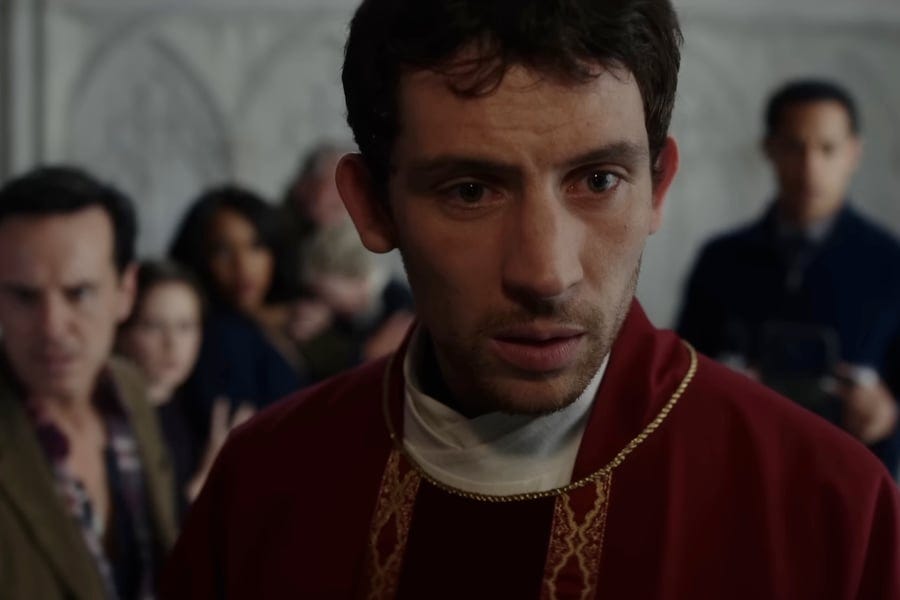
There’s a gesture that Jud makes several times throughout the film, his own brand of storytelling that I really love. He holds his arms out in a cruciform pose, saying that we’re to treat others like “This,” and then turns his hands into fists, “not this.” The cross, not the fist. Sacrificial love, not combat.
But when Jud first showcases that pose to his superior in his former diocese2, I don’t know how much he believes it. After all, he’s defending himself for punching a deacon. And he has a history of combativeness; before becoming a priest, he was a boxer, and he was driven to the ministry out of guilt after killing a man in the ring. While Jud genuinely wants to be a good priest, he’s also quickly frustrated by the people in the congregation. When Wicks is murdered, solving the crime seems to be just as much a way for Jud to finally win a battle over these “wicked wolves,” as Blanc calls them, as it is about clearing his own name.
Honestly, I can’t blame him. The church in this film is a collection of some of the most self-centered, self-righteous, hypocritical people. In Jud’s desire to find the killer(s), we see a desire to expose them for what they are and bring them to justice. I can’t deny that I feel that same self-righteousness when I lash out at the MAGA Christians on Facebook or see an adulterous, abusive pastor arrested and their failure made public. These Christians (a word that should sometimes be in quotes) make a mockery of something I hold dear, and I enjoy seeing them ridiculed, embarrassed, exposed and knocked down. Call it spiritual schadenfreude.
Now, the desire for justice is a very real and good thing. We should want the plans of the wicked to be thwarted. The Bible repeatedly calls for and promises justice. If we get wind of abuse in our congregations, we should report it and victims should be believed. But Jud’s problem – and mine – is one of posture. For people commanded to love our neighbors and our enemies — who might often be one in the same – we have to be aware when our desire for justice twists into a desire to be right, gloat over the hurt of our enemies, or to refuse to see them as humans who God loves. Schadenfreude is not a fruit of the spirit. Uncovering truth, bringing people to justice, exposing sin…it should not be a desire for our side to be “right” but a way to love others to Christ, even if it’s a tough love.
I love how Jud learns how blinded he’s become. In the film’s best scene, he desperately searches for clues with Blanc, scrambling to unravel a conspiracy that much of the congregation appears to be in on. They ransack the parish office and learn information that requires them to call a local excavator. Jud places the call, eager to crack the case. And then, as he’s ready to bound off and solve the mystery, the lady on the other end asks if he can stay on and pray for her; her mom is sick, and she’s having a rough time. Johnson captures a slight pause as the priest hesitates, but he stays on the line. Hours seem to pass – Blanc is a bit perturbed by how long Jud’s away – and when Jud returns, he looks refreshed and at peace, having been able to serve and love someone as a priest, to be reminded of his vocation.
That changes his posture toward the congregation. Although Blanc is committed to solving the murder, Jud wants no part of it anymore (although, of course, plot requirements rope him back in before it’s all over). He doesn’t want to view his parishioners as enemies; he truly wants the cross, not the fist. As he tells Jud, his job “is not to fight the wicked and bring them to justice, but to serve them and bring them to Christ.” And while Benoit Blanc never does come around to Jud’s view of faith – again, that’s not what this movie is – he does appreciate this enough to allow Jud to perform his priestly duties and hear a killer’s confession in their final moments, carrying them to Christ and providing their soul peace at the very end. Justice, mercy and love all meet in this moment.
It’s a beautiful and powerful rebuke to a Christianity that too often sees itself at war, be it with the “wicked” outside the congregation or those on the other side of the political spectrum in their sanctuary. “We are here to serve the world, not beat it,” Jud says – a view in sharp contrast to Wicks, who uses faith as a cudgel to mask his hypocrisy and exert power. I don’t think this needs to be seen as a refusal to acknowledge sin or evil systems; again, I think it’s a question of posture. Does our desire for righteousness and justice rest in a true desire for others to experience the peace of Christ? Or does it rest in our desire to be right, to be on the winning team (which is such an America-filtered view of the Gospel)?
I grew up in congregations that thought the way to keep me in the sanctuary was to make me afraid and angry at the world. I was a self-righteous prick in high school because I viewed my peers as sinners to be brought to judgment and enemies to be argued down. I believed I was chosen, elect, on the right side. Which made me better and them worse. It only resulted in a religion that robbed me of empathy, joy and peace, and put me at odds with anyone who didn’t meet my checkmarks of belief. “If you start fighting wolves,” Jud says, “before you know it, everyone you don’t understand is a wolf.”
But, as a wise apostle once wrote, there is a better way. And it’s the way of love and service. Of seeing people as made in the image of God, and worthy of love, curiosity and respect. It’s not of “loving the sinner, hating the sin” – because then you’ll only ever identify them by the sin you’ve identified – but just loving them because Christ loves them. It’s putting aside our fists and arguments and realizing that’s more that unites us than divides us. It’s wanting above all to see others experience the peace and love available to them in Christ.
Every few Sundays, I have the privilege to help serve communion. It’s always a powerful experience. As I stand with the cup and look them in the eyes, I don’t see people who I might disagree with – maybe vehemently! – on issues of politics or doctrine. I don’t see someone who may have hurt my feelings or sinned against me. I see someone who needs Christ and who is beautiful and beloved, just as I am. There have been weeks in which I’ve walked into the sanctuary frustrated by the words and actions of fellow Christians; participating with everyone else in communion, whether I’m serving or not, is always a reminder that we all stumble to the cross together, and we are all welcome.
I don’t take Wake Up Dead Man as proof that Rian Johnson has reconciled with his doubts and become a practicing Christian. In interviews, he’s been very open that his viewpoint is more akin to Blanc’s, and that perhaps his characters are wrestling with issues he’s already chewed over in his own life. I don’t want to put words in his mouth, but I do think he is able to be both clear-eyed about his doubts, skepticism and reservations regarding the faith as while appreciating what drew him to it in the past and what still keeps others in the church today.
Perhaps that’s why he’s able to give Jud a final victory that feels a bit like having it both ways – getting one up on his parishioners while still keeping it centered in his desire to love others to Christ.
One of the key points of the mystery involves a mysterious gem that went missing ages ago. It belonged to the original parish priest, and Wicks later learns of its location. By the end of the story, Wicks and his murderer(s) are dead, and only Jud and Benoit Blanc know of the existence and location of the gem. Legally, it belongs to Wicks’ illegitimate son – revealed in the film to be Cy, the influencer with political aspirations. But Jud and Blanc feign ignorance; all Jud will tell the young man is “your inheritance is in Christ.”
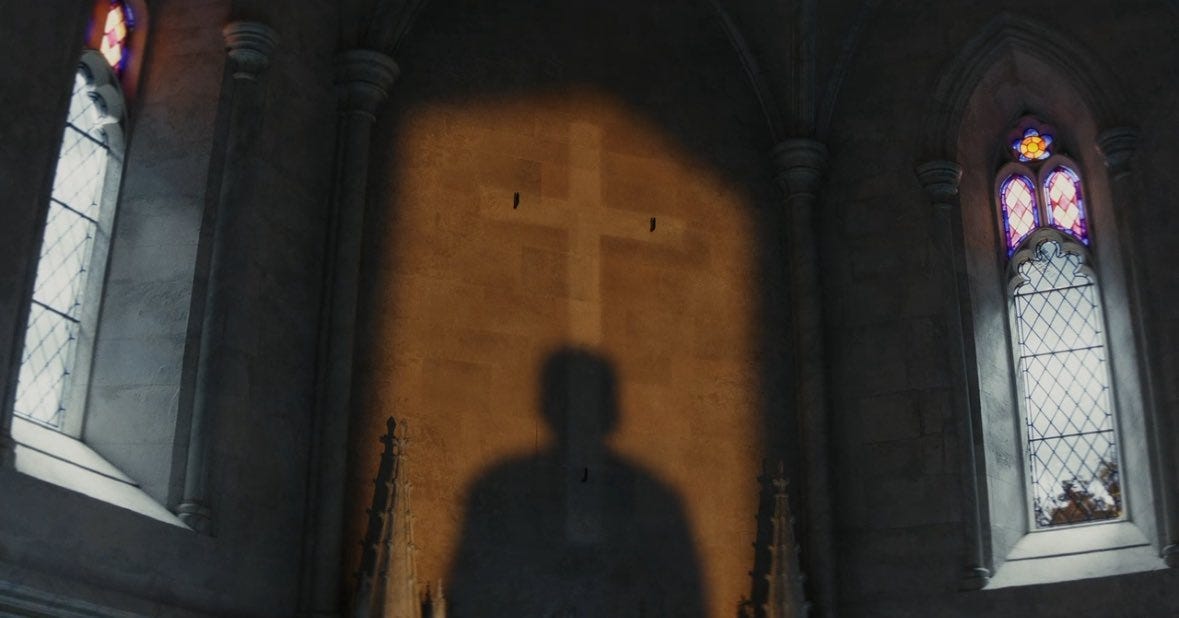
The film’s final shot is a pan up to the wall of the sanctuary, where Jud has refashioned a giant wooden crucifix – its absence in the sanctuary is explained earlier in the film, a great symbol for the Christ-less faith that the Wicks preaches. Jud has brought Christ back into the church…and sparkling inside the wooden carving, we see the gem.
It’s a funny, petty little victory. Jud knows Cy will not use that fortune to do anything but further his own bullying political career, and any chance of his salvation will be lost. It’s a great pun – Jud isn’t lying; Cy’s inheritance is literally in Christ.
But I’ll admit that the first time I saw the film, it bothered me. Wasn’t Jud just keeping the riches for himself? Wouldn’t he be subjected to the same temptation for wealth as everyone else?
But I keep coming back to that saying – “your inheritance is in Christ.” On the one hand, it’s a call for contentment; Jud’s reminder that what brings true meaning and happiness is peace in and with Christ. But it’s also literally in Christ. For Cy to find it, he’d have to come to Christ. For Jud to abscond with it, he’d have to go through Christ – to tear down the thing he loves the most. In Christ, it’s protected – and it’s a visual drama that reminds Jud that the treasure is in Christ, who will keep it from being taken by those driven by power or wealth – including, if it came to it, himself. Christ holds the treasure. Christ protects us from our worst impulses.
I realize I’m at the end of this and I haven’t really even discussed the surface aspects of the movie – the wonderful dialogue, the often very funny performances, Benoit Blanc cementing himself as the greatest role Daniel Craig has ever been given. And that’s okay – these Lent musings are for reflection, not review. But I also don’t mind because as much as I love all those surface things, what I keep coming back to with Wake Up Dead Man is a movie that has some smart, surprisingly insightful things to say about faith and modern Christianity. It’s not a faith-based movie, but it might be the most Christ-saturated one I’ve seen in a long time.
There’s no specific 1:1 for Wicks, but his love of offense seems both very Trump-coded and calls to mind bully preachers like Mark Driscoll, among others.
Jeffrey Wright, swooping in for two scenes and killing it, as always.
No posts
Comments
Nothing yet. Say the first thing.
Sign in to join the conversation.