
Weathering Climate Change will always be free, but paid support keeps this newsletter going and independent. Share this post with someone, get them to subscribe, and make sure you engage. That's the whole engine - readers passing the work along.
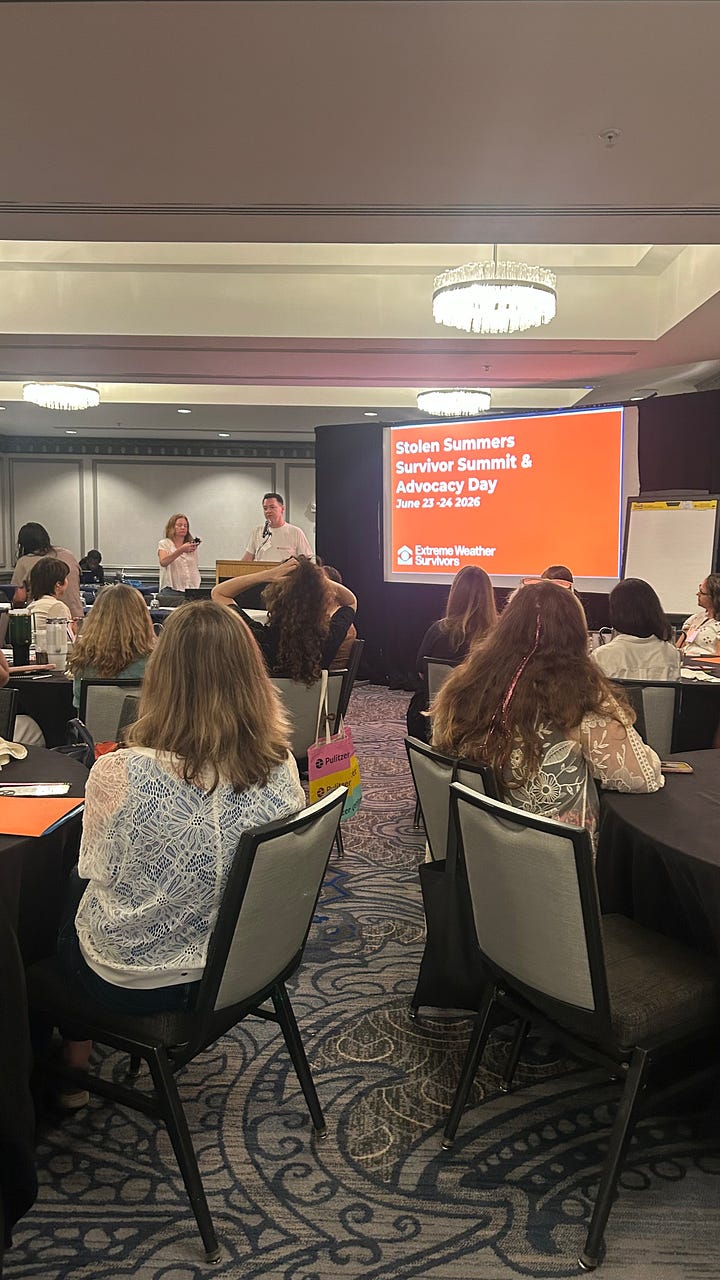
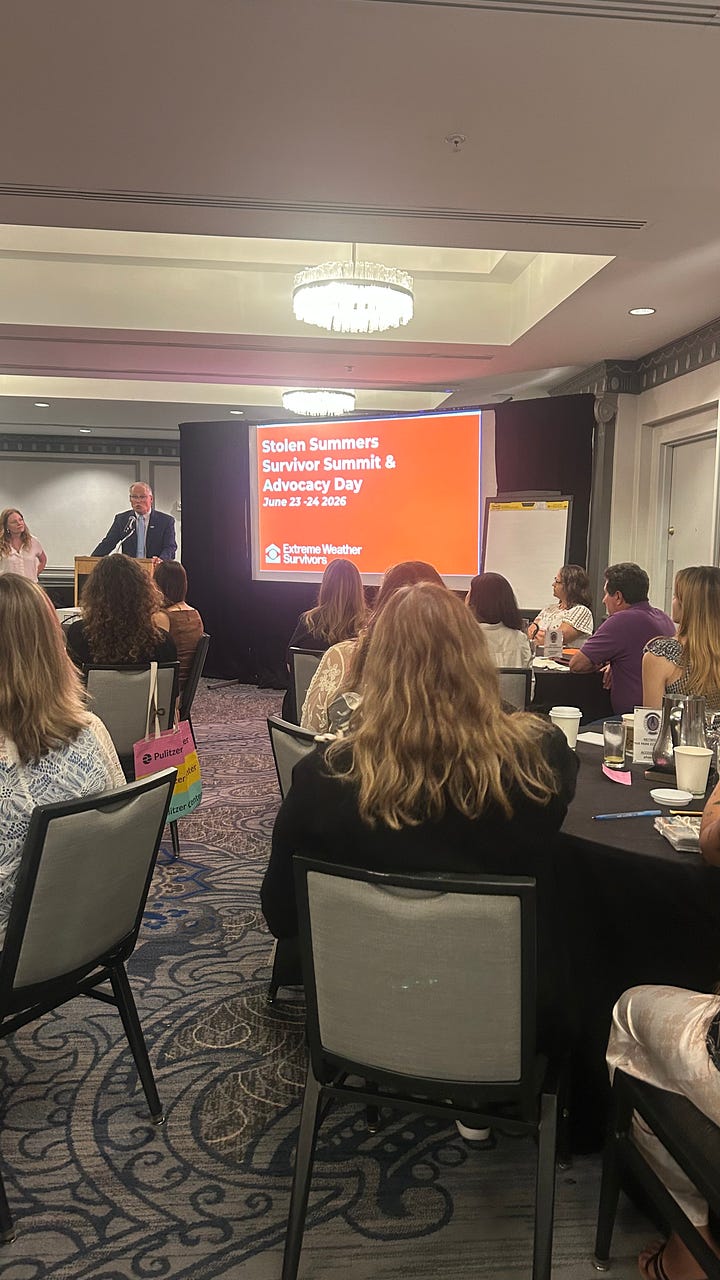
This week I spent a couple days in Washington for an event called Stolen Summers: The Next 250. Extreme Weather Survivors brought together people from all 50 states, survivors and artists alike, and set up in front of the Capitol Building right as the country approaches its 250th birthday. The premise is simple and hard to argue with: for millions of Americans, extreme weather has taken something that cannot be given back. A home. A business. A loved one. A whole way of life.
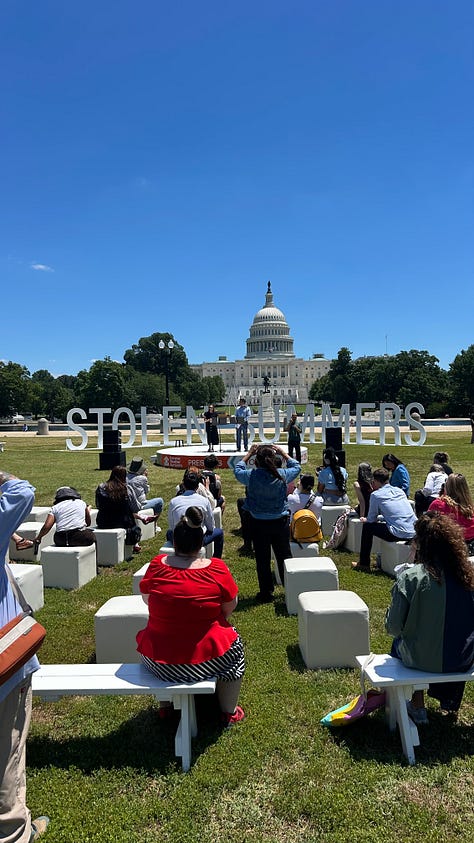
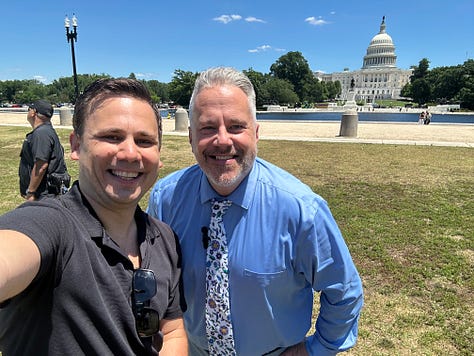
They turned that idea into 30 movie-sized posters lining the grounds. Each one pairs a survivor with an artist, and each one stands in for a million Americans who will tell you that extreme weather has significantly harmed their lives. You walk past them and the abstraction falls away. There was a woman from Montpelier who lost a restaurant and 40 employees’ paychecks the day the floodwater came in. A family outside Asheville whose home came down with the mountain when Helene hit. A young mother in Phoenix whose husband never made it back from a morning hike because the heat killed him. Floods, fires, hurricanes, heat that would not break. Different disasters, different corners of the country, the same loss. These are not statistics. These are our neighbors, and they came to Washington to be seen.
While I was there, I walked over to the Lincoln Memorial Reflecting Pool. By now you have probably heard the story. A repair that was pitched at $1.8 million somehow ballooned into a roughly $14 million no-bid paint job, all so the pool could be painted “American flag blue” in time for the Fourth of July. The paint began peeling almost immediately. The water turned green with algae. And rather than simply fixing it, the administration sent in the National Guard.
I was standing at the edge of the pool when I watched a young boy crouch down and reach out to splash his hand in the water. That was the entire offense. A soldier walked over, stopped him, and then went to have a word with his mother. I took out my phone and filmed it, because I could not believe what I was seeing. I want to be careful about how I say this, and it is the same thing I said when I posted the video: this is not the fault of the troops. They follow orders. But somewhere up the chain, someone decided that the best use of an armed soldier in our nation’s capital was to keep a child from getting his hand wet.
A short distance away, people who had lost nearly everything stood beside portraits of the lives that were taken from them. They are still waiting to be made whole. They are still fighting insurance companies that are quietly walking away from them. They are still rebuilding out of their own pockets. We found the money and the manpower to guard a peeling paint job, and the people whose summers were stolen are told to be patient.
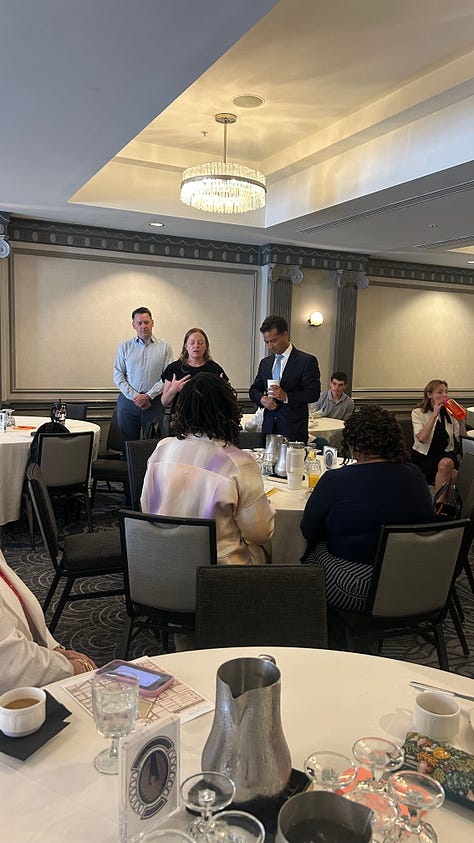
That contrast is the reason I keep doing this work, and it is why I was glad to be part of the panel discussion. I spent 18 years in television weather, and for a long stretch of that career I watched the language get sanded down to nothing. A historic storm became “unusual.” A once-in-a-generation event became a “freak” of nature. Anything but the actual reason. The people at this event refuse to do that. They name it plainly: the weather is getting more extreme, the burning of fossil fuels is driving it, and the companies that have known this for decades spent that time manufacturing doubt instead of leveling with the rest of us. None of this is an act of God, a great deal of it is the predictable result of a choice somebody made.
The point the survivors kept returning to, and the one I believe most deeply, is that none of this should be partisan. A flood does not ask how you voted. A fire does not check your registration. We also talked about something I have written about for years now, which is holding the insurance and big oil industries accountable for what they have done and what they continue to do. The systems that are supposed to catch people when the worst happens are failing at the exact moment more people need them than ever before.
I came home tired, and honestly, I came home angry, which I have come to understand is the correct response. There are 30 million Americans who will tell you that extreme weather has upended their lives. There are families still living in hotels, still fighting their insurance companies, still waiting to be made whole. That is where our attention and our resources should be.
Instead, this administration’s priorities are repainting the reflecting pool and paying our National Guard to stop children from harmlessly splashing the water.
I am proud to be part of the Iowa Writers Collaborative. Please support our work:
No posts
Comments
Nothing yet. Say the first thing.
Sign in to join the conversation.