

26 August 2026
Dear Friends Who Read and Readers Who Are Friends,
The closest I came to Dolly Parton was when the two of us were together in Broadway’s Nederlander Theatre a quarter century ago. That means we were two of the 1,200 people in the house, all there to see Dolly’s pal Reba McEntire as Annie Oakley in a revival of “Annie Get Your Gun.” My young daughter and I were seated in the first row of the balcony and Dolly Parton was seated below us in the orchestra.
Even in the audience with the lights dim, Dolly exuded that “it” quality that directors have told me they look for in a performer. Sure, Reba McEntire was fantastic and owned the stage, but Dolly owned the rest of the theater. (It’s always Dolly, isn’t it, even to those of us who would never meet her?)
My daughter was very young but already she understood that the woman in the audience below us was not merely a celebrity: she was a beloved celebrity. Everyone in the Nederlander that night felt happy to have shared a night with Dolly.
We talk of auras with a whiff of “peace-love-and-and-tie-dye” condescension, but the reality is how many celebrities don’t project an aura that is (forgive me) angelic. Oh, we watch their movies or wear their clothes or read their books, but they don’t touch our soul in the way Dolly Parton so obviously touched ours.
You can see it in the tributes the last 24 hours since she died yesterday at the age of 80. I heard a historian in tears on CNN when I was in the car yesterday. I often have a “super spin” sort of playlist on my phone to listen to when I ride my bike, and yesterday when I was bonking still 15 miles from home, I paused to create a Dolly Parton playlist to recharge my batteries. (Trust me: “Jolene,” “I Will Always Love You,” and “9 to 5” should be on every get-up-and-go playlist.)
And while much of that aura was the result of her remarkable voice, a lot more, I think, came from the absolute comfort in which she lived within her own skin and her magnificent lack of any kind of filter. Listen to some of her interviews and you’ll see what I mean. Her quips, unrehearsed, are legendary.
She understood poverty as well as anyone, and wrote moving, unsentimental songs about it. She was a brilliant businessperson, and unlike most of the oligarchs surrounding us these days, gave so much back. Her philanthropy was well known before she died, but has dominated discussions of her death the last day.
But here, however, is something remarkable she knew on an intuitive level before so many others began to study it: books make us more empathetic. Books make us more intellectually capable of parsing life’s hardest questions. Books make us better.
And, yes, books are capable of making us happy — even now, if we can turn away for an hour or two from podcasts and TikTok. (Confession: I like both. But I also like books.)
Among Dolly’s most impressive philanthropic legacies is her Imagination Library: a foundation that gives a book to any child from brith through age five. In the 31 years it has been existence, it has given children over 332 million books.
Today, as you mourn the passing of a person so beloved that historians weep on the news, consider celebrating her with a donation to her Imagination Library. It doesn’t have to be big. My sense is that while Dolly made jokes often about the impressive size of some things, she herself wrote a poignant song about the beauty to be found in the smallest of things, in this case, a coat made from rags:
“I tried to make them see
That one is only poor
Only if they choose to be
Now I know we had no money
But I was rich as I could be
In my coat of many colors my mama made for me.”
Thank you, Dolly, for always being yourself — and for teaching us all what words and reading and books can mean to the soul.
All the best,
Chris
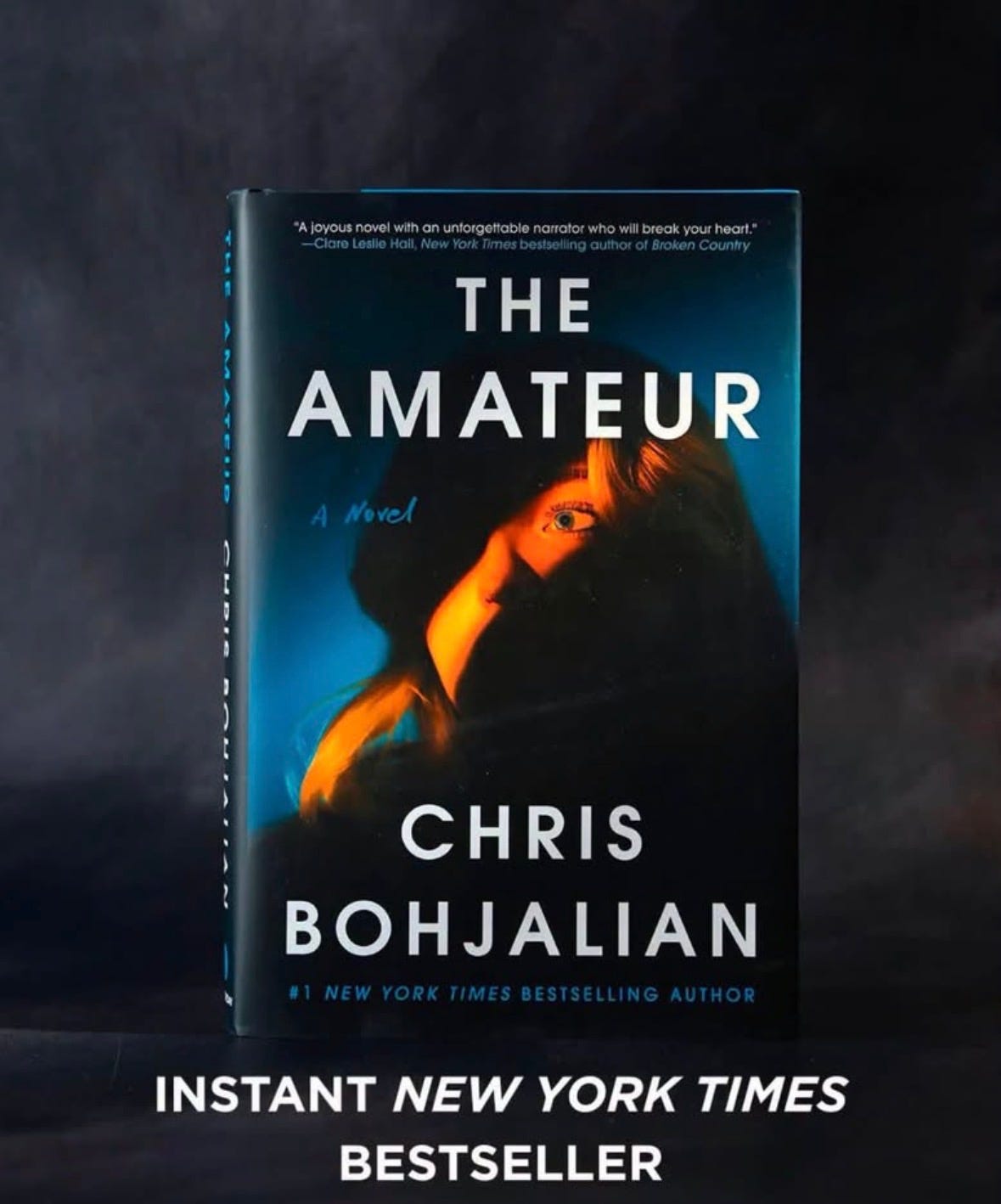
“Bohjalian’s wonderful book is a morality tale, a snapshot of a strange, careless time in a particular slice of America, a psychological exploration of guilt and its repercussions, a portrait of a girl going off the rails — and then, because of an exciting plot twist, a courtroom drama.” — Sarah Lyall, The New York Times Book Review
Thanks for reading Chris Bohjalian's Substack! This post is public so feel free to share it.
Comments
Nothing yet. Say the first thing.
Sign in to join the conversation.