
I don’t have a position on this one. I want to say that first, because most of what I put on this site arrives with at least a working opinion attached, and this doesn’t. I am thoroughly conflicted. I’ve read maybe a tenth of what I should have before writing about this. What I have instead is one afternoon from many years ago that I’ve never been able to file properly.
In 2012 I took my family to Marineland in Niagara Falls. Most of that day has gone soft in my memory. The rides, the food, the animals, all of it sanded down to a few blurry memories. I have two vivid memories from that day, though, that have stuck with me.
The first is the belugas.
They came up along the wall where we were standing, white as bathtubs. They seemed so happy, friendly, curious. I know they were probably just looking for food, but it felt like they just wanted to make new friends as they shot up to get a better look at everyone standing around the tank. My kids were close enough to touch a whale, and did. I remember their faces better than I remember the whale, and that’s saying something.
We were in awe.
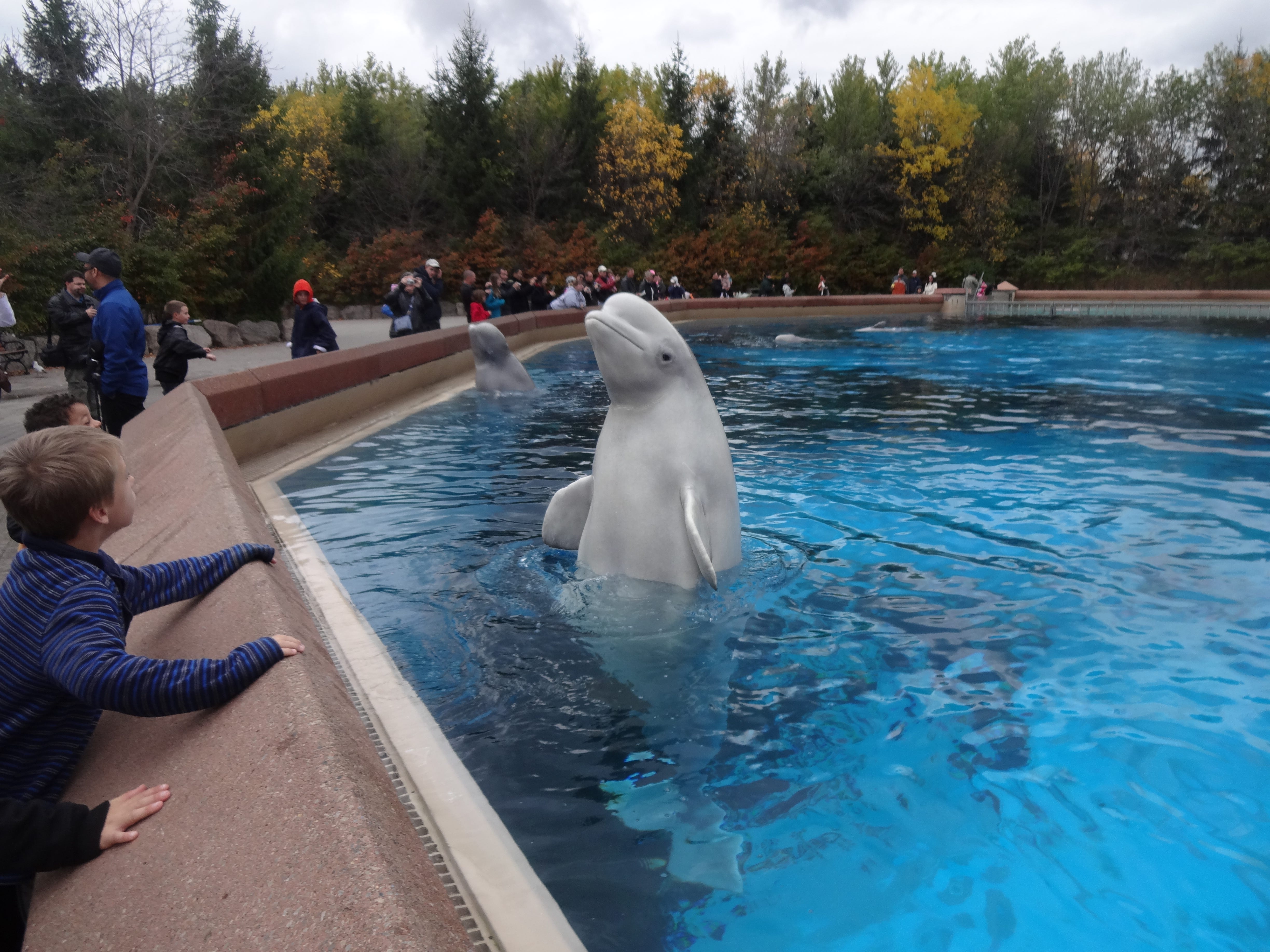
Beluga whales - Marineland, 2012
The second is the protesters.
They got into the park during one of the animal shows, and for a few minutes there was chanting, and anger, and staff moving quickly, and the four of us sitting in a stadium being made to feel like we were part of something cruel. My kids were scared. I didn’t have an argument ready. I just had the feeling, which was: we were loving these animals a few minutes ago, and now apparently we’re in the company of villains. Might we be considered villains too for just being here?
I’ve never resolved it.
We drove home, and my kids talked about the whales the entire way.
Last week, the last of them started leaving.
Marineland closed to the public in 2024 after decades of allegations, investigations, and legal fights. Thirty beluga whales stayed behind in the empty park, fed by donations. When the donations ran out, the park told the Canadian government it might have to euthanize them. Canada had already refused to let Marineland export the whales to an aquarium in China.
So a consortium of American aquariums came and got them. On July 20th, teams from Shedd Aquarium and SeaWorld lifted the first six belugas out in slings, loaded them into cold-water containers, and flew them out of Toronto. Veterinarians rode along. The whales ranged from six years old to about forty. They were moved in sub-pods, grouped by which animals already had relationships with each other, so friends traveled together. Four went to Chicago and two to San Antonio. The rest are going to Atlanta, San Diego, and Valencia over the coming months.
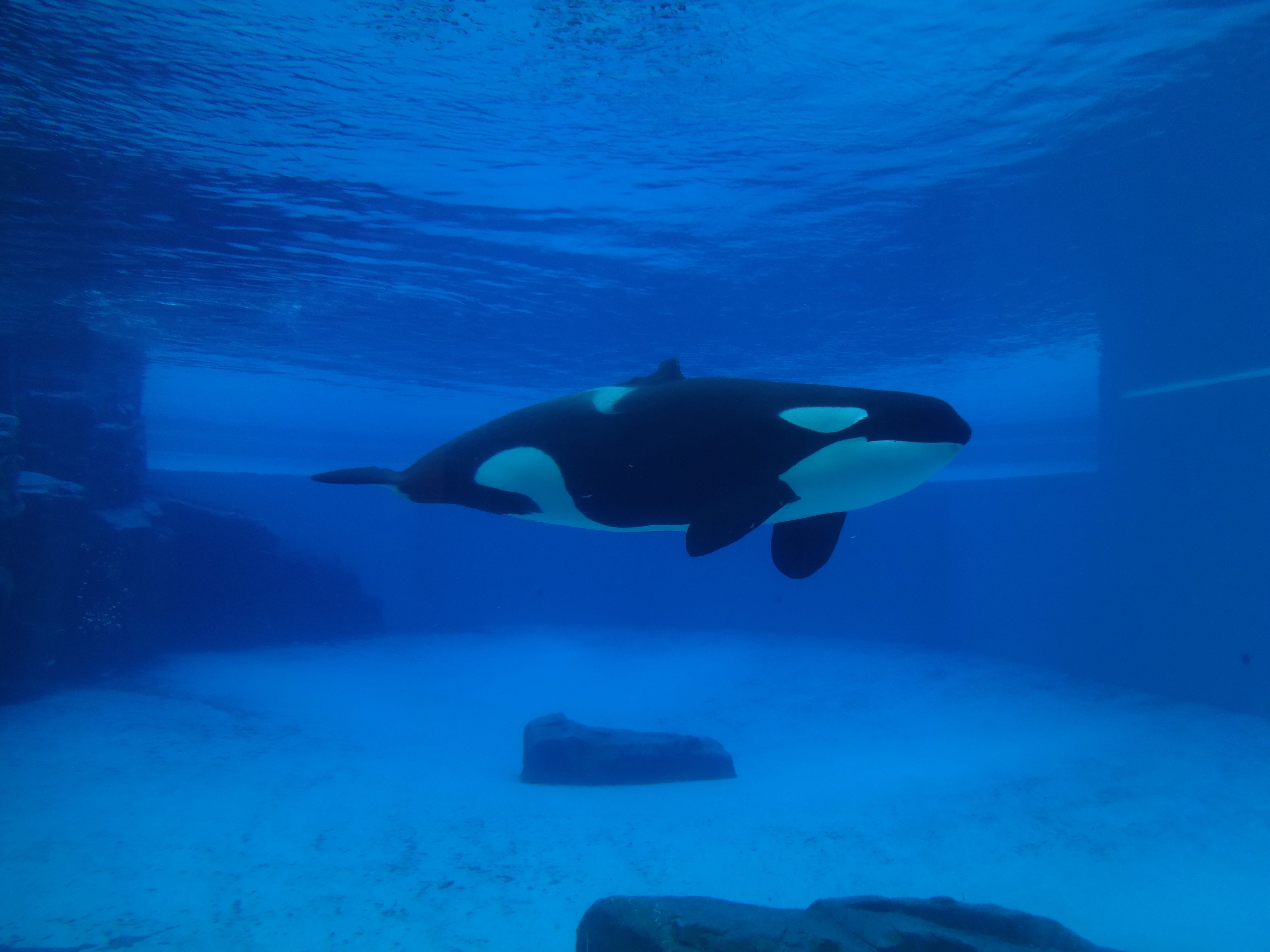
Kiska - Marineland, 2012
Since 2019, roughly twenty belugas died at that park, along with Kiska, the last captive orca in Canada, who spent over a decade alone in a tank. The whales I stood over in 2012 were living somewhere that a lot of people with far better information than mine had already concluded was indefensible. I looked at that pool and saw curiosity and happiness. I was an adult with kids and a camera and no context whatsoever.
A beluga’s forehead is called a melon. It’s a fatty organ under muscular control, and the animal reshapes it while producing sound, aiming its echolocation the way you’d aim a flashlight. No other whale can do that. Sailors in the 19th-century Arctic could hear belugas through the hulls of their ships, which is how they got the name canary of the sea. They whistle, click, chirp, squeal, and produce something like bell tones.
They have no dorsal fin, just a tough ridge, because a fin is a liability under ice. Their blubber can be forty percent of their body weight. They’re born gray and go white as they mature.
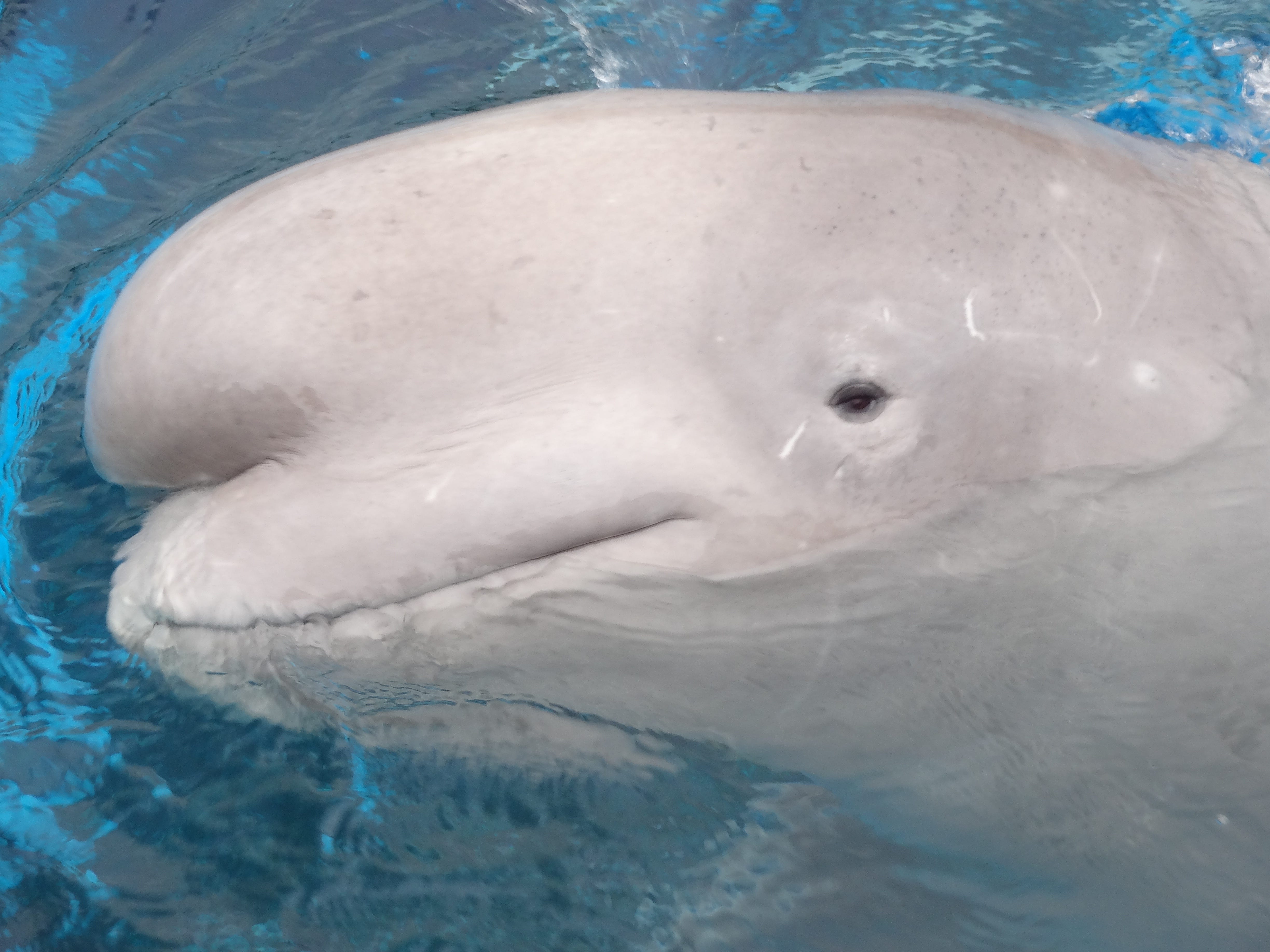
Beluga whale - Marineland, 2012
And they can turn their heads. Almost no other whale can. Cetacean neck vertebrae are fused; a beluga’s aren’t, so it can look sideways at a fish on the seafloor or up at a man in a windbreaker holding a camera. Whatever passed between me and that animal in 2012 was riding on a skeletal quirk that evolved for hunting in shallow, ice-choked water. They live up to seventy years.
A 2020 study that looked at ten sites across the Arctic found that beluga groups aren’t organized around close family the way killer whale and pilot whale pods are. They form communities of hundreds, sometimes thousands, mixing kin and non-kin, with associations that last from a few hours to several years. Unrelated adult males travel together for long distances. Belugas are also one of the very few mammals, humans included, where females go through menopause and then keep living. Grandmothers, in other words.
I went looking for the strongest version of the argument I was on the wrong side of that day, and it’s stronger than I expected.
Start with sound. A beluga perceives its world acoustically. A concrete tank has smooth walls, and smooth walls throw sound back instead of scattering it, so the reverberation is severe. Captive dolphins have been found producing weakened echolocation signals because of it. Belugas moved between facilities have gone quiet for extended periods afterward. Whatever a tank is to a whale, it isn’t quiet, and it isn’t legible.
Then space, which matters less as square footage than as escape. In the ocean, a whale that’s being harassed leaves. In a pool it can’t. In 2012, a one-year-old beluga at Marineland named Skoot was attacked by two older males and died. A trainer who was there wrote that they held her until it was over. That’s not an argument about tank dimensions. It’s an argument that the geometry of captivity removes an option every wild animal has.
And then the record. Twenty belugas in six years at one facility. Ontario inspectors declared the park’s marine mammals in distress over water quality in 2021. Three of five belugas that Marineland sold to an aquarium in Connecticut died there.
I’ve long thought that it was necessary to have zoos and aquariums. Good education requires up-close experiences. Something that you can feel and put your hands on. This experience changed my kids’ lives in real ways, and I know this experience made them care more about these animals. I believe that some part of them still retains that experience and carries it with them as they engage with the world around them to this day.
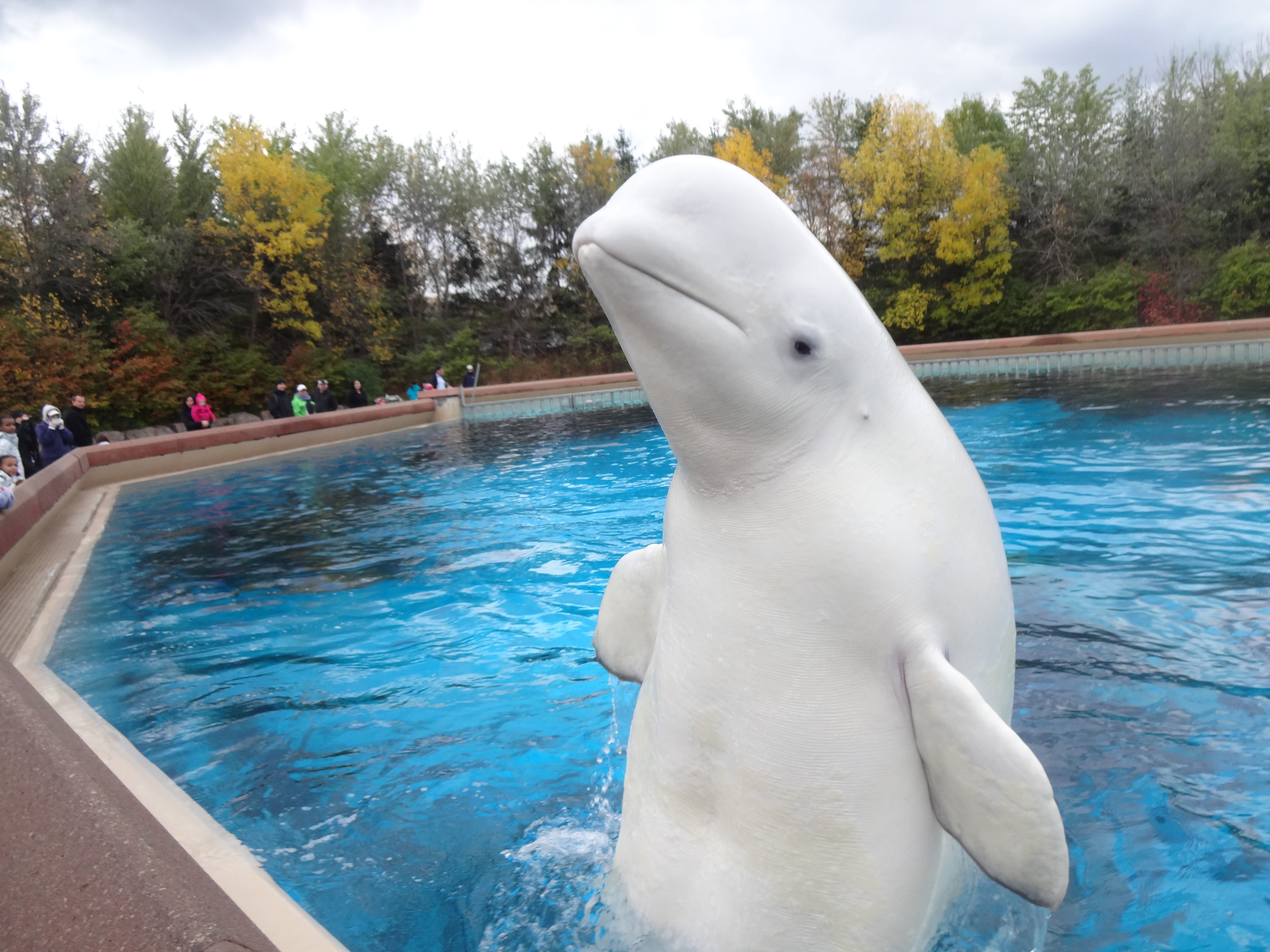
Beluga whale - Marineland, 2012
But that education claim might be marketing.
In 2010, a group of researchers went through the industry’s flagship study on visitor attitudes and found the argument too weak to support. Their conclusion was that there was no compelling evidence that zoos and aquariums change anyone’s mind about anything.
A 2025 meta-analysis in Conservation Biology pooled 56 studies and found a small-to-medium positive effect of zoo and aquarium visits on visitors’ conservation knowledge, attitudes, and intentions. The effect on actual behavior was smaller but still there. I’ll note the things a fair reader should note: most of those studies measured people on the way out the door rather than months later, and one of the authors works for a zoo. It isn’t proof, but it’s better than nothing.
There’s also the money. In 2024, accredited North American zoos and aquariums reported spending about $341 million on field conservation work, on more than a thousand species in 130 countries. Whatever else that is, it’s real money going to wild animals, and it’s generated by turnstiles.
There are about 331 belugas left in Cook Inlet, Alaska, down from roughly 1,300 in 1979. The St. Lawrence population has fallen from thousands to around 900, poisoned slowly by what we put in the water. Those whales need people who care about them, and almost nobody will ever see one. My kids will likely never stand at the edge of Cook Inlet. They stood at the edge of a pool in Niagara Falls, and all these years later, I know they still care what happens to whales. I can’t prove the second thing came from the first. I can only tell you what I saw, and continue to see in their eyes.
The irony is that when thirty whales needed to be moved on short notice, the only institutions on the continent with the trucks, the slings, the veterinarians, the money and the cold-water containers to do it were aquariums.
The rescue was performed by the industry and people under indictment. The villains.
The frame Marineland used, and that every aquarium still uses, is that these animals are working. Education, conservation, research. A job.
People do jobs that aren’t ideal. Somebody runs the night shift at the water treatment plant so the rest of us can drink in the morning. The work is necessary, imperfect, and unglamorous, and we don’t call it evil.
Maybe it’s just because we, as humans, have a choice. The whales don’t.
The man on the night shift made his own decisions and agreed to be there and can quit. The animals can’t. That’s a real difference, and I’m not going to talk my way around it.
But it doesn’t break cleanly either, because we ask enormous things of the earth’s creatures that never agreed to any of it, all day, every day, and most of those arrangements produce nothing anyone would call education. If I’m going to be angry about thirty whales in Niagara Falls, I should probably account for what I had for dinner.
So here’s the closest thing to a conclusion I’ve got, and I suspect it will satisfy nobody.
I still have a wide open mind on this subject, but I don’t think what my family did in 2012 was wrong. I think the experience was real and impactful. It did something for my kids that a documentary on TV could never have done. Personally, I know that the experience was incredibly impactful. I can’t defend the specific place where it happened. Marineland probably earned every bit of what came for it. Those two statements sit next to each other in my head.
What I’m left with is a question I’d rather put to you than pretend to answer. If direct contact and experiences are what make people care, and caring is what saves the wild ones, what do we do when the contact costs one animal its whole life?
And if your answer is that we find another way, I’d love to know what it is. I have many ideas and suggestions. But I’m not sure that any of it is as easy as spending $20 for a ticket and standing 5 feet away from a real beluga whale.
I feel for these animals. I’d like to think that they were well cared for and happy. I want to believe that their sacrifice is justified and worth it. They live their lives imperfectly to indirectly save their own species.
My mind is open. Let me hear from you.
Please be kind.
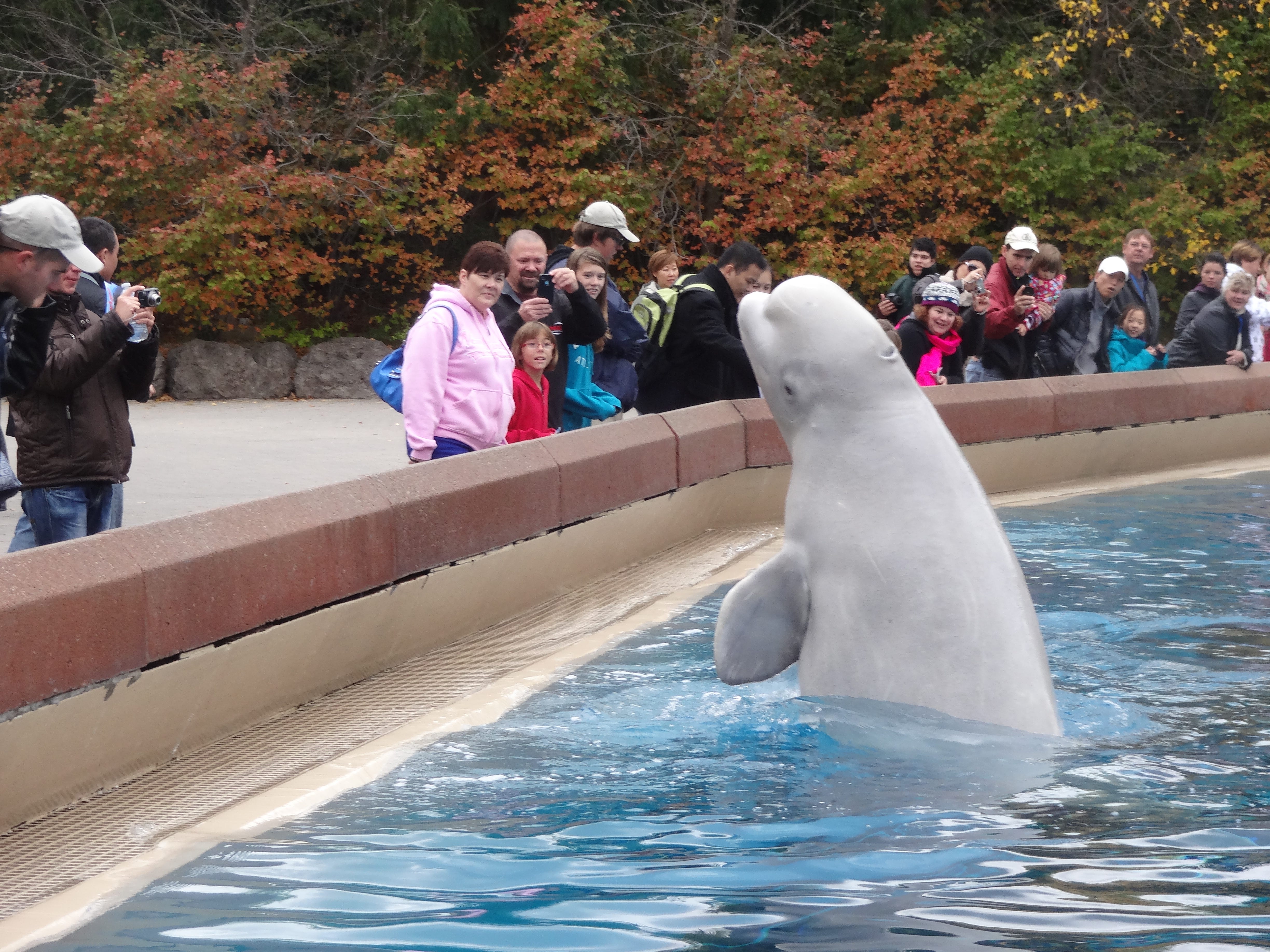
Beluga whale - Marineland, 2012
No posts
Comments
Nothing yet. Say the first thing.
Sign in to join the conversation.