
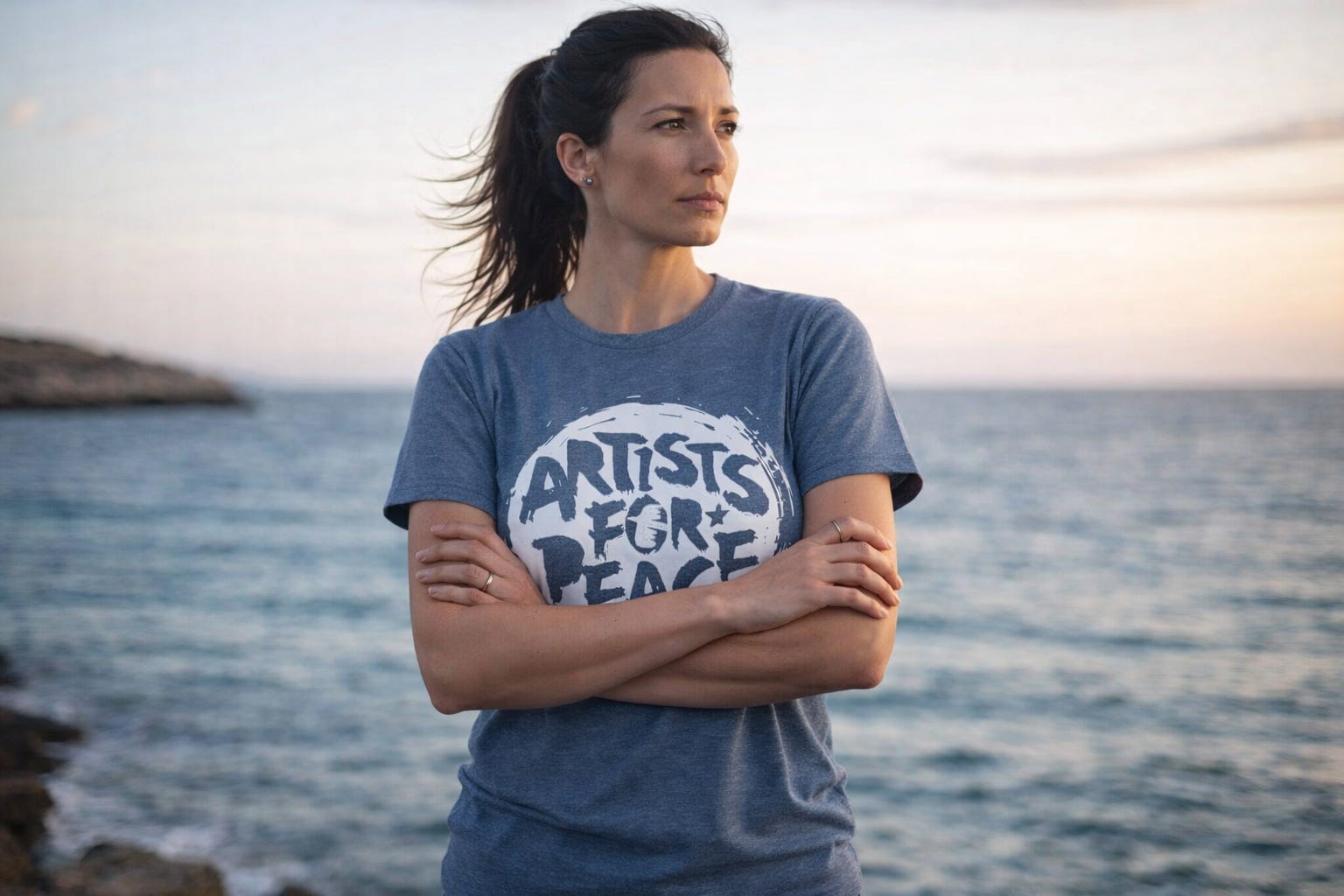
There’s pressure placed on artists to stay pleasant.
Make beautiful things. Entertain. Decorate the walls. Brighten the feed. But don’t make anyone uncomfortable. Don’t wade into difficult conversations. Don’t “use your platform.” Just paint. Just write. Just be an actor. Just do your job and stay quiet.
I understand where that instinct comes from. No one enjoys being talked down to. No one wants art or entertainment to feel like a lecture. And most of us who create don’t wake up in the morning thinking, I’d like to ruffle some feathers today.
But as an artist myself, it’s my opinion that it’s not only acceptable for artists to speak publicly about what matters to them. It is necessary.
Not because we are morally superior. Not because we have all the answers. But because art has never been separate from the world it lives in.
When we look back through history, the idea of the “neutral artist” almost disappears. Francisco Goya did not paint war as a decorative exercise. His Disasters of War prints were raw, unsettling, almost unbearable.
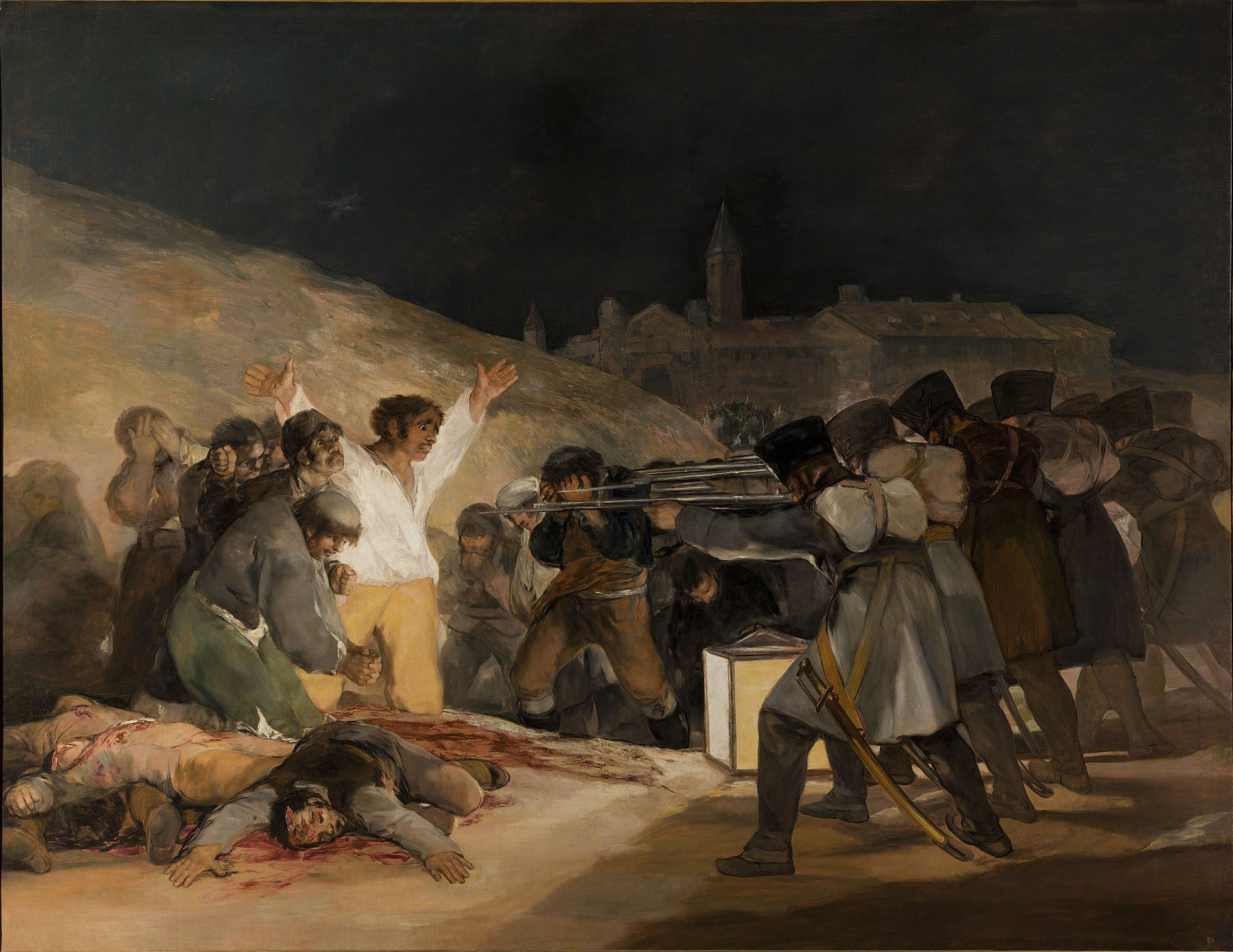
The Third of May 1808 - Francisco Goya
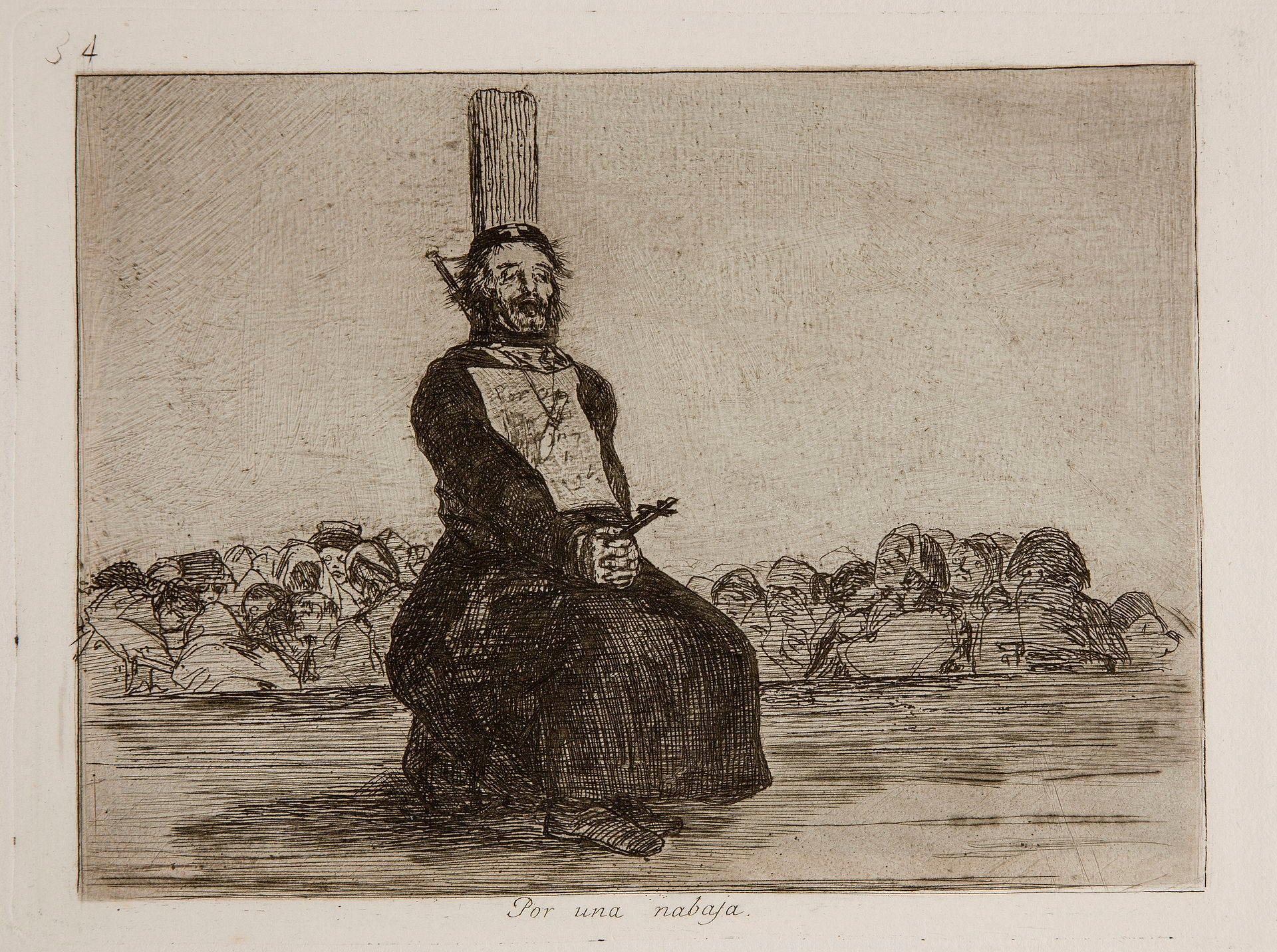
Por una navaja (For a clasp knife) - Francisco Goya
Pablo Picasso painted Guernica in response to the bombing of a Spanish town. It was not subtle. It was not neutral. The attack killed civilians and shocked the world. Instead of painting a literal battle scene, Picasso filled the mural with distorted, screaming figures, a dying horse, a grieving mother, and fractured bodies. The chaos and pain make the point clearly: war destroys innocent life.
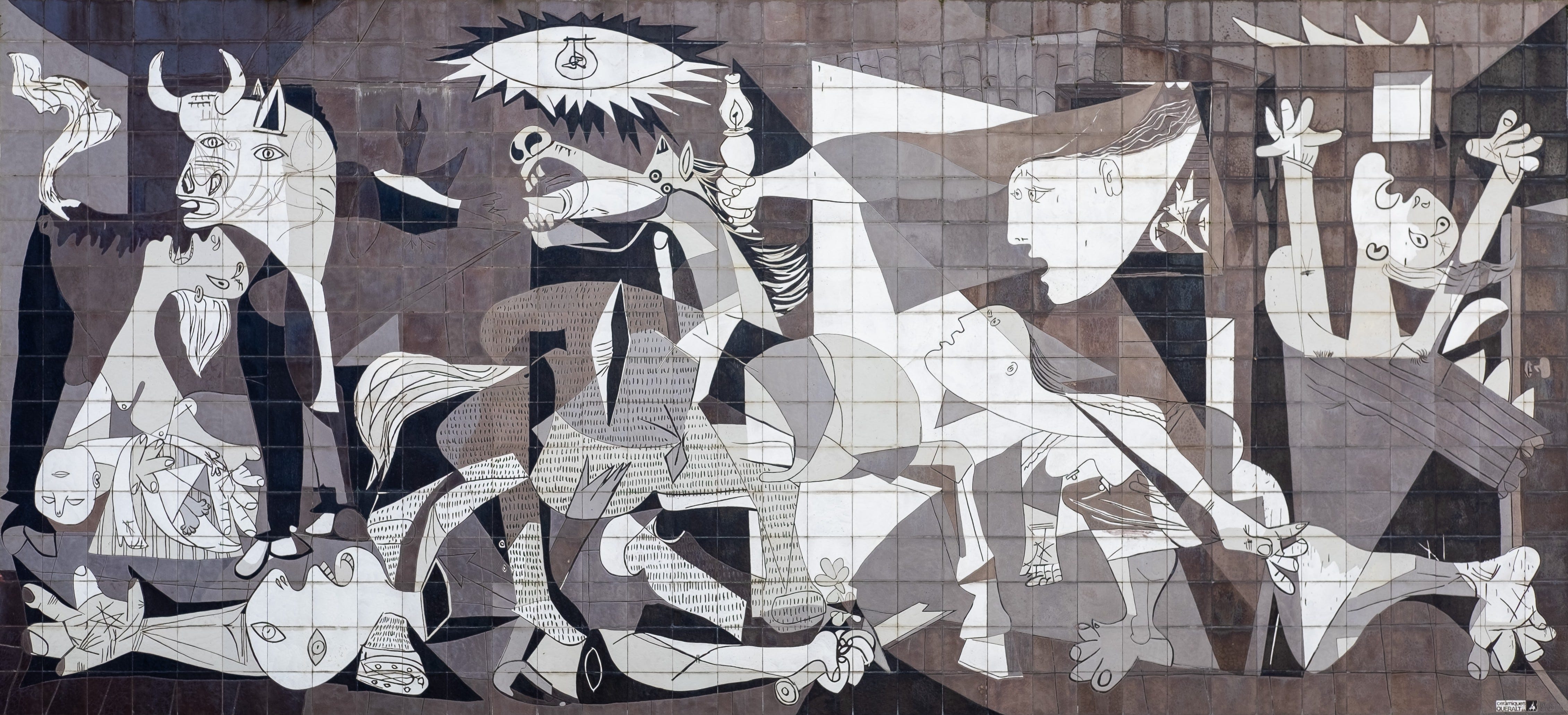
Guernica - Pablo Picasso
Pablo Picasso painted Guernica entirely in black, white, and shades of gray. Without color, the viewer focuses on forms, emotion, and chaos rather than aesthetics. The stark grayscale makes the scene feel cold, brutal, and documentary-like, reinforcing the horror of the bombing.
Artists may never hold a protest sign, but they can still shape culture by what they choose to show and what they choose to ignore. We often romanticize these figures now. We frame them. We hang them in museums. We stream their music. But throughout history, many of them were criticized for being too political, too loud, too divisive.
When Pablo Picasso unveiled Guernica in 1937, reactions were mixed. Supporters saw the painting as a powerful condemnation of the bombing of the Basque town of Guernica during the Spanish Civil War. Critics raised many objections. Some argued the work was too political for art, while others dismissed it as propaganda against fascism. Many viewers found the imagery confusing, chaotic, or deliberately disturbing, and a few even accused Picasso of exploiting tragedy for artistic effect.
The fact is, artists shape culture. Culture shapes what people accept as normal. And what people accept as normal eventually shapes policy, law, and collective behavior.
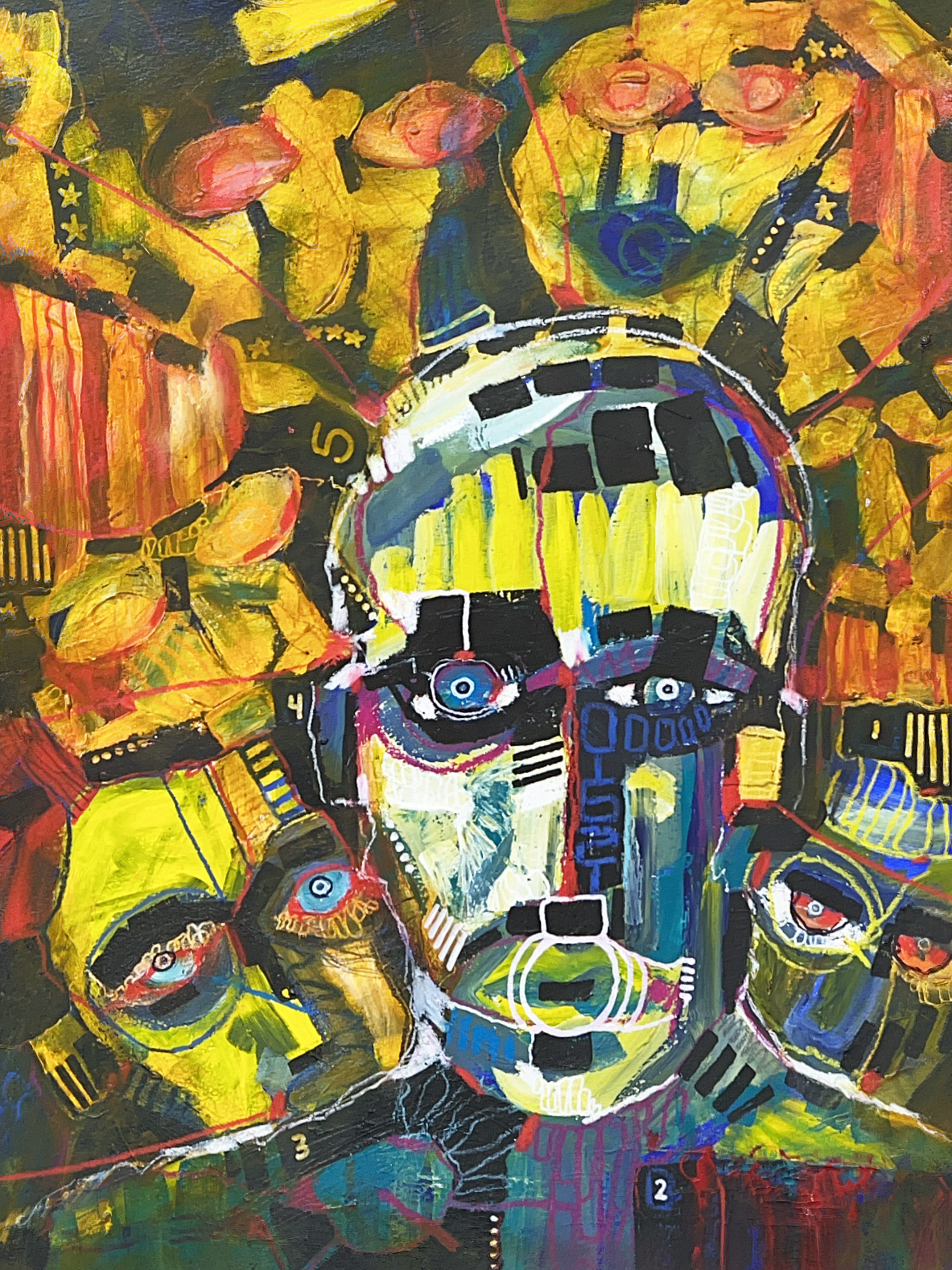
January 6th, 2021 - Chris Auman (Acrylic and mixed media on paper - approx 18x24)
That may sound lofty, but it plays out in small ways every day. The images we see. The stories, poems, lyrics, and speeches that we hear. They tell us what matters to us and what does not.
On the flip side, silence is not neutrality. Silence is also a statement.
If something is happening in the world that deeply affects people, communities, or the natural world, and we have an audience, even a modest one, choosing not to acknowledge it is a choice.
There are seasons when being quiet is necessary for personal reasons. There are moments when listening is more important than speaking. But long-term avoidance, especially when we have something to say, slowly erodes us from the inside out.
I am an artist, designer, and writer who generally centers my work around the ocean. The ocean is not just a backdrop in my work. It is a source of meaning. I think it’s a vital part of our existence. Do I not have a responsibility to speak up about its fragility? Not as an expert scientist. But, simply, as someone who cares.
I think we have to believe that conviction is not the same thing as preaching. Preaching assumes superiority. Protest, at its best, assumes shared humanity.
When an artist speaks publicly about injustice, environmental degradation, or human dignity, they are not claiming to be the final authority. They are saying, This matters to me. I cannot pretend it does not.
There is humility and courage in that.
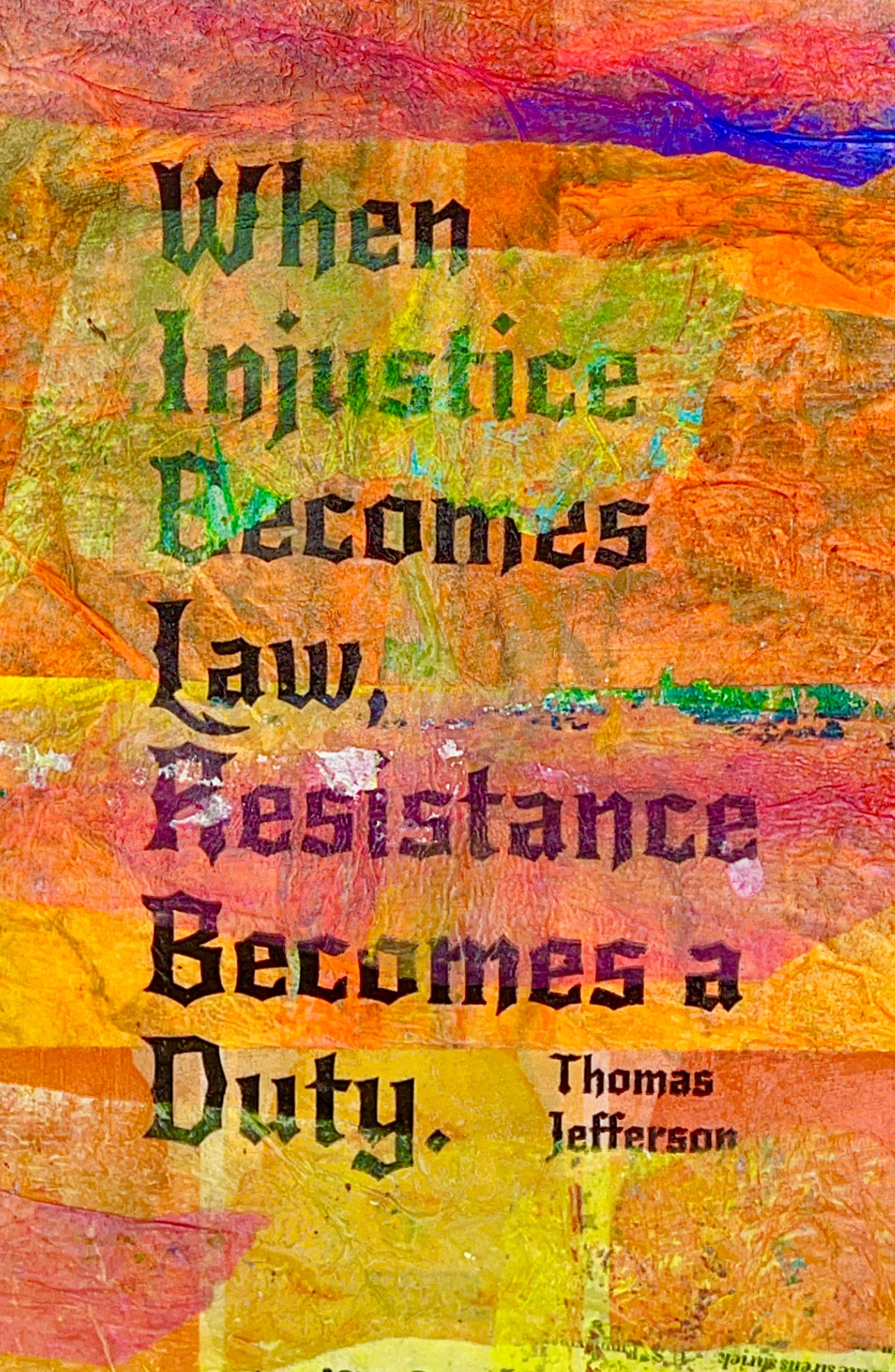
Resistance Poster - Chris Auman (Painted paper collage on paper - approx 11x14)
We live in a time where attention is currency. If you have an audience, even a small one, you have earned a degree of trust. People have chosen to listen to you. That trust should not be exploited, but it also should not be wasted.
If artists with platforms stay silent out of fear of offending someone, what message does that send? Silence only leaves a void for someone else to fill. In today’s world, it will definitely be filled. Many times, by voices that may destroy what we seek to protect.
The artists we remember most clearly are not the ones who carefully avoided tension. They are the ones who allowed their work and their voice to intersect with the realities of their time.
That does not mean every piece must be a protest. It does not mean every speech or social post must be a call to action. It means that when something genuinely matters to us, we allow it to surface without fear.
There is also a deeper philosophical layer here. To create is to pay attention. To pay attention is to notice where things are broken, unjust, or fragile. If we are doing our job as artists, we are already tuned into the world with sensitivity. It is almost impossible to remain completely detached.
Art, at its core, is an act of interpretation. We take the chaos of experience and shape it into something visible and useful. If we refuse to interpret the moral or social realities around us, we narrow the scope of our own work.
And beyond philosophy, there is a human truth. Many people do not have platforms. Many people do not feel safe speaking publicly. Many people do not have the privilege of being heard.
If you do, even in a small corner of the internet or a local community, that access can make a real difference.
Protest is not a disruption of a free society. It is evidence that one exists.
In a country built on the idea that power ultimately rests with the people, protest is one of the clearest ways citizens remind institutions who they serve. It allows ordinary individuals to challenge decisions, defend rights, and push culture forward without violence. It is not about chaos. It is about accountability. When people can gather, speak, create, and dissent openly, it signals that freedom is not just a slogan but an active, lived responsibility.
People who believe protest is wrong often argue that it creates disorder, disrupts everyday life, and risks escalating into conflict or violence. They believe change should happen through established democratic systems like elections, courts, and legislation rather than public demonstrations that pressure institutions.
I don’t discount these things as levers that we should pull as well. But the more we’re told that we should all stay quiet, the more our freedom will ultimately erode. It’s ok to disagree with what someone is protesting about. But telling them to “sit down and shut up” is no different than telling them that freedom simply isn’t meant for them.
When artists withdraw completely from public conversation, culture becomes shaped primarily by corporations, politicians, and algorithms. That is not healthy for a society or our long-term freedoms. That expectation misunderstands art itself. To create honestly is already to reveal what you care about. Speaking up is simply an extension of that honesty.
If you have freedom, you can have a platform. If you have a platform, you can have influence. If you have influence, you have the opportunity to shape culture in some small way. You may lose a few people. You may gain others. But more importantly, you remain aligned with yourself. You remain aligned with your core values and the core values of a free society.
Creativity and conscience belong in the same room.
Art has always lived there.
We are not breaking tradition by speaking up.
We are continuing it.
If you’d like to speak up in your own small way, consider wearing a statement!
Please support my work by becoming a subscriber.
Visit my website for original art, prints, merch, and more!
No posts
Comments
Nothing yet. Say the first thing.
Sign in to join the conversation.