
It's been a while since my last post! I got a bit stuck trying to figure out the best style for my Substack. But I've decided it's better to just start writing and refine things as I go. So, I'm planning to update roughly every two weeks, and I hope you'll join me on this journey as I explore different directions for my writing!
As Japan approaches its upcoming election on July 20th, 2025, I find myself reflecting on the dramatic shifts in political discourse that have emerged in recent months. As someone who engages deeply with Japanese society while also having lived abroad, I've been observing these changes as an individual deeply concerned about Japan's democratic future. I'm worried that something similar to what happened with Brexit could occur in Japan, and it would be too late once it happens.
I couldn't focus on the visual presentation of this article this time. However, timing is crucial for this topic, so I'll be publishing it as is!
What strikes me most about this election cycle is how quickly migration policy has become a central issue especially online. Just months ago, these topics were discussed in more measured tones. Now, social media platforms like X are flooded with what can only be described as anti-foreign sentiment, much of it based on misinformation or incomplete facts. The challenge isn't just the spread of false information – it's that fact-based discussions seem to have little impact on those who have already made up their minds. This creates a frustrating situation where rational debate becomes nearly impossible.
One party that has gained significant attention is Sanseito (参政党), led by Kamiya Sohei. I actually met Kamiya-san several years ago in Rwanda, where I run a restaurant. In 2019, he visited as part of an 18-person business delegation, not yet as a party representative. My impression at the time was of someone who spoke clearly and had a somewhat athletic, straightforward demeanor. He seemed pleasant enough, though I found him somewhat difficult to read. Later, when he left behind one of his books, I discovered we had fundamentally different worldviews. His conservative perspective, particularly on issues like the role of the emperor, Japan's national identity, and traditional gender roles, was quite different from my own thinking.
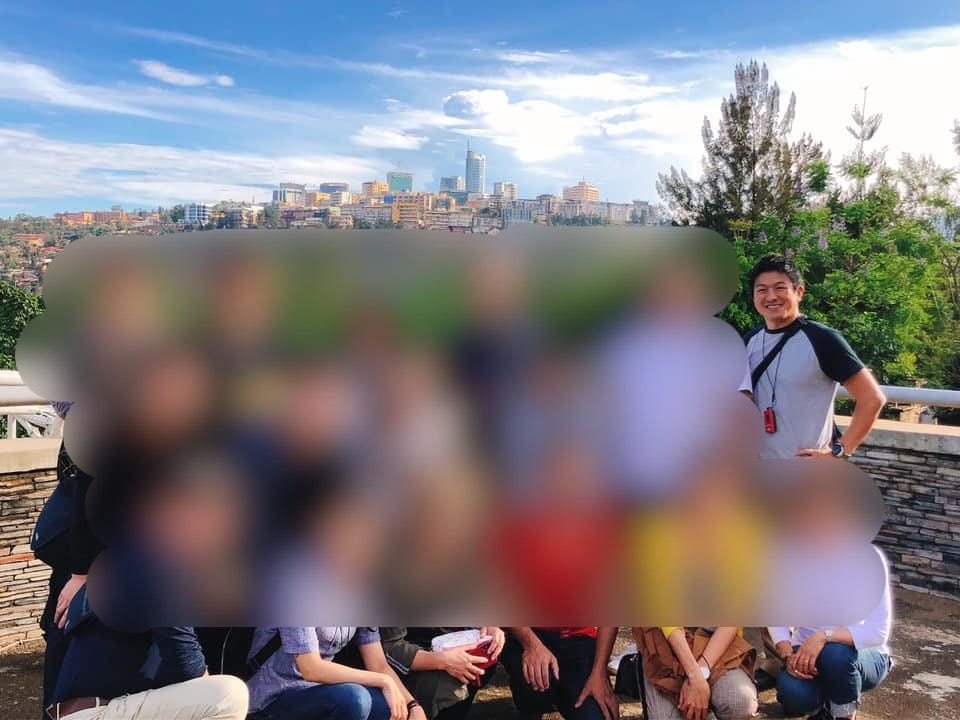
What's particularly alarming is Sanseito's recent constitutional proposal. This is NOT a hastily drafted document – it represents two years of work by over 500 people across 11 different committees. According to Kamiya-san, this constitution "reflects Japanese ideals and values" and represents what Japan needs to become truly independent.

On the subject of Sanseito's constitutional draft, this Note article by lawyer Hori is also very insightful: 参政党が発表した憲法草案がヤバすぎる(弁護士がわかりやすく解説). (=Sanseito's Constitutional Draft is Too Dangerous (Explained Simply by a Lawyer) *I translated this title to English myself.) While it's best to read it directly, perhaps using an AI for translation, in summary, Mr. Hori points out that several fundamental human rights provisions found in the current constitution are completely missing from the draft. These include;
The principle of equality (prohibition of discrimination)
Property rights
Prohibition of torture
Prohibition of ex post facto laws and double jeopardy
Freedom of expression
Freedom of religion
Prohibition of slavery
This signifies the absence of elements indispensable to modern, standard constitutions. This is genuinely frightening. Without constitutional prohibitions against torture, for example, such practices could theoretically become legal. Without protection against retroactive punishment, actions that are legal today could be criminalized tomorrow and punished retrospectively.
Fortunately, there are experts who provide fact-based analysis. Hashimoto Naoko, a researcher with over 20 years of experience studying foreign residents and refugees, regularly addresses common misconceptions with data:
Do foreign workers really lower Japanese wages?
Do foreign residents increase crime rates?
Are foreign residents fraudulently receiving social benefits?
Does immigration strain Japan's social security system?
Her research consistently shows that many of these concerns are based on incomplete or inaccurate information. In fact, Japan's social security system increasingly relies on foreign workers' contributions to remain sustainable. For example, according to the Ministry of Justice's statistics on foreign residents, as of the end of 2023, approximately 3.4 million foreign nationals live in Japan, and about 2 million of them are engaged in labor. They not only supplement Japan's labor shortage but also contribute significantly to Japan's economy and social security system by paying social insurance premiums and taxes.
Recent public opinion polls (for example, multiple surveys conducted in 2024) indicate that while support for Sanseito has seen some temporary stagnation, it continues to gather strong backing on specific issues, particularly "immigration and foreign policy" and the "emphasis on traditional values." It is notably supported by segments of the population dissatisfied with established political parties, the government's COVID-19 response, and inflation.
This situation highlights a fundamental challenge facing democracies worldwide. A thoughtful tweet by "Kotatsunuko" captured this perfectly:
<blockquote class="twitter-tweet"><p lang="ja" dir="ltr">排外主義をめぐる正義を決めるのは活動家や弁護士、学者ではない。決めるのは地域や企業、学校のコミュニティで生きる人たち。活動家や弁護士、学者が正義の決定権を独占すればするほど、普通の人たちは説教されるだけの存在に追いやられます。参政党は追いやられた人たちを待ち構えてるのです。 <a href="
29, 2025</a></blockquote> <script async src="https://platform.twitter.com/widgets.js" charset="utf-8"></script>
"The people who decide what's right about exclusionism aren't activists, lawyers, or academics. It's the people living in communities, workplaces, and schools. The more activists, lawyers, and academics monopolize the right to decide what's just, the more ordinary people are reduced to being just an audience for lectures. Sanseito is waiting for those people who have been pushed aside."
Perhaps our current democratic systems have functioned by excluding people we deemed "illogical," "unscientific," or "anti-factual." But maybe we need to acknowledge that democracy means including even those voices we find unreasonable? Someone once said, “As long as they don't stop looking down on them, these segments of society will continue to resist.” But when they talk about “looking down on them,” I simply cannot understand why they feel they are the victims in the first place.
The constitutional proposal from Sanseito represents more than just one party's vision – it's a symptom of deeper structural issues in Japanese society. The absence of basic human rights protections isn't accidental; it reflects a particular worldview about the relationship between the state and individual rights. This connects to broader questions about Japan's post-war democratic development. How did we reach a point where a party can propose a constitution without fundamental rights protections and still gain political support? What does this tell us about the effectiveness of Japan's democratic institutions in protecting minority rights?
Indeed, the impact of these questions is not abstract for those directly affected. According to a 2021 survey on the living conditions of foreign residents published by the Ministry of Justice, approximately 25% of respondents reported experiencing discriminatory remarks or actions in the past five years, with cases of disadvantage particularly noticeable in housing contracts and job searches. Such concrete data indicates that exclusionary rhetoric is not merely an emotional argument, but has a serious impact on the daily lives of people with foreign roots.
Having already completed my early voting this week, I'm reminded that this election represents a critical juncture for Japanese democracy. The decisions made now will influence not just immigration policy, but fundamental questions about human rights, democratic participation, and social cohesion. The challenge isn't simply to vote, but to fundamentally reconsider how we engage with political discourse. We must find ways to address legitimate economic and social concerns while maintaining essential human rights protections. This requires moving beyond the current cycle of exclusion and counter-exclusion that characterizes much of today's political debate. This situation highlights the need to move beyond simply presenting more data or facts. It prompts us to consider whether we truly understand why certain segments of society feel excluded from mainstream political discourse, and how best to address those underlying concerns directly.
For all friends who care about Japan, whether living here or abroad:
This election matters not just for policy outcomes, but for the broader question of whether Japan will move toward greater inclusion or increased exclusion.
From your perspective abroad, how do these developments appear? How do you see Japan's political landscape evolving? I'd love to hear your thoughts in the comments below.
No posts
Comments
Nothing yet. Say the first thing.
Sign in to join the conversation.