

What started as a lockdown project quickly turned into a deep passion for the Chinese language and culture. Since then, Will has reached an advanced level of Mandarin, spent time living and conducting research in China, and shared his language-learning journey through his YouTube channel.
Will present his journey from beginner to advanced learner, the challenges of reaching fluency, the methods and habits that helped him stay consistent, and his advice for intermediate learners looking to take their Mandarin to the next level. We also explore how learning Chinese has changed his life and perspective on Chinese-speaking cultures.
I’m Will, a 2nd year PhD student based in the UK. I’ve been learning Mandarin for nearly 7 years now, having originally started back in lockdown. During lockdown I knew I wanted to make the most of the time to learn a language but didn’t know what language to learn. Eventually, I chose Mandarin as I have a close 华裔 friend who grew up in the UK who speaks Mandarin who was willing to help me. But the more I learnt, the more it grew on me, and I ended up falling in love with the language and the culture (or became slightly obsessed, you could say!).
华裔 (huáyì): ethnic Chinese / person of Chinese descent
I would say I was not bad at speaking Mandarin after about 2 years of studying, at that point I had done a few interviews in Mandarin on YouTube and even took part in national and global speaking competitions. But to get to the point where I could go and do a large part of my PhD in China in Mandarin it took 6 years of consist daily study. I think if you’re serious about Mandarin learning it’s more helpful to think in terms of hours rather than years. You’re most likely going to need to spend several thousand hours to get good, although there are certainly things you can do to speed the process up.

I think at an intermediate level there are three main challenges that I have experienced as well as seen in a lot of the Mandarin learners that I’ve worked with.
First, getting good at pronunciation. Nailing pronunciation in Mandarin is hard, but incredibly important, I think lots of sentence-by-sentence imitation and shadowing will help a lot. Secondly, having deeper conversations that move beyond just 你中文学多久了?你是怎么学中文的呀?
Finally, nailing sentence order and being able to express ideas clearly and naturally. I think for the second and third challenge, the idea of learning in ‘chunks’ can really help, these are sentence patterns and short phrases that can be used flexibly and interchangeably to build natural sentences in Mandarin. For example, I just used, 多久了 (for how long), 是…的 (for emphasis) and 学中文 (to learn Mandarin).
A big mistake I see a lot of people making (I’ve made this mistake too!) is overloading yourself with resources and methods. Simplifying your routine into small habits which require little decision making can truly work wonders especially when you’re busy. Here are the four things that helped me get fluent and stay consistent.
1 – Listen lots. Download a ton of Mandarin podcasts and listen whenever you have the chance, even if it’s whilst commuting or doing housework, 10 minutes here and there can quickly add up long term.
2 – Binge watch videos and TV dramas. YouTube and Bilibili are great places to do this. Switch as much of your content consumption into Mandarin as you can.
3 – Use a spaced repetition system. Add new sentences and phrases that you come across as flashcards into a spaced repetition system (it tells you when to review something to make sure you don’t forget it). I used to use Anki, I now use the Chunking Chinese Fluency Trainer for this.
4 – Speak lots. Make friends in Mandarin, use language exchange apps to find 语伴 and so on. Conversations are such a valuable learning tool.
语伴 (yǔbàn): language partner
I was fortunate enough to live and do research in China for 5 months in 2025, but before that I had only been to China once for two weeks, so well over 90% of my Mandarin learning took place in the UK. What I learnt before I went to China is that you have to ‘manufacture’ immersion and create the opportunities yourself to surround yourself in the language. Switch as much of your life as you can into Mandarin e.g. read books in Mandarin, listen to music in Mandarin, even speak to yourself out loud in Mandarin 自言自语. But the most underrated immersion method in my opinion is making friends in Mandarin, that was a real game changer for me.
自言自语 (zì yán zì yǔ): to talk to oneself / talk to oneself aloud
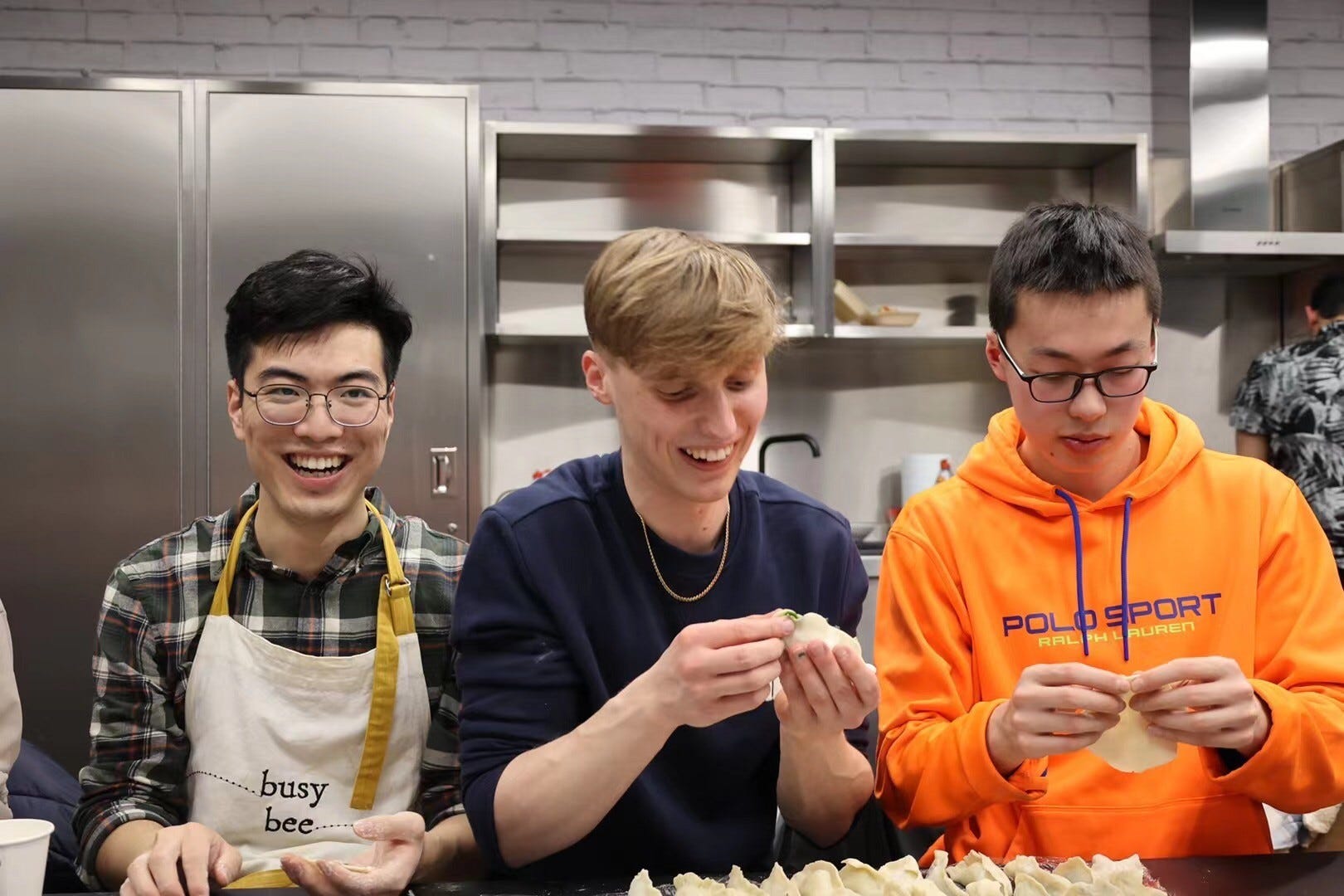
I’ve found that learning Mandarin has completely changed my life, it was genuinely like opening up a door to a different world. I’ve found it’s made me more confident and outgoing; it helped me start a YouTube channel and has made me more disciplined. The biggest cultural insights I gained when I lived in China, especially workplace culture, there are too many stories to tell… I’ll have to save them for another day.
I like the way Chinese uses so many metaphors, for example:
起得比鸡早,睡得比狗晚.
钱又不是大风刮来的.
天底下没有免费的午餐.
跟个无头苍蝇似的
It’s a very rich language, with lots of cultural nuance. That’s a challenge in itself, but it is also a layer of linguistic beauty which I’ve learnt to appreciate more and more over the years.
I think I have three bits of advice for intermediate learners.
Firstly, take the time to really get your pronunciation on point, because it’s a lot harder to undo pronunciation mistakes once you’re already fluent. You don’t want to leave natives guessing what you’re saying all the time. Secondly, make sure you learn in ‘chunks’ and not just words. If you’re an intermediate you probably already have a big enough vocabulary to have decent conversations, the harder part is actually constructing natural, native like sentences in real-time, and I think chunks can really help with this.
Finally, practice speaking lots, having lots of conversations will honestly help so much, so try and make an effort to make those conversations happen and try and learn as much as you can from each and every conversation.
Are there some wrong beliefs about tones, characters, or Chinese grammar that you often hear about and disagree with?
You need to wait thousands of hours before you start speaking Mandarin. I think this really isn’t true, I started speaking after learning for two weeks, and a lot of the successful Mandarin learners I’ve met or interviewed on my channel all have had a similar experience, that is, they started speaking before they felt ready.
Language learning is about learning words and grammar. Expanding your vocabulary and having some basic grammar knowledge will help. But I think the real gamechanger is learning at the sentence level with prefabricated chunks so you can construct sentences with ease.
Just ‘immerse’ more. I think lots of listening and reading can help but taking the time to practice building sentences out loud, doing flashcards daily and having loads of conversations are also really critical.
You need to be ‘talented’ to learn Mandarin. I nearly failed Spanish at school; I certainly wasn’t talented. The most important thing is putting in the time and effort and staying as consistent as you can.
I want to share two sayings that mean a lot to me and hopefully will encourage you:
世上无难事,只怕有心人
“Nothing is difficult in the world, if you set your mind to it”
“Where there is a will, there is a way”
If you set your mind to learning Mandarin and you put the time and effort into it, you’ll reach a high level of proficiency.
千里之行,始于足下
“A journey of a thousand miles begins with a single step”
What is it that you could start doing today that would help you improve your Mandarin? Learning Mandarin can look like a thousand-mile journey if you stay fixated on how much further there is to go. But if you focus on the ‘now’, then it’s a simple game of putting one foot in front of the other.

Comments
Nothing yet. Say the first thing.
Sign in to join the conversation.