
作者:Jing Yu
By Jing Yu
The English translation follows below.
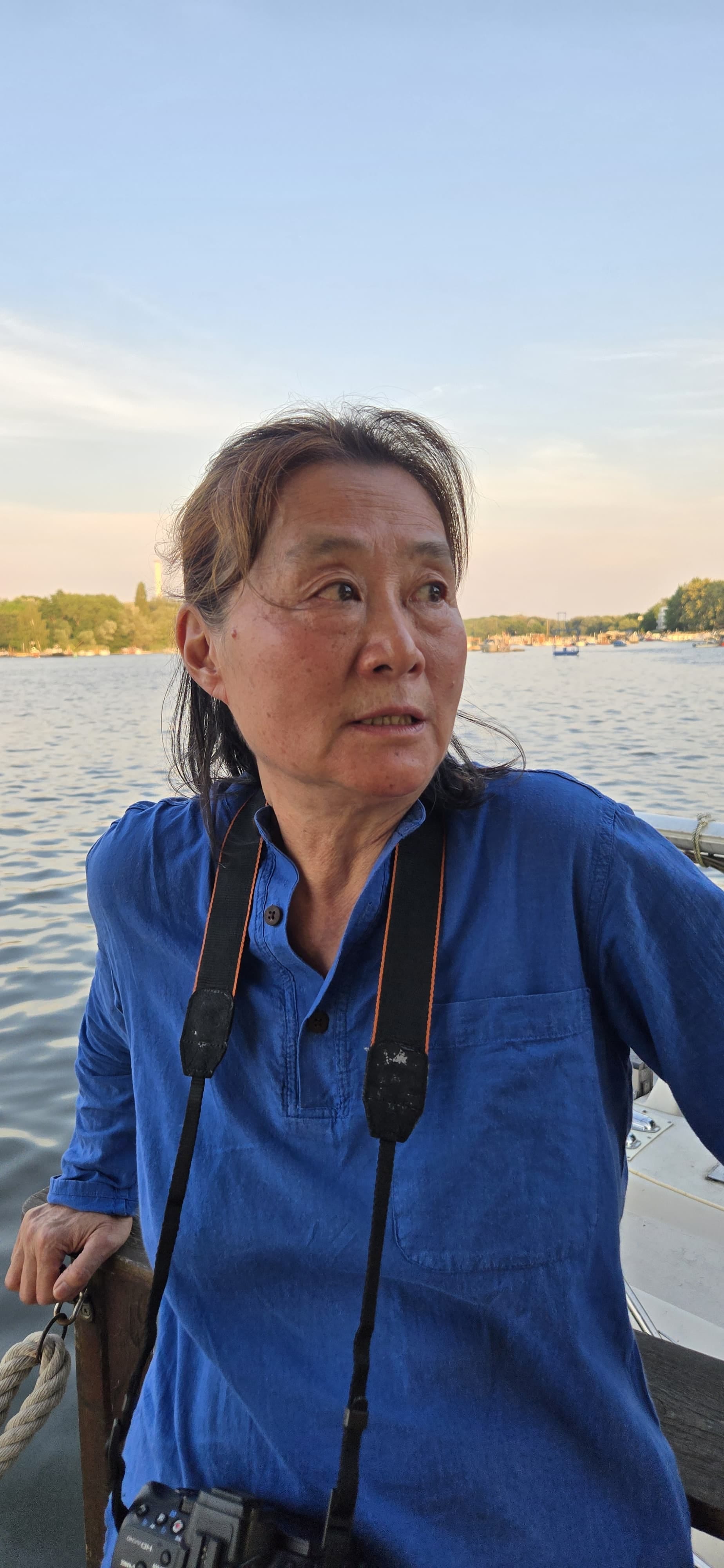
何小培是一个始终游离于中国电影创作体系之外的导演。她的酷儿电影作品,如同她的人生一样,贯穿着某种属于好奇心与探险的特质——无论是《女同志三部曲》,还是《中华坏女人》长纪录片。她用镜头表现被压制的欲望和生命故事,也解构中国社会那些无所不在的规则。
青少年时代的何小培,正赶上中国的文化大革命。作为下乡知青,她去了北京附近的松山龙庆峡当羊倌,在农村度过数年。后来她考上了大学,毕业后,因厌倦体制内的工作,又加入中国登山队,冲击喜马拉雅山脉的南迦巴瓦峰。离开登山队后,她进入了中国国务院,用14年时间,研究经济领域改革。
1995年,世界妇女大会在北京举办,这成为何小培创作和生活的转折点,也是她投身中国女权运动的开始。大会深深地启发和影响了她,她远赴英国攻读性别与发展等专业研究。博士毕业后,她回到中国,创建了民间非政府组织——粉色空间(Pink Space)。粉色空间的原名是粉色空间性文化发展研究中心,致力于性别平等、性少数群体的权益以及多元性文化的倡导与研究。
1
何小培作品里的人物,大多过着不被主流价值观认可,或者处于社会边缘的生活。如艾滋病患者、同志、残障人士、居无定所的人……她的影像,也因此呈现出强烈的独立性。这些作品难以在中国大陆公开放映,所以在电影的拍摄上,何小培一开始就拒绝了张扬的剧组模式,选择由导演和一个极小的团队来制作。其特点往往是:从生活出发,以朋友的身份去观察,在私密的空间内完成。正因如此,这些作品也展现出极大的生命力与敏锐度。
可以说,何小培的创作动机既不是表达欲,也不是纪录的责任感,而是一种本能。她的镜头,直白地摆在被拍摄者的面前,不加修饰地包裹住对方与环境,呈现出一种粗砺真实的质感。她与被采访者直接对话,那些剪辑的停顿和选择,透露出一种让人无法忽略的幽默感。而粗砺与诙谐也正是何小培电影创作的两大特点。
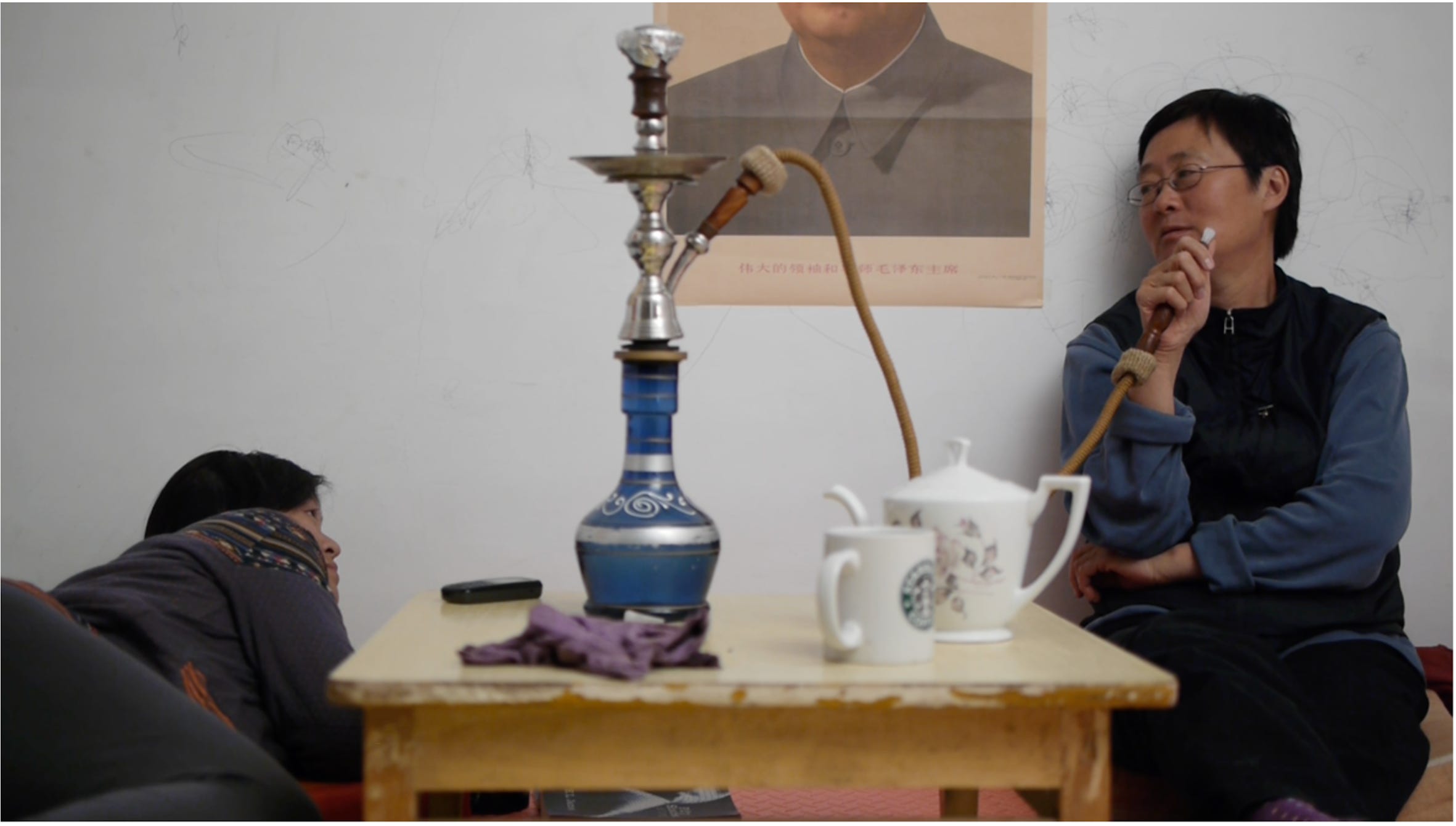
《女同志三部曲》在酷儿研究的领域被广泛提及。这个系列作品,记录和观察了中国性少数群体中普遍存在的“形婚(形式婚姻的简称)”现象。也就是男女同性恋者,协商假结婚,以应对家庭和社会的压力。何小培跟随了几位生活在东北的女同性恋者,拍摄下她们和男同性恋“形婚”的过程,并在此后的十多年里,持续记录下她们的生活状态。
《奇缘一生》是这个系列的第一部作品。几位年轻的女同性恋者,寻找协商对象,举办婚礼,以应对家庭和传统社会的压力。她们中的一些人和父母之间有着强烈的情感纽带,选择“形婚”,并非仅仅因为社会压力,更多是为了父母的脸面,和成为孝女的欲望。当时是2000年代中期,互联网在中国刚开始兴盛,大量酷儿群体通过网络来建立社群。《奇缘一生》这个片名,就来自其中一位当事人小熊建立的“形婚群”。
这部影片展露了何小培一以贯之的幽默感。婚礼现场的大多数人,并不知道新郎新娘们的秘密,但观众却十分清楚。这种信息的不对称,将俗气的婚礼描绘出了喜剧的质感。那些对被拍摄者的采访,以及她们正经到有些荒诞的婚礼,在镜头里呈现,解构了无形社会规则之下婚姻的本质。
六年之后,导演再次拜访了这几位女同性恋,拍摄了这个系列的第二部《形婚之后》。她们中的一些人,已经和“形婚”的丈夫分开;一些人开始了酷儿的家庭生活,并将同性伴侣的关系,以一种心照不宣的方式呈现在父母面前。伴随这种变化的,是她们与“形婚”丈夫以及自己父母的关系,也发生了改变。《形婚之后》就表达了这种被解构了的传统家庭关系。
何小培拍摄“形婚”十年之后,正值新冠爆发后期。经历了漫长的等待,导演辗转多地,终于来到东北,拍摄了这个系列的第三部影片,也是这个系列的第一部长片《六大皆空》。此时,受访的当事人与自己的“形婚”丈夫均已离婚,酷儿的家庭关系也更为牢固。她们中的一些人,为了更好地照顾老人,选择和双方父母住在一起。同时,她们也在考虑生育问题,希望自己能老有所依。可以看出,传统的家庭观念,事实上一直存续在她们的意识中,只是变成了一种更为曲折的方式——如同导演的旅途一般,需要历经艰难,才能到达目的地。
有趣的是,在导演的镜头里,她们的故事,并没有因为不符合社会期待和规范,而变得沉重。三部影片都使用了大量的对话,淋漓尽致地表现了被拍摄者们的性格。或许她们在镜头前有一些无意识的表演,却也让作品呈现出了一种独特的幽默。
2
何小培自己的酷儿精神在《女同志三部曲》中已有所反映。其实,酷儿并非只关乎性别和性取向,它也可以是游离在任何传统范式之外的精神。女同性恋的身份在三部曲里只是一个通道,何小培从这个通道,展现了传统婚姻家庭范式之外的可能性。其直白的拍摄风格,也是传统影像制作范式之外的一种可能性。可以说,她同时结构了家庭与影像两者。
《中华坏女人》是何小培的第一部长片,它的反叛色彩更加鲜明,导演从对他者的观察,过渡到了对自己和自身家庭的思考。
影片始于沉默与对话。作为导演的何小培和女儿一同回到她寡言少语的母亲家中。“我对妈的感情一直特别复杂。”她说。于是,她打开摄像机,女儿开始了对外祖母的采访。两代母女纵横交错地讲述了中国社会近100年的变化,以及宏大历史之下,她们被掩埋、被剥夺和被挑拨的爱、欲望与伤害。
三位女性都是中国传统语境下的坏女人:叛逆,鲁莽,不矜持。她们看似胡作非为的行径里,暴露出蓬勃的生命力:好学,勇敢和坦荡。正如她们的性格一般,影片没有私人影像的细枝末节,而是通过大量的对话,诚实地寻求自己和母亲的爱。母亲的叙事里,有执着和遗憾,但鲜少谈及自己的女儿。试图用这场对话来与母亲和解的导演,将未曾从母亲那里得到的爱,悉数给了自己的女儿,然而在和女儿的对话里,却发现并非如此。女儿决定通过拒绝生育来停止这种代际伤害。祖孙三代的关系,并不是简单的私人情感。她们揭露了一种反建构的质疑:只是坦诚地表现自己的渴望,就无法成为“好女人”、“好妈妈”了吗?
影片中时不时出现的文字,填补了影像和关系里的空白。它们可以是导演内心的反驳,也可以是观众在镜头里没有看到的反思。文字同样也是影片幽默风格的一个支点。不同于很多私人影像的撕裂和痛楚,《中华坏女人》里充斥着无数幽默的瞬间。恰到好处的停顿,出乎意料的转折,显而易见的矛盾。她们在同一空间里,用明显存在代沟的词汇,完成了一场在传统亲子关系中不可能发生的动人对话。
《中华坏女人》的视听语言依然粗砺而直白。在这样一个坦诚的故事里,视听的修辞显得不那么重要。这场拍摄持续数年,使用的工具也与以往大相径庭。模糊、失焦、晃动,在拍摄中最为真实地展现。这些不遵守电影范式的风格,与影片的主题一起,完成了恰如其分的互文。
《中华坏女人》自2021年在北京爱酷电影周首映以来,在欧亚的独立影展上也获得了很多好评。2023年,它在香港百老汇戏院上映,场场满座。不同于一些制作精美,演员靓丽的酷儿剧情片,《中华坏女人》对于华语影像世界的意义在于,它让酷儿的概念脱离了性别的局限——三代女性其实都是酷儿,这无关乎性取向,她们各自代表了中国社会变迁中,不同时期不同形式的反叛。
这也就像何小培的电影本身,永远在打破某种旧有的范式与规则,不管它们是道德的,关系的,还是电影自身的。酷儿,是一种精神,也是她的创作状态本身。
(编者注:2026年9月26日,华盛顿DC季风书园举办的华语独立影像展(9月19日至26日)上,将播放何小培作品《中华坏女人》。读者可关注季风书园获取相关资讯)。
【本文为中国民间档案馆首发,转载时请务必在正文之前注明“本文首发于中国民间档案馆”,并提供中国民间档案馆网站或者Substack的原文链接。】
【作者观点不代表中国民间档案馆立场。】
He Xiaopei’s Queer Cinema: Repressed Lives and Their Chinese-Style Rebellion
By Jing Yu
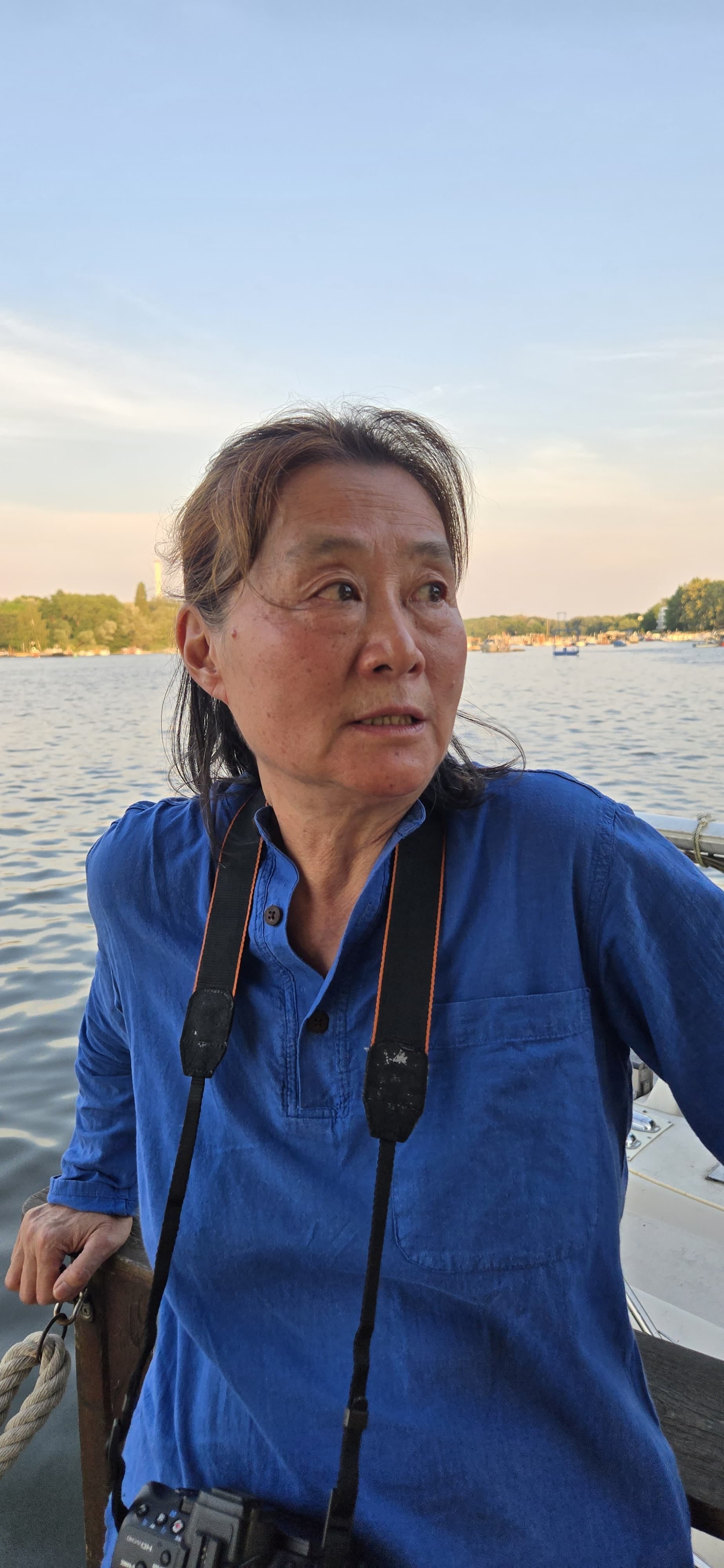
He Xiaopei is a filmmaker who has always operated outside China’s conventional system of film production and has never received formal training in filmmaking.
She experienced the Cultural Revolution and was subsequently sent to the countryside as a sent-down youth. She worked as a shepherd in the Longqing Gorge area of Songshan, near Beijing, where she lived and worked for several years. After graduating from university, she grew weary of working within the state system and joined the Chinese Mountaineering Team, taking part in an attempt to climb Namcha Barwa. After leaving the mountaineering team, she went to work in Zhongnanhai, where she spent fourteen years researching economic reform.
The 1995 World Conference on Women in Beijing marked a turning point in He Xiaopei’s life and creative work. She was deeply drawn to the conference. Curiosity has always been a defining feature of both her personal life and her creative motivations. She decided to go to the United Kingdom to pursue cultural studies. After completing her doctorate, she returned to China and founded the grassroots organization Pink Space, using moving images to give expression to suppressed desires and stories of people’s lives.
1
Most of the people in these stories lead lives that are not accepted by mainstream society: people living with HIV/AIDS, people with disabilities, and gay and lesbian people—people without stable homes or who are denied the possibility of having children. He Xiaopei’s filmmaking accordingly displays a pronounced independence. These works cannot be publicly screened in mainland China. In production, she rejects the conspicuous model of a large film crew, instead making her films with only the director and a very small team.
Her films begin with everyday life: she observes people as a friend and films them within intimate spaces. The resulting works possess tremendous vitality and sensitivity. He Xiaopei’s creative impulse stems neither from a desire for self-expression nor from a sense of responsibility to document, but from something instinctive. The camera is placed directly before her subjects, taking in both them and their surroundings without embellishment and producing a rough, unvarnished sense of reality. Her direct conversations with interviewees, as well as the pauses and choices in her editing, also reveal an unmistakable sense of humor. Rawness and humor are two defining characteristics of He Xiaopei’s filmmaking.
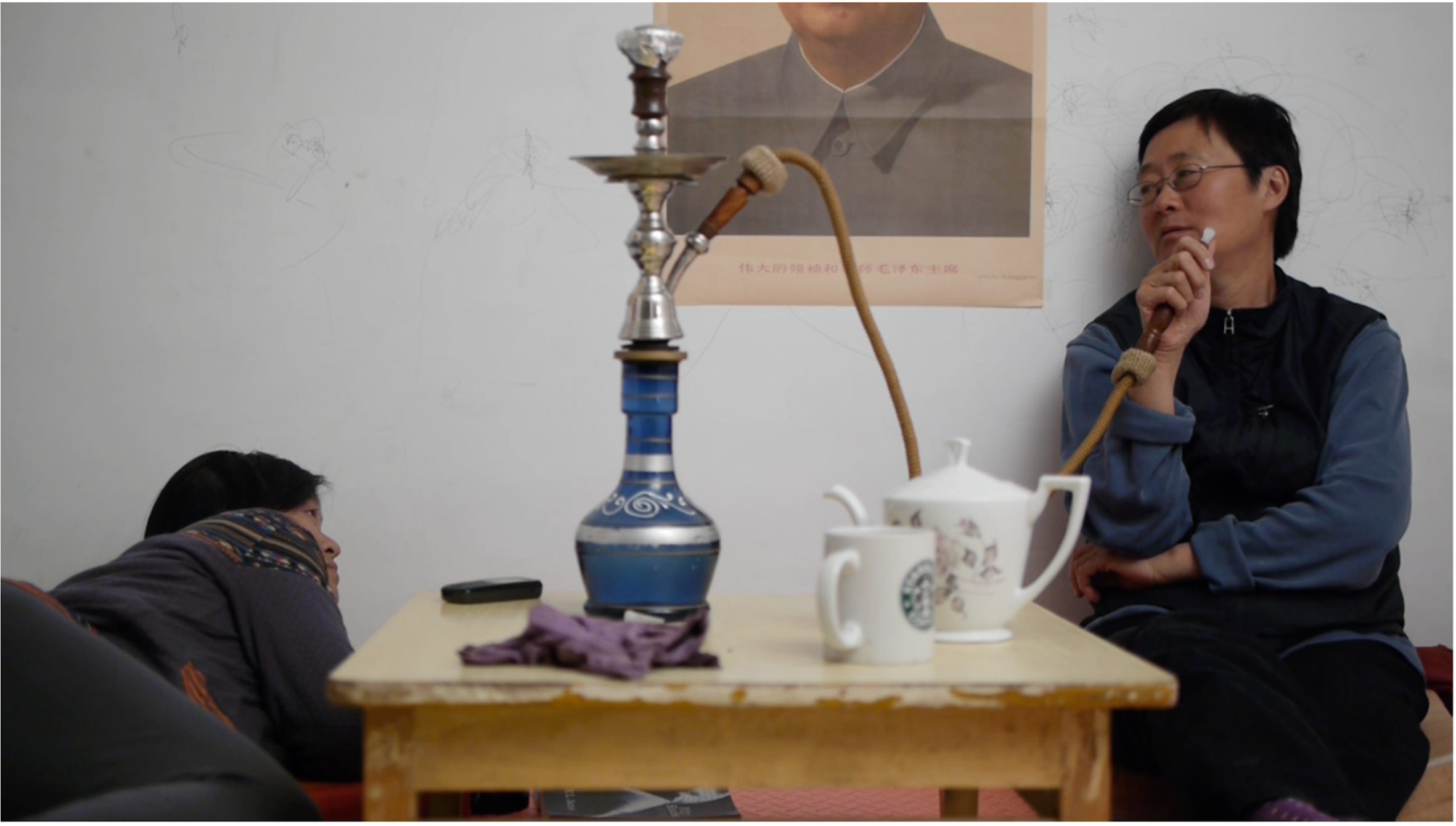
The Lesbian Trilogy first became widely discussed in the field of queer studies. It documents and observes a phenomenon widespread in mainland China: gay men and lesbians entering into marriages with one another in order to cope with pressure from their families and society. He Xiaopei followed several lesbians living in Northeast China, filming the process by which they entered into marriages of convenience with gay men. Over the following decade and more, she continued documenting their lives as they evolved.
Qi yuan yi sheng (When Lesbians Marry Gay Men) is the first work in the series. Several young people negotiate with gay men and hold weddings in order to cope with pressure from their families and traditional society. Some of the women have powerful bonds with their parents, and their decision to enter marriages of convenience is not simply the result of social pressure. It stems even more from a desire to preserve their parents’ face and to be filial daughters.
This was a period when the internet was just beginning to flourish, and large numbers of queer people were forming communities online. “Qi yuan yi sheng ” was the name of a marriage-of-convenience group established by one of the participants, Xiaoxiong. The film displays He Xiaopei’s characteristic sense of humor. Most of the people attending the weddings do not know the couples’ secret, while the audience knows it perfectly well. This asymmetry of information gives the conventional, even tacky weddings a comic quality. The interviews with the participants, together with weddings whose solemn earnestness borders on the absurd, deconstruct the very nature of marriage.
Six years later, the director revisited these lesbians and made the second film in the series, Happily Ever After. Some had already separated, while others had begun to form queer families. Their relationships with same-sex partners are presented to their parents through a kind of tacit understanding: everyone knows, but no one explicitly says so. Their relationships with both their husbands in the marriages of convenience and their parents have undergone changes. Yet the motivation behind these changes is the same as the motivation that led them to enter marriages of convenience in the first place: care for their parents. Happily Ever After deconstructs conventional family relationships.
Ten years after the marriages of convenience, during the later phase of the COVID-19 outbreak, the director traveled from place to place and endured a long period of waiting before finally reaching Northeast China to film the third installment in the series—and the series’ first feature-length film—Liu Da Jie Kong.
The participants and their husbands from the marriages of convenience have all divorced, while their queer family relationships have become more firmly established. Some have chosen to live together with both partners’ parents so that they can better care for them in old age. At the same time, they are considering having children themselves, in the hope that they too will have someone to rely on when they grow old. Traditional ideas of family have in fact remained present in their consciousness throughout. They have simply taken a more circuitous form: like the director’s own journey, reaching the destination requires a difficult and indirect path.
Their stories do not become heavy simply because their lives fail to conform to social expectations and norms. All three films make extensive use of dialogue, vividly bringing out the personalities of those being filmed. There may be an element of unconscious performance in these exchanges, but it is precisely this that produces their humor.
2
He Xiaopei’s queer spirit is already evident in the Lesbian Trilogy. Queerness is not solely about gender and sexual orientation. It can also be a spirit that exists outside any conventional paradigm. Lesbian identity functions in the trilogy merely as a passageway: through it, He Xiaopei reveals possibilities beyond conventional paradigms of marriage and family. Her direct, unvarnished filming style likewise demonstrates possibilities beyond conventional paradigms of image-making. In this way, she simultaneously deconstructs both the family and the moving image.
The Bad Women of China is He Xiaopei’s first feature-length film, and its rebellious character is even more pronounced. Here, she moves from observing others to reflecting upon herself and her own family.
The film begins with silence and conversation. Director He Xiaopei returns with her daughter to the home of her taciturn mother. “My feelings toward my mother have always been especially complicated,” she says. She turns on the camera, and her daughter begins interviewing her grandmother. Across two intertwined mother-daughter relationships, they recount nearly a century of changes in Chinese society, along with the love, desires, and injuries that, beneath the sweep of grand history, have been buried, taken from them, and turned against one another.
The film constantly breaks established rules: paradigms of morality, relationships, and cinema.
All three women are bad women within the traditional Chinese context: rebellious, impetuous, and unabashed. In their misbehavior, they reveal an exuberant vitality: a love of learning, courage, and candor.
Like the women themselves, the film does not dwell on the minutiae characteristic of private, autobiographical filmmaking. Instead, through extensive dialogue, it honestly seeks out the love between the filmmaker and her mother. Her mother’s narrative contains persistence and regret, yet rarely mentions her own daughter. The director attempts through these conversations to reconcile with her mother.
She believes that she has given her own daughter all the love that she herself never received from her mother, only to discover through conversations with her daughter that this is not in fact the case. Her daughter decides to end this intergenerational harm by refusing to have children. The relationships among these three generations of women cannot be reduced to private emotions. They reveal a deconstructive challenge: if women simply express their desires honestly, does that make it impossible for them to be good women and good mothers?
Text appearing intermittently on screen fills the gaps in both the images and the relationships. During the mother’s account, these words can serve as the director’s internal rebuttal; during the daughter’s account, they can express reflections that are not revealed before the camera. Text also serves as one of the sources of the film’s humor. Unlike the rupture and pain found in much autobiographical filmmaking, The Bad Women of China is filled with humorous moments: perfectly timed pauses, unexpected turns, and glaring contradictions. Sharing the same space yet speaking in vocabularies that clearly reveal their generational differences, the women manage to have a moving conversation of a kind that would be impossible within conventional parent-child relationships.
The film’s audiovisual language remains rough and direct. In a story this candid, audiovisual rhetoric becomes less important. Filming continued over several years, using widely differing equipment. Blurred images, missed focus, and camera shake are, throughout the filming, the most truthful manifestations of the circumstances in which the images were made. A style that refuses to obey cinematic conventions thus forms an apt intertextual relationship with the film’s subject.
Since its premiere at the Beijing Queer Film Festival in 2021, The Bad Women of China has received considerable acclaim at independent film festivals across Europe and Asia. In 2023, it was screened at Broadway Cinematheque in Hong Kong, with every screening sold out. Unlike some queer fiction films with polished production values and glamorous actors, the significance of The Bad Women of China for the Chinese-speaking world lies in its freeing of the concept of queerness from the confines of gender. In fact, all three generations of women are queer, regardless of their sexual orientation. Each represents a different form of rebellion at a different stage in the transformation of Chinese society.
Within her own creative world, He Xiaopei uses queerness to deconstruct history, society, systems, and all the invisible rules they produce.
(Editors’ Note: On September 26, 2026, The Bad Women of China, a film by He Xiaopei, will be screened as part of the Screening of Sinophone Independent Films organized by JF Bookstore in Washington, D.C. Readers are invited to follow JF Books for further information about the screening.)
[This article first appeared in China Unofficial Archives. When reposting, please ensure that the following is included at the beginning of the reposted text: “This article was first published by the China Unofficial Archives,” accompanied by a link to the original article on the China Unofficial Archives website or Substack.]
[The views expressed by the author of this article do not necessarily reflect the position of the China Unofficial Archives.]
Comments
Nothing yet. Say the first thing.
Sign in to join the conversation.