
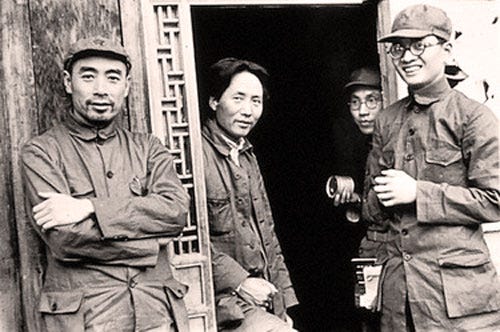
Most cities become irreplaceable by building something the world needs.
A port. A factory. A technology cluster. A logistics corridor. A financial center. These are assets that competitors can replicate; given enough time, capital and political will. The city that builds the best port today can be out built tomorrow. The city that hosts the cheapest factory can be undercut next decade. The city that attracts the top talent can lose them to the next city with better tax incentives.
This is the logic of competition, and most cities lose.
Yan’an does not compete on this logic.
It does not have the best port. It does not have the cheapest factory. It does not have a technology cluster. It does not have a logistics corridor. It has nothing that can be out built, undercut or bid away.
What it has is something no competitor can build, buy, or copy: it is the only city in the nation that can claim to be the origin.
It has the origin of the governing ideology itself. The physical sites where that ideology was forged; the caves, the compounds, the meeting halls, the pagoda that watched it all happen are fixed points in history. They cannot be relocated. They cannot be recreated. They cannot be competed away.
This is not heritage tourism. Heritage tourism is replaceable. Any city with an old building can claim heritage.
This is something else entirely: a sacred anchor that guarantees permanent state investment, automatic inclusion in national circuits and an unshakeable place in the national consciousness regardless of economic performance, global commodity prices, or shifting political winds.
The city that holds this anchor does not need to be the best at anything. It only needs to be the only one that represents what it represents.
This is the city that learned to stop competing and start anchoring.
Welcome to Yan’an.
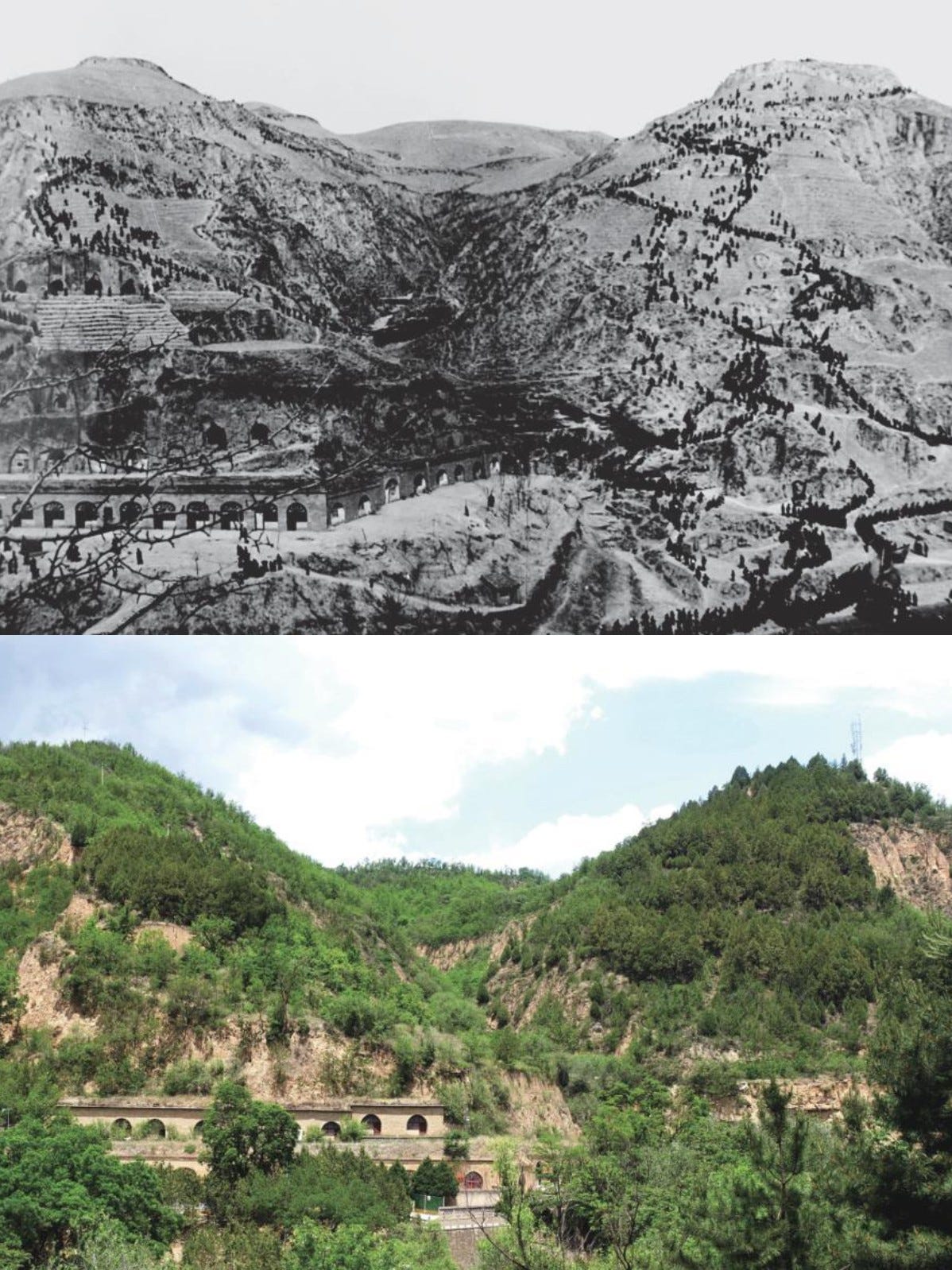
Yan’an existed as a remote garrison town and agricultural outpost on the northern frontier. Its location offered strategic depth but little economic value. It was peripheral, poor and ecologically fragile; a place people passed through, not a place they settled.
The city was originally known as Fushi, a name used until 1937. The Yan’an area was settled during the Qin and Han dynasties and gained prominence as a military outpost, particularly during the Northern Song dynasty when it served as a fortified frontier against the Western Xia. Its military role was defensive, not offensive. It protected, but produced little. It was a wall, not a factory.1
For centuries, the Loess Plateau supported subsistence farming and pastoralism. The soil was fertile but the terrain was hostile, a sea of eroded gullies where villages clung to narrow valley floors. The system was stable but low yield. It solved the problem of survival for a small population but never generated surplus.
By the mid 20th century, the old system had reached its limit. The combination of population pressure, deforestation and over grazing pushed the ecosystem toward collapse. Soil erosion reached catastrophic levels. The land could no longer sustain the population. The original agricultural model was terminal.
The transformation began in 1935, when the Communist forces arrived at the end of the Long March. Yan’an became the headquarters of the Chinese Communist Party (CCP) from 1935 to 1948. This was not a deliberate economic strategy for the city itself, it was a strategic retreat that happened to land here. The Party chose Yan’an not for its economic potential, but for its isolation. Its remoteness, which had made it poor, now made it defensible.2
The arrival of the CCP transformed Yan’an from a forgotten garrison town into the nerve center of a parallel state. The Shaanganning Border Region, with Yan’an at its core, became a model of governance that contrasted sharply with the inefficiency and graft of the Nationalist government. This period marked a pivotal episode that provided the foundation for later successes.3
But this transformation also created a new constraint. The Yan’an period brought the economic contradictions of a state within a state: a small fish in big water dilemma where the administrative apparatus grew faster than the economic base.4 Blockaded by Nationalist forces and geographically isolated, the region faced severe material shortages; fuel, food, and industrial goods all had to be produced or improvised locally.5
The public economy was built from scratch, through centralized leadership and decentralized management, establishing the model for later economic governance. The system worked; but it was a system of survival, not of prosperity.
Discovery
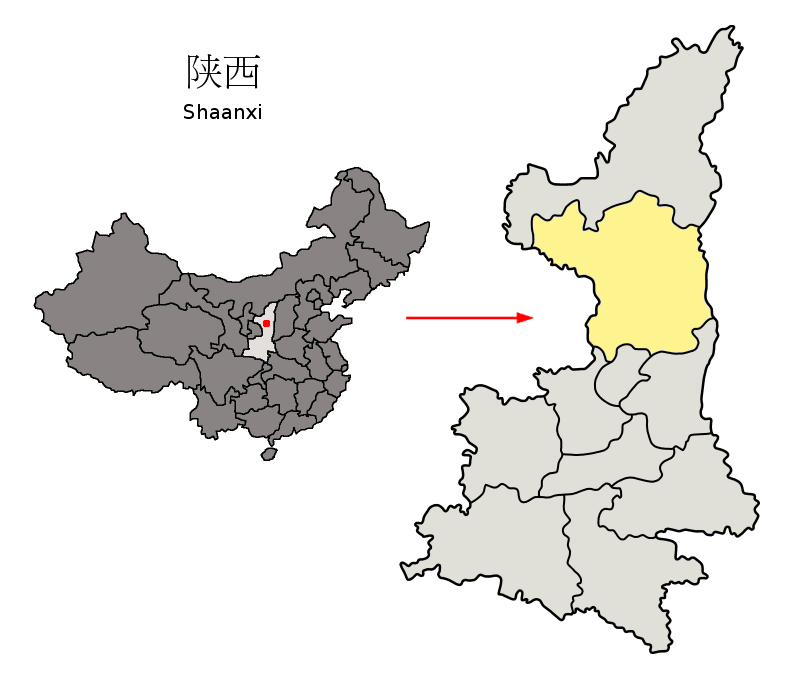
When the Communist forces arrived in Yan’an in 1935 at the end of the Long March, they did not choose the city for its economic potential. They chose it for its isolation. The Loess Plateau’s fractured terrain, its remoteness from Nationalist control, its defensible gullies and caves; these made it a sanctuary, not a prize.
What survived the revolutionary period was not infrastructure it was the place itself.
The caves where the Party leadership lived and worked remained. The compounds where meetings were held remained. The Pagoda Mountain that watched over the city remained. The physical geography; the ravines, the plateau, the river valley remained unchanged. These were not monuments. They were simply places where history had happened.6
But they were irreplaceable. No other city could claim to be the site where the revolution was forged. No other city could point to the same caves, the same compounds, the same mountain. The history was fixed to the geography.
The recognition of Yan’an’s strategic value was not a later invention. It was immediate and continuous from 1949 onward. The state understood that the sacred sites could not be relocated or replicated. They were the physical proof of the revolution’s legitimacy and that proof had to be preserved.
Yan’an was designated as a world famous revolutionary holy land, a national historical and cultural city, and a national excellent tourism city.7 This was not marketing. It was formal acknowledgment of what had always been true: Yan’an was the origin.
The state invested in preserving the sites, building museums, and incorporating Yan’an into national education and pilgrimage circuits. Every Party member would visit. Every school curriculum would include it. Every state funded tour circuit would pass through. The demand was structurally guaranteed.
The recognition was that Yan’an’s value was not economic. It was symbolic. And symbolic value, when anchored to physical geography, is more durable than any economic asset. A port can be out built. A factory can be undercut. A technology cluster can be bid away. But the sacred site cannot be moved.
Yan’an did not need to become the best at anything. It only needed to be the only one that represented what it represented.
Recognition alone does not create sovereignty. Recognition identifies the asset. Activation builds the mechanism that makes the city impossible to bypass.
For Yan’an, the activation mechanism is a two layered system: first, secure the sacred anchor; second, build revenue layers on top but never confuse which is which. The sacred anchor is the foundation. The revenue layers serve it.
The central state did not leave Yan’an’s sacred sites to market forces. Markets are fickle. Pilgrimage circuits could fade. Tourism could decline. Heritage funding could be cut.
So the state did something else.
It designated Yan’an as a world famous revolutionary holy land, a national historical and cultural city, and a national excellent tourism city.8 This was not marketing. This was a formal declaration: the city’s value is non-negotiable and permanently protected.
Then it went further.
Yan’an was designated the spiritual home of Chinese Communists.9 It requires the Party to preserve, protect and promote the city’s sacred sites as a permanent obligation. The city does not need to compete for attention or investment because its status is structurally guaranteed.
This has led to Yan’an receiving permanent state funding, automatic inclusion in national education and Party training circuits, and structural demand from pilgrimage tourism that will never fade.
The anchor was secured. It cannot be moved. It cannot be copied. It cannot be competed away.
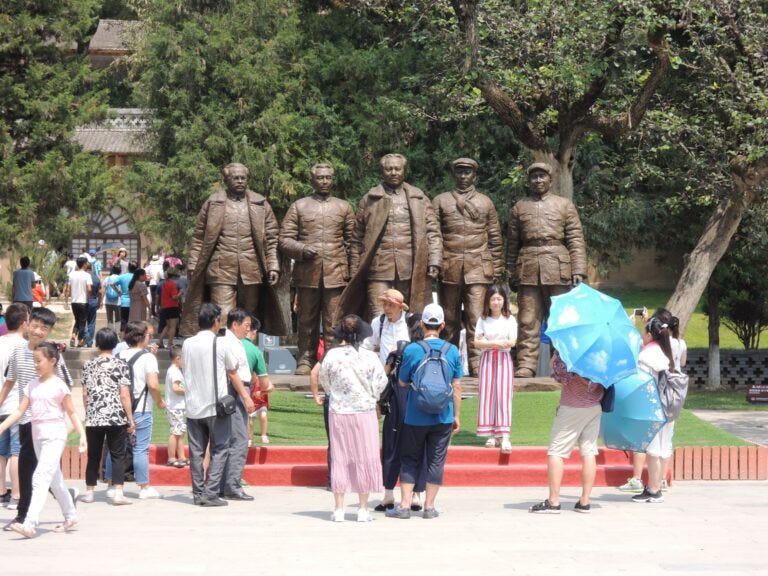
With the anchor secured, Yan’an could build. But the layers are replaceable. They generate wealth. They do not define the city.
Apples
The Loess Plateau, once a sea of eroded gullies, proved ideal for premium apple cultivation. High altitude, deep soil abundant sunshine and large temperature differences between day and night. The conditions created apples that commanded premium prices.10
The city built cold storage capacity exceeding 1.66 million tons, enabling year round sales. It adopted dwarfing, dense planting, and drought prevention methods, pushing premium fruit rates above 85 percent. It opened global export markets through the China-Europe Railway Express. It introduced apple insurance and futures to protect farmers from weather and price shocks. sales.11
By 2023, Yan’an’s apple orchards covered over 221,000 hectares, producing 4.64 million tons valued at RMB 25.91 billion. The entire industrial chain reached RMB 50.67 billion. Approximately one million people, nearly half the city’s population depend on apples for income.12
Energy
Yan’an sits on vast energy reserves: 1.38 billion tons of proven oil reserves, 11 billion tons of coal, and 300 billion cubic meters of natural gas.13
Instead of exporting raw resources, the city built high end refining and chemical industrial clusters, capturing more value along the chain. Major energy projects; Datang Yan’an Power Plant, Yanchang Petroleum Fuxian Power Plant, LNG helium extraction, locked in production capacity.14 The 14th Five-Year Plan targets 80 million tons of raw coal, 14-15 million tons of crude oil and 15 billion cubic meters of natural gas annually. The goal is to reach three 100 billion level industrial clusters; oil and gas, coal power, and energy and chemicals.15
Tourism
The sacred anchor also generates a continuous stream of cultural tourism revenue.
Nanniwan, once a symbol of early reclamation efforts, now attracts more than a million visitors annually, blending ecology with cultural tourism.16 The city fosters five tourism brands: red revolutionary tourism, Yellow Emperor historical tourism, Yellow River natural heritage tourism, Loess Plateau folk tourism, and ecological green tourism.17
The state permanently secured the sacred anchor through designation and mandate, then layered scalable agricultural, energy, and tourism industries on top—creating a self-reinforcing system where the anchor guarantees investment, investment builds infrastructure, and infrastructure generates revenue.
Never confuse the layers with the foundation.
Present Yan’an as an apple city and it becomes fungible. Shaanxi has other apple cities. Present Yan’an as an energy city and it wont work because Shaanxi and all across China there are other energy cities. Present Yan’an as a tourism city and it becomes fungible. Every province has a tourism city.
But present Yan’an as what it actually is; the sacred anchor with revenue layers built on top and it becomes impossible to replace.
Because the anchor cannot be moved and the layers cannot exist without the stability the anchor provides.
The Doctrine

A city achieves permanent irreplaceability by anchoring its identity in a non-replicable sacred or origin asset, then layering revenue generating industries on top without allowing any of them to redefine the city. The anchor guarantees survival. The layers generate wealth. The hierarchy must never be reversed.
Yan’an cannot be replaced because its core asset; the sacred site is a fixed point in history.
No competitor can build a new one. No competitor can move the existing one. Every other city competing on apples, energy or tourism can be out competed. Only one city can claim the origin.
The apples are replaceable. The energy is replaceable. The tourism is replaceable. The sacred anchor is not.
Any city with a unique origin story; historical, cultural, religious, or political can apply this doctrine. The principle is not about Yan’an. It is about recognizing that some assets cannot be competed away and must be treated as foundational, not decorative.
The rule is simple:
Identify the single asset in your territory that cannot be built, bought or copied. That is your anchor. Everything else serves it. Confuse the two and you become fungible.
The strategic error is confusing the layers with the foundation.
The main insight is that origin is not heritage. Heritage is a museum piece, something to be preserved and visited. Origin is an active asset that guarantees investment, attention and structural demand. It does not sit passively. It generates permanent obligation.
It shows us that anchors must be secured first. Before you build anything, ensure the asset that cannot be replicated is permanently protected. If it can be taken away or degraded, you have no foundation. Everything else depends on it.
The other point is that revenue layers are replaceable. They generate wealth. They do not define the city. Never let a replaceable asset redefine an irreplaceable one. The apples, the energy, the tourism; these are all fungible. The anchor is not.
The fourth lesson is that hierarchy is everything. The anchor governs. The layers serve. Reverse the hierarchy and you become fungible. Present Yan’an as an apple city and it becomes just another agricultural region. Present it as an energy city and it becomes just another resource exporter. Present it as what it actually is; the sacred anchor with revenue layers built on top and it becomes impossible to replace.
Yan’an wins not by being the best at anything it produces, but by being the only place that represents what it represents and collecting rent from everything built on that irreplaceable foundation.
Family IX | Origin Sovereignty.
This family studies places that establish authority by becoming the unique source of something no competitor can authentically reproduce. Markets compete. Origins define.
Yan’an establishes sovereignty by being the only place that represents what it represents.
Yan’an belongs in Family IX because it solves the origin problem: how to make a territory irreplaceable not by what it produces, but by what it represents.
Every city in Origin Sovereignty establishes authority through being the unique source:
City Source of Origin
Yongzhou Deep historical connection to an industry
Chengmai Legal annexation of a historical story
Jiayuguan Sovereign narrative control over a gateway
Tonghua Single irreplaceable asset (frost cycle)
Huangnan Confluence of three irreplaceable assets
Yan’an Ideological sacred site as permanent anchor
Yan’an’s contribution is showing how a territory with no dominant commercial product can achieve origin sovereignty through ideological and historical irreplaceability. Yongzhou has an industry. Tonghua has a frost cycle. Huangnan has a confluence. Yan’an has a sacred site that cannot be moved, copied, or competed away.
Yan’an teaches that origin sovereignty can be anchored in ideology, not just in commerce or geography.
Yan’an introduces a new dimension: Sacred Origin.
This is the first time a city in this family has demonstrated that origin can be established through ideological irreplaceability; not just commercial, legal or physical uniqueness. Previous cities in Family IX derived value from products, crafts, or physical confluence. Yan’an derives value from representing a founding ideology. This is a different category of origin, one that comes with permanent state protection and structural demand.
The doctrine is refined to show that origin sovereignty does not require a product, a craft, or a physical asset. It can be anchored in what a place represents and when that representation is tied to a governing ideology, the state guarantees it permanently.
The closest existing doctrine in Family IX is Jiayuguan’s Sovereign Orchestrator Principle.
Both Jiayuguan and Yan’an establish sovereignty through control over a sacred or symbolic asset. Jiayuguan owns the gate, the physical passage and the story of the passage. Yan’an owns the origin, the ideological foundation and the story of the foundation.
But they differ in a critical way.
Jiayuguan’s sovereignty depends on controlling access and narrative. Yan’an’s sovereignty depends on being the origin itself. Jiayuguan must continually manage the story. Yan’an’s story is fixed in history.
Yan’an teaches that the most secure origin is not one that must be continually narrated. It is one that is permanently anchored in history and structurally guaranteed by the state.
Irreplaceability comes with permanent state protection and structural demand that no commercial origin can match. Origin sovereignty does not require a product, a craft, or a physical asset. It can be anchored in what a place represents and when that representation is tied to a governing ideology, the state guarantees it permanently
Yan’an joins the Origin Sovereignty family as the definitive case of Sacred Origin; teaching that ideological anchors, when permanently secured, create the stability for layered revenue systems that no competitor can replicate because the foundation itself cannot be moved.
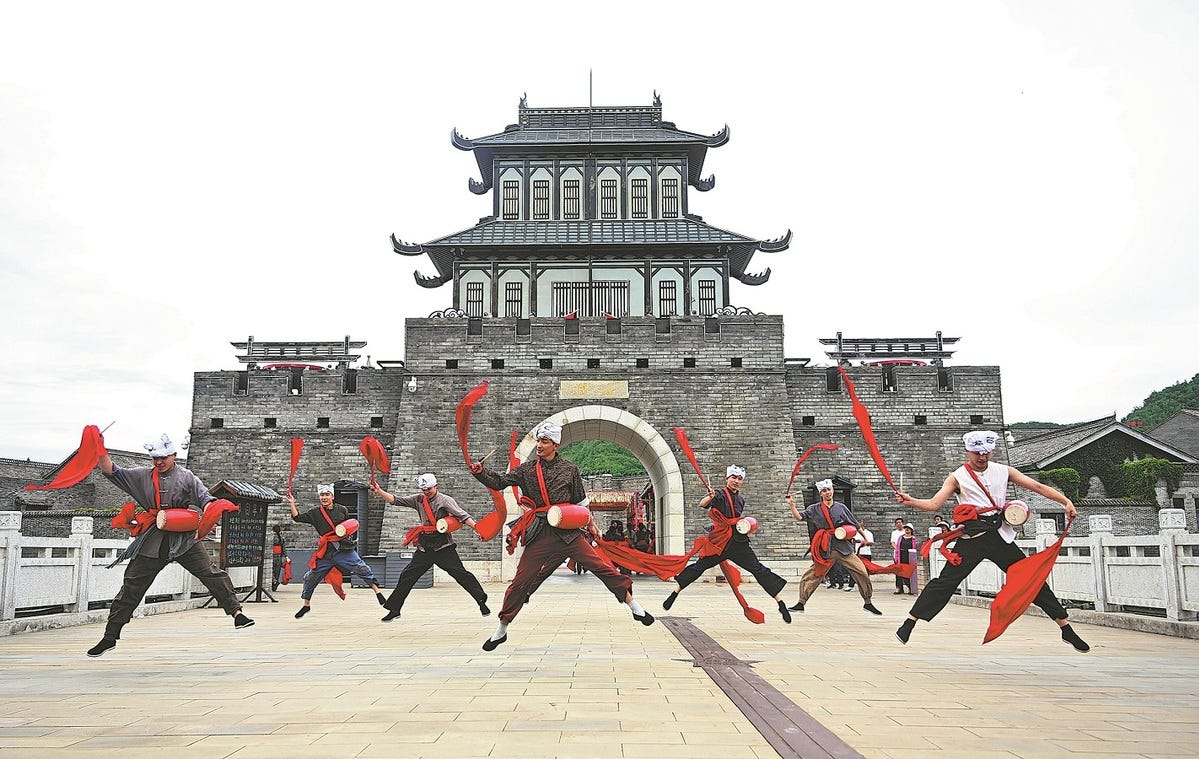
Every city in the 707 Project teaches a principle. But principles are useless if they remain abstract. The question is not whether Yan’an is irreplaceable. The question is: What is your anchor?
You may not run a city. But you run something. A team, department company a household or even your career. In every system you manage, there are assets that are replaceable and assets that are not. The question is whether you know which is which.
Most people spend their lives optimizing the replaceable.
They chase the next promotion, upgrade their skills, network build revenue layers; career achievements, credentials, relationships. These are valuable. But they are also fungible. Someone else can get the promotion. Someone else can learn the skill. Someone else can build the network.
The question Yan’an forces you to ask is: What is the one thing in your life that cannot be built, bought or copied by anyone else?
For Yan’an, it was the sacred site. The physical proof of origin. The thing that could not be moved, replicated or competed away.
For you, it might be something else.
It might be a unique capability you have developed over decades, a depth of knowledge that no one else possesses. It might be a reputation for integrity that cannot be manufactured. It might be a relationship of trust that has been built through years of reliability. It might be a physical location; a workshop, a studio, a farm that has qualities no other place can replicate. It might be a story; your story, your family’s story, your organization’s story that cannot be told by anyone else.
The principle is the same, identify the asset that cannot be built, bought or copied. Secure it first. Then layer everything else on top.
But here is the trap, most people never identify their anchor because they are too busy optimizing their layers. They treat everything as fungible. They assume that if they just work harder, learn more, network better, they will become irreplaceable. But hard work can be replicated. Learning can be replicated. Networking can be replicated.
Irreplaceability cannot be replicated. It can only be recognized and secured.
Yan’an teaches us that the first step is not building. The first step is recognition. The central state recognized that the sacred sites were irreplaceable. It did not try to make them irreplaceable. It recognized that they already were. Then it secured them. Then it built on them.
So the question for you is simple, what have you been treating as replaceable that is actually irreplaceable?
What asset in your life; a capability, a reputation, a relationship, a location, a story cannot be built, bought or copied by anyone else? And if you recognized it as irreplaceable, what would you do differently?
Would you protect it more fiercely? Would you invest in it more deeply? Would you build revenue layers on top of it, rather than treating it as a decorative relic?
The answer to those questions is the difference between being replaceable and being sovereign.
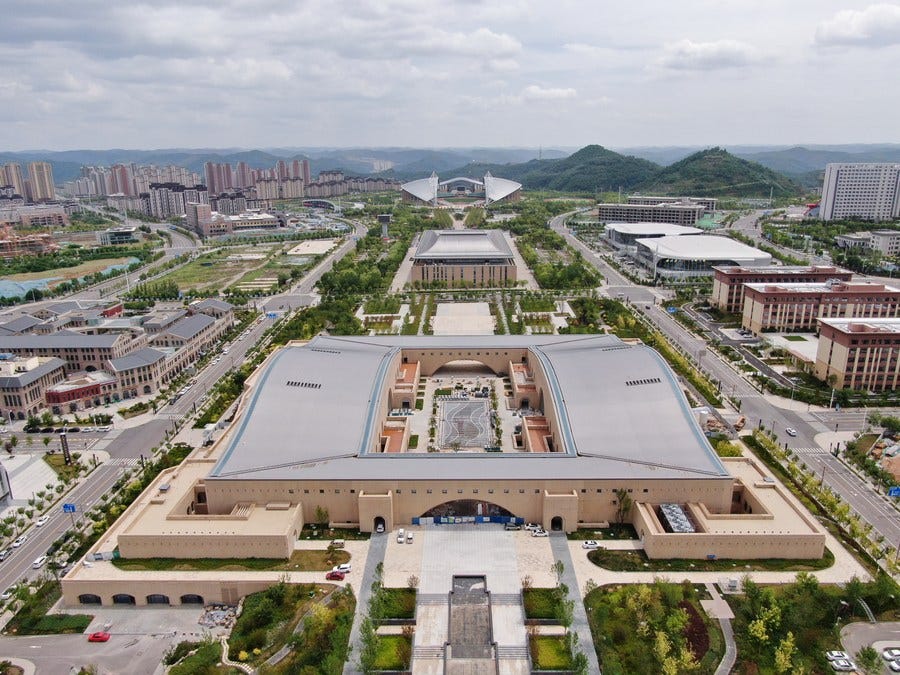
Yan’an’s lesson is simple but profound, some assets cannot be competed away. They must be recognized, secured and built upon, but never confused with the layers that sit on top.
The strategic error is treating the replaceable as if it were irreplaceable, and the irreplaceable as if it were just another asset. Yan’an teaches us to reverse that error. Identify the anchor. Secure it. Build on it. And never, ever reverse the hierarchy.
Next week, we turn to a city that took the opposite approach.
Heze had a flower.
A flower that anyone could grow. A flower that existed in gardens across the world. A flower that, on its own, was a commodity; beautiful, but fungible.
And yet, this city built irreplaceability from that flower. Not by hoarding it. Not by protecting it. But by turning it into something no other city could replicate: a cultural export, an industrial ecosystem, a global brand. The flower became a symbol. The symbol became a story. The story became sovereignty.
While Yan’an built down, anchoring itself in the ground of history next week’s city built out. It took something ordinary and made it extraordinary through narrative, infrastructure, and global connection.
The question is can you build irreplaceability from something anyone can grow?
Zhong, Lina, Zhao, Wenwu, Lü, Yihe, and Liu, Yuanxin. "Analysis of Landscape Pattern Evolution Characteristics in the Hilly and Gully Area of Loess Plateau: A Case Study in Yan'an City, Shaanxi Province." Acta Ecologica Sinica 34, no. 12 (2014): 3368–3377. DOI: 10.5846/stxb201310202531.
"Economic Distress and Public Finance Breakthrough During Yan'an Period." Fiscal Science no. 1 (2021): 116–125.
"Impacts of Land Use, Rainfall, and Temperature on Soil Conservation in the Loess Plateau of China." CATENA 239 (2024).
"Multiple 'sources' exert efforts to gather energy, and Yan'an has sufficient momentum for development." Silk Road International Expo, 2024.
Comments
Nothing yet. Say the first thing.
Sign in to join the conversation.